
SAT Exam Hub
Why NYT Connections Beats Word Lists for SAT Vocab Practice
NYT Connections can legitimately count as SAT vocabulary practice because its group-formation mechanic trains the categorical word knowledge the digital SAT's Words in Context questions reward — not the definitional recall word lists build. The catch: the case is task-analysis based, not causal, so treat it as a deliberate supplement to official Bluebook practice, not a proven score-raiser.
- gre
- mcat
- asvab
- sat
- act
- digital-adaptive
- official-material
- section-strategy
- test-date-timeline
The most frustrating SAT vocabulary miss is not the word you have never seen. It is the word you have seen, highlighted, flashcarded, and confidently defined — until the digital SAT places it inside a sentence where the obvious meaning is not the one that works.
That is the real opening for NYT Connections as SAT vocabulary practice. The point is not that a daily word game magically raises a Reading and Writing score. The point is narrower and stronger: NYT Connections makes you decide what kind of relationship a word is participating in right now. That is much closer to a Words in Context question than another pass through a list of isolated definitions.
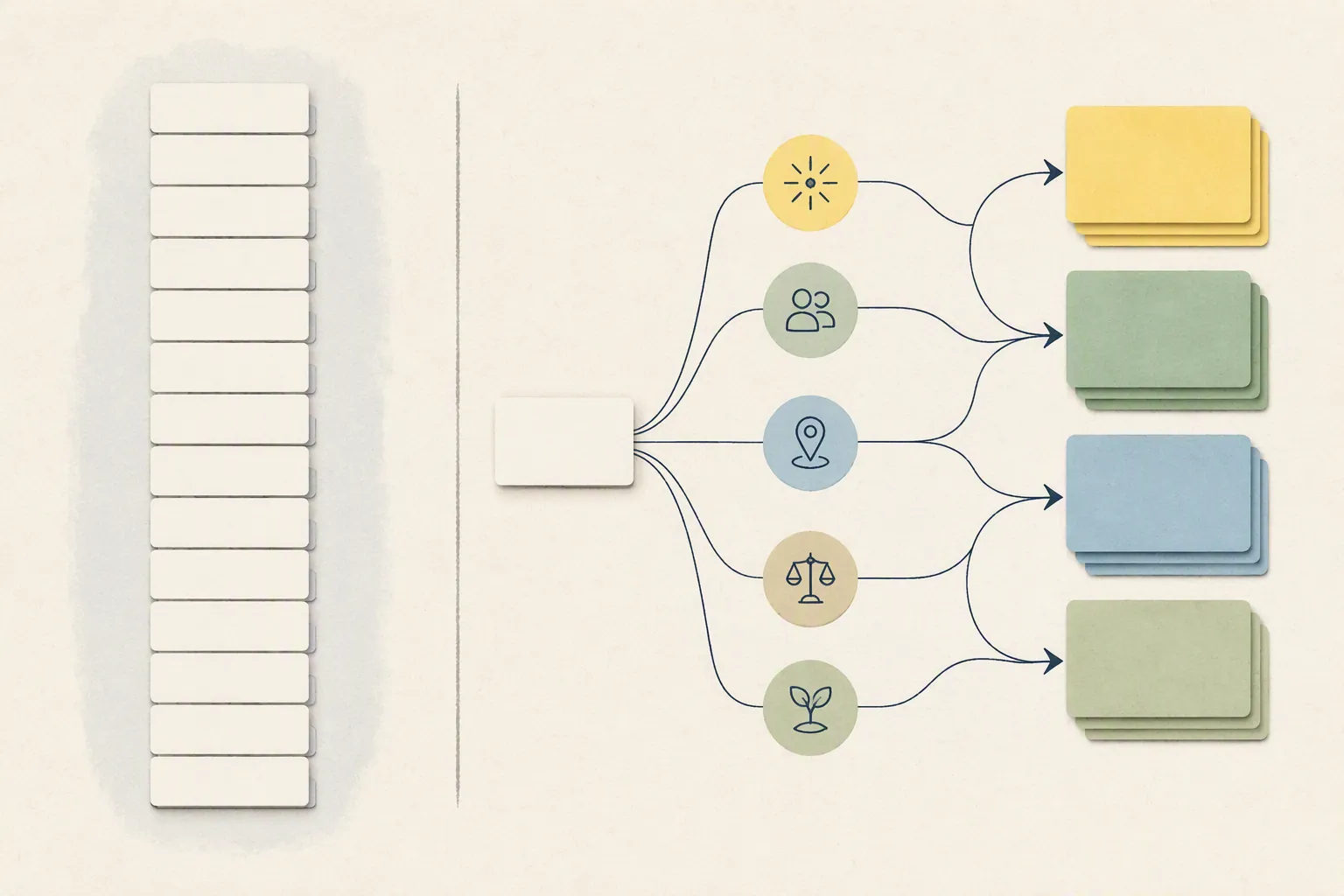
The SAT does not reward vocabulary the way word lists train it
On the digital SAT, vocabulary lives mainly inside Craft and Structure. Princeton Review estimates that this domain accounts for about 13–15 Reading and Writing questions, or roughly 28% of the section, and notes that up to about eight questions can be direct Words in Context items [1]. Those numbers are large enough to matter, but they also clarify the assignment. The exam is not asking students to parade through rare words from a prep book. It is asking whether a word or phrase fits the logic, tone, and meaning of a specific passage.
That distinction matters most for the student in the middle range: strong enough to recognize many answer choices, not yet precise enough to separate a near-synonym from the word the sentence actually needs. A student may know that “temper” can involve mood, moderation, or metal treatment. The SAT version of the problem is deciding which sense survives the passage around it.
PrepMaven’s Words in Context strategy captures the same movement from recall to fit: predict the meaning from the sentence first, then match that prediction to the answer choices [2]. That advice is useful because it prevents a familiar word from bullying the reader into a familiar definition. The passage gets the first vote.
For a broader map of where these questions sit inside Reading and Writing, see the site’s SAT Reading and Writing sample question breakdown. The important point here is simpler: SAT vocabulary practice has to train contextual judgment, not just recognition.
The kind of vocabulary that matters is depth, not just breadth
Vocabulary still matters for reading. The careful version of that claim is that useful vocabulary knowledge is not merely the number of words a student can define once. Vocabulary.com, summarizing Anderson and Freebody’s 1981 work secondhand, says general vocabulary knowledge was found to be the single best predictor of reading comprehension and emphasizes that depth of word knowledge mediates that relationship [3]. Since this article is relying on Vocabulary.com’s relay of the study rather than direct examination of the original paper, the conclusion should stay modest: the support points toward depth of word knowledge as important, not toward a specific SAT-score effect from any one game or routine.
Depth means knowing what a word can do in different settings. It includes connotation, register, category, contrast, idiom, and the company a word usually keeps. A student who knows only one tidy definition may still stumble when the answer choices are all plausible. A student with deeper knowledge has more ways to test the fit.
That is why flashcards can feel productive while leaving the actual SAT weakness untouched. They are excellent for first exposure and weak for relational judgment unless the student deliberately adds sentences, contrasts, and usage tests. For the fuller comparison, see the SAT vocabulary flashcards comparison. The short version is that “I know this word” is not the same as “I know which role this word is playing here.”
Where Connections actually overlaps with Words in Context
NYT Connections gives players a grid of words and asks them to sort those words into hidden groups. The New York Times has described the editing of the game as a category-building process that depends partly on misdirection: words may appear to belong together for one reason while the correct group is governed by another [4]. That design choice helps explain why the game is more interesting than a vocabulary quiz.
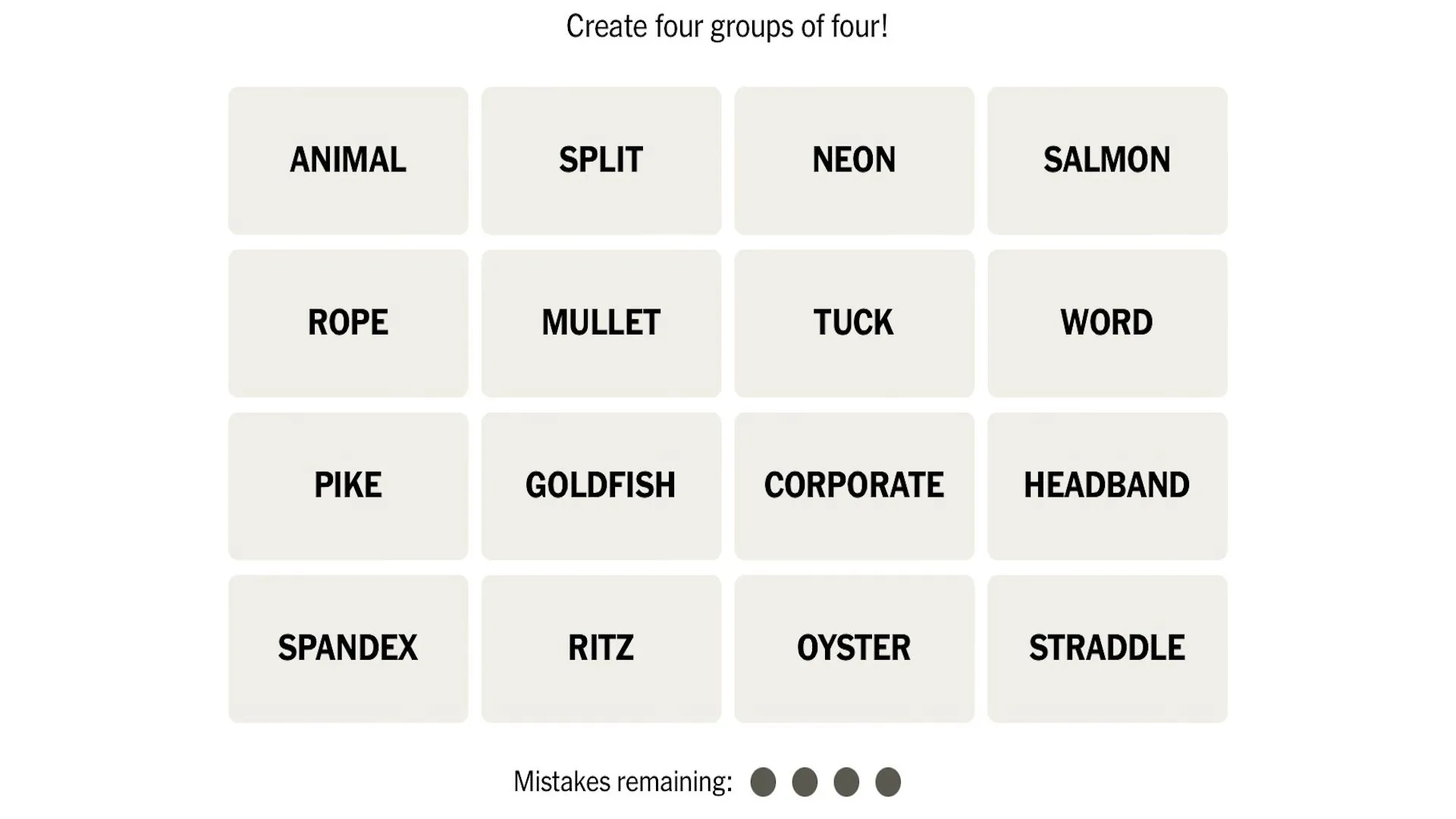
The overlap is not that both activities contain words. Plenty of weak study methods contain words. The overlap is the mental operation.
| Task | What the student has to do | Why it matters for SAT vocabulary |
|---|---|---|
| Words in Context | Use the surrounding passage to decide which meaning or phrase best fits. | The correct answer is usually the word whose function matches the sentence, not merely the word the student recognizes. |
| NYT Connections | Use neighboring words to decide which category governs a word right now. | A word may have several live possibilities, and the player must reject attractive near-fits. |
| Shared operation | Hold multiple meanings in mind, test them against nearby language, and resolve the best relationship. | This trains categorical word knowledge: meaning as relation, not meaning as an isolated definition. |
Consider a hypothetical example, not from a real SAT item or a real Connections board. Suppose a student sees the word “charge.” In one setting, it might mean a fee. In another, an accusation. In another, a command or responsibility. On the SAT, the sentence decides which sense is active. In Connections, the surrounding tiles do the same kind of narrowing: “fee,” “cost,” and “rate” pull one way; “accuse,” “claim,” and “allege” pull another. The student’s job is to stop treating the word as a dictionary entry and start treating it as a node in a relationship.
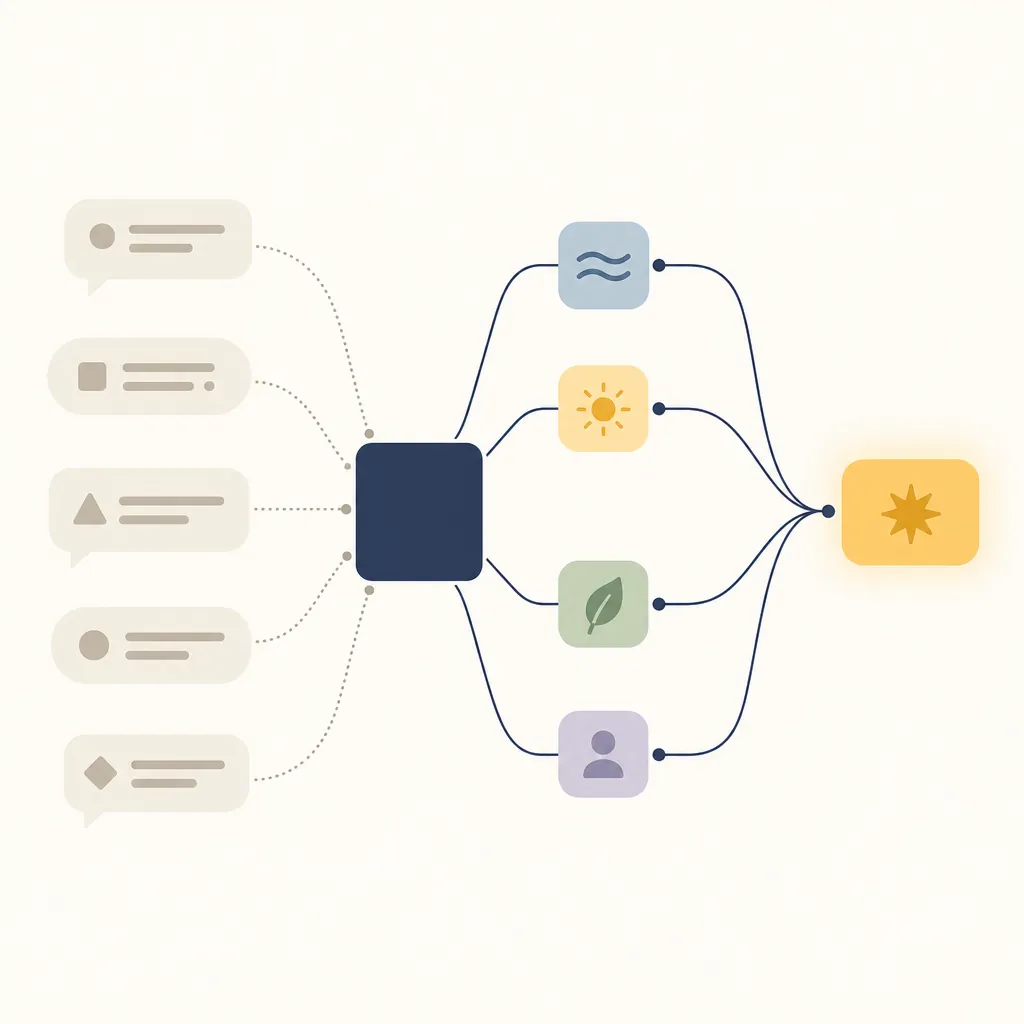
This is also where Connections can beat passive word-list review. A list often tells the student what a word means before the student has had to make a decision. Connections withholds the category. The player must generate possible relationships, test them, abandon some, and keep searching when a set feels almost right. That “almost” is not a nuisance; it is the useful part.
The same thing happens in a well-written Words in Context item. Two answer choices may both be dictionary-neighbor synonyms. One carries the wrong tone. One fits the general topic but not the sentence’s logic. One is attractive because the student has memorized it recently. The correct answer is the word that resolves the local context cleanly. Connections is not a passage-based reading test, but it does repeatedly force that act of semantic resolution.
The difficulty data points in the right direction, with caveats
The available public data on Connections should be handled carefully. WordsRated reports community-sourced statistics based on roughly 60,000 Reddit posts, not official New York Times internal data. In that dataset, 57% of reported solves had zero mistakes, the average fail rate was 9.1%, and the group types were often meaning-based: 43.5% were categorized as definition/synonym groups and 38.2% as idiom/usage groups [5].
Those figures do not prove that playing Connections improves SAT performance. They do suggest that a large share of the game’s work is semantic rather than merely trivia-based. Definition, synonym, idiom, and usage categories are exactly the areas where a student’s word knowledge becomes deeper than a memorized gloss.
TODAY’s coverage of the hardest NYT word-game puzzles of 2024 gives a useful pressure test rather than a controlled dataset. It reported that Connections Puzzle #375, from June 20, 2024, had about a 47% fail rate [6]. That single puzzle should not be treated as typical, but it illustrates how quickly the game can punish shallow grouping. When too many words seem to connect, the player has to identify the relationship that is precise enough to hold four tiles and exclude the decoys.
The purple category deserves special caution. WordsRated’s community-sourced analysis attributes about 47% of hardest-category solves to purple/wordplay material [5]. For a student who already enjoys semantic traps, that can be excellent training in secondary meanings, sound, idiom, and flexible association. For a lower-scoring student, it can also become the wrong kind of struggle: clever, irritating, and only loosely connected to what the SAT will ask next Saturday morning.
That is why the sensible SAT entry point is not “master the purple group.” It is yellow and green first: the clearer categories where definition, usage, and common relationships are visible enough to study. Purple can be a stretch task. It should not be the standard by which a 500–700 Reading and Writing student decides whether vocabulary practice is working.
What a useful Connections habit should look like
A defensible routine does not need to turn Connections into homework theater. Around three puzzles per week is enough to make the habit deliberate without letting it crowd out official practice. The valuable part is the short reflection afterward, not the streak.
- Write down one word that had more than one possible meaning.
- Name the wrong category you almost chose.
- Explain the clue that made the correct category stronger.
- If the miss was idiom or usage, write a sentence using the phrase correctly.
That reflection log is what converts the game from entertainment into practice. Without it, a student can solve, fail, shrug, and learn very little. With it, the student is rehearsing the same question the SAT asks: which meaning is licensed by the surrounding language?
If you want the practical version of this idea, use the companion guide on building custom Connections-style grids from SAT vocabulary. If you want to push the context-clue side specifically, the related piece on using Connections hints as vocabulary practice is the better next stop. The Sports Edition SAT/ACT companion is more relevant if sports vocabulary and category transfer are part of the student’s routine.
The boundary: supplement, not score-raiser
The honest claim is mechanism-based. NYT Connections aligns with part of the SAT vocabulary task because both require categorical, contextual word judgment. That is different from a causal claim. The research materials here do not include a controlled study showing that Connections players gain SAT points because they play Connections.
So it should sit beside official work, not replace it. Students still need Bluebook practice, official-style Reading and Writing review, and a plan that diagnoses which question types are actually costing points. For that boundary, use Khan Academy and Bluebook SAT practice, the broader SAT exam prep guide, or the score-gap method before adding another “fun” habit to the week.
NYT Connections can legitimately count as SAT vocabulary practice when the student uses it to train categorical word knowledge: multiple meanings held at once, near-fits rejected, and the strongest relationship chosen. Its value is in that task alignment. It is not proof of a score increase, not a substitute for Bluebook, and not a complete vocabulary plan.
References
- SAT Vocabulary: SAT Words Still Matter, Princeton Review
- SAT Vocabulary Strategy: Predict and Match, PrepMaven
- Don't Believe the Hype: Vocabulary Still Matters on the SAT, Vocabulary.com
- How We Edit Connections, The New York Times, June 26, 2023
- NYT Connections Statistics, WordsRated
- The New York Times reveals top Wordle and Connections puzzles of 2024, TODAY
Related exhibits & inventory
Verified outcomes
- not-score-proven → not-score-proven
When to Do HIIT for Better Memory and Exam Focus
- No baseline score reported → No verified final scoreLimited
Can NYT Strands Daily Actually Build Vocabulary?
- pre-final grades → 0.65 SD higher
A Sleep-First Routine to Stop Falling Asleep While Studying
- Not a score log → Not a score logModerate
Does Air Quality Affect Study Focus? Yes — by How Much?
Planners
Tool verdicts
A lesson substitute only for motivated adult beginners with MIDI keyboards focused on songs; otherwise a supplement.
Monthly $19.99; 6-month $83.94; annual ~$119.88-$120; checked 2026-08-27EvidenceModeratePixel 11 Pro is the cheaper study-app buy for flashcard-heavy students; iPhone 17 Pro only for notes-first Apple users.
$1,099/256GB each; AnkiMobile $24.99 iOS vs AnkiDroid free; checked 2026-08-26EvidenceModerateGalaxy S26 Ultra offers the more complete out-of-box exam-prep workflow; Pixel 11 Pro suits students who prefer assembling their own study stack.
Pricing not included in this workflow comparison (2026-08-26)EvidenceModerate
Questions about this plan
Ask a question about a specific section, timeline, or citation in this plan — or flag something that needs correcting.
Comments
Join the discussion with an anonymous comment.