
SAT/ACT Planner
Summer Screen Time Isn't the Enemy of SAT Study Time
Last reviewed: August 27, 2026
Evidence note: The available evidence supports protecting consistent study time and sleep. It does not establish moderate gaming or smartphone use as a direct cause of summer learning loss, and it does not prove that the household plan below will produce a particular SAT or ACT score increase.
For a teen taking the SAT or ACT in the fall, the central summer screen-time decision is narrower than it first appears. Parents do not need to eliminate gaming, social media, or streaming. They need to keep those activities from displacing the preparation appointment and bedtime boundary on which the plan depends.
The pressure behind that decision is real. SAT participation among the Class of 2025 surpassed two million test-takers, the first time it had exceeded that level since 2020.[1] That scale can make summer preparation feel urgent, but it does not turn every recreational hour into lost learning. A phone can be locked away all afternoon while a student still has no assigned study time, no task to start, and no consistent stopping point at night.

What the evidence does—and does not—blame
The supplied research does not justify saying that gaming or smartphone use itself causes the summer slide. It supports a more limited concern: learning is vulnerable when summer lacks structure, students spend too little consistent time on academic work, or late-night routines crowd out sleep.
A Brookings review of summer learning research found that effective summer programs depend in part on consistent attendance and substantial time on task.[2] That finding comes from organized programs, so it should not be stretched into a promise that a home study block will raise an exam score. It does, however, clarify why an optional, frequently moved session is a weak foundation for preparation: when attendance and time on task disappear, the learning opportunity disappears with them.
This distinction matters in a household argument. Counting total screen hours may reveal that a teen spends a great deal of time online, but the total alone does not show whether SAT or ACT practice was completed or whether bedtime held. Those are the outcomes the family rule should protect.
The complete summer workflow
Set the system at the beginning of summer rather than renegotiating it after every long gaming session. The full plan can remain compact:
| Household action | What it protects | Practical standard |
|---|---|---|
| Review a family media plan | Shared expectations | Agree on study time, screen-free periods, bedtime, exceptions, and where devices stay |
| Fix a daily SAT or ACT block | Consistent preparation | Use a recurring time and a defined task; move it only for an agreed exception |
| Make meals and study periods screen-free | Clear boundaries | Keep unrelated devices away from the table and study surface |
| Protect the hour before bed | A reliable stopping point | End gaming, scrolling, and streaming; charge devices outside the bedroom if needed |
| Disable autoplay and unnecessary notifications | Fewer unplanned extensions | Change the settings once instead of relying on repeated reminders |
| Use parental controls where needed | Enforcement of agreed limits | Apply the least restrictive control that makes the plan reliable |
The controls are supporting tools, not the plan itself. Blocking an app does not decide when preparation begins, what the student will do, or how missed work will be recovered. Those questions belong in the schedule.
Make the study block a real appointment
“Study sometime today” sounds flexible and usually leaves the hardest decision unresolved. The teen must repeatedly choose to stop a rewarding activity, decide which exam task matters, gather materials, and estimate whether enough time remains. A fixed block removes most of that negotiation before the day begins.
Choose the block by working backward from the household’s actual summer rhythm. A student who sleeps later may be more consistent at 11 a.m. than at 8 a.m. A teen with a job, sports practice, or family responsibilities may need an early-evening appointment. The best slot is not the one that appears most disciplined on paper; it is the one the student can attend repeatedly without a parent restarting the plan every few days.
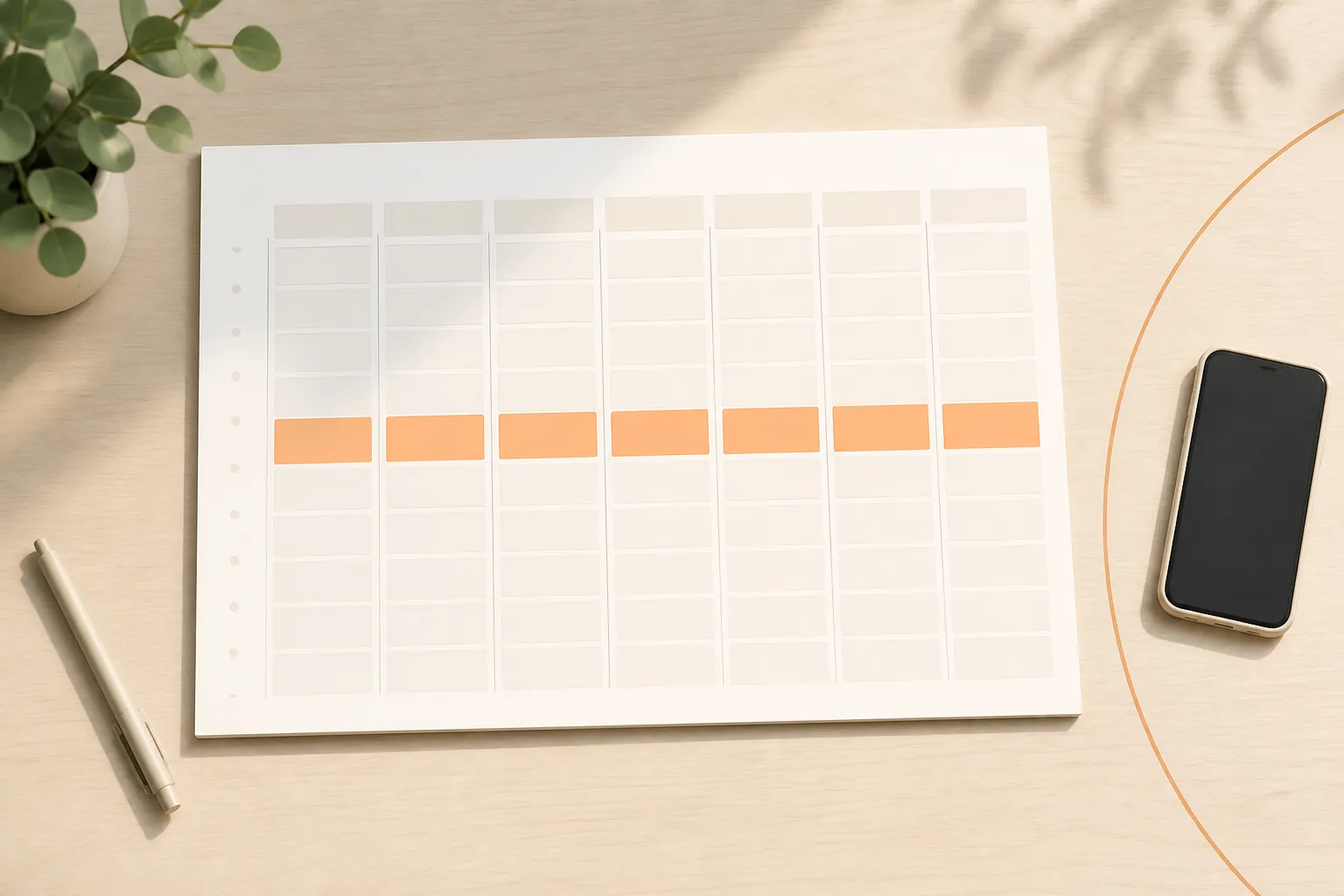
A workable appointment has four visible parts:
- A start time: “10:30 a.m.” is usable; “before lunch” invites interpretation.
- A finish condition: set a reasonable end time or define a bounded assignment rather than demanding open-ended studying.
- A prepared task: identify the practice set, lesson, review activity, or timed section before the block begins.
- A device rule: unrelated phones, games, and messages stay outside the workspace; a device required for digital practice remains available for that purpose.
The task needs particular attention. “SAT prep” or “ACT prep” is a category, not an instruction. A student is more likely to start when the calendar names the next action—for example, reviewing errors from the previous practice session or completing an assigned skills set. This also lets a parent check whether preparation happened without hovering over every question.
Protect the block from both screens and adults
A protected appointment binds the household as well as the student. Parents should not schedule an errand in the middle of it, assign a surprise chore at the start, or move it casually because another part of the day became inconvenient. If the family treats the block as optional, the teen will reasonably do the same.
When a conflict is known in advance, reschedule the appointment to a specific time. When a session is simply missed, avoid turning the next day into a punishment marathon. Record what was not completed, decide whether it must be recovered, and return to the normal schedule. Consistency is easier to rebuild when one missed block does not make the entire week feel lost.
Gaming can follow the completed block if that arrangement works for the family. It does not need to be framed as a moral reward for good behavior. It is simply easier to manage leisure after the day’s protected obligation has a clear endpoint.
Use screen-free boundaries where timing matters
An all-day screen ban creates a large enforcement job without necessarily protecting the moments that matter. Narrow boundaries are easier to understand: no unrelated screens during the study block, no personal scrolling at meals, and no gaming, streaming, or social media during the hour before bed.
During preparation, remove only what competes with the assigned task. A phone can go face-down in another room or into a shared charging area. If the student is using an online practice platform, calculator, instructional video, or digital notes, the necessary device stays. “Screen-free study” should not become a rule that prevents legitimate digital SAT or ACT work.
Meals can serve as dependable reset points because they already have a beginning and an end. They are also easier to enforce fairly when adults put away their own phones. The purpose is not to prove that every notification is harmful; it is to create a few periods in which the household is not continuously interruptible.
Bedtime needs its own rule
Summer bedtime often fails by small extensions: one more match, the next automatically playing episode, or a conversation that keeps producing notifications. Even when the family does not object to the activity itself, allowing it to continue indefinitely can consume the time assigned to sleep.
Set the stopping boundary first, then decide what physical arrangement makes it credible. During the hour before bed, end interactive games, scrolling, and streaming. Devices can charge in a kitchen, hallway, or another shared location if keeping them in the bedroom makes the rule unreliable. A student who uses a phone as an alarm may need a separate alarm clock rather than a nightly exception that swallows the boundary.
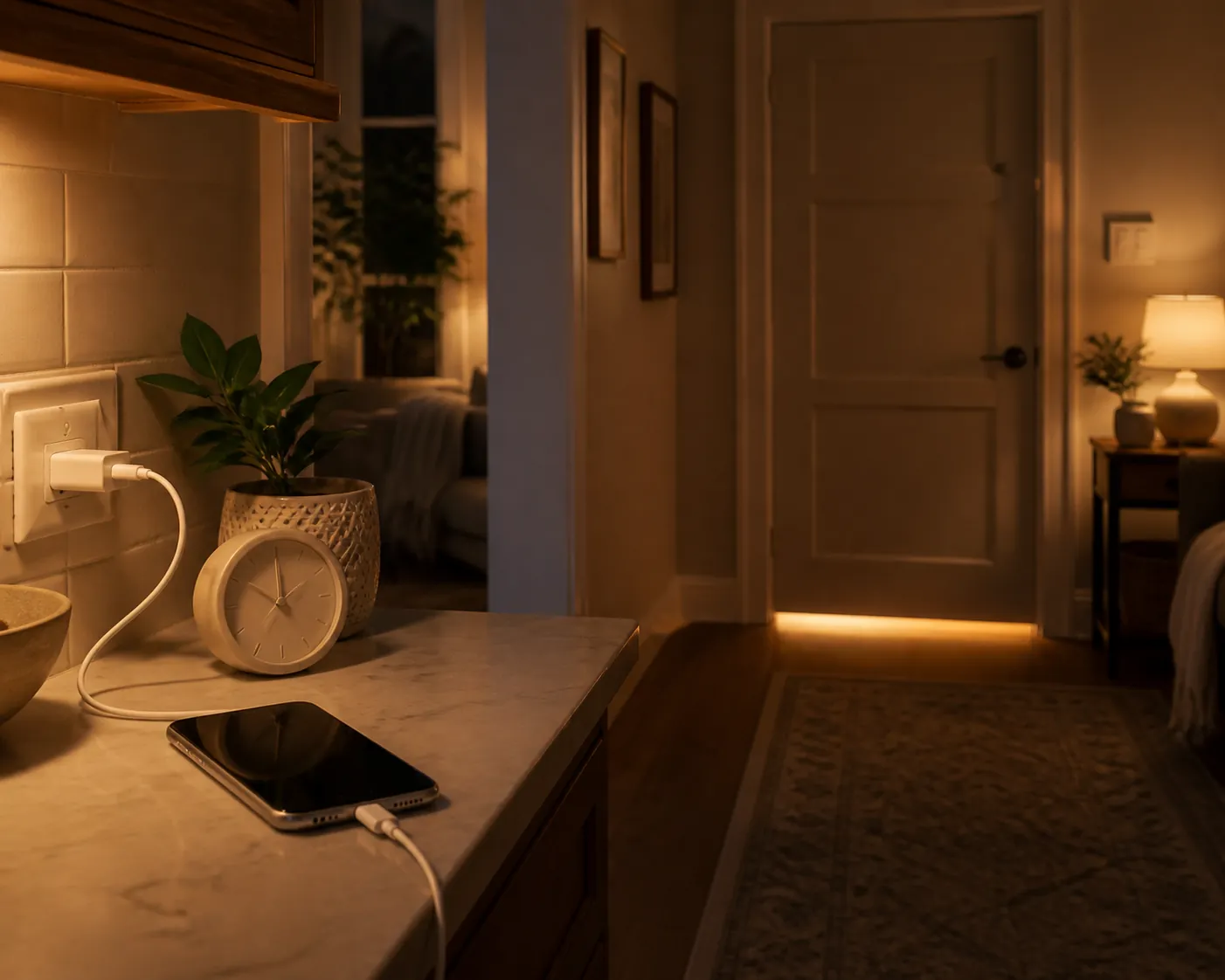
Keep bedtime distinct from the study block. If preparation was missed, routinely pushing it into the protected pre-bed hour trades one part of the plan against another and turns late-night work into the default rescue strategy. Reschedule the academic task deliberately instead.
Let settings handle the repetitive parts
Autoplay and nonessential notifications can be disabled at the start of summer. That one-time adjustment reduces the number of moments in which a student must actively stop or ignore something. There is little value in repeating a verbal warning every day when a setting can remove the prompt.
Parental controls are most useful when they enforce a rule the family has already discussed: pausing selected entertainment during the study appointment, limiting access after the bedtime cutoff, or preventing settings from being changed casually. They are less useful as a substitute for choosing the appointment in the first place.
Start with the lightest control that makes the agreement dependable. A teen who reliably leaves a phone in the kitchen does not need an elaborate blocking system. If the agreed boundary repeatedly fails, add a technical control to that boundary rather than expanding restrictions across the entire day.
Write the agreement before the arguments begin
The family media plan does not need to become a contract full of punishments. One page is enough if it answers the decisions that otherwise recur every afternoon and evening:
- When does the regular SAT or ACT block begin and end?
- What counts as an acceptable reason to move it, and when will the replacement block occur?
- Which screens are required for study, and where do unrelated devices go?
- Which meals and household periods are screen-free?
- When does the pre-bed screen boundary begin, and where do devices charge?
- What happens after a missed block or a broken bedtime rule?
Review the plan after the first several days of actual use and when work, camp, travel, or sports schedules change. A revision should produce another specific schedule, not return the family to “study when you can.” The teenager should have a voice in choosing the workable time, while the adults remain firm that some protected appointment and bedtime boundary must exist.
Once the study window is dependable and the bedtime cutoff holds, screens can remain part of summer. The household does not need to prove that leisure is harmless in every circumstance; it needs to verify that preparation is occurring and that late-night use is not erasing the sleep boundary. For the exam-specific work inside that protected window, continue with the SAT hub or ACT hub; household structure makes preparation possible, but it does not by itself guarantee a test result.
References
- SAT Participation for Class of 2025 Surpasses 2 Million Test Takers, First Time Since 2020 — College Board Newsroom
- Summer learning loss: What is it, and what can we do about it? — Brookings Institution
Fill in this timeline
This is a skeleton schedule, not a performance claim — for section-by-section strategy to fill in each slot, read the exam hub. For evidence that a similar timeline worked, compare against real outcome logs.