
Does Air Quality Affect Study Focus? Yes — by How Much?
The short answer: yes, but keep the size honest
Does air quality affect study focus? Yes. The room you study in can measurably change attention, response speed, and some kinds of decision-making. The part that gets exaggerated is the size of the effect. The evidence supports air quality as a real secondary lever, not as a substitute for sleep, full-length practice, error review, or actual section strategy.
The useful numbers are modest. In one classroom study, each additional 1 liter per second per person of ventilation was associated with about 11 more math points, described as roughly a 0.5% increase; a Lawrence Berkeley National Laboratory review found mostly positive ventilation-performance findings, with improvements ranging from a few percent to more than 15% across studies, depending on design and setting.[1][2] In a 2021 Harvard worker study across 302 people in six countries, response times slowed by 1.4% to 1.8% per 500 ppm increase in CO2 and by 0.8% to 0.9% per 10 µg/m³ increase in PM2.5.[3] A nationwide school-district panel found that an interquartile-range increase in PM2.5 was associated with 0.007 standard deviations lower math achievement and 0.004 standard deviations lower English language arts achievement.[4]

Those findings are not fake. They are also not a license to turn a CO2 reading, a PM2.5 level, or a purifier setting into exact SAT points, MCAT scaled-score gains, GRE verbal points, or ASVAB percentile movement. The evidence is good enough to justify fixing bad study air when the fix is cheap. It is not good enough to let a product page promise a score jump.
| Claim | Evidence label | What the evidence supports | What it does not support |
|---|---|---|---|
| Stale, high-CO2 rooms can slow response speed and impair some cognitive tasks. | High | Controlled and field evidence links higher CO2 with slower responses and weaker decision-task performance.[3][5][6] | No fixed conversion from ppm to standardized-test points. |
| Better ventilation is associated with better school performance. | Moderate | Classroom studies and reviews generally point in the same direction, often with small-to-moderate percentage changes.[1][2] | Not proof that opening a window before one practice test will change your score. |
| PM2.5 exposure can hurt attention and is associated with lower test performance. | Moderate to High, depending on the claim | Population studies show small score associations; acute exposure studies show attention-related effects.[4][7][8] | No evidence that a given PM2.5 drop produces a precise ACT, SAT, MCAT, GRE, or ASVAB gain. |
| Air purifiers improve exam scores. | Limited | One college classroom trial found higher exam scores under purified air; one adult-over-40 HEPA trial suggests cognitive gains in a different population.[10][11] | Not enough to make purifier purchase the main exam-prep intervention. |
CO2 and ventilation: the clearest stale-room signal
High evidence: when people sit in enclosed rooms, CO2 rises as a marker of poor ventilation, and cognition can slip. The most exam-relevant finding is not a dramatic intelligence collapse. It is slower response time. In the 2021 Global COGfx study, response times were 1.4% to 1.8% slower for each 500 ppm CO2 increase.[3] In a timed test, 1% or 2% is not magic. It can still matter when you are working near the edge of a section clock.
Controlled exposure studies make the stale-room concern harder to dismiss. Berkeley Lab reported significant impairment on six of nine decision-making scales at 1,000 ppm CO2 and seven of nine at 2,500 ppm, with initiative and strategic thinking rated dysfunctional at the higher level.[5] Those tasks are not the GRE or MCAT. They do, however, involve exactly the kind of executive control students notice fading late in a closed-room study block: choosing, updating, inhibiting, and staying mentally organized.
The larger Harvard COGfx numbers need the most care. Harvard’s COGfx Study 1 page reports cognitive scores 61% higher on a Green day and 101% higher on a Green+ day than on a Conventional day, along with lower scores at roughly 945 ppm and 1,400 ppm CO2.[6] Those are attention-grabbing figures, but they come from a specific experimental office-task setup, not a standardized-test score scale. They are useful for showing that indoor environmental conditions can move cognitive-task performance. They are not a basis for saying a purifier, window, or ventilation rate buys a certain number of test points.
Moderate evidence: ventilation is probably helpful for students, but the classroom-score evidence is less clean than a controlled lab exposure. The PLOS ONE classroom study found a roughly 0.5% math-score increase per additional 1 L/s per person of ventilation, and the same study also found 12 to 13 more points per 1°C cooler within the 20°C to 25°C range.[1] That temperature finding is a useful reminder: if a room feels awful, it may not be one variable. Heat, stale air, and discomfort often arrive together.
PM2.5: small score associations, sharper short-term attention concerns
Moderate evidence: fine particulate pollution is associated with lower academic performance at population scale, but the average effects are small. The nationwide district panel is the cleanest reality check here: more than 256 million tests across 10,921 districts, with an interquartile-range increase in PM2.5 linked to 0.007 standard deviations lower math achievement and 0.004 standard deviations lower English language arts achievement.[4] That is not nothing. It is also nowhere near the kind of effect a student should treat as the main explanation for a weak practice-test trend.
A separate Yale and North Carolina study of 2.8 million students from 2001 to 2018 reported test-score harms even below the current 12 µg/m³ annual PM2.5 standard.[7] That matters because students often assume air quality only becomes relevant during wildfire smoke, visible haze, or obvious pollution days. The evidence is broader than that. Still, population score studies do not tell one MCAT candidate what will happen this Saturday if the room has a certain PM2.5 reading.
High evidence for the narrow attention claim: short-term particulate exposure can impair attention-related performance. A 2025 Birmingham study with 26 participants found that one hour of high PM2.5 exposure impaired selective attention and emotion recognition, while working memory was spared.[8] The sample is small, so the exact size should not be overread. The pattern is still exam-relevant because selective attention is what keeps a student from rereading the same passage, missing a negation, or drifting during a dense science paragraph.
The distinction matters: PM2.5 evidence is strongest when the claim is “pollution can affect attention and is associated with lower achievement.” It is weaker when the claim becomes “this device will raise your score.” One is an evidence-based caution. The other is a sales argument wearing a lab coat.
The chess study is useful, but only as a warning
The chess evidence is tempting because chess under a clock looks more like testing than many office-cognition tasks do. An IZA study found that a 10 µg/m³ increase in indoor PM2.5 raised the odds of an erroneous chess move by 26.3%, with stronger effects under time pressure.[9] That is the kind of result a test-taker notices, because timed exams punish small lapses.
But it has to stay in its lane. A chess move is not an ACT math question, a GRE text-completion item, or an MCAT passage inference. The 26.3% figure is an odds result in a specific chess setting. It should not be translated into “you will miss 26% more questions” or any other per-question exam prediction. The practical lesson is narrower: when a room is polluted and the task is timed, small attention failures may become more costly.
Air purifiers: limited evidence, not a score plan
Limited evidence: purifier trials are interesting, but they are not strong enough to make filtration the main lever. A 2024 randomized purifier trial in college classrooms with more than 160 students reported higher total exam scores under purified air.[10] That is worth noting. It is still one study in a specific setting, and it does not establish a general purifier-to-score rule for SAT, ACT, GRE, MCAT, or ASVAB prep.
The 2026 HEPA purifier result needs even more fencing. The reported cognitive gains were in adults over 40, so they should not be generalized to typical high school, college, or early-career test-takers.[11] If a student is over 40 and studying in a polluted room, that study may be personally interesting. It still does not make filtration the first lever to pull before sleep and practice quality.
A purifier can be reasonable when outdoor air is smoky, indoor PM2.5 sources are hard to remove, or the only available study room is genuinely polluted. It becomes unreasonable when it absorbs the money, attention, and urgency that should have gone into timed sections, missed-question review, sleep protection, and a realistic study calendar.
How much should a test-taker care?
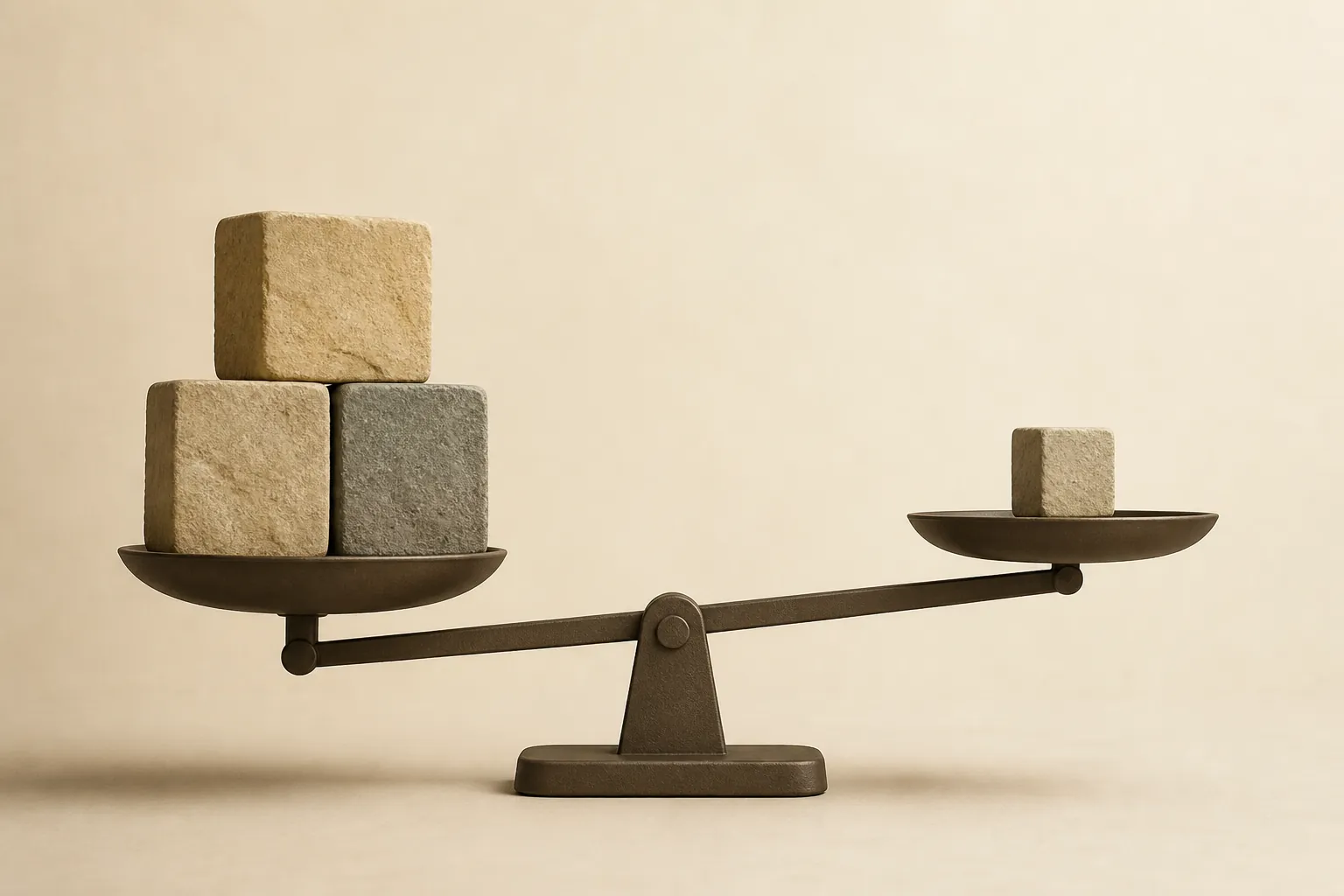
Care enough to fix obvious problems. Do not care so much that air quality becomes the explanation for every bad practice set. A stuffy room can make a two-hour study block feel heavier. Smoke, incense, frying particles, wildfire haze, or a closed bedroom packed with people can add friction. But the effect sizes in the strongest evidence are usually in the single-digit percentage range for realistic exposure shifts, not the kind of jump that replaces a month of targeted practice.
- If the room gets stale during long blocks, open a window or door when outdoor air is acceptable, use a fan to move air, or switch rooms between sections.
- If outdoor air is smoky or polluted, do not “ventilate” by pulling that air straight into your study space. Reduce indoor sources first, then consider filtration if the room is where you must work.
- If you repeatedly fade after 90 to 120 minutes in the same closed room, test a simple change: ventilate before the block, leave the door open, or move to a better room for full-length practice.
- If you use a CO2 monitor, treat it as a troubleshooting tool, not a score predictor. A high reading can tell you the room needs air exchange; it cannot tell you your SAT or MCAT outcome.
- If money is tight, spend first on the basics that directly determine preparation: official materials, practice tests, reliable scheduling, and enough sleep.
Air quality sits next to other environmental and body-state variables. Heat is another one; a room can sabotage both sleep and performance before a student realizes the issue is physical, not motivational. If that is your problem, the adjacent guide on hot rooms, sleep, and exam performance is the better next read. If the issue is timing a test date around body disruption rather than room conditions, see whether to schedule your exam around daylight saving time.
A sensible setup for timed practice
For exam prep, the goal is not perfect air. It is removing avoidable drag before doing the work that actually changes scores. A reasonable setup is boring and cheap: study in a room that is not smoky, not hot, not visibly dusty, and not sealed for hours with stale air building up. Then run the timed section anyway.

- Before a long block, clear obvious indoor pollution sources: smoke, candles, incense, aerosol sprays, and heavy cooking particles.
- Check the room feel after the first hour. If you are sleepy, headachy, or foggy in a closed space, ventilate or move before blaming your character.
- Practice under conditions close to test day. If your actual test center will be ordinary, do not train only in a perfect room that you cannot reproduce.
- Review the missed questions. Air can add friction, but it will not teach algebra, timing decisions, passage mapping, or careless-error control.
For students building a broader prep system, this is where air quality belongs: inside the study environment, below the main academic levers. A score-gap method for SAT prep, an ASVAB prep plan, or a system for building willpower for studying will matter more than chasing perfect indoor readings.
The exam-prep verdict is simple: if your study room is stuffy, smoky, polluted, or poorly ventilated, improve it. If you are choosing between buying gear and doing more high-quality practice or protecting sleep, choose the practice and sleep first.
References
- Associations of Classroom Ventilation Rate and Temperature with Students’ Test Scores — PLOS ONE, 2015
- Ventilation Rates and School Performance — Lawrence Berkeley National Laboratory, 2017
- Impacts of Indoor Air Quality on Cognitive Function — Harvard Healthy Buildings Program, 2021
- The Effect of Air Pollution on Student Achievement — PMC, 2021
- Elevated Indoor Carbon Dioxide Impairs Decision-Making Performance — Berkeley Lab, October 17, 2012
- COGfx Study 1 — Harvard Healthy Buildings Program
- Yale study: Polluted air can negatively impact children’s test scores — Yale School of Public Health
- Air Pollution Impairs Focus and Emotional Regulation, Study Finds — Yale Environment 360, 2025
- Indoor Air Quality and Cognitive Performance — IZA
- Air quality improvement enhances cognitive performance in a college classroom: A randomized crossover trial — PubMed, 2024
- HEPA air purifiers may boost brain power in adults over 40 – new research — The Conversation, 2026
Related case links
No matching exam hub found
Browse the exam hubs directory to find the study plan for this exam.
Did a similar plan work for you?
Share whether a comparable timeline and starting point produced a similar result — this is verification discussion, not general commentary.
Comments
Join the discussion with an anonymous comment.