
MCAT Exam Hub
Parsing Complex MCAT Passages with the Lake Erie Whitefish Case
Learn how to track multiple funding sources, causal chains, and stakeholder claims in dense environmental science passages — using the Lake Erie whitefish restoration case as a real-world model for MCAT CARS and Science Reasoning success.
- gre
- mcat
- asvab
- sat
- act
- digital-adaptive
- official-material
- section-strategy
- test-date-timeline
A student sees a passage about Lake Erie whitefish restoration funding and relaxes too early. Fish decline, restoration money, maybe a familiar conservation arc. Then the passage starts naming Michigan’s state budget, the Great Lakes Restoration Initiative, the Great Lakes Fishery Trust, NOAA, tribal representatives, state fisheries officials, invasive mussels, spawning habitat, experimental egg stocking, and a commercial harvest record that stretches back more than a century.
That is when the passage stops being “about fish.” For MCAT purposes, it becomes a sorting problem. The Lake Erie whitefish restoration funding case study is useful because the facts refuse to stay in one neat lane. A dollar amount does not automatically prove a biological outcome. A cultural claim does not answer a mechanism question. A long-term decline does not show which current intervention will work. If you can keep those columns separate under time pressure, you are practicing the same move that hard CARS and science-reasoning passages reward.
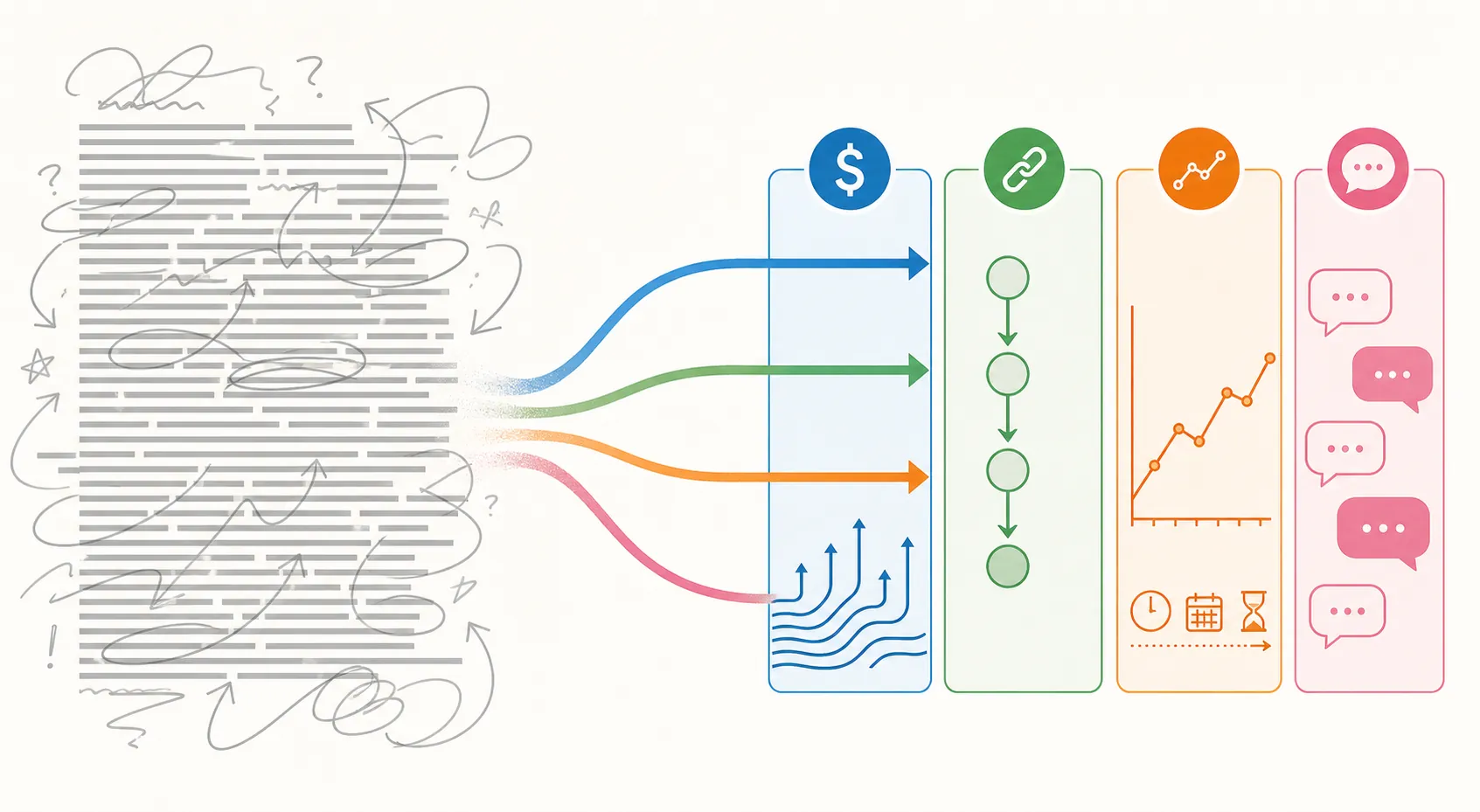
First, stop treating the money as one pot
The easiest wrong answer in a passage like this is the one that blends every funding source into “restoration support.” That sounds reasonable until a question asks which agency funded which action, or which claim is supported by which appropriation. In this case, at least four funding streams matter, and they are not interchangeable.
| Funding stream | Amount | What to mark in the margin |
|---|---|---|
| Michigan one-time state appropriation | $350,000 in July 2026 | A dedicated state budget line for whitefish restoration; do not treat it as proof that a biological intervention has already succeeded. |
| GLRI coregonine restoration projects | More than $6.8 million since 2017 | A broader Great Lakes restoration funding context for coregonines, not the same thing as Michigan’s 2026 state appropriation. |
| Great Lakes Fishery Trust habitat partnership | Up to $1.3 million in 2026 | A separate habitat partnership; track the institution and purpose before using it in an inference. |
| NOAA Great Lakes Fish Habitat Restoration Partnership | Up to $12 million available | A federal grant opportunity for habitat restoration; availability is not the same as an awarded whitefish outcome. |
Michigan Public reported that Michigan fisheries received a one-time $350,000 state appropriation for whitefish restoration in July 2026, describing it as the first dedicated whitefish line in the state budget; the same article also described a 2026 Great Lakes Fishery Trust habitat partnership of up to $1.3 million and quoted state fisheries chief Jim Dexter calling the $350,000 “a drop in the bucket” [1]. Coregonine Restoration Projects separately lists more than $6.8 million in Great Lakes Restoration Initiative funding since 2017 for coregonine restoration work [2]. NOAA Fisheries separately lists up to $12 million available through the NOAA Great Lakes Fish Habitat Restoration Partnership grants [3].
On an exam, those three sentences would be bait. Not because the numbers are obscure, but because they invite compression. A student under time pressure may write “millions for whitefish” in the margin and move on. That note is too blurry. The safer margin note is split by source: state appropriation, GLRI-funded coregonine work, GLFT habitat partnership, NOAA habitat grants.
The difference matters because MCAT-style answer choices often substitute one institutional fact for another. If a question asks what Michigan’s 2026 appropriation establishes, it establishes a budget action and a political priority. It does not establish that GLRI funds were newly created in 2026. It does not establish that NOAA awarded $12 million to Lake Erie whitefish. It does not establish that larval survival increased. The exact trap is moving from “money exists” to “effect has occurred.”
Build the passage map before you interpret it
For a dense passage, I would not start by deciding whether the restoration effort is hopeful, insufficient, overdue, or scientifically elegant. I would start by building a rough grid. You do not need a beautiful diagram. You need enough separation that one answer choice cannot smuggle a funding fact into a causal conclusion.
- Funding source: Who controls or announces the money?
- Purpose: What is the money supposed to support?
- Mechanism: What biological or ecological chain is being proposed?
- Evidence status: Is this long-term trend data, a field observation, an experiment, a projection, or a stakeholder claim?
- Speaker: Who is making the claim, and how much certainty does the passage give it?
That grid is not busywork. It changes how you read. The phrase “restoration funding” becomes less tempting as a catchall. You start seeing that the passage contains budget evidence, ecological hypotheses, historical population data, experimental caveats, and cultural claims. Those categories can all be important without answering the same question.

Separate mechanisms from outcomes
The whitefish case gives you more than one causal chain. That is exactly why it is useful. A weaker reader flattens the problem into “whitefish declined because the habitat got worse.” A stronger reader marks which mechanism is being discussed at each moment.
One mechanism involves invasive quagga and zebra mussels. Michigan Public and The Nature Conservancy describe the chain this way: invasive mussels filter out plankton, zooplankton availability drops, and larval whitefish can starve during a vulnerable stage [1][4]. That is a food-web mechanism. It is not the same mechanism as physical habitat loss.
A second mechanism is historical habitat disruption. The Detroit River-Western Lake Erie Basin Indicator Project ties lake whitefish spawning habitat concerns to river changes and documents the historical spawning context in the Detroit River-Western Lake Erie system [5]. The 1907-1916 channel construction history belongs in a different mental column from mussel-driven larval starvation.
A third mechanism is contemporary shoreline armoring. That kind of human alteration can affect habitat quality, but again, it is not the same claim as “mussels removed zooplankton.” If an answer choice says a funding program targets habitat while the passage’s evidence sentence describes larval starvation from plankton depletion, pause. The answer may be borrowing credibility from the wrong mechanism.
The freshwater drum detail is a good test of this discipline. Michigan Public and The Nature Conservancy note that freshwater drum can naturally crush mussels in the western basin, while quagga mussels can live too deep for drum to reach [1][4]. That does not prove drum will solve the whitefish problem. It gives a possible biological interaction, plus a limitation. In exam language, it weakens any answer choice that treats natural predation on mussels as a complete control strategy.
Do not let trend data masquerade as experimental proof
Long time-series data are powerful, but they do not answer every causal question. The Detroit River-Western Lake Erie Basin Indicator Project reports that commercial lake whitefish harvest in the region fell from more than 50 million pounds in the mid-1900s to about 270,000 pounds during 2010-2017 [5]. That is a scale-and-trend fact. It tells you the decline is large. It does not, by itself, isolate one cause or validate one funding approach.
The same source reports larval export from the Detroit River estimated at 29 million to 83 million annually [5]. That is a different kind of number. It is not a harvest figure, and it does not mean 29 million to 83 million adults are joining the population. An item can exploit that mismatch easily: one answer choice may compare larvae and harvested adults as if they are the same unit. They are not.
Then there is the much smaller and more immediate field detail from The Nature Conservancy: researchers caught 32 fish where more than 400 were expected [4]. That number is vivid, and it signals a problem. But it is not the same kind of evidence as a 150-year trend. It is also not proof that any single intervention will reverse the decline. It is a local observation that should make you ask what the expected count was based on, what sampling conditions applied, and whether the passage treats the result as diagnostic or illustrative.
This is where high scorers gain points quietly. They do not ignore the emotional force of a collapse from more than 50 million pounds to about 270,000 pounds. They just refuse to let that number answer a different question. If the question asks which statement is most strongly supported, “whitefish harvest declined sharply over the period described” is safer than “invasive mussels caused the entire decline” unless the passage explicitly supplies that causal bridge.
Treat experiments as evidence with a status label
The Nature Conservancy’s restoration work gives the passage a useful middle ground between despair and proof. In the Jordan River, the organization describes the first successful river-hatched whitefish after more than 100,000 eggs were stocked [4]. That is not nothing. It shows that a restoration technique can produce river-hatched fish under the described conditions.
But “can produce river-hatched fish” is narrower than “will restore Lake Erie whitefish populations.” Those are different answer choices. One is supported by an observed outcome from a specific effort. The other requires population-level recovery, survival, reproduction, scaling, and persistence over time. The passage may hope for those steps, but hope is not an evidence category.
The same caution applies to CO2 smothering mats tested against invasive mussels. The Nature Conservancy presents that work as part of an adaptive restoration effort and notes that results will not be clear for “a few years” [4]. On an MCAT passage, that phrase should almost glow on the page. It means the study is ongoing or incomplete for the relevant endpoint. It does not mean failure. It does not mean success. It means the evidence has not ripened into the stronger conclusion yet.
A fair answer choice might say researchers are testing methods intended to improve whitefish restoration outcomes. An overreaching answer choice might say the methods have restored the fishery. The first tracks the evidence status. The second converts an experiment into a completed result.
Mark stakeholder claims by speaker, not by emotional weight
The case also includes claims that matter because of who says them. Keway Biber, identified in Michigan Public’s coverage as a tribal representative, frames whitefish as a sacred covenant species [1]. That statement belongs in the passage. It tells you that restoration is not only a biological or commercial issue. It carries cultural and treaty-related meaning for tribal communities.
But a culturally weighty claim still has to stay in its lane on a test. It can support an answer about why stakeholders view whitefish restoration as morally or culturally significant. It cannot, by itself, prove the effectiveness of CO2 mats, egg stocking, or a particular funding level. Respecting the claim means labeling it accurately, not using it as a universal proof token.
Jim Dexter’s comments need the same treatment. Michigan Public quotes the state DNR fisheries chief calling the $350,000 appropriation “a drop in the bucket” and saying a proposed $500 million, 10-year invasive mussel bill is “not likely to pass any time soon” [1]. The first statement is an expert judgment about scale. The second is a political feasibility judgment. Neither is the same as an independently verified estimate of biological need.
The $500 million figure deserves a margin note: stakeholder-cited proposed bill, not independently verified here from legislative sources. That does not make it false. It means you should not build a strong inference on it unless the passage itself authorizes that move. MCAT answer choices love to turn “a stakeholder says a bill would do X” into “the bill will do X” or “lawmakers have funded X.” Those are not equivalent.
There is also a small source-handling lesson in the Michigan Public article itself: it includes a July 21, 2026 correction about a source affiliation [1]. That is not the main story. It is, however, exactly the kind of detail that should keep you from treating every institutional label as background noise. In multi-actor passages, source identity is often part of the reasoning task.
A worked passage grid for this case
If this appeared as a dense MCAT passage, I would reduce it to something like the grid below. The point is not to memorize the case. The point is to stop the passage from blending categories while you read.
| Passage element | What it says | How to use it on questions |
|---|---|---|
| Michigan appropriation | $350,000 one-time state funding in July 2026 | Use for questions about state action, scale, and dedicated budget attention; do not use as proof of restoration success. |
| GLRI coregonine funding | More than $6.8 million since 2017 | Use as broader restoration-funding context; keep separate from the 2026 Michigan line item. |
| GLFT habitat partnership | Up to $1.3 million in 2026 | Use for habitat partnership questions; do not merge with NOAA or GLRI. |
| NOAA habitat grants | Up to $12 million available | Use as a federal grant availability fact; do not assume awarded funds or measured outcomes. |
| Harvest decline | More than 50 million pounds in the mid-1900s to about 270,000 pounds in 2010-2017 | Use as long-term trend evidence; avoid treating it as isolated causal proof. |
| Larval export | 29 million to 83 million larvae annually | Use as reproductive-output context; do not confuse larvae with adult population recovery. |
| 32 fish observation | 32 caught where more than 400 were expected | Use as a local field signal; do not overgeneralize beyond the passage’s stated frame. |
| Mussel mechanism | Mussels reduce plankton and can contribute to larval starvation | Use for food-web mechanism questions; keep separate from habitat construction or shoreline-armoring mechanisms. |
| Jordan River egg stocking | River-hatched fish after stocking more than 100,000 eggs | Use as evidence of a specific experimental outcome; do not inflate into full population recovery. |
| Tribal framing | Whitefish described as a sacred covenant species | Use for stakeholder-value questions; do not use as biological efficacy evidence. |
What the wrong answers would probably do
Once the grid is clear, the likely traps become easier to predict. One wrong answer would merge the four funding sources and claim that “Michigan provided more than $6.8 million” for the 2026 effort. Another would say NOAA’s up-to-$12 million grant availability proves Lake Erie whitefish restoration has already received that amount. Another would treat the $350,000 appropriation as if it funded invasive mussel control at the scale of the proposed $500 million bill. Each answer contains a familiar noun from the passage, which is why it feels plausible.
Causal traps are just as easy to imagine. A question might ask which result would most directly support the mussel mechanism. The best answer would involve larval food availability, plankton, mussel density, or larval survival. An answer about improved spawning substrate might be relevant to restoration broadly, but it would not directly test the mussel-to-zooplankton-to-larval-starvation chain.
Evidence-status traps usually sound more sophisticated. “Because river-hatched fish were observed after egg stocking, the restoration program has reversed the population decline.” That is too strong. “Because results will not be clear for a few years, the intervention has failed.” Also too strong. The supported version sits between them: researchers have observed a limited positive result in one restoration context while broader outcomes remain uncertain.
Speaker traps lean on authority. A DNR official’s skepticism about funding scale is relevant. A tribal representative’s covenant framing is relevant. The Nature Conservancy’s adaptive-science framing is relevant. But each source is doing a different job in the passage. Authority does not erase category boundaries.
The reusable method
For a passage like this, read the first third with a pencil task, not a topic task. Do not ask, “What do I think about whitefish restoration?” Ask, “How many columns is this passage asking me to maintain?” In this case, the answer is at least four: money, mechanism, data, and claims.
- Circle or tag each funding source the first time it appears, especially when amounts are close enough to blur together.
- Write one- or two-word mechanism labels: mussels-food web, channel-habitat, shoreline-habitat.
- Mark data by unit and time scale: pounds harvested, larvae exported, fish caught, years observed.
- Label claims by speaker: state official, tribal representative, nonprofit researcher, federal agency.
- Before choosing an answer, ask whether it changes category: funding to outcome, trend to cause, claim to proof, availability to award.
That last check is the score-maker. Hard passages rarely punish you for not knowing the species, agency, or local geography beforehand. They punish you for letting one kind of evidence do another kind of work. The Lake Erie whitefish case is messy in the same way: a real conservation effort with real money, real cultural stakes, real decline data, and real uncertainty. The winning move is not to flatten the mess. It is to keep the columns separate long enough for the question stem to tell you which column matters.
References
- Michigan fisheries get one-time funding for whitefish restoration, Michigan Public, 2026-07-20.
- Coregonine Restoration Projects, Coregonine Fish Restoration.
- NOAA Great Lakes Fish Habitat Restoration Partnership Grants, NOAA Fisheries.
- Returning Whitefish to the River, The Nature Conservancy.
- Detroit River-Western Lake Erie Basin Indicator Project - Lake Whitefish Spawning, University of Windsor.
Related exhibits & inventory
Verified outcomes
- not-score-proven → not-score-proven
When to Do HIIT for Better Memory and Exam Focus
- No baseline score reported → No verified final scoreLimited
Can NYT Strands Daily Actually Build Vocabulary?
- pre-final grades → 0.65 SD higher
A Sleep-First Routine to Stop Falling Asleep While Studying
- Not a score log → Not a score logModerate
Does Air Quality Affect Study Focus? Yes — by How Much?
Planners
Tool verdicts
A lesson substitute only for motivated adult beginners with MIDI keyboards focused on songs; otherwise a supplement.
Monthly $19.99; 6-month $83.94; annual ~$119.88-$120; checked 2026-08-27EvidenceModeratePixel 11 Pro is the cheaper study-app buy for flashcard-heavy students; iPhone 17 Pro only for notes-first Apple users.
$1,099/256GB each; AnkiMobile $24.99 iOS vs AnkiDroid free; checked 2026-08-26EvidenceModerateGalaxy S26 Ultra offers the more complete out-of-box exam-prep workflow; Pixel 11 Pro suits students who prefer assembling their own study stack.
Pricing not included in this workflow comparison (2026-08-26)EvidenceModerate
Questions about this plan
Ask a question about a specific section, timeline, or citation in this plan — or flag something that needs correcting.
Comments
Join the discussion with an anonymous comment.