ASVAB Exam Hub
Solar Eclipse 2026 Myth vs. Fact Guide for Students
Students absorb eclipse misinformation from social media, but exams test the verified data. This study guide debunks the most repeated solar-eclipse myths with dated, source-labeled facts and maps each corrected fact to the exam-style question it would answer, using the August 12, 2026 total solar eclipse as the worked example.
- gre
- mcat
- asvab
- sat
- act
- digital-adaptive
- official-material
- section-strategy
- test-date-timeline
Two weeks after the August 12, 2026 total solar eclipse, the useful question is no longer “What will happen?” It is “Which sentences from the eclipse week can a student safely carry into a test?” That is the job of a solar eclipse 2026 study guide for students: take the exciting, half-remembered claims and replace them with facts that have a source, a date, and a testable concept attached.
Use the 2026 eclipse as the worked example. The August 12 event reached a maximum totality of 2 minutes 18.2 seconds, with greatest eclipse at 17:47:06 UTC, eclipse magnitude 1.0386, and a maximum path width of 294 km. Its path crossed Greenland, Iceland, the Atlantic, northern Spain, and a corner of Portugal.[1]
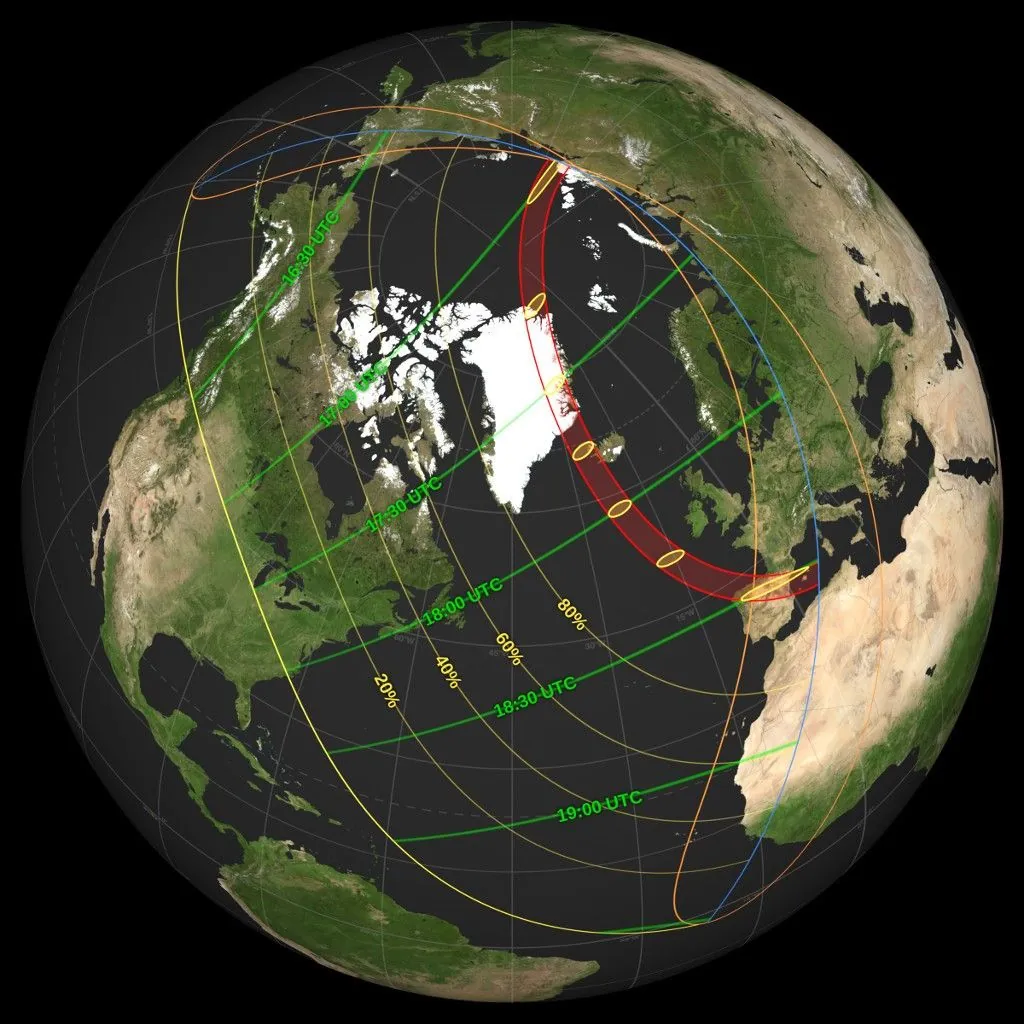
The crowd-size claim also needs cleaning up. timeanddate, using CIESIN-based estimates, reported that about 980 million people saw a partial solar eclipse, while about 15.2 million people were inside the path of totality.[2] Those are not the same experience. A partial eclipse over a large region can involve hundreds of millions of viewers; totality is confined to a much narrower track.
A little historical context is fine, as long as it stays precise. The 2026 event was the first total solar eclipse visible from the Spanish mainland since 1905 and the only 21st-century total solar eclipse over Iceland.[1] That is more defensible than a loose “first in Europe” sentence, because Europe-wide eclipse history depends on whether places such as the Faroe Islands and Svalbard are being counted.
The repair pattern: claim, corrected fact, exam concept
The fastest way to fix eclipse misinformation is not to memorize a larger paragraph. It is to attach each bad claim to the exact concept it was distorting.
| Claim you may have heard | Corrected fact to remember | What a test item is really checking |
|---|---|---|
| “Solar eclipses are once-in-a-lifetime events.” | They are not ultra-rare globally, but totality is rare for one specific location. | Global frequency vs. local recurrence; path of totality |
| “Solar eclipses happen at full moon.” | Solar eclipses occur at new moon; lunar eclipses occur at full moon. | Moon phases and Sun-Moon-Earth geometry |
| “The Moon is the same size as the Sun.” | The Sun is about 400 times wider, but also about 400 times farther away. | Actual size vs. apparent size |
| “Regular sunglasses are good enough.” | They are never safe for direct solar viewing. | Safety standards and evidence-based procedure |
| “NASA-approved glasses” means NASA checked that brand. | NASA does not approve specific eclipse-glasses brands. | Source literacy and standards language |
| “Everyone saw totality in 2026.” | Many more people saw a partial eclipse than totality. | Interpreting estimates, maps, and categories |
| “2026 was the last one for a generation.” | The next total solar eclipse is August 2, 2027. | Timelines and future-event interpretation |
Myth: “Solar eclipses are once-in-a-lifetime events”
This is the myth that is closest to being useful and therefore easiest to remember incorrectly. Solar eclipses are not once-in-a-lifetime events for Earth. The National Solar Observatory says solar eclipses happen 2 to 5 times per year somewhere on Earth, with a total solar eclipse somewhere about every 18 months.[3]
The local version is different. NSO describes totality at a given place as returning roughly every 360 years, while the broader recurrence language often appears as about 400 years or a 360–410-year range.[3][1] For a test answer, do not flatten those into one fake-perfect number. The safe sentence is: solar eclipses occur regularly somewhere on Earth, but totality is rare at any one location.
The 2026 path shows why the distinction matters. A path with a maximum width of 294 km can cross several countries and still miss most people on Earth.[1] That is why the estimated partial-eclipse audience was about 980 million, while the estimated totality population was about 15.2 million.[2]
Exam language usually hides this as a scale question. If a prompt asks why many places saw only a partial eclipse, the answer is not that the eclipse was “weak.” It is that the Moon’s darkest shadow, the umbra, traces a narrow path across Earth’s surface.
Myth: “A solar eclipse happens at full moon”
This one costs points because the wrong word is so small. NASA’s eclipse-geometry explanation states that solar eclipses occur only at new moon, while lunar eclipses occur only at full moon.[4] If the question is asking about a solar eclipse, the Moon is between Earth and the Sun. That is the new-moon arrangement.
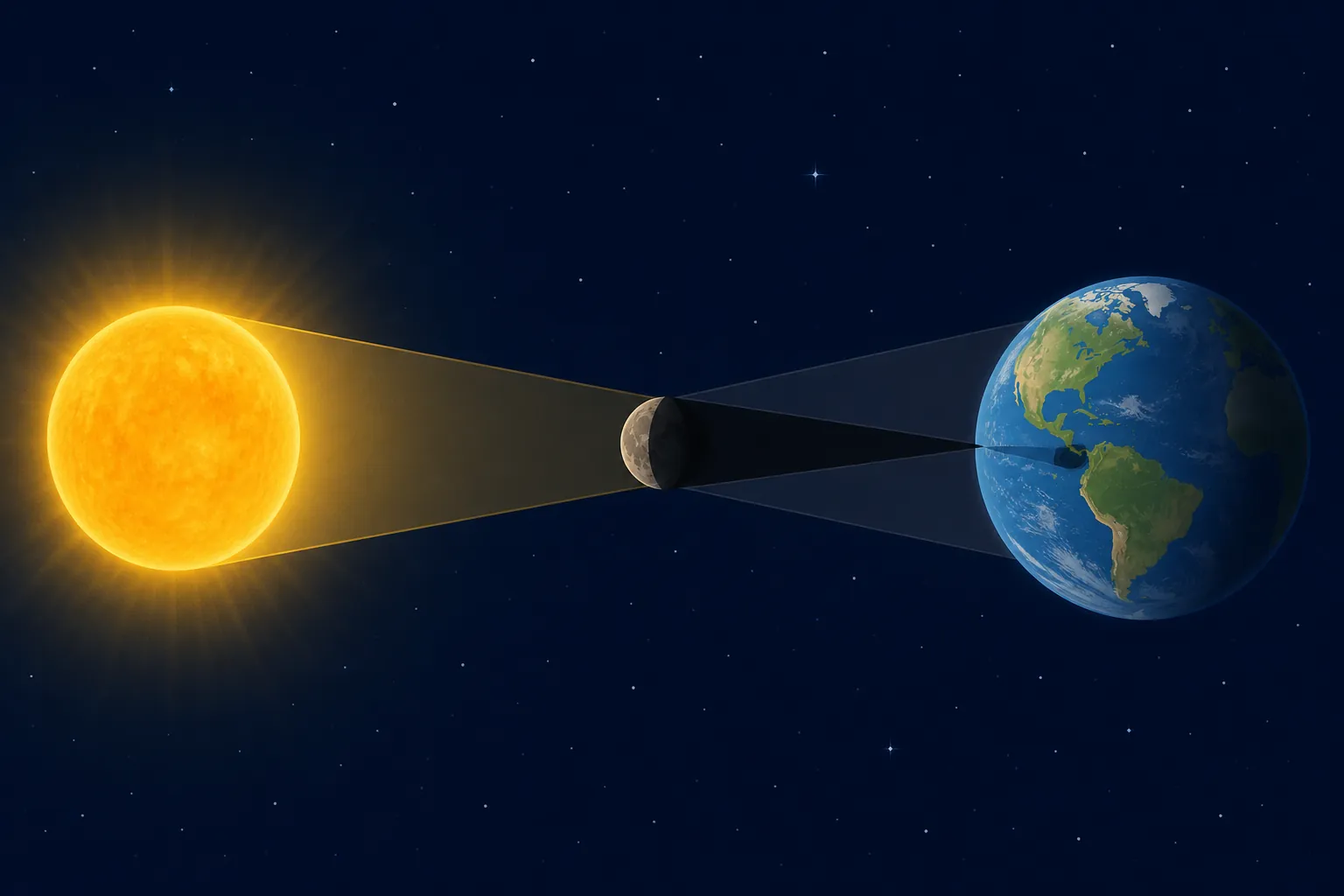
A lunar eclipse reverses the shadow relationship: Earth is between the Sun and the Moon, so Earth’s shadow falls on the Moon. That requires a full moon. For the solar-vs-lunar pairing, the companion guides on the 2026 lunar eclipse astronomy study guide and partial lunar eclipse explanation are more useful than trying to memorize both as isolated events.
In exam form, this fact often appears as a diagram: Sun on one side, Earth on the other, Moon somewhere in between or beyond. Label the bodies first. Then ask whose shadow is falling on whom. That usually tells you whether the answer is new moon or full moon.
Myth: “The Moon is the same size as the Sun”
The correct version is better than the myth because it explains why totality is possible at all. NASA and NSO describe the Sun as about 400 times larger in diameter than the Moon, but also about 400 times farther away from Earth. That distance ratio makes the Sun and Moon appear nearly the same size in the sky.[4][3]
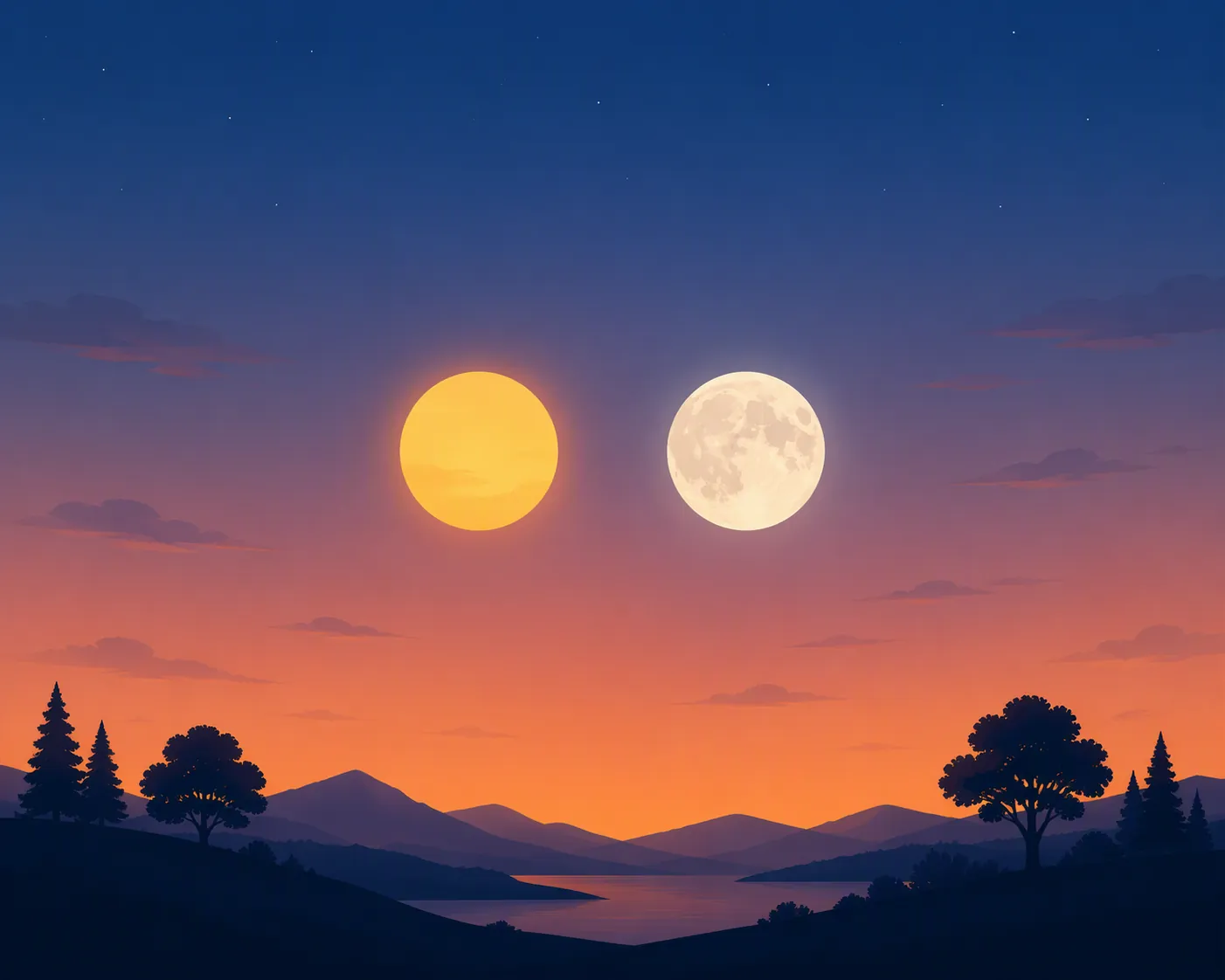
That is an apparent-size fact, not an actual-size fact. If an answer choice says the Moon can block the Sun because they have the same diameter, reject it. If it says the Moon appears similar in angular size because the Sun is much larger but much farther away, that is the testable concept.
This also explains why annular and total eclipses are different. The Moon’s apparent size changes slightly as its distance from Earth changes. When the Moon appears too small to cover the Sun completely, a ring of sunlight remains. When it appears large enough to cover the bright solar disk, totality can occur.
Myth: “Regular sunglasses are fine if you only look briefly”
NASA’s safety guidance is blunt on this point: regular sunglasses are not safe for viewing the Sun, no matter how dark they are. Safe eclipse viewing requires solar viewers or filters that comply with ISO 12312-2.[5]
There is one narrow exception, and it is not “whenever the eclipse is happening.” NASA says the Sun may be viewed without eye protection only during the brief totality phase of a total solar eclipse, when the Moon completely blocks the Sun’s bright face. Viewers must put eclipse glasses back on as soon as any bright part of the Sun reappears.[5]
That means most people watching the 2026 event still needed protection the whole time, because partial eclipse is not totality. It also means a person outside the path of totality never had a safe naked-eye phase at all.
A safety question may not look like astronomy at first. It may ask which observation method is valid, which claim is unsupported, or which step should happen when the first bright sunlight returns. The keyword to remember is not “dark.” It is ISO 12312-2.
Myth: “NASA-approved glasses” means NASA endorsed that brand
NASA does not approve specific eclipse-glasses brands.[5] A package, post, or seller using “NASA-approved” language is turning a safety standard into an endorsement claim.
For students, this is a source-literacy point. NASA can explain the safety requirement. A manufacturer can claim its product meets a standard. Those are not the same kind of statement. On a test passage, the stronger answer is the one that separates an official safety criterion from a vendor’s marketing wording.
A clean way to write it is: eclipse viewers should comply with ISO 12312-2, but NASA does not certify or approve individual glasses brands.[5] That sentence keeps the useful standard and removes the fake endorsement.
Myth: “Everyone saw totality in 2026”
This claim usually comes from confusing eclipse visibility with totality. The August 12, 2026 eclipse had a broad partial-eclipse region and a narrow totality path. The estimated numbers show the split: about 980 million people saw a partial eclipse, while about 15.2 million were inside totality.[2]
A partial eclipse can still be memorable. It is just not totality. In a partial eclipse, the Moon covers only part of the Sun’s bright disk from the observer’s location. In totality, the Moon completely covers the bright solar disk, allowing the corona to become visible.
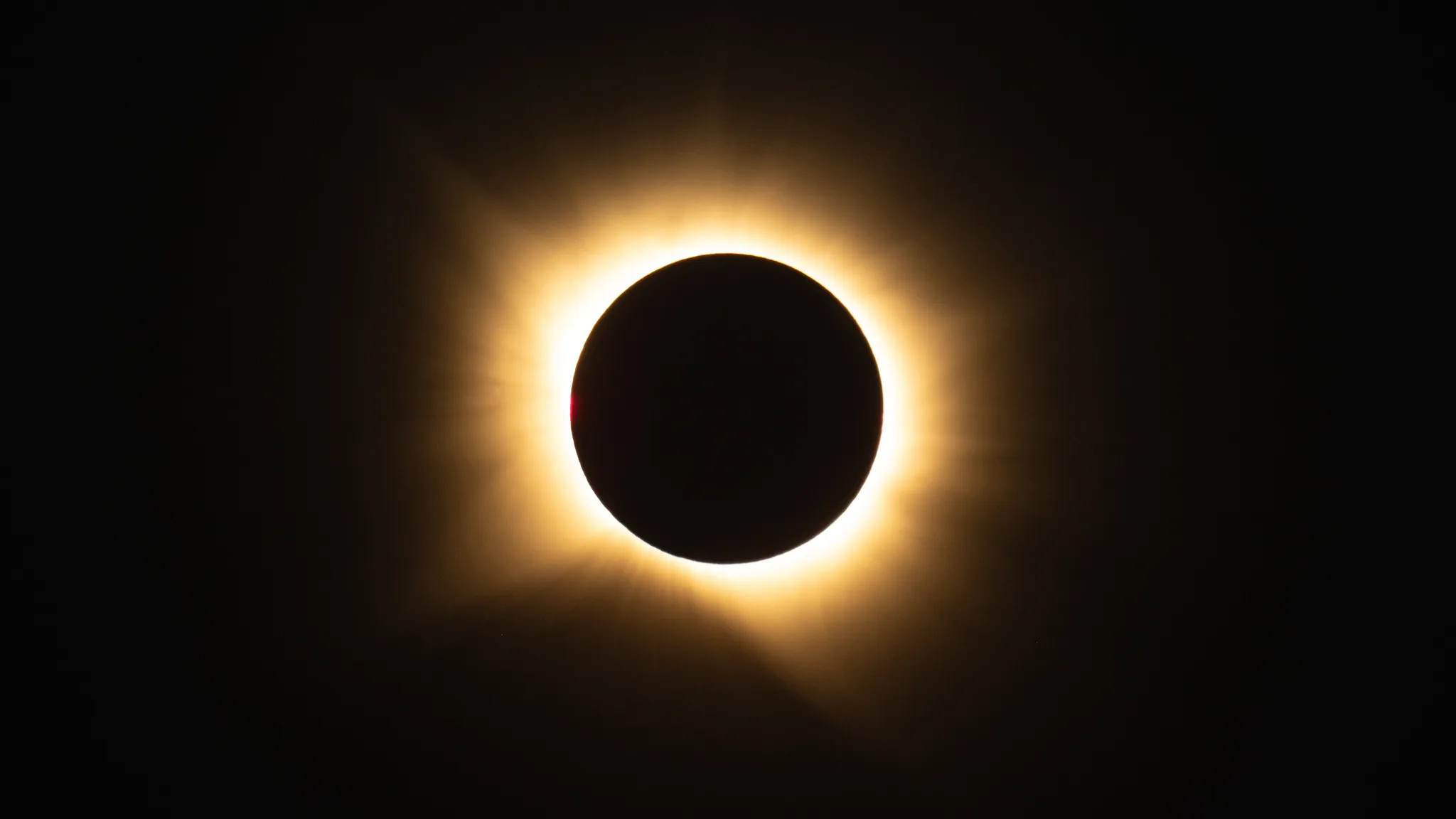
The exam version may give a map and ask which observer saw totality. Do not answer from the country name alone. Spain, Iceland, Greenland, and Portugal were not uniformly inside totality; the relevant detail is whether the observer was inside the mapped path of totality.
Myth: “The 2026 eclipse was the last one for a generation”
No. The next total solar eclipse is August 2, 2027, with a path that includes southern Spain, North Africa, and the Middle East.[6] That does not make the 2026 eclipse unimportant; it just removes the artificial drama from the timeline.
For the United States, NASA’s future-eclipse list includes a total solar eclipse on March 30, 2033 in Alaska, another on August 23, 2044 that reaches the contiguous United States, and a coast-to-coast total solar eclipse on August 12, 2045 with totality lasting up to 6 minutes 6 seconds.[6]
If you want the next-event map skill rather than another myth list, use How to Read the 2027 Solar Eclipse Path Map. The test habit is the same: read the path, identify totality versus partial visibility, and keep the date attached to the source.
Where these facts show up in exam language
For ASVAB General Science, the safest use of the 2026 eclipse is as astronomy review: Moon phases, shadows, apparent size, and safe observation. The fuller concept map is already handled in the ASVAB Astronomy Study Guide for the 2026 Solar Eclipse, so this guide is mainly for cleaning up the claims that interfere with those concepts.
For Regents Earth Science, the new-moon/full-moon distinction and diagram reading matter more than the drama of the event. A Regents-style item can ask which lunar phase allows a solar eclipse, which shadow region creates totality, or why eclipses are not visible everywhere on Earth.
For SAT or ACT science passages, do not assume there will be an eclipse-specific question. Use these facts as passage-reading background: distinguish estimates from measurements, claims from source statements, and apparent size from actual size. The broader exam-mode comparison is in What Exams Actually Test About the 2026 Total Solar Eclipse.
| If the question says... | Think... |
|---|---|
| “Which phase of the Moon is required for a solar eclipse?” | New moon |
| “Why does the Moon cover the Sun even though the Sun is larger?” | Apparent size: the Sun is much larger but much farther away |
| “Why did one city see totality and another see only a partial eclipse?” | The umbra follows a narrow path; location matters |
| “Which viewing method is safe?” | ISO 12312-2 solar viewers or filters; not regular sunglasses |
| “Did NASA approve this glasses brand?” | No; NASA gives safety guidance but does not approve brands |
| “Was 2026 the last total solar eclipse for a generation?” | No; the next total solar eclipse is August 2, 2027 |
For more astronomy practice in the same exam-first style, the Perseid meteor shower study guide is a useful sibling resource. If you are sorting topics by test, start from the site’s ASVAB General Science and SAT/ACT hubs rather than trying to treat every sky event as equally likely to appear.
The social-media version of the 2026 eclipse moved fast because it sounded clean: once in a lifetime, full moon, same-size Sun and Moon, NASA-approved glasses, last chance for decades. The testable version is cleaner once each sentence is repaired: totality is local, solar eclipses occur at new moon, apparent size is not actual size, regular sunglasses are unsafe, NASA does not approve brands, and the next total solar eclipse is already dated.
References
- Solar eclipse of August 12, 2026, Wikipedia
- Total Solar Eclipse on August 12, 2026, timeanddate
- Eclipse Science, National Solar Observatory
- Why Do Eclipses Happen?, NASA Science
- Eclipse Viewing Safety, NASA Science
- Future Eclipses, NASA Science
Related exhibits & inventory
Verified outcomes
No verified outcomes on file for this exam yet
See Methodology for how outcome evidence is disclosed once logged.
Planners
No planner filed for this exam yet
A downloadable timeline template for this exam hasn't been published yet.
Tool verdicts
AI-tool cautions
No AI tools tested for this exam yet
No hands-on AI-accuracy logs have been filed for this exam.
Questions about this plan
Ask a question about a specific section, timeline, or citation in this plan — or flag something that needs correcting.
Comments
Join the discussion with an anonymous comment.