
Which Frontier AI Model Actually Helps You Study?
Accuracy Warning — ChatGPT, Gemini, Claude, NotebookLM
No model is safe as an answer key; each still fails specific official-question formats such as SAT ordering, GRE quant traps, MCAT passage scope, ACT science visuals, and ASVAB technical simplification.
- Accuracy:
- Moderate
- Tested:
- Retired official exam questions and official-format study tasks: answer accuracy, explanation quality, practice-question fidelity, hallucination checks, cost
- Last tested:
- 2026-08-25
Comparing frontier AI models for study help sounds like it should end with a clean ranking. It does not. As of the March 2026 snapshot in Stanford HAI’s AI Index, the top lab scores were packed into a narrow band: Anthropic at 1,503 Elo, xAI at 1,495, Google at 1,494, and OpenAI at 1,481 — roughly a 25-point spread across the cluster.[1] That is too tight to tell a GRE, MCAT, SAT, ACT, or ASVAB student which tool to trust on Tuesday night.

The better question is narrower: when the prompt looks like an actual exam question, which model gets the answer right, explains it without drifting, and admits what it cannot verify? That is the frame used here. ChatGPT, Gemini, Claude, and NotebookLM were compared as study tools, not as general intelligence trophies.
The test protocol mattered more than the model names
The protocol used retired official exam questions and official-format study tasks across GRE, MCAT, SAT, ACT, and ASVAB prep. The point was not to recreate a psychometrically valid full administration. It was to stress the parts of studying where students actually get hurt by a bad AI answer: answer selection, explanation quality, practice-question realism, hallucinated facts, and cost.
| Protocol dimension | What was checked | Why it matters |
|---|---|---|
| Answer accuracy | Whether the model selected or derived the correct answer on retired official exam questions | A smooth explanation attached to a wrong answer is still a wrong answer |
| Explanation quality | Whether the reasoning matched the official concept being tested and avoided invented rules | Students often learn the explanation, not just the answer |
| Practice-question fidelity | Whether generated practice items resembled the exam’s format, difficulty, and distractor style | Bad generated questions train the wrong reflexes |
| Hallucination checks | Whether the model invented source support, misquoted uploaded material, or overclaimed certainty | This is the main reason source-grounded tools matter |
| Cost | Whether the useful behavior required a paid tier or a slower, more expensive reasoning mode | Prep budgets are real, but price alone does not choose the safest tool |
Answer accuracy and explanation quality were scored separately. That separation is not pedantry. A model can land on the right letter with a brittle shortcut, or miss the answer while giving an explanation that reveals exactly where a student’s misconception sits. Those are different study outcomes.
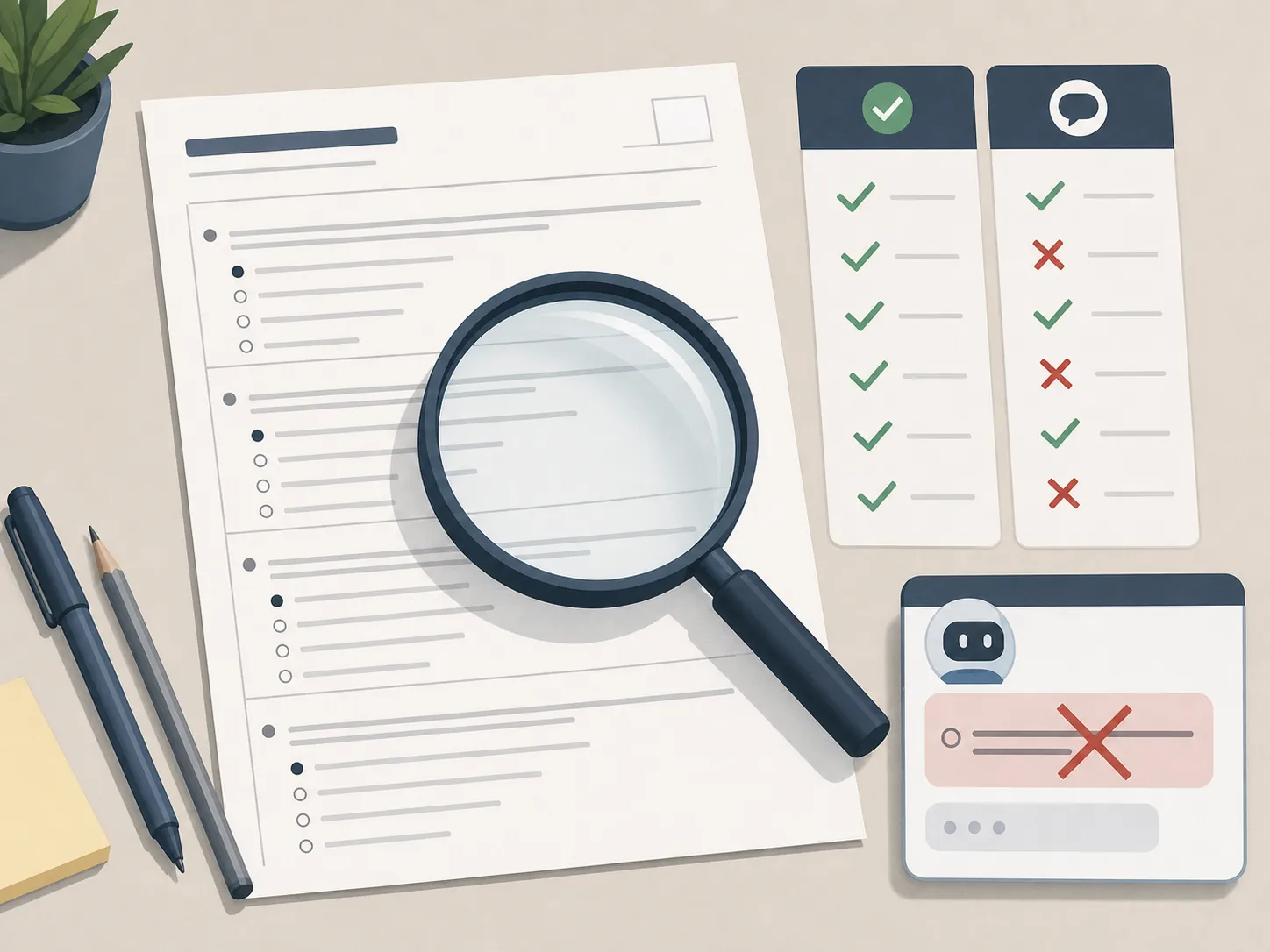
NotebookLM was tested differently from ChatGPT, Gemini, and Claude because its strongest use case is different. It is not mainly a “know everything” chatbot. It is most useful when a student already has notes, official explanations, textbook chapters, lecture slides, or a prep-book section and wants grounded review against that source set. ChatGPT, Gemini, and Claude were judged more heavily on explanation, gap-filling, and their ability to reason beyond uploaded material without pretending that unsupported claims came from the source.
This comparison was last reviewed on August 25, 2026. That date matters because model names, tiers, and prices keep shifting. A verdict that does not say when it was observed is barely a verdict.
The public SAT evidence is useful, but it is not a 2026 winner’s medal
The cleanest public full-SAT model test remains historical. Study.com reported in March 2023 that ChatGPT-4 scored 1460, around the 96th percentile, while ChatGPT-3.5 scored 1160, around the 73rd percentile. In that untimed, text-only protocol, ChatGPT-4 answered 50 of 58 math questions correctly, but it also scored 0% on SAT Writing “Ordering” and 0% on “Inequalities,” and graph questions had to be described in text.[2]
That result is impressive, and it is also easy to misuse. It does not prove that every 2026 frontier model is SAT-safe. It does not even prove that the same model behavior holds under timed, visual, adaptive, or fully digital conditions. It proves something narrower: even a strong model that performs well overall can fall flat on specific official-question categories.
A later artificial-test-taker study gives one reason not to dismiss the SAT result as memorization. In SAT Math experiments, paraphrasing dropped GPT-4 accuracy by only 3.9 points, and performance across years showed a correlation of r = 0.991; the same paper estimated that SAT math difficulty had drifted about 0.21 standard deviations since 2012.[3] That supports the idea that the model was often solving, not merely regurgitating. It still does not erase the category-level failures.
This is the benchmark problem in miniature. A high total score can hide the exact failure mode that matters to a student. If your weakness is inequalities, the model’s overall SAT bragging rights are cold comfort.
Per-exam verdicts: useful, but not interchangeable
Across the exam-scoped run, no model earned a universal “best for studying” label. The safer verdict is by exam and by job. If you want a broader map of exam prep categories, start with the site’s exam hubs; the table below is specifically about AI model fit.
| Exam | Safest AI role | Best-fit model pattern | Main caution |
|---|---|---|---|
| GRE | Explaining official verbal and quant problems after you attempt them | Claude, ChatGPT, and Gemini are useful for explanations; NotebookLM is better when reviewing uploaded notes, word lists, or official explanations | Do not trust generated quant questions unless you check the algebra and answer key |
| MCAT | Source-grounded review of dense science material | NotebookLM is the cleanest fit when the student has a defined source set; ChatGPT, Claude, and Gemini help fill conceptual gaps outside that set | Generated passages can feel MCAT-like while testing the wrong reasoning |
| SAT | Targeted explanation and category repair | ChatGPT, Gemini, and Claude can explain; NotebookLM helps consolidate class notes and official explanations; Gemini also has a free full-length SAT practice angle | Historical public SAT evidence shows strong overall performance can still hide category failures |
| ACT | Reviewing missed English, math, reading, and science items by section | Use NotebookLM for source-grounded review; use ChatGPT, Gemini, or Claude for alternate explanations and timing strategy | Science-format graph and table reasoning should be checked against the original item |
| ASVAB | Concept review, arithmetic reasoning, word knowledge, and source-based technical study | NotebookLM is safest for uploaded mechanical/electronics material; ChatGPT, Gemini, and Claude are useful for plain-language explanations | Technical domains invite confident simplification; verify against the manual or course source |

GRE: explanations help more than generated practice
For GRE prep, the useful AI task is usually post-mortem work: take an official problem you missed, ask for the tested concept, identify the trap answer, and request one simpler version before returning to the original. ChatGPT, Claude, and Gemini are all capable enough to be useful here, especially when the student provides the full question and answer choices.
The weak spot is practice-question generation. GRE quant distractors are not just random wrong numbers; they reflect predictable algebra slips, comparison traps, and data-interpretation shortcuts. A model-generated “GRE-style” problem may be fine as a warm-up, but it should not replace official material unless the solution and answer choices are independently checked. This is where a source-grounded workflow is less glamorous and more useful: upload your missed-question log, official explanations you are allowed to use, and vocabulary notes, then make NotebookLM interrogate those documents instead of inventing a new mini-test.
MCAT: NotebookLM gets the first look when the source set is strong
MCAT study is where NotebookLM’s advantage is easiest to understand. The exam rewards cross-linked science knowledge, but students already sit on piles of material: content outlines, lecture notes, Anki exports, lab summaries, missed-question notes, and official explanations. If those sources are the authority, the model that stays closest to them deserves the first pass.
That does not make NotebookLM the only tool. ChatGPT, Gemini, and Claude are better when the source set is incomplete and the student needs a fresh explanation of enzyme kinetics, acid-base reasoning, optics, amino acid behavior, or experimental design. The risk is that a helpful-sounding explanation can drift outside what the passage actually supports. On MCAT passage work, that drift is expensive. The safer request is not “teach me everything about this topic.” It is “using only this passage first, explain why this answer follows; then separately label any outside background that helps.”
Independent hands-on testing by XDA Developers reached a similar job split: NotebookLM stood out for studying from supplied material, while Gemini, Claude, and ChatGPT were more useful for broader conversational help.[4] That distinction matters more for MCAT than for almost any other exam here.
SAT: do not confuse “can score high” with “safe for every question type”
SAT prep is the easiest place to overstate AI. The public ChatGPT-4 result is strong enough to show that frontier models can handle a large amount of SAT material, and the later artificial-test-taker work makes the memorization-only explanation less persuasive.[2][3] But the same public record contains the warning label: 0% on specific categories under that protocol.[2]
Gemini also deserves attention because Google announced free full-length SAT practice in January 2026, with questions vetted by Princeton Review.[5] That is a study-product feature, not proof that Gemini is generally “best at the SAT.” The useful distinction is simpler: if you want a guided practice environment, Gemini’s SAT feature belongs on the shortlist; if you want explanations of missed official questions, ChatGPT, Claude, and Gemini can all help; if you want to review your own class notes and official explanations without source drift, NotebookLM has the cleaner job fit.
For more focused product testing, see the hands-on coverage of Google Gemini’s SAT practice test and the separate ChatGPT exam study assistant trial.
ACT: the Science section keeps the models honest
ACT English and Math create familiar AI study tasks: explain grammar rules, redo missed algebra, compare answer choices, and build short drills. The harder test is ACT Science, because the section is not really a science-facts quiz. It is a time-pressured graph, table, experiment, and claim-reading test.
That makes ACT a bad place to trust a model that has not seen the visual layout clearly. If a chart, table, or figure is involved, the student should provide the original image when the tool supports it or describe the data carefully and check the model’s interpretation against the source. A model can sound decisive while swapping axes, smoothing over an exception, or treating a trend as causal.
ASVAB: useful for concepts, risky for technical overconfidence
ASVAB prep is less glamorous than SAT or MCAT prep, but it is exactly where a study assistant can be useful: arithmetic reasoning, word knowledge, paragraph comprehension, mechanical comprehension, electronics information, and assembling objects all benefit from patient explanation and repeated examples.
The caution is technical simplification. When a model explains gears, circuits, pulleys, or mechanical advantage, it may compress the idea so aggressively that the answer sounds clearer than it is. NotebookLM is the safer starting point if the student has an ASVAB manual, class notes, or instructor material to upload. ChatGPT, Gemini, and Claude are better for turning a confusing paragraph into plain English, but their technical answers should be checked against the source when the stakes are official.
NotebookLM’s real advantage is not intelligence; it is restraint
NotebookLM gets special credit in this comparison because many study problems are source problems. Students do not always need a model to roam the open internet of its training data. They need it to stay inside the chapter, the syllabus, the official explanation, or the missed-question notebook.
That restraint is especially useful for MCAT content review, GRE error logs, ACT English rule sheets, SAT grammar notes, and ASVAB technical material. It also changes the hallucination check. Instead of asking, “Does this sound right?” the student can ask, “Where in my source does this come from?” A tool that cannot point back to the uploaded material should not be treated as if it has.
The free NotebookLM plan limits matter for heavy users: Coursiv reports 50 sources per notebook, with each source up to 500,000 words or 200MB; the Pro plan is listed at $19.99 per month bundled with Google AI Pro, with a $9.99 monthly rate for U.S. graduate students.[6] Those limits are generous enough for many exam workflows, but not infinite. A messy student who uploads everything may still need to curate.
The practical routine is simple: put official explanations, class notes, your own missed-question log, and allowed prep materials into the notebook; ask for patterns in your errors; ask for a quiz only from those sources; then make the model cite the source passage behind each answer. That is a better use of AI than asking a general chatbot to invent “20 hard MCAT-style questions” and hoping the answer key is clean.
Where ChatGPT, Gemini, and Claude still earn their keep
The general frontier chatbots are still valuable because students often do not know what source they need. A missed GRE probability question may expose a weak counting principle. A missed MCAT passage may reveal a shaky understanding of controls. A missed SAT grammar question may be less about that one sentence and more about modifier logic. General models are good at giving another explanation when the official one is too compressed.
Their study modes also matter. ChatGPT has Study & Learn, Gemini has Guided Learning, and Claude has Learning Mode. Those product surfaces are designed to slow the model down, ask questions, and keep the student involved rather than dumping an answer. They are useful when the student wants tutoring behavior, not just a solution.
The problem is that tutoring behavior can hide answer risk. A model that asks good Socratic questions can still mishandle a graph, misread a quantifier, or generate a fake rule. The safer request pattern is: first solve; then identify the tested skill; then explain why each wrong answer is wrong; then state what evidence would change the answer. That last instruction is useful because it forces the model to expose the boundary of its confidence.
For adjacent hands-on comparisons, the site has separate tests of Grok vs. Copilot on real exam questions, Gemini vs. ChatGPT for study planning, and Gemini AI for exam prep. Those are narrower product checks, not substitutes for the exam-scoped verdict here.
Math is where averages become cliffs
Math performance is not a smooth staircase. LLM Stats reports that many models clear more than 95% on grade-school math, while only the top two or three exceed 70% on competition-level math, and IMO-level performance remains below 50%.[7] That gap matters for GRE quant, SAT advanced math, ACT math, and ASVAB arithmetic reasoning because the student may not know whether a problem is routine or cliff-edge.
Reasoning modes can help, but they are not free. The same aggregator describes reasoning models as adding roughly 10% to 30% accuracy at 2x to 5x latency and cost.[7] For a student, that means the most expensive mode should be reserved for the problems where the model’s first-pass answer and explanation matter enough to justify the delay.
A good rule: use cheap or default modes for flashcard explanations, vocabulary, grammar drills, and source summaries; use a stronger reasoning mode for multi-step quant, experimental-design reasoning, or a question where two answer choices remain plausible after your own attempt.
Cost changes the decision, but it should not lead it
AI study subscriptions can look cheap next to traditional prep. The Hill reported legacy price anchors including Kaplan at about $2,000, Princeton Review’s top-5% option above $2,000, and SAT Essentials at $649.[5] That comparison is real, but it can become a trap. A cheap tool that teaches a wrong shortcut is not a bargain.
Token pricing also varies widely across model tiers. TeamAI’s 2026 frontier-model pricing snapshot described output-token prices spanning roughly $0.05 to $25 per million tokens, with examples such as GPT-5 mini at $0.25 input and $2.00 output per million tokens and DeepSeek V3 at $0.27 input and $1.10 output per million tokens.[8] Those numbers are useful as a market snapshot, not as a promise that your preferred app’s subscription economics will stay fixed.
If cost is your main question, the separate subscription analysis of whether a $200 Claude Opus 5 subscription can replace a test prep course is the better place to go deep. Here, price only breaks ties after the exam task and failure mode are clear.
The safest choice by study job
| Study job | Best starting point | Why |
|---|---|---|
| Reviewing material you already have | NotebookLM | It is built around uploaded sources and source-grounded recall |
| Understanding a missed official question | ChatGPT, Claude, or Gemini; NotebookLM if the official explanation is uploaded | The general models are strong explainers, but source grounding reduces drift |
| Generating extra drills | Use any model cautiously, then verify | Practice fidelity is uneven and answer keys can be wrong |
| Learning a concept outside your source set | ChatGPT, Claude, or Gemini | They are better gap-fillers than a source-bound notebook |
| Checking dense notes for contradictions or forgotten topics | NotebookLM | The task rewards staying inside the supplied material |
| Hard multi-step math or science reasoning | A stronger reasoning mode, with independent checking | Accuracy may improve, but cost and latency rise |
That table is less satisfying than a universal winner, but it is more honest. Frontier models are clustered closely enough that a leaderboard gap should not decide your study plan. The meaningful differences come from fit, failure mode, and verifiability.
Start with the exam. Then name the study job. If the material is already in your hands, prefer a source-grounded tool and make it cite the source. If you need an explanation beyond your notes, use ChatGPT, Gemini, or Claude, but check official-question formats that the model can misread: SAT ordering and inequalities, GRE quant traps, MCAT passage scope, ACT science visuals, and ASVAB technical simplifications. No model tested here is safe enough to be treated as the answer key.
References
- Technical Performance, Stanford HAI, 2026
- ChatGPT SAT Score Prompts Discussion on Responsible AI Use, Study.com, March 2023
- Artificial test takers and SAT Math performance, Frontiers in Artificial Intelligence, 2026
- I tested NotebookLM, Gemini, Claude, and ChatGPT for studying, XDA Developers
- SAT test prep AI ACT, The Hill, January 2026
- NotebookLM vs ChatGPT, Coursiv
- Best AI for Math, LLM Stats
- The 2026 AI Frontier Model War, TeamAI, 2026
Authoritative source
For the authoritative version of this contentHow to Read the '1 in 4 NFL Players CTE' Study
Report an error in this tool's output
Found something this tool got wrong beyond what's documented above? Report it so the accuracy log stays current.
Comments
Join the discussion with an anonymous comment.