I Tested ChatGPT as an Exam Study Assistant
Accuracy Warning — ChatGPT
Can sound confident while producing wrong practice questions, answer rationales, or score estimates; keep official answer keys and scoring outside the tool.
- Accuracy:
- Moderate
- Tested:
- Concept re-explanation, practice-question generation, study planning, and score estimation across five exams
- Last tested:
- 2026-08-03
Last reviewed: Q3 2026. Accuracy warning: ChatGPT can sound most confident exactly where an exam prep tool needs to be most accountable — answer keys, difficulty, scaled scores, pacing decisions, and readiness calls. I tested ChatGPT as an exam study assistant by task, not by vibes: explaining missed concepts, generating practice questions, explaining official-answer rationales, building a study plan, and estimating scores across GRE, MCAT, ASVAB, SAT, and ACT prep.
The short verdict: ChatGPT is worth using after official or reputable practice, when the job is “explain the idea I missed in plainer language.” It becomes unreliable when it starts acting like the source of practice questions, the answer key, or the score report. The closer the task gets to real exam conditions, the more the tool needs exam-company obligations it does not have.

Two published findings shaped the warning more than any polished demo. In a Boston University/Academic Pathology test, ChatGPT 3.5 produced immunology items where the question, answer, and explanation were all correct only 19 times out of 60, and 25% of the generated questions were wrong or misleading.[1] In a reported Turkish randomized math experiment of about 1,000 students, ChatGPT-using students solved 48% more practice problems but scored 17% worse on the topic test; the tool answered practice math correctly only about half the time, with wrong step-by-step approaches 42% of the time and wrong arithmetic 8% of the time.[2]
The task-scored verdict
A high benchmark score is not a license to hand over the prep plan. GPT-4’s reported SAT benchmark was 1460, compared with 1160 for GPT-3.5, which shows that the model can perform some standardized-test reasoning.[3] It does not show that ChatGPT can generate calibrated practice, protect official-material scarcity, or convert a student’s work into a valid scaled score. For the digital SAT, the 400–1600 conversion depends on College Board’s proprietary adaptive Bluebook scoring, not a chat transcript.[4]
| Study job | Best use | Where it breaks | Evidence label | Verdict |
|---|---|---|---|---|
| Explain a missed concept after official or reputable practice | Ask for a simpler explanation, another analogy, or a slower walkthrough of the underlying concept. | It can still make mistakes, especially if the student provides a flawed transcription or asks it to infer the original item. | Moderate | Use, but keep the original question and answer key outside ChatGPT. |
| Generate practice questions | Low-stakes concept rehearsal after review, preferably with human or source verification. | Generated items may have wrong stems, wrong answers, misleading explanations, or non-exam-like difficulty. BU found only 19/60 fully correct generated immunology items.[1] | High for warning | Do not use as the main question bank. |
| Explain official-answer rationales | Useful when the official explanation is too compressed and the answer key is already known. | If ChatGPT disputes or rewrites the official key without evidence, the student can end up learning the model’s error. | Moderate | Use as a re-explainer, not as the final authority. |
| Build a study plan | Turn constraints into a calendar: test date, weekly hours, weak areas, official practice cadence. | It may invent score promises or overpack the schedule if not anchored to the exam and real practice data. | Limited to Moderate | Use for logistics, then anchor the plan to exam-specific materials. |
| Estimate scores or readiness | None, unless it is simply organizing official scores you already have. | It cannot reproduce proprietary adaptive scoring, calibrated equating, or official scale conversions. The SAT is the clearest example.[4] | High for warning | Do not use as a scorekeeper. |
The failure gradient: explanation is not the same job as measurement
A missed GRE quant problem and a generated GRE quant problem look similar on a screen. They are not the same prep event. In the first case, the student has already used a trusted measuring instrument and needs help unpacking the concept. In the second, ChatGPT is trying to become the measuring instrument.

That distinction matters because standardized-test questions are not just content delivery. They are calibrated prompts with a reason to exist: a distractor pattern, a difficulty target, a timing expectation, and a scoring role. If the generated question is sloppy, the student may still feel productive. They may even solve more. The Turkish math experiment is the uncomfortable version of that story: more practice problems completed, worse test performance.[2]
The GRE evidence points in the same direction, though from a different angle. On 100 official ETS GRE quantitative questions, accuracy was reported at 69% with raw prompts and 84% with instruction-primed prompts.[5] Prompting helped. It did not remove errors. For a tutor explaining why a ratio setup went wrong, that gap is manageable if the official answer is still in charge. For a question bank or score predictor, it is not.
This is where many AI-study recommendations get too loose. “ChatGPT can make practice questions” is technically true in the same way that a tired tutor can scribble a few extra algebra questions. The useful question is whether those items are exam-ready without expert review. The BU immunology result says no for a medical-school-style context: only 32% of generated items had the question, answer, and explanation all correct together.[1]
There is a positive counterpoint, and it should be treated as a counterpoint rather than a rescue. One SAT benchmark study reported that 69% of AI-generated SAT questions were ready for use, while 31% needed revision, with a difficulty distribution close to official materials.[6] That is better than the BU result, and it suggests generated questions can become useful after screening. It still leaves nearly a third of items needing revision. A student with three weeks until test day is not the right quality-control department.
The scorekeeper problem is worse than the question-bank problem
A bad generated question wastes time and may teach the wrong move. A fake score estimate can distort the whole prep plan. Students change section priorities, delay official practice, reschedule exams, or walk into test day with the wrong expectation because a tool gave them a number that felt official.
SAT is the easiest place to see the boundary. Even if a model can answer SAT-like questions well, it does not have College Board’s adaptive scoring conversion. The digital SAT score depends on module routing and proprietary scale conversion inside Bluebook, so ChatGPT cannot validly turn a homegrown set of questions into a real 400–1600 estimate.[4] The same caution applies in spirit to ACT, GRE, MCAT, and ASVAB prep: if the test maker or a validated prep provider controls the score model, a chat interface should not be promoted into that role.
This is also why GPT-4’s reported 1460 SAT benchmark is interesting but not decisive.[3] A model’s performance on a benchmark is not the same as a student’s measurement system. The student needs to know what their own timing, error pattern, stamina, and scaled score mean under the rules of the exam they are taking.
Exam-by-exam notes
GRE: ChatGPT is most useful after a real quant or verbal set, when the student can paste a missed concept in their own words and ask for a slower explanation. The GRE quant prompt-sensitivity result matters here because it shows that careful prompting improved performance but still left errors on official questions.[5] Use it for re-explanation. Keep score estimates and section readiness tied to official ETS-style practice and verified prep data.
MCAT: Be especially careful. The MCAT punishes shallow explanations that sound biological but miss passage logic or experimental design. A ChatGPT-on-MCAT preprint gives section-level context, but the section-accuracy figures available here should be treated cautiously rather than inflated into a tutoring verdict.[7] Blueprint also documented concrete MCAT study errors from ChatGPT, including the kind of elementary math mistake — “the square root of 2 is 2” — that should make any premed hesitate before using it as an answer authority.[8]
That does not mean MCAT students should never use it. The better placement is around AAMC material, not in place of it. Sketchy tested using ChatGPT to supplement AAMC answer explanations, which is the right kind of question: can it make an official explanation more understandable without replacing the official item or key?[9] That is much safer than asking it to manufacture a full passage set and then trusting the answer explanations.
ASVAB: Label this Limited. The ASVAB-specific evidence here is thin, so confidence has to come from nearby math and standardized-test evidence rather than from a strong ASVAB trial. That means ChatGPT can help explain arithmetic reasoning, word-problem setup, mechanical concepts, or vocabulary in simpler language, but it should not replace a dedicated ASVAB exam prep guide, a verified AFQT practice path, or reputable timed practice.
SAT and ACT: SAT has both the attractive benchmark and the clearest scoring warning. GPT-4 can score impressively on SAT-style material, and some generated SAT questions may be usable after review.[3][6] But SAT scoring is not just “percent correct,” and ACT-specific evidence here is not strong enough to justify broader claims. For both exams, use official or reputable full-length practice for pacing and score decisions, then use ChatGPT only to unpack the concepts behind missed questions.
Where ChatGPT actually belongs in an exam-first plan
The defensible workflow is not complicated. It just has to keep the measuring instrument outside the chat window.
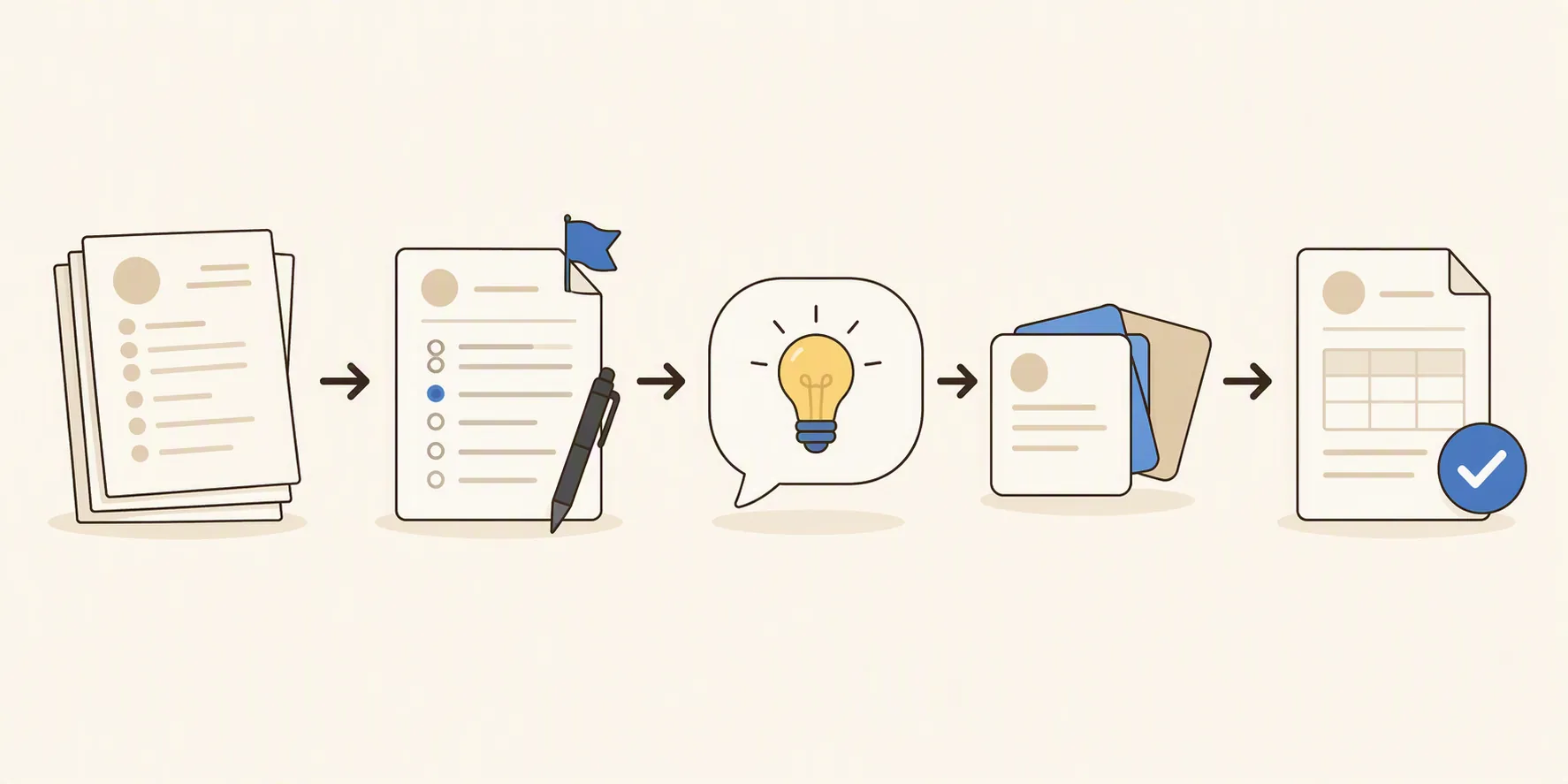
- Start with official or reputable practice. For MCAT, that means building around AAMC-style practice and a realistic MCAT study plan. For ASVAB, start with exam-specific prep and AFQT-relevant practice rather than generic math worksheets.
- Mark the missed question and identify the source-confirmed answer. Do this before asking ChatGPT anything.
- Ask ChatGPT to re-explain the underlying concept, not to re-grade the item. The prompt should make the hierarchy clear: “The official answer is C. Explain the concept that makes C correct and why my reasoning failed.”
- Use any AI-generated drills as low-stakes rehearsal only. If a generated item looks useful, verify the answer and explanation before letting it influence your confidence.
- Return to official or validated practice for timing, score estimates, and readiness decisions.
That workflow sounds conservative because exam prep should be conservative. Official questions are scarce because they measure the exam, not because they are decorative. Burning through them casually is bad; replacing them with unverified generated items is worse.
A reasonable ChatGPT exchange after a missed GRE quant problem might ask for three versions of the same explanation: one algebraic, one numerical, and one plain-English. A reasonable MCAT exchange might ask it to explain the difference between two biological mechanisms after the student has already checked the AAMC explanation. A reasonable ASVAB exchange might ask for a simpler way to remember a mechanical principle. None of those tasks asks ChatGPT to decide whether the student is ready.
For a broader evidence review of what AI study tools do and do not improve in learning trials, use Are AI Study Tools Actually Tested for Learning? as the companion piece. For the academic-integrity boundary — official practice first, AI for re-explanation, never for scoring — see Can Students Use ChatGPT for Exam Prep Without Cheating?. Study Mode and related tutoring interfaces may change the feel of the session, but they do not remove the need to verify accuracy and keep scoring outside the model; that distinction is covered separately in OpenAI and Hugging Face Study Tools.
The boundary I would not cross
Use ChatGPT when the original practice source is trustworthy and the final answer key is already known. Ask it to slow down a concept, restate a rule, make a simpler analogy, or generate a small low-stakes drill you can check.
Do not use it when the task affects your score estimate, practice-question supply, pacing plan, section priority, or readiness decision. Those jobs belong to official exam materials, reputable prep data, and score reports built for the exam. If the task is “help me understand why I missed this,” ChatGPT can be useful. If the task is “tell me what this means for my score,” it is in the wrong chair.
References
- Study Finds AI Language Model Failed to Produce Appropriate Questions, Answers for Medical School Exam — Boston University Chobanian & Avedisian School of Medicine
- Kids who use ChatGPT as a study assistant do worse on tests — The Hechinger Report
- ChatGPT SAT Score Prompts Discussion on Responsible AI Use — Study.com
- ChatGPT for SAT Prep — PrepGraph
- arXiv:2309.14519 — arXiv
- Does ChatGPT-Generated Practice Match Official SAT Difficulty? A Benchmark Study — Pursu
- ChatGPT on MCAT preprint — medRxiv
- The 5 Worst MCAT Study Tips I Got From ChatGPT and What to Do Instead — Blueprint Prep
- Using ChatGPT to Supplement AAMC Answer Explanations: Can It Work — Sketchy
Authoritative source
For the authoritative version of this contentHow to Read the '1 in 4 NFL Players CTE' Study
Report an error in this tool's output
Found something this tool got wrong beyond what's documented above? Report it so the accuracy log stays current.
Comments
Join the discussion with an anonymous comment.