
MiniMax H3 AI tested for exam prep? It's a video model
Accuracy Warning — MiniMax H3
H3 is a video generation model, not a study assistant; no independent H3 exam-prep benchmark was available at review, so verify any visual explanation against official exam materials.
- Accuracy:
- Limited
- Tested:
- Assessing H3 for exam-prep jobs: question generation, explanations, grading, study plans, explainer clips
- Last tested:
- 2026-07-31
You may be searching for the wrong MiniMax. If your exam date is fixed and you need practice questions, answer explanations, grading, or a study plan, MiniMax H3 is the wrong tool to test first. H3 is a video generation model released on July 31, 2026; the MiniMax model that belongs in the exam-prep conversation is M3, the text/multimodal LLM.

Verdict: MiniMax H3 tested for exam prep
| Exam-prep task | H3 verdict | Evidence label | Better MiniMax choice |
|---|---|---|---|
| Generate GRE, MCAT, SAT, ACT, or ASVAB practice questions | Not suitable. H3 is built for short video generation, not question writing. | Model-type mismatch; H3 release/spec evidence | M3 or another text study-capable LLM |
| Explain a missed concept | Not suitable as a tutor. H3 can make a clip from supplied material, but it is not the model to reason through an answer. | Model-type mismatch | M3, checked against official materials |
| Grade a free response or written explanation | Not suitable. H3 is not a grading assistant. | Model-type mismatch | M3 or a rubric-aware study workflow |
| Build a study plan | Not suitable. H3 does not solve the calendar, diagnostic, and review-loop problem. | Model-type mismatch | M3 or a dedicated study planner |
| Create a short visual explainer clip | Limited / conditional. This is H3’s one plausible study use, but only after the facts are already checked. | Supported for video generation; not evidence of exam accuracy | H3, if cost and verification make sense |
| Use MiniMax for text-based exam prep | Use M3, not H3. M3 is the relevant MiniMax text/multimodal model. | Model-family disambiguation | M3 |
That warning matters. A model can be impressive and still be irrelevant to the job sitting in front of a test-taker. H3 can belong in a media workflow. It does not belong at the center of a two-week push to raise a GRE quant score, stabilize MCAT content review, or stop missing SAT grammar patterns.
For the same reason, this review sits with our AI Study Tools coverage rather than with general AI release news. We use the same evidence-labeling habit behind our Claude Opus 5 benchmark-to-study-productivity mapping: leaderboard wins are useful only after you identify what the leaderboard actually measures.
What H3 actually is
MiniMax H3 is a video model. The July 31, 2026 launch coverage identifies it as MiniMax’s new Hailuo-series video model, and the available specs describe 4- to 15-second 2K clips at 24 frames per second, with text, image, video, and audio inputs; the API model ID is MiniMax-H3.[1][2]
That input list can make H3 sound broader than it is. Text input does not turn a video model into a tutor. Audio input does not turn it into an answer grader. Multimodal prompting does not automatically mean the model can generate exam-calibrated practice or explain why a tempting wrong answer is wrong.
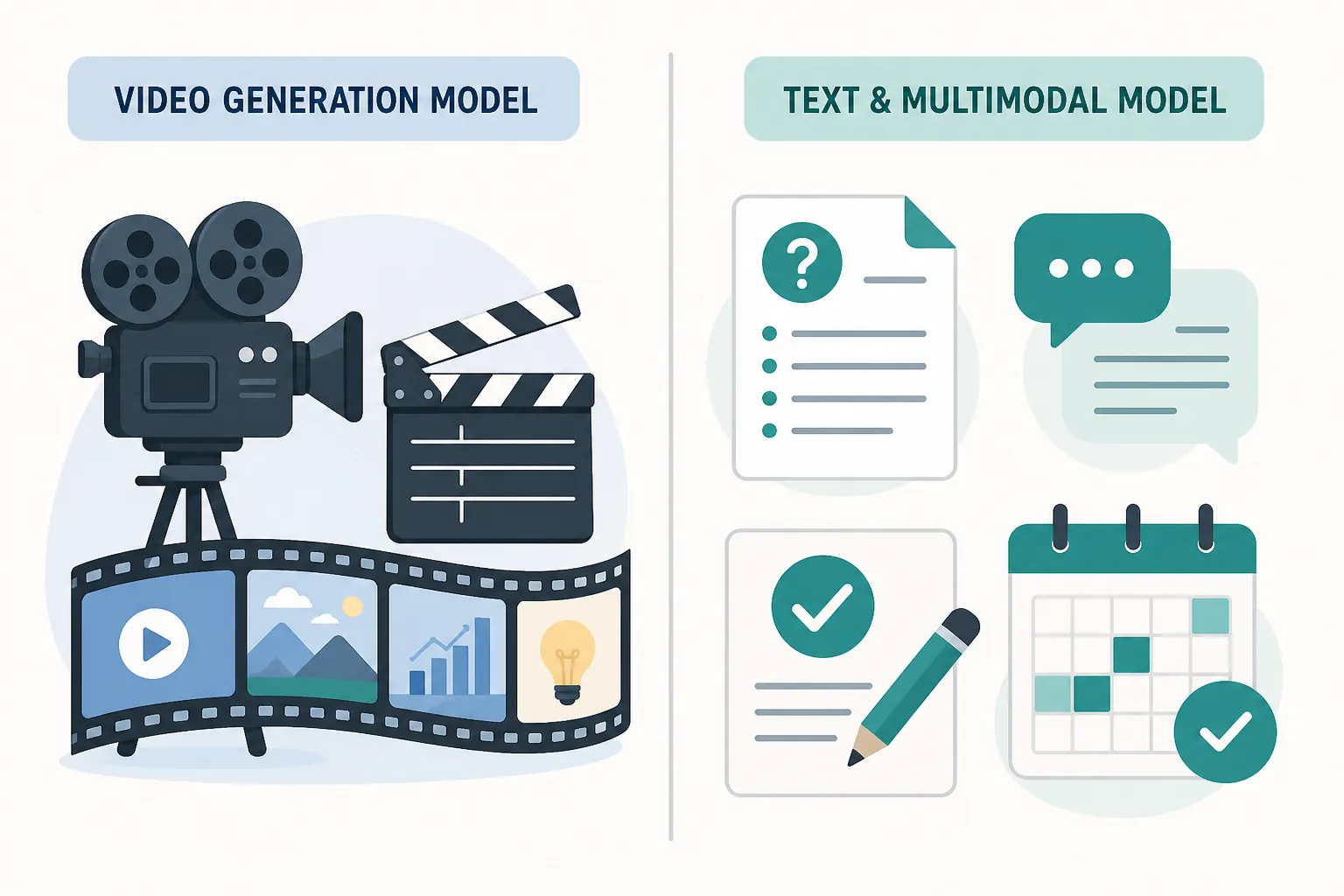
The name collision is the trap. “MiniMax” is the company and model family. H3 is the video model. M3 is the text/multimodal model that belongs in the study-tool lane. MiniMax describes M3 as a 1M-token context, native multimodal model, and Artificial Analysis profiles MiniMax-M3 as a leading open-weights model with an Intelligence Index score of 55.[3][4]
Even that M3 evidence needs a label. MiniMax’s headline M3 benchmark figures, including SWE-Bench Pro, Terminal-Bench 2.1, and MCP Atlas results, are vendor-reported with stated methodology, and none of those benchmarks is a GRE, MCAT, SAT, ACT, or ASVAB score report.[3] So M3 is the correct MiniMax model to test for text-based exam prep; it is not automatically proven as your exam tutor.
The video leaderboard is real, and it is narrow
H3’s strongest public signal at launch is in video editing, not education. Artificial Analysis listed MiniMax H3 at #1 on its Video Editing Leaderboard with audio, with an Elo score of 1,130 from about 5,044 samples.[5]
That is worth noticing if you are choosing a model to transform media. It is not a GRE quant explanation score. It is not an MCAT biology accuracy score. It is not evidence that H3 can write ACT English distractors, evaluate an ASVAB arithmetic-reasoning solution, or build a spaced review plan.
This is where students often lose time. A leaderboard number migrates from its original category into a decision it was never designed to answer. The correct conclusion is smaller: H3 appears competitive for short video editing with audio under that leaderboard’s conditions. The exam-prep conclusion does not follow.
What happened when we mapped H3 to real study tasks
Because H3 launched the same day as this review, this is a first-run task-fit test, not a mature independent benchmark. The useful question was simple: can the documented H3 model do the jobs that move exam scores? For four of the five common jobs, the answer is no at the model-category level.
| Student job | What the student needs | H3 fit | Where to route the work |
|---|---|---|---|
| Practice-question generation | Exam-style stems, plausible distractors, answer keys, difficulty control, source checking | Wrong tool. H3 generates short video, not a practice set. | Use M3 or another text LLM, then check against official exam sources. |
| Concept explanation | Step-by-step reasoning, misconception diagnosis, level adjustment | Wrong tool for the explanation itself. It can only help later if the explanation is already correct and you want a clip. | Use M3 or a study assistant workflow. |
| Answer grading | Comparison to rubric, partial-credit judgment, feedback on reasoning | Wrong tool. | Use a rubric-aware text workflow and verify with official scoring guidance. |
| Study-plan building | Diagnostic results, time remaining, topic priority, review loops | Wrong tool. | Use M3, a planner, or a dedicated exam-prep system. |
| Visual explainer creation | A short animation or visual scene based on already-verified content | Possible but limited. | Use H3 only after fact-checking the script and only if the cost is justified. |
For exam-specific routing, start from the exam rather than the model name: GRE, MCAT, SAT, ACT, or ASVAB. The official-source boundary matters more than the novelty of the model, which is also the line we draw in our OpenAI vs. Hugging Face study-tools comparison.
Where M3 fits instead
M3 is the MiniMax model to test if your task is text-heavy. Its 1M-token context and native multimodal profile make it plausible for long passages, notes, rubrics, screenshots, and multi-document review, while Artificial Analysis lists MiniMax-M3 pricing at $0.30 per 1M input tokens and $1.20 per 1M output tokens up to 512K context.[3][4]
That does not mean a student should dump an entire prep book into M3 and trust the output. The useful M3 test is smaller and harsher: give it official-style material, ask it to explain missed questions, require it to cite the exact rule or concept it used, and compare the result with official answer explanations. If it fails there, the context window and benchmark profile do not rescue it.
M3’s open-weights positioning is also relevant if you care about deployment flexibility, auditability, or research workflows; that is a separate question from whether it improves your next diagnostic score. For the model-access side of that discussion, use our open-weight models explainer. For H3 specifically, open-weights claims should stay tentative: open weights were announced, but they were not yet downloadable in our July 31 research check.
H3’s legitimate study role: short clips from already-checked material
There is one fair use case for H3 in exam prep: turning a verified explanation into a short visual clip. A student who already understands the right solution might want a quick animation of a physics setup, a geometry transformation, or a biological process. In that role, H3 is a presentation layer, not the source of truth.
The workflow should run in this order: solve or verify the content first, write the script second, generate the clip third, and check the final video again before using it for review. If that sounds slower than just prompting a video model, good. Exam prep is exactly where a smooth wrong explanation can do more damage than an awkward correct one.
This is similar to the caution behind our YouTube-lectures-to-notes hybrid workflow: video can help learning, but it still needs a text layer where claims can be checked, corrected, and turned into retrieval practice.
The cost math changes the decision
H3’s listed API pricing snapshot on July 31, 2026 was $0.13 per second for 2K output. At that rate, a 15-second clip costs about $1.95, and a run involving a 15-second reference plus 15 seconds of output would be about $3.90.[6]
That is not absurd for one polished clip. It becomes harder to justify when the clip is a study aid that still needs script writing, fact-checking, revision, and possibly regeneration. Ten short clips can easily become more expensive than the study value they add if they replace practice instead of supporting it.
The spending test is blunt: if the same time and money could buy official questions, a better diagnostic review session, or a targeted tutoring hour, H3 has to clear a high bar. A beautiful 15-second animation that does not change what you can answer under timed conditions is decoration.
Why polished video is a special accuracy risk
The accuracy warning here is not H3-specific research. A 2025 Frontiers in Computer Science rapid review discusses AI-generated instructional video in the Sora, Veo, and HeyGen era, not MiniMax H3 specifically.[7] Applying that concern to H3 is a reasoned generalization: when an AI-generated instructional video is polished, students may feel that the explanation is more settled than it really is.
UNC’s Learning Center gives the more practical study version of the same caution: generative AI can support academic study, but students still need to verify outputs, use it as a supplement, and avoid treating fluency as correctness.[8] That is especially important when the output is a clip, because video reduces friction. It plays forward. It looks finished. It does not invite line-by-line checking the way a written explanation does.
If you are already prone to mistaking recognition for mastery, a smooth AI video can make the problem worse. That is the same overconfidence pattern we discuss in AI addiction and study habits: the tool can feel productive while quietly removing the harder work of recall, error review, and timed application.
Independent early commentary also urges caution around H3’s limits rather than treating demos as proof of reliability.[9] That does not make H3 useless. It just keeps the tool in the right lane: short generated media, not exam-content authority.
Stability matters when your test date does not move
A same-day launch model is a fragile foundation for a study plan. APIs, pricing, access rules, model IDs, and open-weight availability can change. If your exam is in three weeks, you do not want your review system to depend on a tool you have not already tested against official material.
That is the lifecycle lesson from our Amazon Nova discontinued-models piece: model capability is only one part of study-tool reliability. Continuity, access, and replacement planning matter when the consequence is your score, not a demo reel.
The practical decision
If you searched “MiniMax H3 AI tested for exam prep” because you need a study assistant, do not start with H3. Test M3 or another text-capable study tool against official exam materials. Make it generate explanations, identify your errors, and survive comparison with official answers before you give it a role in your prep.
If you want H3 because you need a short visual explainer, keep the job small. Verify the facts first, script the explanation yourself or with a checked text model, generate the clip, then check the clip again. H3 can make the visual aid. It should not decide what the exam answer is.
References
- China's MiniMax releases H3 video model — Reuters, July 31, 2026
- What Is MiniMax H3? Video Editing, 2K, Audio & More — gptproto
- MiniMax M3: Frontier Coding, 1M Context, Native Multimodality — All in One Model — MiniMax
- MiniMax-M3: Leading open weights model — Artificial Analysis
- Video Editing Leaderboard (With Audio) — MiniMax H3 #1, Elo 1,130 — Artificial Analysis
- H3 - API Pricing & Providers — OpenRouter
- A rapid review of using AI-generated instructional videos in higher education — Frontiers in Computer Science, 2025
- Generative AI for Academic Study — UNC Learning Center
- MiniMax H3 Review: Specs, Demos, and Limits — PixVerse
Authoritative source
For the authoritative version of this contentHow to Read the '1 in 4 NFL Players CTE' Study
Report an error in this tool's output
Found something this tool got wrong beyond what's documented above? Report it so the accuracy log stays current.
Comments
Join the discussion with an anonymous comment.