
Why Researchers Rely on Open-Weight AI Models
Accuracy Warning — Qwen3-8B
Base model accuracy was 41%; fine-tuning improved to 78% on a single classification task - results may vary by domain and dataset.
- Accuracy:
- Moderate
- Tested:
- fine-tuning classification model with LoRA adapter
- Last tested:
- 2025-11-07
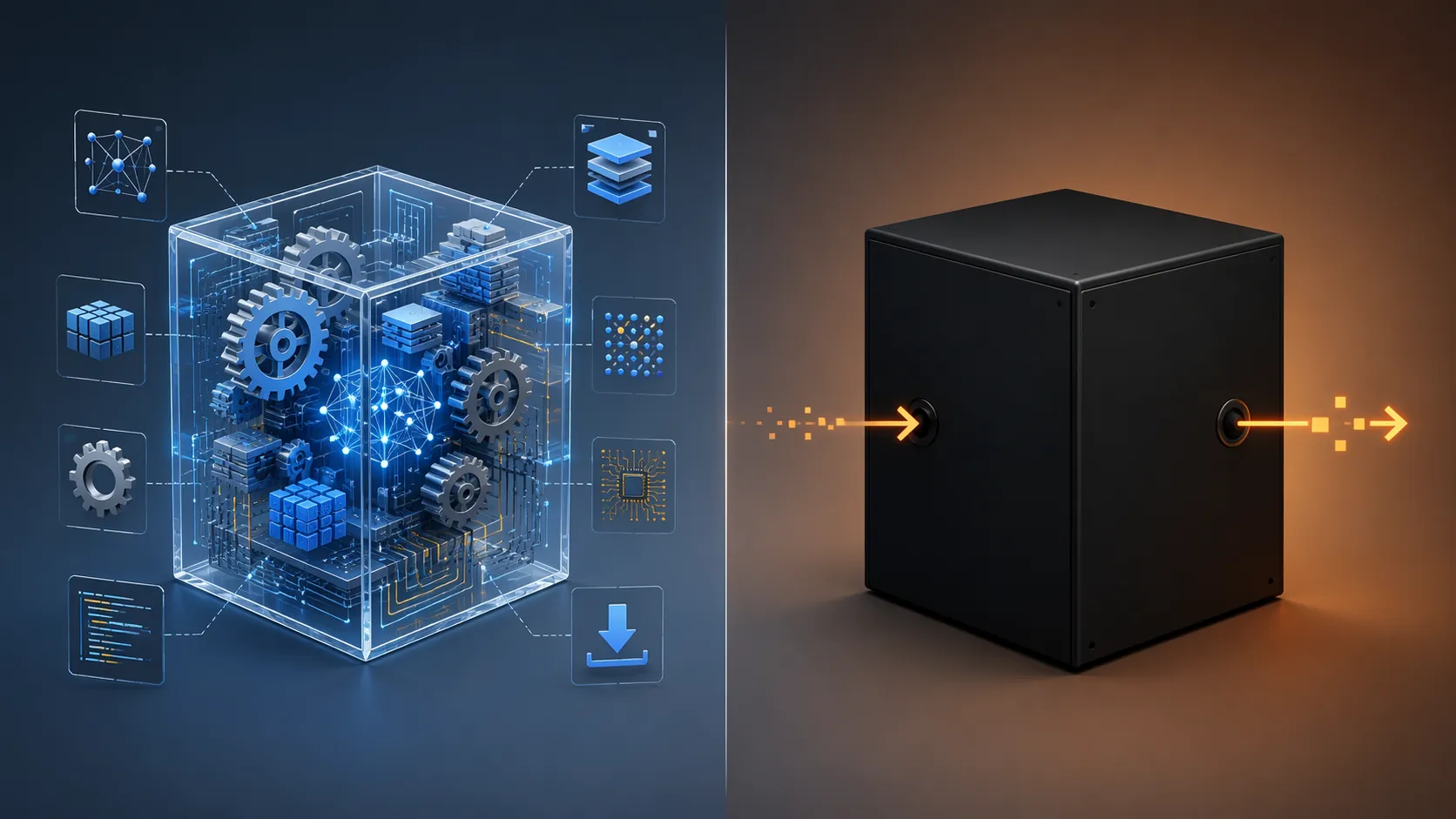
The phrase open-weight AI models for study and research hides an important distinction. A closed API gives you access to a model through a vendor-controlled interface: you send text in, receive text out, and accept that the provider controls the model, deployment, update schedule, and most inspection rights. An open-source AI system, in the stricter OSI framing, should support the freedoms to use, study, modify, and share the system. Many models called “open source” in everyday AI discussion do not meet that standard; they are better described as open-weight models, meaning their core model components are publicly released so users can download, run, study, and modify them under the license terms that apply. [1][2]
That distinction matters because “open” is too often used as a mood, not a research condition. Open-weight is not the same as fully open-source. Licenses can still restrict commercial use, downstream redistribution, or certain applications. But weight access changes what a researcher can physically do: rerun a model locally, compare versions, attach adapters, compress it, inspect activations, or measure how it behaves on specific hardware. Prompting a closed chatbot well is useful. It is not the same thing as controlling the object being studied.
The useful question is not whether open models are nicer
For casual studying, a closed chatbot may be perfectly adequate. If the task is to summarize a textbook chapter, quiz yourself on a concept, or draft flashcards, an API model can be fast, polished, and easier to use than downloading a model and managing inference. The real dividing line appears when the work becomes research: when a lab needs the same model behavior next month, when a student must describe exactly what changed, when a reviewer asks whether the training data or adapter affected the result, or when sensitive data cannot be sent to a remote vendor.
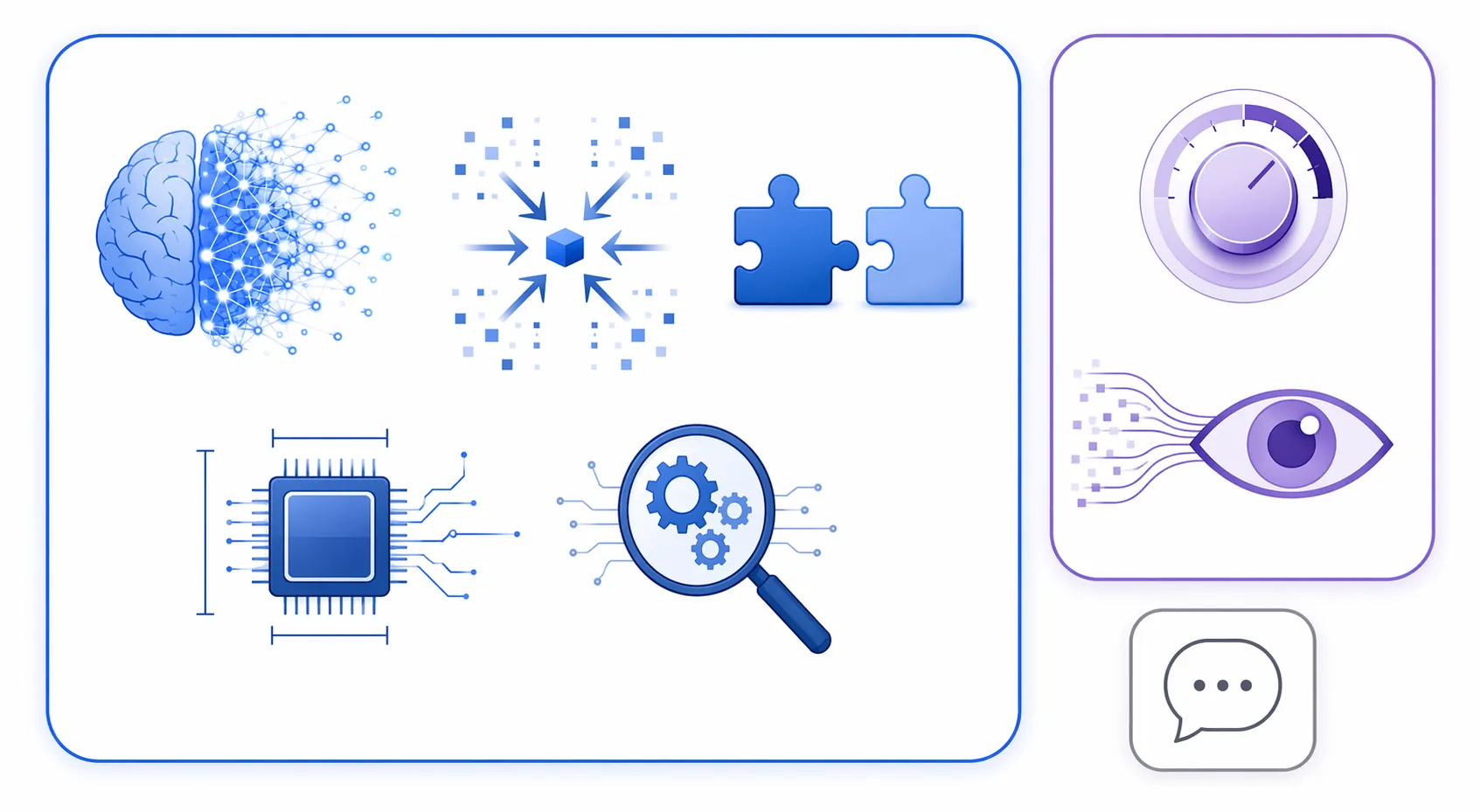
The strongest evidence for that dividing line comes from CSET Georgetown’s October 2025 report, The Use of Open Models in Research. The authors analyzed more than 250 scientific publications and identified eight distinct LLM research use cases. Five of those use cases were possible only with access to model weights. Two more strongly favored weight access. Only prompting sat comfortably inside the closed-API world. [3]
What the eight use cases actually require
A list of use cases can sound abstract until you translate it into the work that happens in a lab notebook. The CSET taxonomy is useful because it separates tasks by the kind of access they require, not by whether a vendor demo can produce an impressive answer. [3]
| Research use case | Relationship to weight access | What this means in practice |
|---|---|---|
| Prompting | Works through closed APIs | The researcher sends inputs and evaluates outputs without modifying the model. |
| Fine-tuning | Predominantly weight-dependent | The researcher adapts a model to a task or dataset and needs to document what was changed. |
| Model inspection | Predominantly weight-dependent | The researcher examines model components or behavior beyond ordinary input-output testing. |
| Continuous pretraining | Only possible with weight access | The researcher continues training the model on new data, often to adapt it to a domain or language. |
| Model compression | Only possible with weight access | The researcher reduces model size or computational burden for deployment or controlled experiments. |
| Combining or synchronizing models | Only possible with weight access | The researcher merges, aligns, or coordinates models in ways that require direct access to their components. |
| Hardware-functionality measurement | Only possible with weight access | The researcher measures how the model behaves on specific chips, systems, or deployment environments. |
| Examining internals for interpretability | Only possible with weight access | The researcher studies internal representations or mechanisms rather than only final outputs. |
Prompting is the familiar case: ask a model to classify a passage, explain a proof, draft code, or generate possible labels. The researcher can vary the prompt, temperature if the provider allows it, examples, and evaluation set. That is useful for many behavioral studies and plenty of student workflows. It also leaves the model itself untouched. If the provider silently updates the system, changes moderation behavior, alters routing, or retires a model version, the researcher may be left explaining a moving target.
Fine-tuning is different. The point is not to phrase the question more cleverly; it is to alter how the model performs on a task. A graduate student classifying domain-specific documents, a medical informatics team adapting labels to a local ontology, or a legal research group training on specialized categories needs more than an input box. They need to know which base model was used, which data shaped the adaptation, which parameters or adapter files changed, and whether the result can be rerun by someone else.
Continuous pretraining goes further. Here the model is not merely tuned for a narrow output format; training continues on additional data so the model can absorb a domain, corpus, or distribution. This is the sort of work that cannot be meaningfully reproduced if the underlying weights remain behind an API. A vendor may offer customization tools, but without the weights the researcher cannot fully control or inspect the training process that matters.
Model compression is similarly weight-bound. If a lab wants to quantize a model, distill it, prune it, or otherwise make it smaller and cheaper to run, it must work on the model components. That is not just an engineering convenience. Compression can change accuracy, bias, latency, and failure patterns. Those changes become research questions in their own right.
Combining or synchronizing models also requires access below the prompt layer. Researchers may want to merge model capabilities, align components, or coordinate systems across modalities or tasks. The details vary by project, but the common requirement is direct manipulation of model artifacts rather than conversation with a hosted assistant.
Hardware-functionality measurement is the least glamorous item in the taxonomy and one of the most revealing. Someone has to know how a model behaves on actual hardware: memory pressure, throughput, deployment constraints, and system behavior. A closed API can report latency from the outside, but it cannot let the researcher measure the model as a deployable object on chosen hardware.
Interpretability work is the clearest case against black-box comfort. If the research question concerns internal representations, circuits, activations, or mechanisms, outputs are not enough. The model’s answer may be the evidence for a prompting study, but it is not the substrate for interpretability. For that, the object under study has to be available.
The publication record does not look like a hobbyist niche
The CSET report also undercuts the idea that open-weight models are mainly a preference of tinkerers outside serious institutions. Nearly 90% of papers using open models involved academic institutions, 50% involved companies, and roughly 35% were coauthored across academic and company affiliations. [3]
Those percentages do not prove that open-weight models are more accurate than closed models on every task. They show something narrower and more important for researchers: open models are already embedded in the published workflow of academic and cross-sector AI research. When a paper depends on weight access, a closed API is not a less convenient substitute. It is a different kind of object.
There is a timing caveat. The report analyzed publications up to early 2025, while API providers have continued to add capabilities since then. Some closed providers now offer limited fine-tuning endpoints. Those tools can be valuable, especially for teams that want managed infrastructure and do not need to inspect or ship model artifacts. But the CSET asymmetry is not erased by hosted fine-tuning. Continuous pretraining, compression, interpretability, hardware measurement, and model combination still require access that an ordinary API does not provide.
A small fine-tuning case shows why this matters to students
The most useful example is modest. Stanford Research Computing published a November 2025 case study fine-tuning Qwen3-8B with a LoRA adapter. In that classification task, the base model reached 41% accuracy, while the fine-tuned version reached 78%. The cloud compute cost was under $5, and the resulting adapter file was under 500MB. [4]
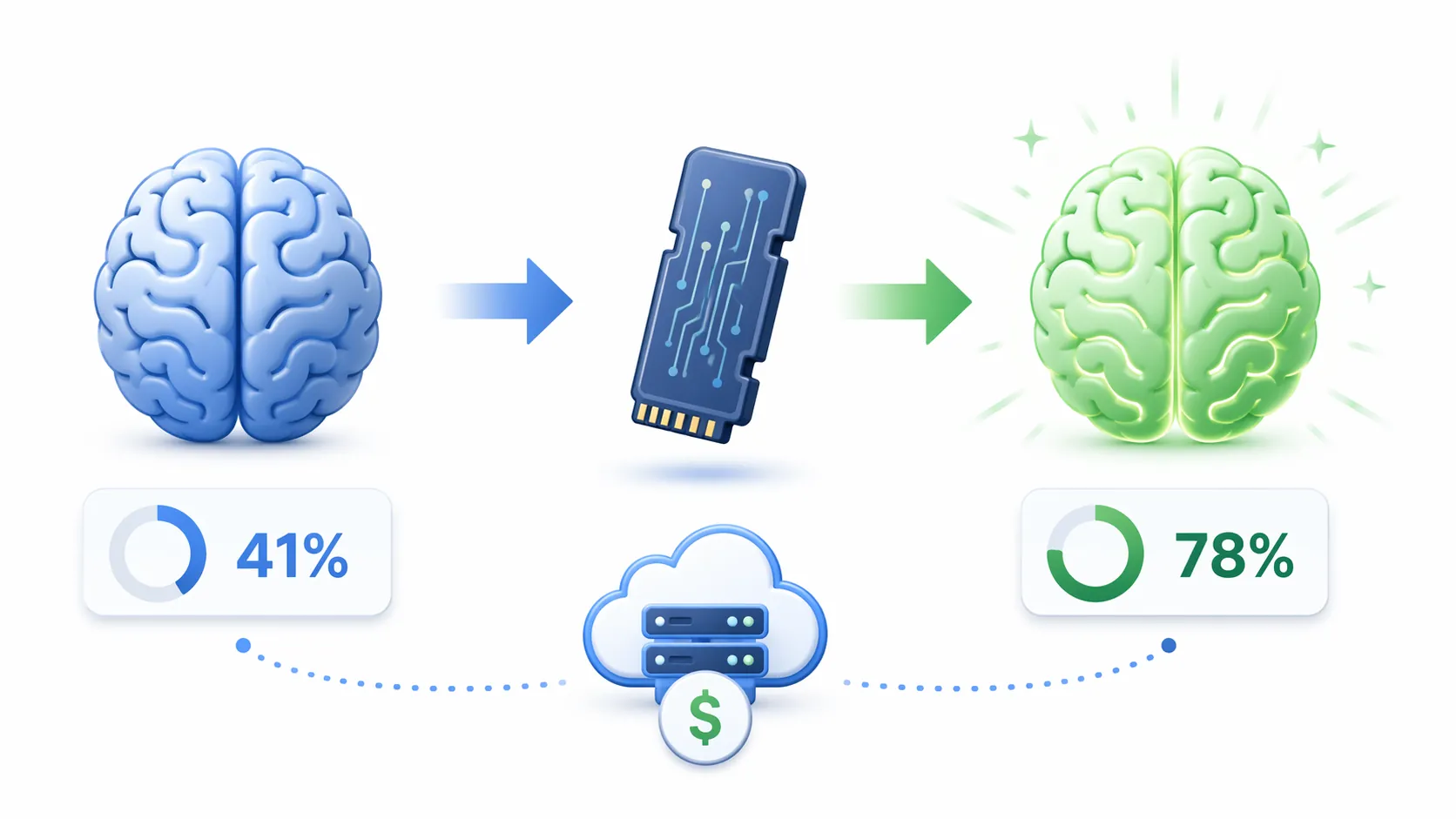
This is the kind of case that should make a graduate student sit up, not because it promises cheap miracles, but because it is reproducible in shape. There is a base model. There is a named adaptation method. There is a before-and-after metric. There is a small portable artifact that can be saved, shared, inspected, and reused. If the result fails later, there is something concrete to debug besides a prompt transcript.
The cost figure should stay attached to that setup. It was not a general law of fine-tuning. It came from one model version, one task, one adapter approach, and one compute arrangement. Newer models may start from different baselines. Larger datasets may cost more. Different tasks may benefit less. The point is not that open-weight fine-tuning is always under $5; the point is that weight access can turn customization into a controlled, portable research operation rather than a conversation with a remote system.
What closed APIs still do well
Closed APIs remain excellent for many study and research-adjacent tasks. They are easy to start using, often strong at general reasoning and writing support, and usually spare the user from driver errors, memory limits, deployment setup, and model-serving chores. A student preparing for an exam may be better served by a reliable hosted assistant than by spending a weekend configuring local inference.
They are also useful for exploratory work: generating hypotheses, rephrasing survey items, checking code logic, producing draft rubrics, or reading unfamiliar material quickly. None of that requires pretending the API is an inspectable research instrument. It is a tool with a boundary.
The boundary becomes painful when the model’s behavior itself is part of the claim. If a paper says a model improved after adaptation, the adaptation should be identifiable. If a lab says compression preserved performance, the compressed model should exist as an artifact. If a study makes claims about internal mechanisms, the internals should be accessible. If a deployment paper studies hardware behavior, the model has to run where the measurements are taken.
Licenses and platforms still need to be read
Weight access does not remove legal or institutional review. Some open-weight models use permissive licenses. Others use vendor community licenses with use-case restrictions. A university lab still has to check whether its intended use, redistribution plan, data rules, and publication requirements fit the license. “Downloadable” is not the same as “unrestricted.”
Distribution platforms also change the workflow. Hugging Face, local inference tools, cloud notebooks, and managed endpoints can all sit between the researcher and the model. For students comparing hosted tools with model hubs, StudyMethod’s guide to OpenAI and Hugging Face study workflows is a better place to start than a licensing rabbit hole.
There is a privacy and dependency angle too. Local open-weight models can reduce exposure to outages, vendor policy changes, and data-transfer constraints, though they do not automatically solve data governance. If the immediate concern is what happens when a hosted chatbot is unavailable, the practical study implications are covered in Why a ChatGPT Outage Might Actually Help You Study Better.
How to decide what you need
A simple test is enough for most projects: ask whether the model is merely helping with the work, or whether the model is part of the evidence. If it is helping you brainstorm, summarize, quiz, or draft, a closed API may be enough. If the model must be trained, altered, compressed, inspected, locally deployed, measured, or reproduced as an artifact, weight access becomes part of the method.
- Use a closed API when the task is ordinary prompting, reading support, tutoring, drafting, or quick exploration.
- Use an open-weight model when you need to fine-tune, continue training, compress, inspect, interpret, merge, benchmark on hardware, or rerun the same model under your own conditions.
- Treat API fine-tuning as useful managed customization, not as a substitute for full weight access.
- Read the license before building a research plan around a model, especially if the work involves redistribution, sensitive data, or commercial partners.
For ordinary studying, model choice should also account for cost, reliability, context window, answer quality, and the student’s ability to stay disciplined. That is why tool comparisons such as Claude Opus 5 versus Fable 5 for studying and study-habit guides like Why Tokenmaxxing Backfires belong beside the research discussion. More control is not automatically more learning. Sometimes it is just more setup.
For serious academic work beyond prompting, though, the published record is unusually clear. In the CSET taxonomy, closed APIs fit one use case cleanly. Open-weight models are the only viable option for five and the favored option for two more. That is not a branding advantage. It is a structural requirement: the difference between asking a model for an answer and being able to study, modify, rerun, and explain the model itself.
References
- What is an open-weight model — Stanford HAI
- Open Weights — Open Source Initiative
- The Use of Open Models in Research — CSET Georgetown, October 2025
- Fine-tuning Open Source Models — Stanford Research Computing, November 7, 2025
Authoritative source
No specific exam hub matched
Browse the exam hubs directory for the authoritative plan on any of the five exams.
Report an error in this tool's output
Found something this tool got wrong beyond what's documented above? Report it so the accuracy log stays current.
Comments
Join the discussion with an anonymous comment.