How a HIIT Study Break Improved My Exam Focus
Evidence label: Score Outcomes. Source type: self-reported outcome log. Evidence level: Limited. Last reviewed: 2026-08-25. Sample: n=1. The claim here is narrow: replacing between-block phone scrolling with a fixed 4-minute Tabata-style HIIT study break was associated with faster refocus and slightly better second-half practice-block accuracy during exam prep. It does not prove standardized-test score gains, memory improvement, or a general rule that HIIT will improve every test-taker’s focus.
| Item | Disclosure |
|---|---|
| Intervention | 4-minute Tabata-style break: 20 seconds of work, 10 seconds of rest, repeated for 8 rounds |
| Comparison | The old between-block habit: picking up the phone after a practice block |
| Tracked | Refocus time, distraction counts, block completion, and practice-block accuracy |
| Not tracked | Official exam score, long-term retention, sleep, nutrition, heart rate, or lab-measured attention |
| Tracking dates | Not published in this write-up; no dates are reconstructed after the fact |
| Allowed conclusion | A short, fixed break appeared to help the restart moment in this self-report |
| Not allowed | A claim that this workout raises GRE, MCAT, SAT, ACT, ASVAB, or other exam scores |
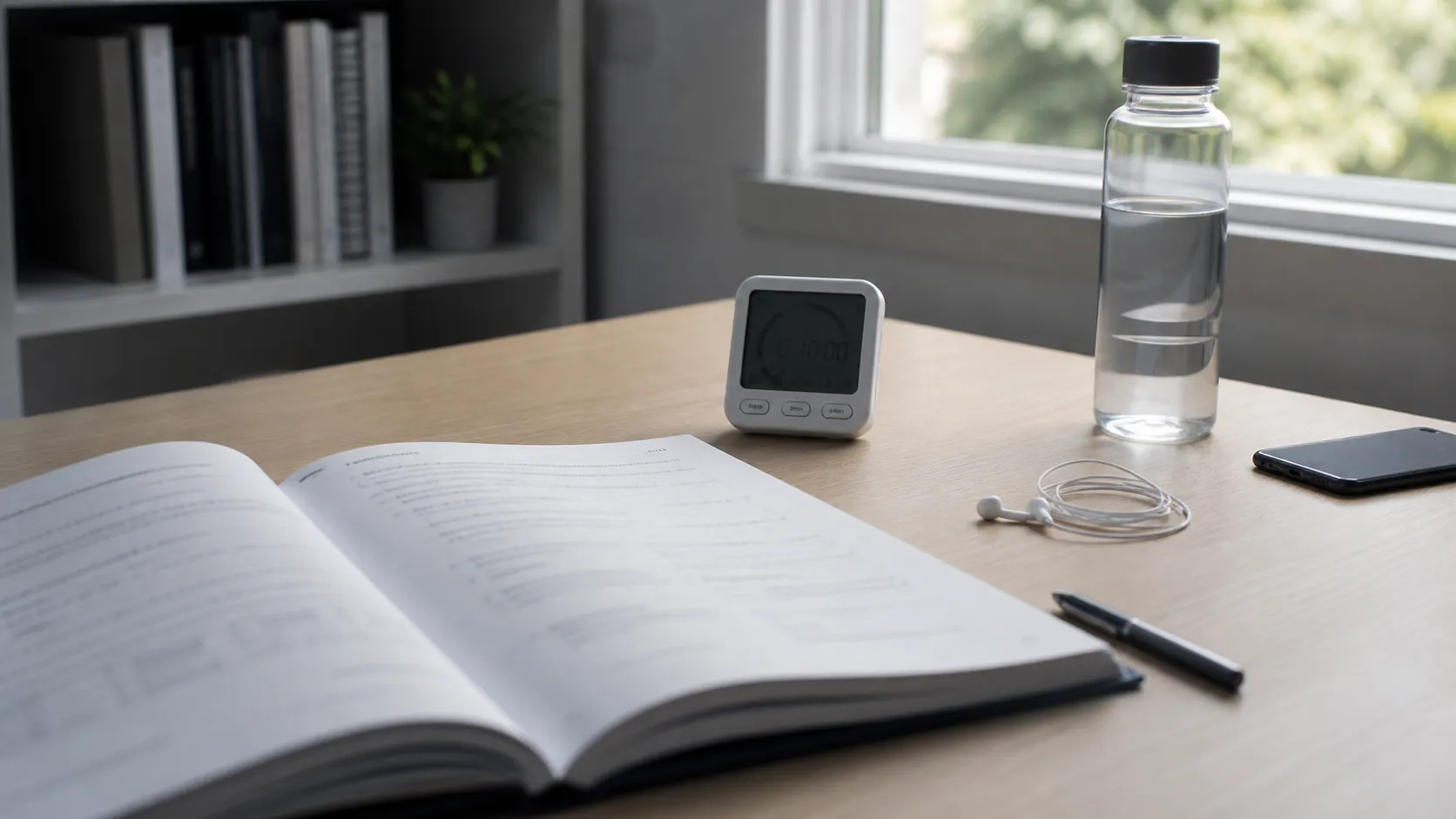
The useful version of “a HIIT study break workout that improved my exam focus” is not that the workout made me smarter. It is that the break had clean edges. Four minutes started. Four minutes ended. Then the practice set reopened. The weak point in my study routine was not the first block of work; it was the gap after it, when a “quick” phone check could absorb the exact energy I needed for the next block.
That is why I tracked the after-break moment instead of trying to make a heroic claim about motivation. The question was simple: after the break, how long did it take to restart, how many times did attention leak, and did accuracy collapse in the next practice block?
The 4-minute break I used
The break was the consumer version of Tabata: 20 seconds of work, 10 seconds of rest, repeated 8 times, for 4 total minutes. That format is widely described as “Tabata,” though the original research protocol was much more demanding than the way most people use the word in study-break contexts today. For this log, “Tabata-style” is the safer phrase: fixed intervals, high effort relative to my own body, not an attempt to reproduce a laboratory-level intensity target. [1]
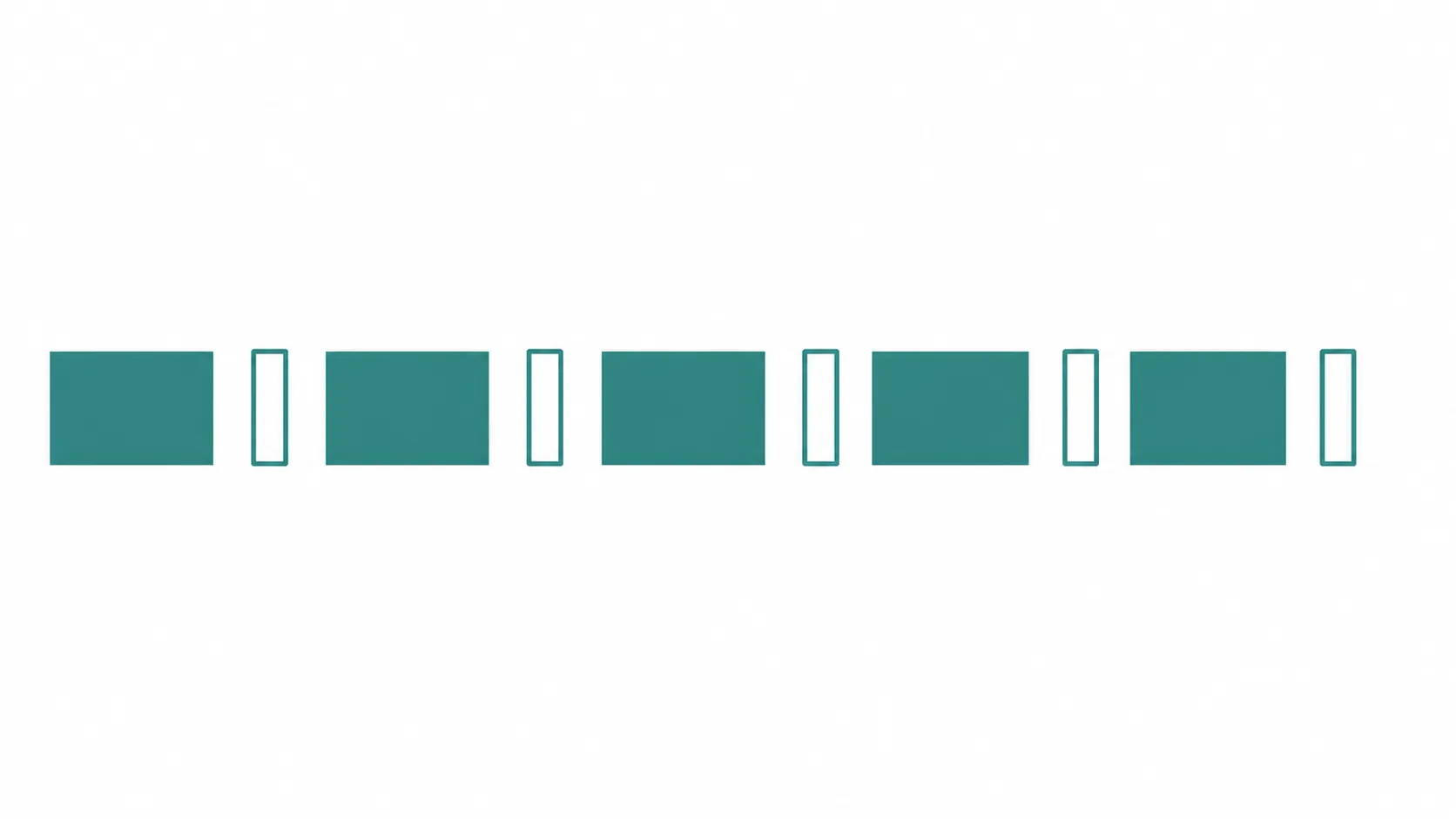
I placed it between study blocks, not before the entire study session. That placement matters. I was not trying to become a person who exercises before dawn and then floats into a perfect day. I was trying to stop losing the second block to phone drift.
The exact movements are less important than the timer, the safety margin, and the restart rule. A low-equipment version can use bodyweight squats, marching high knees, step-backs, incline pushups against a desk, or another movement that does not turn the room into a gym. The point is not to max out. If the break leaves you sweaty, dizzy, embarrassed, or unwilling to sit down again, it has failed as a study break even if it looked like exercise.
- Work interval: 20 seconds of vigorous but controlled movement.
- Rest interval: 10 seconds of stillness or slow breathing.
- Rounds: 8.
- Total time: 4 minutes.
- Restart rule: when the timer ends, open the next practice block before touching the phone.
The phone rule did more work than it sounds like. A walk, stretch, or snack break can still be fine, but those breaks are easy to negotiate: one message, one video, one score forum, one explanation thread. The Tabata timer was too short to bargain with.
How I measured whether focus actually improved
The tracking method was deliberately plain. I did not try to measure “mental clarity.” I measured the ugly little things that decide whether a study plan survives contact with a tired afternoon.
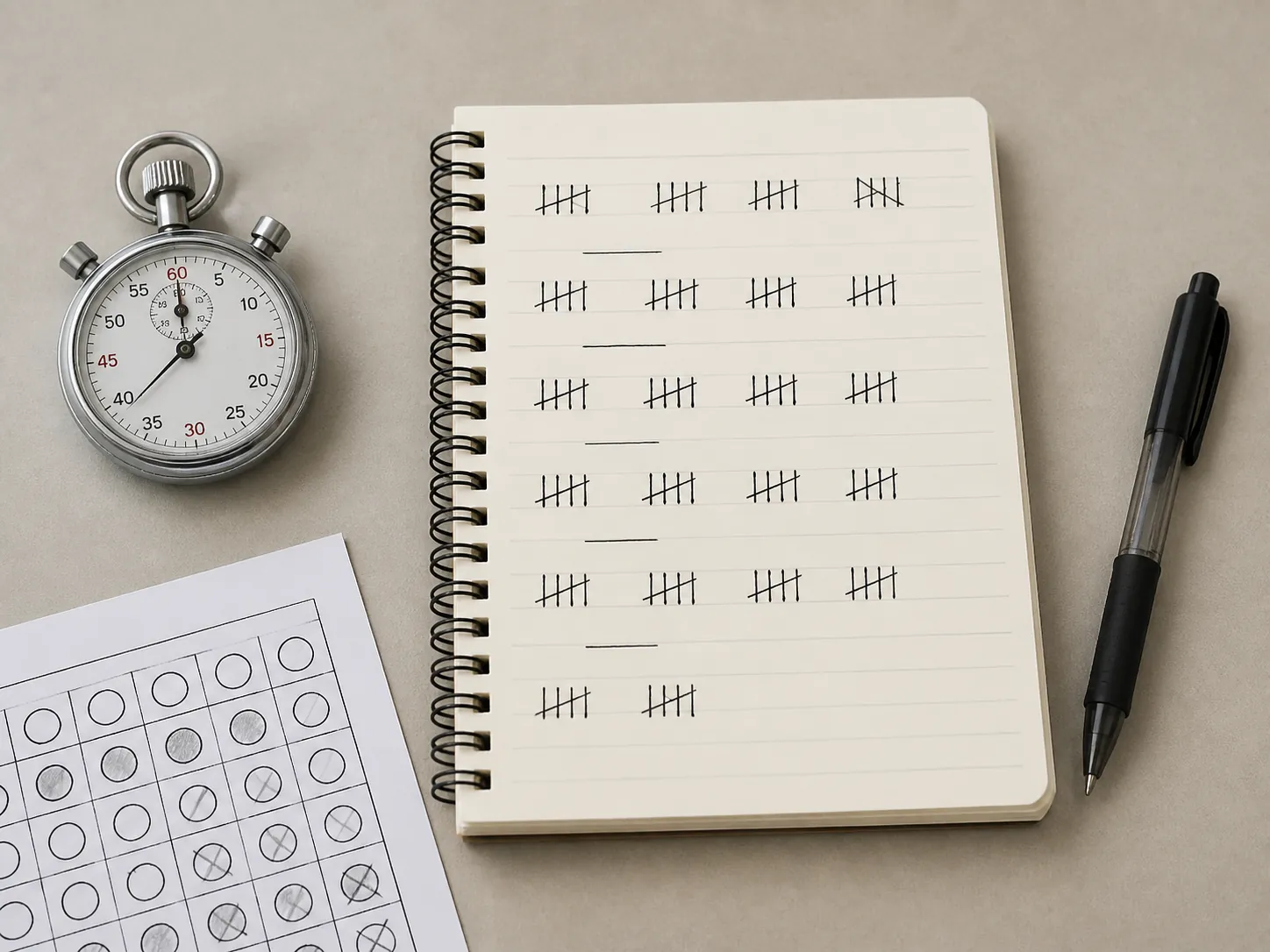
| Metric | How I counted it | Why it mattered |
|---|---|---|
| Refocus time | Minutes from the end of the break to the first real action in the next block: opening the set, reading the first question, or writing the first answer step | This measured the restart, not how virtuous the break felt |
| Distraction counts | A tally each time I left the practice task for phone use, unrelated tabs, messaging, or avoidant desk activity | This caught the difference between sitting at the desk and actually working |
| Block completion | Whether the planned second block was completed without being abandoned or shortened | A focus break is not useful if it quietly becomes a way to end the session |
| Practice-block accuracy | Accuracy in the practice block after the break, compared with the matching block pattern I had been using before | This checked whether faster restarting came with sloppy work |
Refocus time was the cleanest metric. It started after the break ended, not when I began thinking about studying again. If I stood around, adjusted music, checked a message, or reread the same instructions without beginning, that time counted. The clock stopped only when I had taken the first concrete step into the next practice block.
Distraction counts were stricter than mood. One phone pickup counted. One unrelated tab counted. One “I’m just checking the timer history” detour counted if it was not needed for the block. This was not moral bookkeeping; it was leak detection.
Accuracy was the guardrail. If the workout helped me sit down faster but made the next block worse, that would not be an improvement in exam focus. For test prep, the second half of a session matters because that is where avoidance can dress itself up as fatigue, review, or “researching strategy.”
The log was still noisy. Practice sets are not identical. Some topics are harder. Some days come with less sleep, more caffeine, or more deadline panic. Because this was n=1 and self-reported, the result should be treated as a repeatable self-test design, not as external proof. If you want the broader mechanism map behind study focus, the site’s executive-function study-technique guide is the better place to separate attention control, task switching, inhibition, and working-memory demands.
What changed in the log
The pattern was small and useful: after the Tabata-style break, refocus time shortened, distraction counts dropped, and second-half practice-block accuracy held up better than it usually did after a phone break. The important word is “usually.” This was not a perfect streak, and it was not a dramatic transformation. It was a repeated nudge in the part of the session where I had been leaking time.
| After-break outcome | Observed pattern | How much confidence it deserves |
|---|---|---|
| Refocus time | Shorter after the fixed 4-minute break than after the phone-scroll break | Most credible part of the log because the start and stop points were simple |
| Distraction counts | Lower after the timer-based break | Useful, but dependent on honest tallying |
| Block completion | The second block was easier to begin and finish | Plausible, but vulnerable to day difficulty and schedule pressure |
| Practice-block accuracy | Slightly better in the post-break block pattern | Relevant, but not clean enough to infer score gains |
I am not publishing raw row-level values here, so the claim stays deliberately modest. Without the full dated sheet, a reader cannot audit the exact size of the change or rule out every boring alternative explanation. Maybe some later practice sets matched my strengths. Maybe the novelty of the timer helped. Maybe the real intervention was putting the phone face-down and giving the break a hard endpoint.
Those caveats do not make the log useless. They define what it is good for. It is good enough to justify a self-test if your own between-block break is turning into a phone trap. It is not good enough to say that HIIT improved my official exam score, because no official score outcome was measured.
Does the research make this result plausible?
The acute-HIIT literature supports a narrow version of this result. In a meta-analysis of 20 randomized controlled trials, acute high-intensity interval exercise was associated with a small improvement in executive function, with an SMD of 0.33 and a 95% confidence interval from 0.08 to 0.58. In the 20–30 age group, the executive-function effect was reported as SMD 0.42. The same meta-analysis did not find a significant acute effect on memory, which is exactly why this article is not making a retention claim. [2]
That distinction matters for exam prep. Executive function is the thing you lean on when you need to restart, inhibit the phone, switch back to the question, and keep the next step in mind. Memory is the thing you want when material sticks for the exam. A 4-minute HIIT break can plausibly help the first category without proving anything about the second.
A separate synthesis from UC Santa Barbara researchers points in the same direction on timing and dose: cognitive benefits were strongest for vigorous activity, when cognition was tested after exercise, and for bouts under 30 minutes in adults ages 18–45. That fits the placement of the study break better than a long workout before or after the session. [3]
The most directly relevant trial used the exact 4-minute Tabata structure. In an 8-week randomized controlled trial of 84 sedentary college students, the 20-second work / 10-second rest format produced larger cognitive gains than moderate-intensity continuous training, including a WAIS-IV core cognition increase of 10.47 points and a choice reaction time decrease of 65.15 milliseconds. That study is stronger than this self-report, but it still does not prove that a test-taker’s official exam score will rise after using a Tabata break between practice blocks. [4]
There is also a more ordinary intensity clue from college-student work: a 10-minute pre-class exercise bout improved executive function at an effort described as roughly like “walking between buildings and you’re a hair late.” That is useful because it keeps the intervention from drifting into punishment. A study break that requires a heroic fitness identity is not going to survive a dense prep schedule for most people. [5]
So the literature does not make the self-report look magical. It makes it look small, time-sensitive, and domain-limited. Better restarting and fewer distractions after a short vigorous bout are plausible. Memory improvement, score transformation, and universal exam-focus improvement are not supported by this evidence.
How to test the same break without fooling yourself
If you try this, do not start by asking whether it “feels energizing.” That question is too easy to answer based on novelty. Use the same three practical metrics: refocus time, distraction counts, and completion/accuracy in the next block.
| Step | What to do |
|---|---|
| 1. Pick one study-block format | Use the same kind of practice block each time: for example, timed questions, passage review, problem sets, or flashcard recall. Do not compare a hard topic day with an easy review day and pretend it is clean. |
| 2. Record your usual break | Before changing anything, log what happens after your normal break. If that break is phone scrolling, write that down plainly. |
| 3. Insert the 4-minute timer break | Use 20 seconds of controlled work and 10 seconds of rest for 8 rounds. Keep the movements safe and repeatable. |
| 4. Start the refocus clock | When the break ends, measure how long it takes to take the first real action in the next block. |
| 5. Tally distractions | Count phone pickups, unrelated tabs, messages, and avoidant desk activity during the next block. |
| 6. Record completion and accuracy | Write down whether you finished the block and how accurate the work was. Do not rely on memory later. |
| 7. Compare patterns, not one lucky day | Look for repeated direction across similar sessions. One good block is not a method. |
A tiny log is enough to expose the main issue. If your refocus time drops but your accuracy falls, the break is probably too intense, badly placed, or just not useful for that subject. If your accuracy holds but the break keeps expanding into water, messages, stretching, and “one more thing,” the workout is no longer the intervention. The hard edge is gone.
This self-test also pairs well with other structured break experiments. If a HIIT break is not a fit, compare it against a quieter protocol like a mindfulness exercise for study focus, a timed Pomodoro study break, or another evidence-labeled break case such as the birdwatching focus break. The comparison only works if every option is judged by the same after-break metrics.
When I would skip the HIIT version
I would not use this break if the movement itself becomes the obstacle. Joint pain, dizziness, migraine sensitivity, panic symptoms, overheating, shared-space awkwardness, or a history that makes intense intervals risky are all good reasons to choose something else. A break that makes you dread the next block is not a focus tool.
Novices should also treat “high intensity” as relative, not as a dare. The study version of this protocol needs to leave enough control for the next block of cognition. If the first minute feels like a fitness test, reduce the movement intensity, switch to lower-impact options, or abandon HIIT and keep the fixed timer idea.
The part worth keeping is the measurable reset: a short break with a known endpoint, followed by a tracked return to work. For me, the 4-minute Tabata-style version was associated with faster refocus, fewer distraction leaks, and slightly better practice-block accuracy in the second half of prep. That makes it worth testing if it fits your body and schedule. It does not make it a credible promise of better memory, transformed scores, or universal exam focus.
References
- Tabata, bellicon
- Effects of acute high-intensity interval exercise on cognitive function: a systematic review and meta-analysis, Scientific Reports
- Bursts of exercise boost cognitive function, UCSB neuroscientists find, UC Santa Barbara, 2024
- Effects of 4-min Tabata training on cognitive performance in sedentary college students, Frontiers in Psychology
- Exercise benefits executive function, Northeastern Global News, 2025-12-19
Related case links
No matching exam hub found
Browse the exam hubs directory to find the study plan for this exam.
Did a similar plan work for you?
Share whether a comparable timeline and starting point produced a similar result — this is verification discussion, not general commentary.
Comments
Join the discussion with an anonymous comment.