
A 20-Minute Birdwatching Break Boosts Focus and Mental Health
If your break choice is between a phone scroll, a vague “go outside,” and a timed birdwatching reset, the strongest controlled student evidence supports the timed birdwatching break for focus and mental health—but only within a narrow claim. A 2024 controlled student trial found that 30-minute birdwatching sessions, done 3–5 times per week for 5 weeks, improved well-being and reduced psychological distress more than generic nature walks, with both nature conditions outperforming the control group. It did not test GRE, MCAT, SAT, ACT, ASVAB, or course-exam score gains. Treat this as a supported break protocol, not a score-improvement promise. [1]

The useful evidence starts with a student trial, not a nature slogan
The load-bearing study here is the North Carolina State University pilot-scale experiment published in the Journal of Environmental Psychology in 2024. It matters because the comparison was not “birdwatching versus nothing.” The researchers randomly assigned 112 college students to one of three conditions: birdwatching, nature walks, or a control group. The birdwatching and nature-walk groups completed 30-minute sessions, 3–5 times per week, over 5 weeks. [1]
That design answers the question an exhausted test-taker actually has: is birdwatching doing anything different from just stepping outside? In this trial, yes, on the outcomes measured. Birdwatchers had a mean WHO-5 well-being increase of +1.62, compared with +1.12 for nature walkers. On the STOP-D psychological distress measure, birdwatchers dropped −0.80, compared with −0.48 for nature walkers. Both groups did better than the control condition. [1]
Those are well-being and distress results. They are not practice-test score results. They do not show that a birdwatching break raises a 510 MCAT to a 515, turns a 155 GRE Quant into a 160, or moves an ACT section score. That distinction is not nitpicking; it is the difference between a usable study-support habit and another prep myth with feathers glued to it.
The study also has limits worth keeping in view. It was pilot-scale, with 112 college students, and the sample was self-selected. The participants skewed white at 80.4% and female at 61.7%, which means the result may not generalize cleanly across all student populations. It was also not conducted specifically on GRE, MCAT, SAT, ACT, or ASVAB test-takers during official exam prep. [1]
The break protocol: 20–30 minutes, 3–5 times weekly
A test-week break has to survive contact with Tuesday. It cannot require a car, binoculars, a new hobby identity, or a morning lost to “self-care.” The practical version is small: leave the desk, give your attention a low-effort target, identify a few birds, and return before the break turns into avoidance.
| Protocol element | What to do |
|---|---|
| Duration | Set a timer for 20–30 minutes. |
| Frequency | Use it 3–5 times per week during heavy prep. |
| Location | Use a campus green space, park, courtyard, sidewalk with trees, or a window with visible sky or branches. |
| Gear | Use the free Merlin Bird ID app on iOS or Android; binoculars are optional, not required. |
| Task | Sit or walk slowly, identify 3–5 birds by sound or photo, log them, then stop. |
| Return rule | Go back to the next planned study task, not to your phone. |
The 30-minute ceiling comes from the student trial. The 20-minute floor is supported by a separate 2019 “nature pill” study covered by Harvard Health: in an 8-week trial with 36 adults, 20–30 minutes in a nature setting produced the largest single-session cortisol reduction, while additional time beyond 30 minutes showed diminishing returns. [2]
For exam prep, that dose is useful because it is long enough to interrupt a stress loop but short enough not to eat the afternoon. A 7-minute glance out the window may be pleasant. A 90-minute “break” after a brutal practice section may be necessary sometimes. But the repeatable protocol sits in the middle: 20–30 minutes, scheduled, finished, and followed by a defined return task.
How to run one session
- Before you leave the desk, write the next study action you will return to: “review missed genetics passage,” “redo algebra set 4,” or “check explanations for questions 21–30.”
- Set a 20–30 minute timer. Do not leave the break open-ended.
- Go somewhere with visible or audible bird activity. A bench, courtyard, parking-lot tree line, or dorm window can be enough.
- Open Merlin Bird ID and use Sound ID or Photo ID when you hear or see a bird.
- Aim to identify 3–5 birds or bird sounds. If you only identify one, that is still a valid session.
- Log what you found in the app or a notebook.
- When the timer ends, return to the written study action. Do not “just check” messages first.
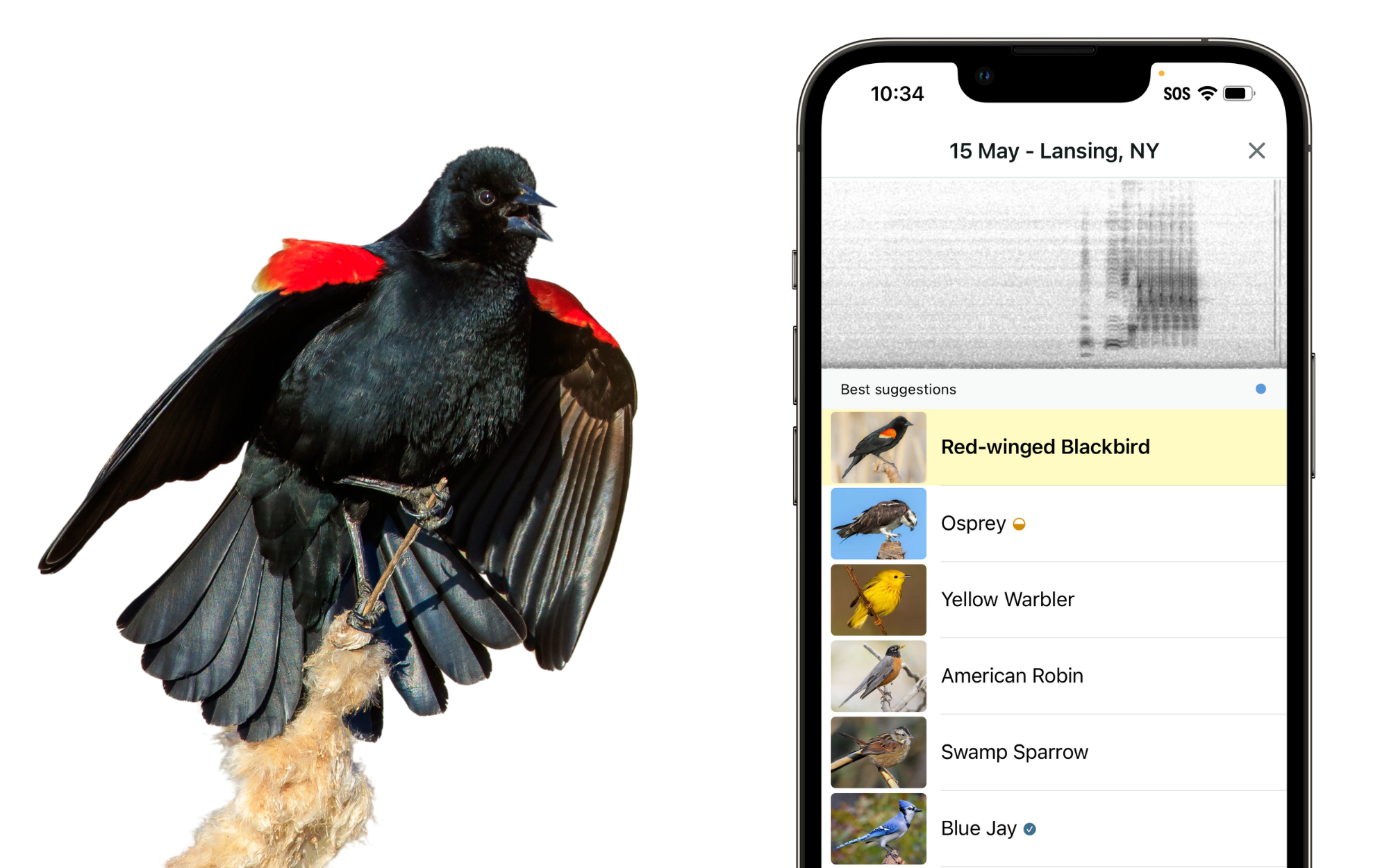
Merlin is useful here because it adds structure without adding friction. You do not need to know bird names beforehand. You do not need to buy binoculars. The app gives the break a simple job: listen, look, identify, log. That is different from walking outside while mentally replaying a bad practice score.
Why birdwatching may beat a generic walk
A generic nature walk can help, and in the NCSU trial it did. The reason birdwatching is the more interesting break is that it gave students a slightly more structured attentional task. They were not merely outside; they were directing light attention toward specific sights and sounds. That is a good fit for attention restoration theory, where “soft fascination” means the environment holds attention with little effort, giving the more effortful, directed-attention system a chance to recover. [1]
That matters during practice review. Two hours into missed-question analysis, the problem is often not that the student lacks discipline in some grand moral sense. The problem is that directed attention has been dragged through dense explanations, answer-trap comparisons, and self-criticism. A phone break keeps the attentional system busy. A birdwatching break gives it a target that is specific but not academically demanding.
The distinction is small but practical. “Go outside” leaves room to keep thinking about percentile ranks, application deadlines, or how everyone else seems ahead. “Find three birds” narrows the job. You listen for a call, watch movement in a tree, check an identification, and make a note. The break has enough shape to prevent rumination from taking over.
Birdwatching break versus screen break
The real competitor is not usually a noble 30-minute walk through a botanical garden. It is the phone already sitting beside the answer explanations. The student tells themselves they need a quick reset, opens one app, then returns 18 minutes later more irritated, more scattered, and still tired.
A screen break can feel like rest because it changes the content. It does not necessarily change the demand pattern. There is still rapid novelty, evaluation, comparison, interruption, and the small emotional whiplash of whatever the feed serves next. For a test-taker trying to recover enough attention to review another passage or drill another set, that is a poor trade.
The birdwatching protocol replaces the usual break behavior rather than adding another obligation. Use it where the phone break would have gone: after a 90–120 minute study block, after a difficult practice section, or between longer cycles of timed work and review. If you already use Pomodoro-style blocks, it fits better after several cycles than after every 25-minute sprint.
When to use it during GRE, MCAT, SAT, ACT, or ASVAB prep
Use this break where attention failure is actually costing you. It is most useful after tasks that create fatigue but still require accurate follow-up: reviewing missed MCAT passage questions, checking GRE quant traps, analyzing SAT reading misses, drilling ACT science timing, or working through ASVAB arithmetic errors. It is less useful as a way to procrastinate before the first study block has started.
| Study situation | How to use the break |
|---|---|
| After a full-length or section-length practice test | Use 20–30 minutes before review, especially if you are too reactive to read explanations carefully. |
| Between timed practice and error analysis | Use the break as a reset so the review session does not become score-rumination. |
| During a long weekend study block | Replace one phone break with birdwatching, then return to a written next task. |
| During final exam week | Keep the session short and local. This is not the week to discover a distant trail. |
| On low-sleep days | Use it as a distress-reduction break, not as a substitute for sleep. |
The scheduling rule is simple: do not let the break make the study plan fuzzier. If the next action is unclear before you leave, the return will be messy. Write the next task first, take the break, then execute the task you already chose.
What to track, and what not to pretend you are tracking
Track the outcomes the evidence actually supports: distress, mood, and ability to re-enter focused work. A quick 1–5 rating before and after the break is enough. For example: “How tense am I?” “How scattered do I feel?” “Can I do the next review task without opening my phone?”
Do not track this as if it were a direct score intervention. If your practice scores rise over the next month, many things may be responsible: more review, better timing, stronger content knowledge, improved sleep, easier practice material, or random variation. The birdwatching evidence does not isolate exam-score effects.
A reasonable two-week test is enough. Replace one screen-based break during long study days with a 20–30 minute birdwatching session. Repeat it 3–5 times weekly. If you come back less distressed and more able to review accurately, keep it. If you find the task annoying, inaccessible, or too easy to stretch into avoidance, use another structured non-screen break.
The bounded recommendation
For a student deep in exam prep, the practical recommendation is not to become a birder. It is to replace one phone-based break during a long study block with a timed birdwatching session: 20–30 minutes, 3–5 times per week, using a nearby outdoor space or window and a simple identification tool.
Judge it by the right standard. If it lowers distress and helps you return to the next study task with less friction, it is doing the job the evidence supports. If someone claims it will directly raise your MCAT, GRE, SAT, ACT, or ASVAB score, ask for the score-outcome trial. That trial is not in the evidence yet.
References
- Birdwatching linked to increased psychological well-being on college campuses: A pilot-scale experiment, Journal of Environmental Psychology, 2024.
- A 20-minute nature break relieves stress, Harvard Health Publishing, 2019.
Related case links
No matching exam hub found
Browse the exam hubs directory to find the study plan for this exam.
Did a similar plan work for you?
Share whether a comparable timeline and starting point produced a similar result — this is verification discussion, not general commentary.
Comments
Join the discussion with an anonymous comment.