
Comparison
The Odyssey Exam Prep: Key Quotes, Literary Devices & Essay Guide
This guide bridges the gap between knowing the plot of The Odyssey and being able to produce analytical essay writing under exam pressure. It provides curated key quotes with ready analysis, a cheat sheet of Homeric literary devices, and a repeatable thesis-building framework for timed essays.
Verdict panel
- Compared
- not specified
- Target exam
- not specified
- Best for
- not specified
- Pricing last reviewed
- pricing currency unconfirmed
The night before an exam, knowing what happens in The Odyssey can feel reassuring right up to the moment the prompt asks you to argue something. Plot memory says, “Odysseus blinds the Cyclops.” Essay writing has to say what that moment proves: about pride, identity, cleverness, heroic fame, divine punishment, or the cost of wanting your name remembered.
This is why a useful Odyssey study guide and summary cannot stop at summary. If you are shaky on the sequence of events, use The Odyssey Summary and Analysis for Students first. If you already know the journey, spend your last study hours on the smaller, harder task: choosing evidence that can survive under time pressure.

A quick boundary note for 2026: Christopher Nolan’s film adaptation has made Homer’s epic unusually visible again, and some classes may discuss the poem beside the film. This guide stays with Homer’s poem. If your assignment asks for adaptation comparison, use 10 Ways Nolan's The Odyssey Diverges from Homer's Epic or Study Homer's Odyssey Through Christopher Nolan's Film as companion resources.
The Exam-Ready Version of Studying The Odyssey
For exam purposes, a quote is not useful because it is famous. It is useful because you can attach it to a claim. The strongest passages in The Odyssey tend to do more than one job: they reveal character, expose a social rule, carry a theme, and give you a device to name. SparkNotes’ study materials organize the poem around major themes, characters, and key passages, which makes them a practical starting point for this kind of evidence bank.[1]
| What to memorize | What to prepare |
|---|---|
| A short phrase or scene marker | A claim it can support |
| One theme label | A more arguable tension inside that theme |
| One literary device | The effect of that device in the passage |
| One character action | The consequence of that action |
Notice the difference. “Odysseus is clever” is a note. “Odysseus’ cleverness protects him when he suppresses his identity, but endangers him when he insists on proclaiming it” is the beginning of an essay.
A Quote Bank That Can Actually Write Essays
Do not try to memorize twenty long passages. Memorize a small group of scenes so well that each one can answer several prompts. The wording below uses compact quote handles and scene references rather than asking you to reproduce a full translation from memory; your class edition may phrase the lines differently.
“The man of twists and turns”
The poem opens by asking the Muse to sing of a “man of twists and turns,” a phrase associated with Odysseus’ wandering intelligence as well as his unstable path home.[2] As an exam tool, this is almost too valuable to waste on a generic opening sentence. It lets you argue that Odysseus’ identity is built around movement: he survives because he adapts, disguises himself, withholds information, and reads other people quickly.
Useful themes: cunning, identity, nostos, storytelling, leadership. Useful device: epithet or characterizing phrase. Stronger essays notice the double edge. The same flexibility that makes Odysseus brilliant can make him hard to trust. He is not only a homecoming hero; he is a man whose gifts depend on delay, concealment, and verbal control.
Avoid using this quote as a decorative label for “Odysseus is smart.” Attach it to a verb. He adapts. He conceals. He narrates. He survives by refusing to be fixed too early.
Odysseus Names Himself to Polyphemus
After escaping Polyphemus, Odysseus reveals his real name, turning a successful trick into a dangerous claim for fame. The episode is one of the poem’s clearest examples of intelligence undone by pride: “Nobody” saves him, but “Odysseus” exposes him. SparkNotes highlights the Cyclops episode as a key passage for Odysseus’ character and the consequences of his self-assertion.[1]
Useful themes: kleos, pride, cunning, consequences, divine punishment. Useful devices: dramatic irony, naming, delayed consequence. The scene works especially well in essays that ask whether Odysseus controls his fate. He wins the immediate contest through verbal ingenuity, then hands Polyphemus the information needed to call on Poseidon.
Avoid writing, “Odysseus makes a mistake because he is arrogant,” and stopping there. The richer claim is that heroic culture rewards public reputation, so his error is not random foolishness. He wants the deed attached to his name. The poem makes that desire understandable and costly at the same time.
Penelope’s Weaving Trick
Penelope delays remarriage by weaving a burial shroud by day and undoing it at night, a deception associated with the pressure placed on her by the suitors in Ithaca.[1] This is not a side anecdote to use when you run out of Odysseus material. It is one of the best ways to show that intelligence in the poem is not only martial, masculine, or outwardly adventurous.
Useful themes: loyalty, cunning, gender, household order, time. Useful devices: repetition, delay, symbolic action. Penelope’s weaving turns domestic labor into strategy. She cannot fight the suitors directly, but she can manipulate expectation, ritual obligation, and time.
Avoid making Penelope merely “faithful.” Faithfulness is part of the scene, but exam answers get stronger when they show how active her loyalty is. She preserves the possibility of Odysseus’ return by creating delay inside a situation designed to force closure.
Argos Recognizes Odysseus
When Odysseus returns to Ithaca in disguise, his old dog Argos recognizes him before many humans do. SparkNotes treats the scene as one of the poem’s memorable recognitions, and it is valuable because it compresses homecoming into one almost unbearable image.[1]
Useful themes: nostos, loyalty, recognition, disguise, emotional cost. Useful devices: recognition scene, pathos, contrast. Argos does not need a speech to prove loyalty. His body, neglect, and recognition expose what has happened to the household during Odysseus’ absence.
Avoid turning Argos into sentimental filler. The scene matters because it tests recognition itself. In a poem full of disguises, lies, and verbal tests, the dog’s recognition is wordless and immediate. That makes it emotionally powerful, but it also makes it structurally useful.
The Marriage Bed
Near the end of the poem, Penelope tests Odysseus by referring to their marriage bed. Odysseus’ reaction proves his identity because the bed is built around a rooted olive tree, a secret known to the married couple.[1] This is one of the cleanest pieces of evidence for the poem’s idea of home: home is not just a location reached after travel, but a private knowledge that cannot be faked.
Useful themes: marriage, identity, loyalty, recognition, rootedness, nostos. Useful devices: symbol, test scene, delayed recognition. The bed turns furniture into proof. It is fixed, rooted, and hidden inside the house, which makes it a pointed answer to Odysseus’ long mobility.
Avoid saying only that the bed “symbolizes love.” That is true but thin. Better: the bed makes identity verifiable through shared memory. Penelope does not accept Odysseus because he looks right or speaks movingly; she tests whether he knows the secret structure of their life together.
The Bat Simile Above Charybdis
In the Charybdis episode, Odysseus clings to a fig tree and is compared to a bat clinging to a cave roof, an example often discussed under the poem’s extended Homeric similes.[2] This image is strange in exactly the useful way. It strips heroic posture away. Odysseus survives not as a bronze-clad warrior but as a desperate body hanging on.
Useful themes: survival, vulnerability, anti-heroic imagery, fate, endurance. Useful device: Homeric simile. The comparison slows the action and changes the scale. Instead of giving you another grand heroic tableau, it asks you to see survival as physical, awkward, and animal-like.
Avoid using similes only to say “Homer creates imagery.” Name the effect. Here, the simile makes Odysseus smaller, not larger. That is the analytical point.
Literary Devices Worth Naming Under Pressure
You do not need a full course in Homeric poetics to write a good timed essay. You do need enough vocabulary to move from “this scene is important” to “this scene works this way.” The Odyssey is traditionally associated with oral epic technique, formulaic phrasing, type scenes, and an opening in medias res rather than a simple chronological beginning.[2]
| Device | What it means | How to use it in an essay |
|---|---|---|
| Epithet | A repeated descriptive phrase, such as “wily Odysseus” or “rosy-fingered Dawn.” | Show how repeated language fixes a character or scene inside the poem’s oral pattern. |
| Homeric simile | An extended comparison that pauses the action and develops an image. | Explain how the comparison changes scale, mood, or judgment. |
| In medias res | The story begins in the middle of events rather than at the chronological start. | Argue that the poem makes identity something reconstructed through memory and storytelling. |
| Type scene | A repeated social pattern, such as arrival, feasting, testing, or guest-friendship. | Compare how similar situations reveal moral differences between households. |
| Oral composition | Epic technique shaped by performance, repetition, and formulaic structure. | Treat repetition as purposeful structure, not laziness. |
| Dactylic hexameter | The traditional meter of Greek epic. | Mention only when your prompt asks about epic form or poetic tradition. |
| Xenia pattern | The ritual code of guest-friendship: receiving, feeding, questioning, gifting, and sending onward. | Use it to judge characters by how they treat strangers and dependents. |
Britannica identifies the Odyssey as an ancient Greek epic poem associated with Homer, and its entry summarizes the poem’s plot, characters, and themes within that epic tradition.[3] For exam writing, the important thing is not to display every term you know. Use the device that actually sharpens the claim.
How a Device Becomes Analysis
Weak sentence: “Homer uses a Homeric simile when Odysseus is near Charybdis.” Stronger sentence: “The bat simile near Charybdis makes Odysseus’ survival look precarious and almost animal, complicating the poem’s heroic image of him.” The second sentence names the device and explains what it does.
Weak sentence: “Penelope’s weaving is an example of deception.” Stronger sentence: “Penelope’s weaving turns a domestic type of work into a delaying strategy, showing that cunning in the poem belongs inside the household as well as on the battlefield or at sea.” Again, the difference is not vocabulary. It is consequence.
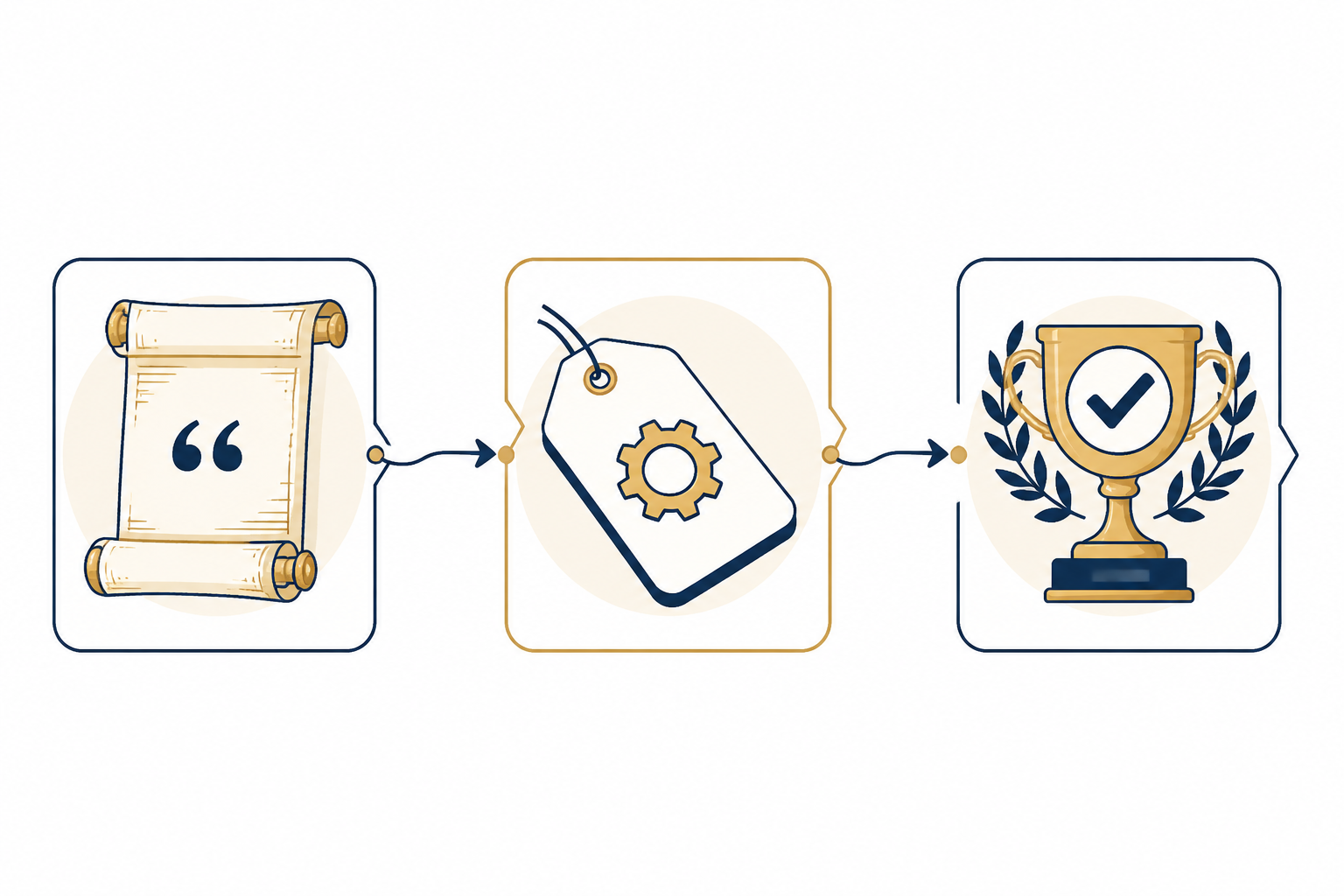
Build a Thesis from Tension, Not Topic
Most rushed essays begin with a topic: loyalty, hospitality, temptation, fate. Topics are too large to defend. A thesis needs tension, because tension gives you something to prove.
| Topic | Exam-ready tension | Possible thesis shape |
|---|---|---|
| Nostos | Homecoming is physical, social, and emotional. | The poem treats homecoming not as arrival alone but as the difficult restoration of identity, household order, and mutual recognition. |
| Xenia | Hospitality reveals moral order, but it can also expose innocent people to divine punishment. | The poem uses guest-friendship as a moral test, though the fate of the Phaeacians complicates any simple claim that proper hospitality is always rewarded. |
| Cunning | Intelligence saves Odysseus, but pride can corrupt its success. | Odysseus survives through verbal skill and disguise, yet the Cyclops episode shows that cunning becomes dangerous when joined to the desire for fame. |
| Divine justice | The gods punish and protect, but not always in a way that looks simple to human observers. | The poem presents divine justice as powerful but unevenly experienced, especially when mortal households are caught inside conflicts among gods. |
| Temptation | Delay can be pleasure, danger, or testing. | The temptations Odysseus faces matter because they threaten not only his body but his commitment to return and be known again. |
| Loyalty | Loyalty can be passive waiting or active testing. | Penelope’s loyalty is not mere patience; it is an intelligent practice of delay, suspicion, and recognition. |
SparkNotes identifies major themes such as cunning, temptation, hospitality, loyalty, and homecoming across its study materials, but the exam move is to turn those themes into arguable relationships.[1] If a thesis could be answered with “yes, obviously,” it is probably still a topic sentence.
The Three-Part Claim Pattern
- Name the tension: identify the pressure inside the topic, such as cunning versus pride or homecoming versus recognition.
- Choose two or three scenes: use scenes that show change, contrast, or consequence.
- Attach a device or narrative function: explain how the poem makes the idea visible through simile, epithet, disguise, recognition, testing, or type scene.
Here is the pattern in motion: “Although Odysseus’ cunning repeatedly protects him, The Odyssey also shows that intelligence must be disciplined by self-control; his false name saves him from Polyphemus, but his decision to reveal his true name turns victory into delayed punishment.” That thesis gives you two pieces of evidence before the essay has even begun.
Another: “Penelope and Odysseus are matched not simply because they are loyal to each other, but because both understand that identity must be tested before it is trusted.” This can use the weaving trick, Odysseus’ disguise, and the marriage bed. It does not need a full plot summary. It needs three controlled moments.
Theme Notes You Can Turn into Arguments
Nostos: Homecoming Is More Than Getting Back
Nostos, or homecoming, is tempting to write about as a travel problem: Odysseus wants to get from Troy to Ithaca. That is only the surface. The better essay question is what must be restored after he arrives. His house has been invaded, his wife must test him, his son must stand with him, and his identity has to be recognized after years of absence.
Best evidence: Argos, the marriage bed, Odysseus’ disguise, Penelope’s test. Best device vocabulary: recognition scene, symbol, disguise, delayed revelation.
Xenia: Hospitality as a Test
Guest-friendship is one of the poem’s great sorting mechanisms. Good hosts feed, receive, and send guests onward; bad hosts exploit, consume, or violate the vulnerable. The suitors abuse Odysseus’ household. Polyphemus grotesquely violates the guest-host relation. The Phaeacians, by contrast, help Odysseus continue his journey.
The nuance: divine justice is not a vending machine. The Phaeacians help Odysseus according to the demands of hospitality, yet Poseidon punishes them for escorting him home.[2] That does not erase xenia as a moral code, but it does help a stronger essay avoid claiming that the poem always rewards correct behavior in a simple way.
Cunning: Intelligence Needs Discipline
Cunning is one of the safest themes to choose because it appears everywhere: in Odysseus’ false names, disguises, storytelling, and tactical patience; in Penelope’s weaving and testing; even in the poem’s own delayed structure. The trap is writing a celebration only. Odysseus’ intelligence is magnificent, but the Polyphemus episode gives you the necessary complication.
Best evidence: “man of twists and turns,” “Nobody,” the name reveal, Penelope’s weaving, the marriage bed test. Best device vocabulary: epithet, irony, disguise, recognition, narrative delay.
Temptation: Delay Has Different Forms
Temptation in the poem is not only sexual or luxurious. It can be the temptation to forget home, to stay still, to sleep, to listen too long, to claim glory, or to trust an appearance too quickly. This gives you room to connect scenes that do not look alike at first. A prompt about temptation can include the Cyclops episode because pride tempts Odysseus into self-exposure.
Best evidence: the Cyclops name reveal, delayed homecoming episodes, Penelope’s resistance to pressure, Odysseus’ concealed return. Best device vocabulary: delay, contrast, testing, narrative suspense.
Loyalty: Recognition Must Be Earned
Loyalty is easy to flatten. Penelope waits, Argos remembers, Telemachus supports his father, loyal servants remain faithful. But the poem is more interesting when loyalty is tied to recognition. Who knows Odysseus? Who should be trusted? Who has merely occupied the house, and who belongs to it?
Best evidence: Argos, Penelope’s weaving, the marriage bed, the household tests after Odysseus’ return. Best device vocabulary: recognition, symbol, disguise, type scene.
Sample Prompts, Planned the Way You Would Write Them
Use the tools before the prompt scares you. The point is not to predict the exact question. It is to have flexible material ready enough that several prompts begin to look manageable.
Prompt: Does Odysseus Earn His Homecoming, or Is He Simply Favored by Athena?
Possible thesis: “Although Athena’s support is essential to Odysseus’ return, the poem presents homecoming as something he must repeatedly earn through endurance, restraint, and recognition; divine favor creates the possibility of nostos, but human intelligence and testing complete it.”
- Evidence to use: “man of twists and turns,” disguise in Ithaca, Penelope’s marriage bed test.
- Device angle: in medias res and delayed recognition make Odysseus’ identity something reconstructed rather than simply announced.
- Avoid: treating divine help as if it removes Odysseus’ agency.
Prompt: Is Divine Justice in The Odyssey Consistent?
Possible thesis: “The poem often presents divine justice through punishments that match violations of order, especially failures of hospitality and restraint, but the Phaeacians’ punishment shows that mortal goodness can still be caught inside divine conflict.”
- Evidence to use: Polyphemus’ curse through Poseidon, the suitors’ violation of the household, the Phaeacians’ punishment after helping Odysseus.
- Device angle: type scenes of hospitality let you compare moral behavior across different households.
- Avoid: claiming that every good person is rewarded and every bad person is punished immediately.
Prompt: Compare Odysseus and Penelope as Figures of Cunning
Possible thesis: “Odysseus and Penelope are matched by their ability to survive through controlled deception: his cunning moves through disguise, naming, and storytelling, while hers works through delay, weaving, and testing inside the household.”
- Evidence to use: “Nobody,” the name reveal, Penelope’s weaving, the marriage bed test.
- Device angle: parallel testing scenes show that recognition depends on intelligence, not just emotion.
- Avoid: making Penelope passive or treating Odysseus’ cunning as always successful.
Prompt: How Does Homer Make Odysseus Heroic Without Making Him Simple?
Possible thesis: “Homer makes Odysseus heroic through endurance and intelligence, but repeatedly complicates that heroism by showing him vulnerable, deceptive, and sometimes responsible for the dangers that follow him.”
- Evidence to use: “man of twists and turns,” the bat simile above Charybdis, the Polyphemus name reveal.
- Device angle: epithets and similes can either elevate Odysseus or make him physically exposed.
- Avoid: writing a one-note praise essay.
A Timed Essay Routine
If you have forty or fifty minutes, do not spend the first fifteen trying to remember the entire poem. Spend the first few minutes turning the prompt into a tension and choosing evidence you already know how to use.
- Circle the task word: compare, evaluate, analyze, discuss, trace.
- Rewrite the topic as a tension: loyalty versus suspicion, cunning versus pride, homecoming versus recognition.
- Choose two or three scenes, not five or six.
- Give each body paragraph one job: claim, evidence, device or narrative function, consequence.
- Use plot only as much as needed to position the evidence.
A body paragraph can be built like this: claim first, scene second, analysis third. For example: “The Cyclops episode shows that Odysseus’ intelligence is most effective when it suppresses identity. His invented name allows him to escape Polyphemus, but his later insistence on naming himself turns cleverness into exposure. The scene therefore links language to both survival and danger.”
That paragraph does not retell the whole episode. It selects the part of the episode that proves the claim. That is the habit you want.
Translation Notes Without Losing the Essay
Different English translations of The Odyssey phrase famous lines differently. Penguin’s guide discusses the poem through summary, characters, contemporary relevance, and translation choice, which is a reminder that wording can vary while the scene’s analytical function remains stable.[4] If your teacher expects quotation from a specific edition, use that edition’s wording. If not, short phrase handles plus accurate scene reference are safer than half-remembered long quotations.
This matters most for phrases like “man of twists and turns,” epithets for Odysseus, and speeches in the Cyclops or marriage bed scenes. Do not panic if your translation says something slightly different. Anchor your analysis in what the passage does.
What to Have Ready Before the Prompt Appears
Go into the exam with a small kit, not a swollen notebook. You want five scenes, six or seven device terms, and one repeatable paragraph pattern. If the prompt asks for homecoming, you have Argos and the bed. If it asks for cunning, you have “Nobody,” the name reveal, and Penelope’s weaving. If it asks for justice, you have xenia, the suitors, Polyphemus, and the Phaeacian complication.
If you still cannot place the major events, return to The Odyssey Summary and Analysis for Students. If you want a deeper argument about gods, punishment, and moral order, use A Guide to The Odyssey's Moral Universe. If your class is pairing Homer with Nolan’s film, use the film comparison guides after you have separated poem evidence from adaptation evidence.
You do not need to memorize every event in The Odyssey to write well under pressure. You do need evidence that can move: a quote or scene that supports more than one theme, a device term that explains how the passage works, and a thesis pattern that turns topic into argument.
References
- The Odyssey: Study Guide, SparkNotes
- Odyssey, Wikipedia
- Odyssey by Homer | Plot, Summary, Characters, Themes, Britannica
- A Guide to The Odyssey | Summary, Best Translations & More, Penguin
Back to the exam this applies to
Target exam not specified — see all exam hubs.
Comments
Join the discussion with an anonymous comment.