
Study Homer's Odyssey Through Christopher Nolan's Film
This study guide helps students navigate the connections and differences between Homer's epic poem and Christopher Nolan's 2026 film adaptation, so you can use the film as a companion without mixing up what belongs to each.
Updated:
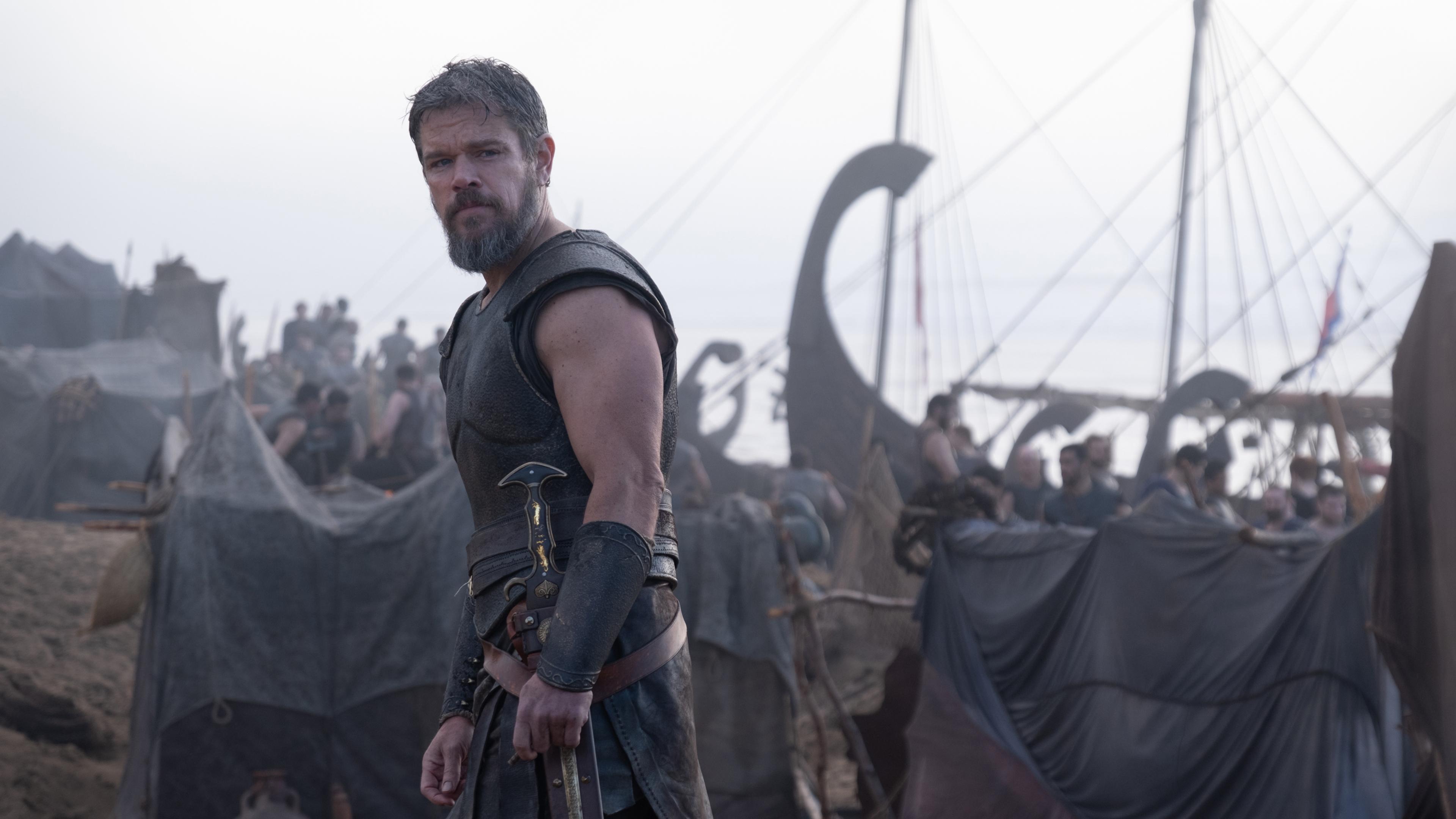
If you are using Christopher Nolan’s The Odyssey as a way into Homer, the safest rule is simple: let the film help you remember the people, places, conflicts, and emotional stakes, but do not cite it as if it were the poem. A Homer Odyssey study guide has to keep that line bright. Nolan can give you a vivid Ithaca, a terrifying sea, and a version of Odysseus whose choices feel immediate. Homer gives you the words, structure, speeches, repetitions, divine interventions, and narrative order your teacher can actually ask you to analyze.
That distinction matters more than usual because this film is not a small classroom supplement. Released on July 17, 2026, Nolan’s The Odyssey arrived as the first major Hollywood adaptation of Homer’s epic since the 1997 television miniseries, with a reported $250 million budget, sold-out IMAX presales, and a 96% Rotten Tomatoes score reported on opening day.[1] None of that makes the movie academically authoritative. It does explain why students are going to bring it into class discussions immediately.
Use the Film as a Companion, Not a Source Text
A film adaptation can be genuinely useful before, during, or after reading The Odyssey. It can help you track Odysseus, Penelope, Telemachus, Athena, the suitors, Circe, Calypso, Polyphemus, and the Phaeacians without feeling lost every time a new name appears. It can also help you feel why homecoming matters after war, why hospitality is not just politeness, and why disguise, testing, recognition, and storytelling drive so much of the poem.
The problem starts when the film’s clearest images overwrite the poem’s actual evidence. If you write, “Homer shows the Trojan Horse scene,” you have already crossed the line. Homer’s Odyssey alludes to the Trojan Horse, but the poem does not stage it as a full opening action sequence. If you write, “the gods are only storms and omens,” you are describing Nolan’s grounded visual strategy, not Homer’s divine machinery. Homer’s gods speak, intervene, disguise themselves, argue, and protect favorites.
A better habit is to keep three columns in your notes: Homer, Nolan, and interpretation. “Odysseus tells his wanderings in flashback” belongs to Homer. “The wanderings unfold more linearly on screen” belongs to Nolan. “The change makes Odysseus feel less like a self-conscious storyteller and more like an action hero moving through danger” is interpretation. That third column is where good essays often begin, but only if the first two columns stay separate.
The Biggest Adaptation Differences to Keep Straight
The table below is the part to keep open while rereading. It is not a replacement for the poem, and it is not trying to prove that every change is a mistake. Adaptation means selection. Film has to externalize, compress, visualize, and pace material that Homer often handles through narration, speeches, repetition, and delayed revelation.
| Topic | What Nolan's film does | Where to look in Homer | What not to claim in an essay |
|---|---|---|---|
| The Trojan Horse | The film shows the Trojan Horse as part of the story world, giving viewers a concrete image of Odysseus's wartime cunning.[1] | The Odyssey refers back to Troy and the Horse rather than presenting the whole event as the poem's main action; students can cross-check the relevant allusions through book-by-book guides.[3] | Do not write that Homer stages the Trojan Horse scene in The Odyssey the way the film does. |
| Narrative order | The film presents Odysseus's journey in a more chronological, cinematic sequence.[1] | In Homer, Odysseus's wanderings are largely narrated after the fact in Books 9-12, when he tells his story at the Phaeacian court.[3] | Do not treat the film's order as the poem's order. |
| Odysseus as storyteller | A linear film can make events feel like they are simply happening to Odysseus. | Homer makes Odysseus a performer of his own past in Books 9-12, so the way he tells the story becomes part of what readers study.[3] | Do not ignore the fact that Homer gives Odysseus control over a major block of narration. |
| The gods | The film emphasizes gods through natural phenomena and grounded signs rather than frequent visible divine characters.[1] | In Homer, gods such as Athena and Poseidon are active agents who speak, disguise themselves, intervene, and shape outcomes.[3] | Do not say Homer's gods are only symbolic weather or psychological pressure. |
| Athena | The film's more naturalistic style changes how divine help is felt on screen.[1] | Athena is central to Telemachus's development, Odysseus's return, disguise, recognition, and final restoration.[3] | Do not flatten Athena into a vague idea of wisdom if your evidence comes from the poem. |
| Telemachus's story | The film condenses the Telemachy, reducing some of the early poem's space for Telemachus's search and education.[1] | Books 1-4 give Telemachus substantial attention before Odysseus fully enters as the central returning hero.[3] | Do not assume the poem rushes past Telemachus just because a film must move faster. |
| Circe | The film gives Circe a more humanized treatment.[1] | Circe appears in the wanderings Odysseus narrates, where enchantment, danger, hospitality, and delay all matter.[3] | Do not use Nolan's emotional emphasis as direct proof of Homer's characterization. |
| Argos | The film expands Argos's screen time, making the dog a more visible emotional thread.[1] | In Homer, Argos's recognition of Odysseus is brief but powerful because it concentrates loyalty, neglect, and homecoming in a small scene.[3] | Do not exaggerate Argos's role in the poem because the film gives him more room. |
| The suitors | The film builds toward the homecoming conflict in Ithaca as a major dramatic payoff.[1] | The bow contest, slaughter of the suitors, and aftermath belong especially to the poem's final books, commonly summarized in study guides for Books 21-24.[3][4] | Do not discuss the revenge scene without checking the poem's sequence of testing, recognition, and violence. |
| Penelope and the bed | A film can turn recognition into a visibly emotional scene. | The bed trick is one of the poem's key recognition tests near the end, and GradeSaver's summaries of the final books are useful for cross-checking the sequence.[4] | Do not reduce Penelope to someone who simply waits; in Homer, she tests, delays, and judges. |
The table’s most important pattern is not “movie wrong, poem right.” It is that Nolan often makes implicit, delayed, or narrated material visible and immediate. That is a normal film choice. It becomes a classroom problem only when the visible version is mistaken for the textual one.
The Structure Change Is More Than a Timeline Change
The easiest difference to notice is chronology: Nolan’s film moves more directly from war, voyage, danger, and return, while Homer delays Odysseus’s own account of his wanderings until Books 9-12.[1][3] But if you stop at “the movie is linear and the poem is not,” you miss the larger point.
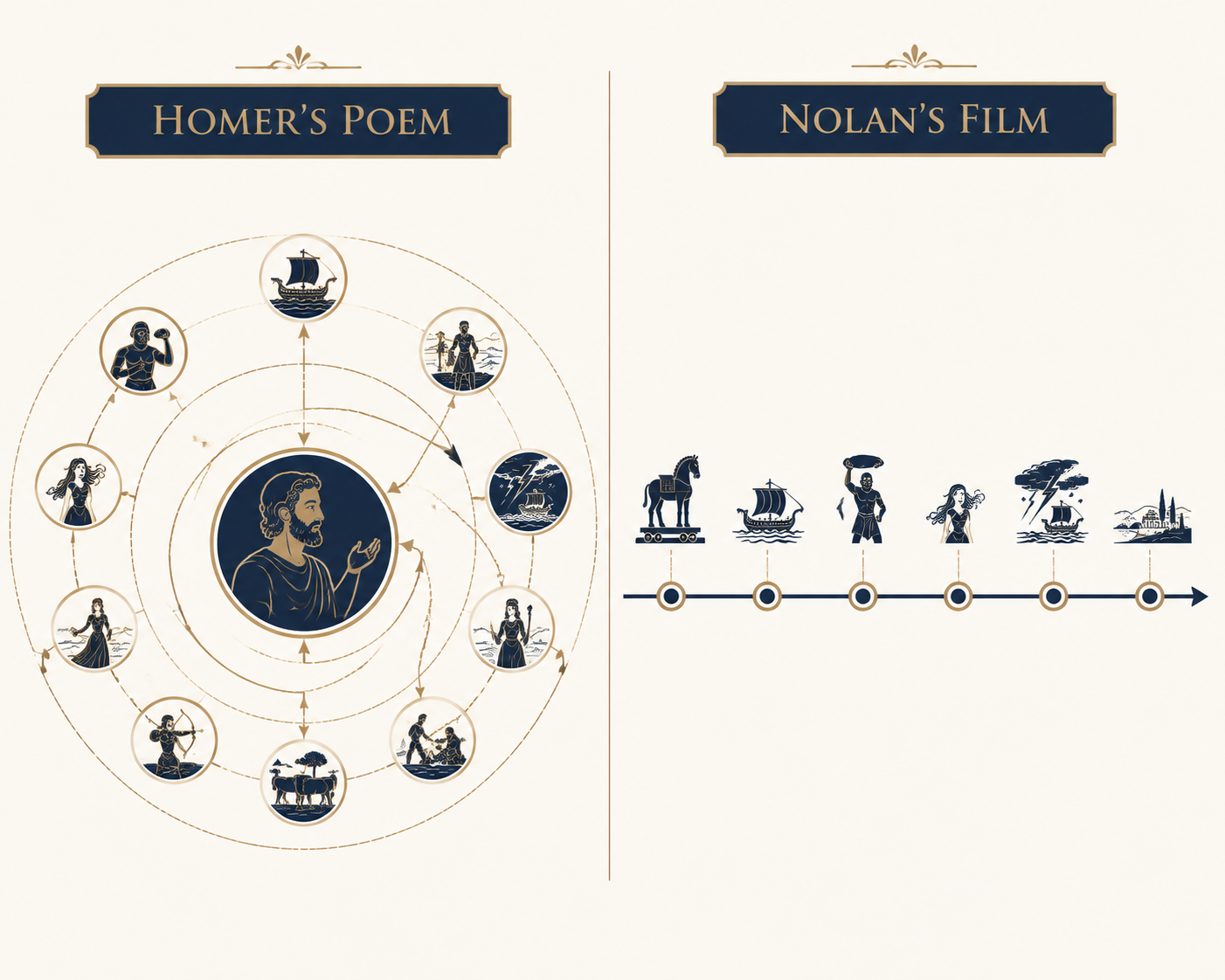
In Homer, Odysseus does not simply endure the Cyclops, Aeolus, the Laestrygonians, Circe, the Underworld, the Sirens, Scylla and Charybdis, and the cattle of the Sun. He later tells those adventures to an audience. That means readers are not only studying events. They are studying how Odysseus presents himself, what he emphasizes, how he turns suffering into a story, and how storytelling helps him secure help for the final leg home.
That matters in essays because Books 9-12 are not just a detachable adventure packet. They sit inside a social situation: Odysseus is among the Phaeacians, and his narration helps move him from unknown stranger to honored guest. The poem’s structure makes hospitality and storytelling work together. The film can show a shipwreck, a monster, or a storm with great force, but the poem asks you to notice who is speaking, who is listening, and what the story accomplishes.
A practical way to study this difference is to mark every episode in two ways. First, write where it happens in Odysseus’s life. Second, write where Homer places it in the poem. The Cyclops episode happens before Odysseus reaches the Phaeacians, but readers receive it when Odysseus narrates his past. That gap is exactly where analysis lives.
Gods, Weather, and the Risk of Over-Modernizing Homer
Nolan’s grounded treatment of the gods gives students a useful comparison point. If divine power is expressed through storms, lightning, omens, and natural force, the film can make ancient religion feel less like a costume drama and more like a world where human beings read meaning into danger.[1] That is a legitimate cinematic interpretation.
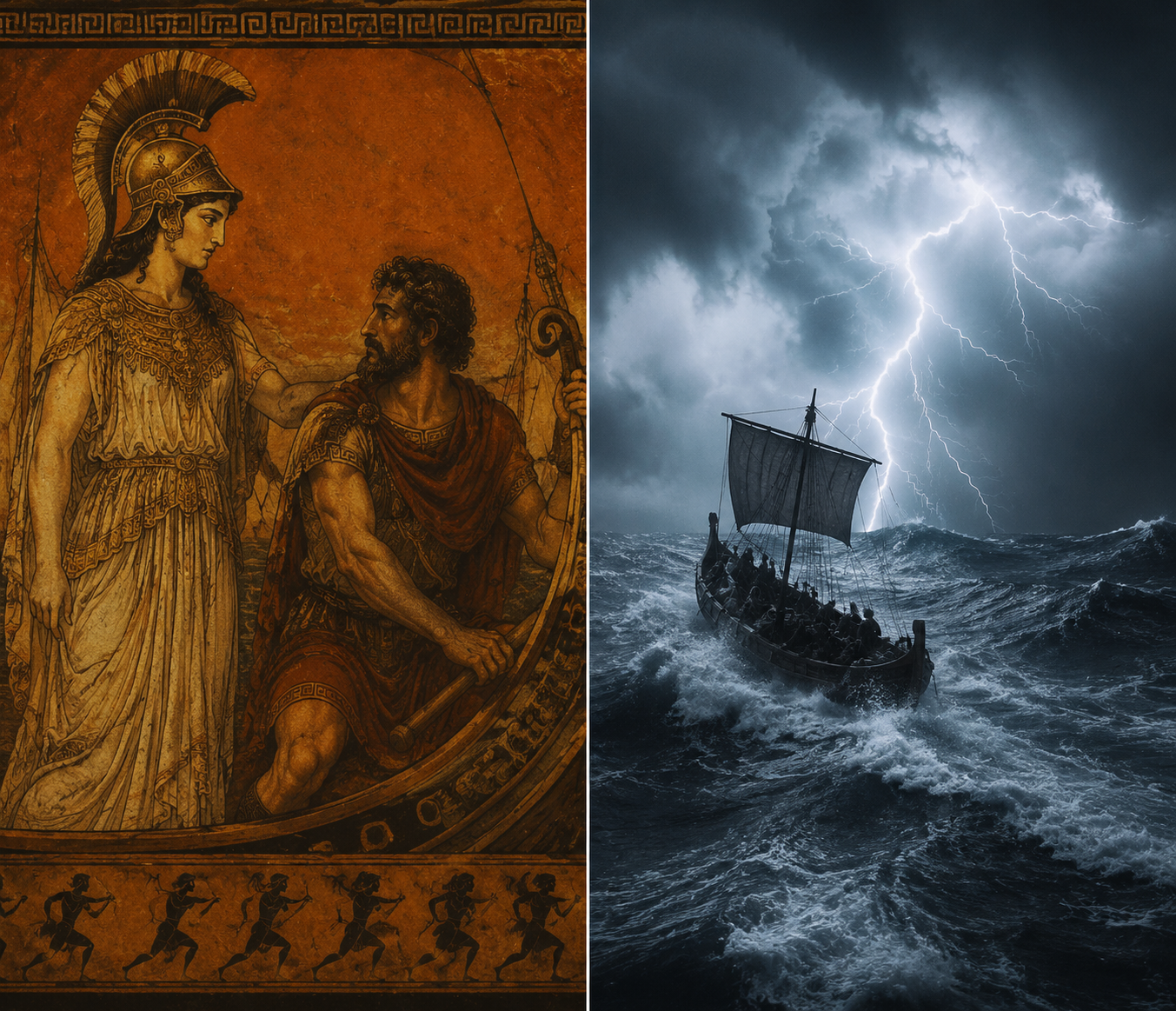
Homer, however, is not embarrassed by divine characters. Athena does not merely represent Odysseus’s cleverness; she acts. Poseidon does not merely represent the sea; he opposes Odysseus. The gods in the poem can be personal, partisan, strategic, and theatrical. They can disguise themselves, persuade mortals, complain, relent, and enforce consequences.[3]
So if your class is discussing fate, agency, or responsibility, keep the versions separate. Nolan’s version may invite language about ambiguity: is a storm divine anger, natural disaster, or both? Homer gives you firmer evidence for divine intervention. A strong essay can compare those models, but it should not quietly replace one with the other.
The Accent Choice Is About Accessibility, Not Just Sound
The film’s use of American accents is one of the easier choices to dismiss until you connect it to translation. Nolan has been reported as reading major English translations including Emily Wilson, Robert Fagles, and E. V. Rieu, and City Lit’s 2026 translation comparison links Wilson’s influence to the film’s preference for immediacy and accessibility rather than a deliberately remote, “timelessly foreign” sound.[2]
That gives students a smarter way to talk about the choice. The question is not whether ancient Greeks “really sounded American.” Of course they did not speak modern English in any accent. The question is what kind of distance an adaptation or translation creates between the audience and the poem. A formal, archaizing style can make the epic feel elevated. A plainer contemporary style can make the characters’ choices feel closer. Both are interpretive decisions.
For class writing, this is useful only if you keep the claim modest. You can say the film’s accent strategy resembles a modern translation impulse toward directness. You should not claim that Homer’s Greek has an “American” quality, or that one modern performance style proves what the ancient poem sounded like.
High-Risk Essay Mistakes After Seeing the Film
Most film-to-text mistakes are not wild misunderstandings. They are small acts of confidence in the wrong source. These are the ones most likely to cost you credibility in a discussion or paper.
- Writing that Homer “shows” the Trojan Horse as a full scene. Safer version: Homer alludes to the Trojan past, while Nolan visualizes the Horse as part of the film’s adaptation.
- Treating Books 9-12 as if they unfold in the poem exactly when they happened chronologically. Safer version: Odysseus narrates much of his wandering past in flashback at the Phaeacian court.
- Calling the gods symbolic weather in Homer. Safer version: Nolan often grounds divine presence in natural phenomena, while Homer presents gods as active characters.
- Using the film’s expanded Argos material to argue that Argos is a long-running character in the poem. Safer version: Homer’s Argos scene is brief, concentrated, and emotionally sharp.
- Letting the condensed Telemachy shrink Telemachus’s importance. Safer version: Books 1-4 give Telemachus a major opening arc before Odysseus’s narrated adventures take over.
- Quoting or paraphrasing film dialogue as if it came from Homer. Safer version: cite your assigned translation when making a textual claim.
How to Turn the Movie Into Better Notes
If you have already seen the film, do not try to erase it from your memory. Use it, but make it work for the poem instead of taking over the poem. Start by listing the scenes that stayed with you: the sea, the Horse, Circe, Argos, the suitors, Penelope’s recognition, Telemachus trying to grow into authority. Then attach each scene to a book or cluster of books in Homer before you write anything analytical.
| If the film made you remember... | Reread or review... | Watch for this in Homer |
|---|---|---|
| Telemachus under pressure in Ithaca | Books 1-4 | Athena's role, the suitors' abuse of hospitality, Telemachus's movement from passivity toward action |
| Odysseus's major sea adventures | Books 9-12 | Odysseus as narrator, not just survivor |
| Circe and the dangers of delay | The Circe episode within the wanderings | Enchantment, hospitality, advice, and the cost of lingering |
| The emotional return to Ithaca | The later Ithaca books | Disguise, testing, recognition, and controlled revelation |
| The suitors' defeat | Books 21-24 | The bow, the violence of restoration, and the unsettled aftermath |
| Penelope's test | The final recognition sequence | The bed as proof of shared history, not just a romantic symbol |
When you move from notes to an essay, build sentences that name the version you mean. “In Nolan’s film” and “in Homer’s poem” are not clunky training wheels; they are precision tools. Once the distinction is clear, you can make more interesting claims: Nolan’s linear structure changes the way we experience suspense, while Homer’s nested narration makes Odysseus’s self-presentation part of the action. Nolan’s naturalistic gods create ambiguity, while Homer’s divine characters make conflict between mortal agency and divine pressure more explicit.
What to Do Before a Discussion, Quiz, or Paper
Before class, pick the section of the poem that matches the assignment, not the part of the film you liked most. If the assignment is on hospitality, the Cyclops and Phaeacian episodes may matter more than the final revenge. If the assignment is on gender and recognition, Penelope’s testing deserves closer attention than a broad claim about “waiting.” If the assignment is on heroism, you need both Odysseus’s cunning and the damage his choices bring to his men.
For a quick pre-class check, write three short labels beside each example you plan to use: text evidence, film memory, or comparison. A line from your assigned translation is text evidence. A visual image from Nolan is film memory. A sentence about how the film’s visualization changes your understanding of the poem is comparison. Teachers usually welcome comparison when it is labeled honestly. They object when a movie scene is smuggled in as if Homer wrote it.
Nolan’s The Odyssey appears faithful to the epic’s spirit while making major cinematic changes in structure, emphasis, characterization, and tone. That is exactly why it can help. Enjoy the film’s images, use them to orient yourself, and then go back to the relevant books of Homer with separate notes for what belongs to the poem, what belongs to Nolan, and what belongs to later translation or interpretation.
References
- The Odyssey (2026 film), Wikipedia.
- Best translation of The Odyssey: which one should you read, City Lit, July 10, 2026.
- The Odyssey Study Guide, Duke University.
- The Odyssey, GradeSaver.
Comments
Join the discussion with an anonymous comment.