What Changed for AI Study Tools After the OpenAI Lawsuit
Accuracy Warning — ChatGPT
AI study tools can produce unverified or wrong answers; verify exam-specific content against official ETS, AAMC, College Board, ACT, and DoD materials. Do not treat chatbot chats as private.
- Accuracy:
- Moderate
- Tested:
- Post-lawsuit ChatGPT Study Mode and exam-prep answer verification
- Last tested:
- 2026-08-25
If “the OpenAI lawsuit” means Raine v. OpenAI, the practical answer for students in Q3 2026 is this: the case changed the safety conversation around ChatGPT and pushed visible product changes, but it did not make AI study tools illegal or automatically useless. If you mean the New York Times copyright case or the German GEMA ruling, those matter more for privacy, training data, and what can be exposed in litigation than for whether you may ask an AI tool to explain a quadratic equation, outline a MCAT content review plan, or turn notes into flashcards.
That distinction matters because a test-taker with a real exam date does not need a grand verdict on AI. They need to know what changed, what did not, and what still has to be checked against ETS, AAMC, College Board, ACT, or DoD material before it touches a score goal.

The lawsuit that changed the conversation
Raine v. OpenAI was filed on August 26, 2025, in San Francisco County Superior Court. The suit was brought by the parents of Adam Raine, a 16-year-old who had used ChatGPT, including as a study aid, before his death by suicide.[1][2] The case belongs in this article because one of the questions it left behind is ordinary and immediate: can a student still use ChatGPT, Study Mode, Gemini, Claude, NotebookLM, or another assistant for exam prep without ignoring obvious warnings?
The answer is not supplied by the lawsuit alone. A complaint is an allegation, not a completed factual record. Some details now repeated in coverage, including the claim that OpenAI’s moderation systems flagged 377 of Adam Raine’s messages for self-harm, come from the complaint as summarized by legal and news sources and should be checked against the primary filing before being treated as settled fact.[1][2] For a study-tool decision, the safer conclusion is narrower: the case made it much harder for AI companies to talk about student use without also talking about crisis handling, escalation, and where chatbots should stop behaving like endlessly available companions.
OpenAI responded the same day with a public post titled “Helping people when they need it most.” The company said it was improving how ChatGPT responds in moments of distress, including routing some conversations to more capable models, adding parental controls, exploring ways to connect users with licensed therapists, and making crisis-resource referrals more prominent. OpenAI also said that ChatGPT sees about 1 million weekly messages with explicit indicators of suicidal intent.[3]
That last number is not an exam-prep statistic. It does not tell us how often students misuse AI for homework, how accurate Study Mode is, or whether Gemini writes better practice questions. It does explain why the case did not remain a private product-liability dispute in the public imagination. A tool used for vocabulary review, SAT algebra, or MCAT biochemistry can also become the nearest conversational surface for a distressed user. Companies had to respond to that reality.
What actually changed after Raine v. OpenAI
The most concrete changes fall into two buckets: safety behavior and education positioning. They are related, but they are not the same thing. A model can be better at refusing unsafe requests and still be mediocre at AP Biology. A study feature can be genuinely useful and still be a poor place to type sensitive personal details.
OpenAI moved safety controls into the product story
After the filing, OpenAI publicly emphasized GPT-5 de-escalation behavior, parental controls, crisis-resource referrals, and possible therapist-connection pathways.[3] The important word is “emphasized.” These announcements matter because they show a company response to a known failure surface. They do not prove that every sensitive chat will be handled correctly, and they do not turn ChatGPT into a clinician, counselor, or supervised tutoring environment.
For exam prep, the product-level result is that safety can no longer be treated as a side panel. A student using AI late at night for “just one more practice set” is also using a system that now has more visible crisis-handling logic layered into it. That is a genuine change from the user’s side: some conversations may be interrupted, redirected, or handled by different model behavior than a normal math explanation or reading-comprehension drill.
Study Mode became part of ChatGPT’s education answer
ChatGPT Study Mode launched on July 29, 2025, before the Raine complaint was filed. OpenAI described it as a learning mode built with pedagogy experts to guide students step by step rather than simply hand over answers, and said it was available to logged-in users on Free, Plus, Pro, and Team plans.[4] Because plan names and access rules change quickly, treat that availability claim as a last-reviewed Q3 2026 item rather than a permanent pricing promise.
Study Mode is the part most students are actually deciding about. It can slow a session down in a useful way: ask what you already know, break a problem into parts, quiz you after an explanation, or make you justify an answer choice. That is better study behavior than copying a finished solution into your notes. It is still not an official answer key.
If you want a tool-specific verdict, use StudyMethod’s hands-on review of ChatGPT Study Mode for exam prep. This article is answering the lawsuit question: the case made safety and supervision harder to ignore, but it did not erase the normal quality-control work students already had to do.
The litigation atmosphere widened beyond one case
Raine was not the end of the legal pressure. Consumer Notice’s AI chatbot lawsuit tracker lists follow-on developments including lawsuits involving Sam Nelson and Tiru Chabba in May 2026, Florida becoming the first state to sue OpenAI in June 2026, and Character.ai/Google settlements in January 2026.[5] A tracker is not the same as a merits ruling, but it is useful for one practical reason: companies building chatbots now know that youth safety, companion-style behavior, and escalation failures are active litigation risks.
That wider pressure helps explain the more cautious tone across AI education products. The change is not that AI study tools disappeared. The change is that vendors have more reason to add age controls, warning language, model-routing rules, and “this is not professional help” boundaries around the same study features students were already using.
What did not change: legality, answer quality, and responsibility
No cited development in the Raine case made it unlawful for a student to use ChatGPT, Gemini, Claude, NotebookLM, or another AI assistant to study. Your school, testing program, employer, or instructor can still set rules about permitted tools. That is a policy issue. It is different from saying the lawsuit banned AI study tools.
The more stubborn issue is answer quality. AI systems can still invent facts, misread official policy, overstate a test strategy, or generate a practice question that looks exam-like but tests the wrong thing. That was true before August 2025. It remained true after OpenAI announced safety changes. It remains true in Q3 2026.
For a GRE student, the danger is not only a wildly wrong explanation. It is the almost-right quant shortcut that fails on a harder item. For an MCAT student, it is a smooth biochemical pathway summary with one wrong regulatory step. For an ASVAB student, it is a mechanical-comprehension explanation that sounds plausible but does not match the level or framing of official practice. These are study losses, not technology scandals. They cost time.
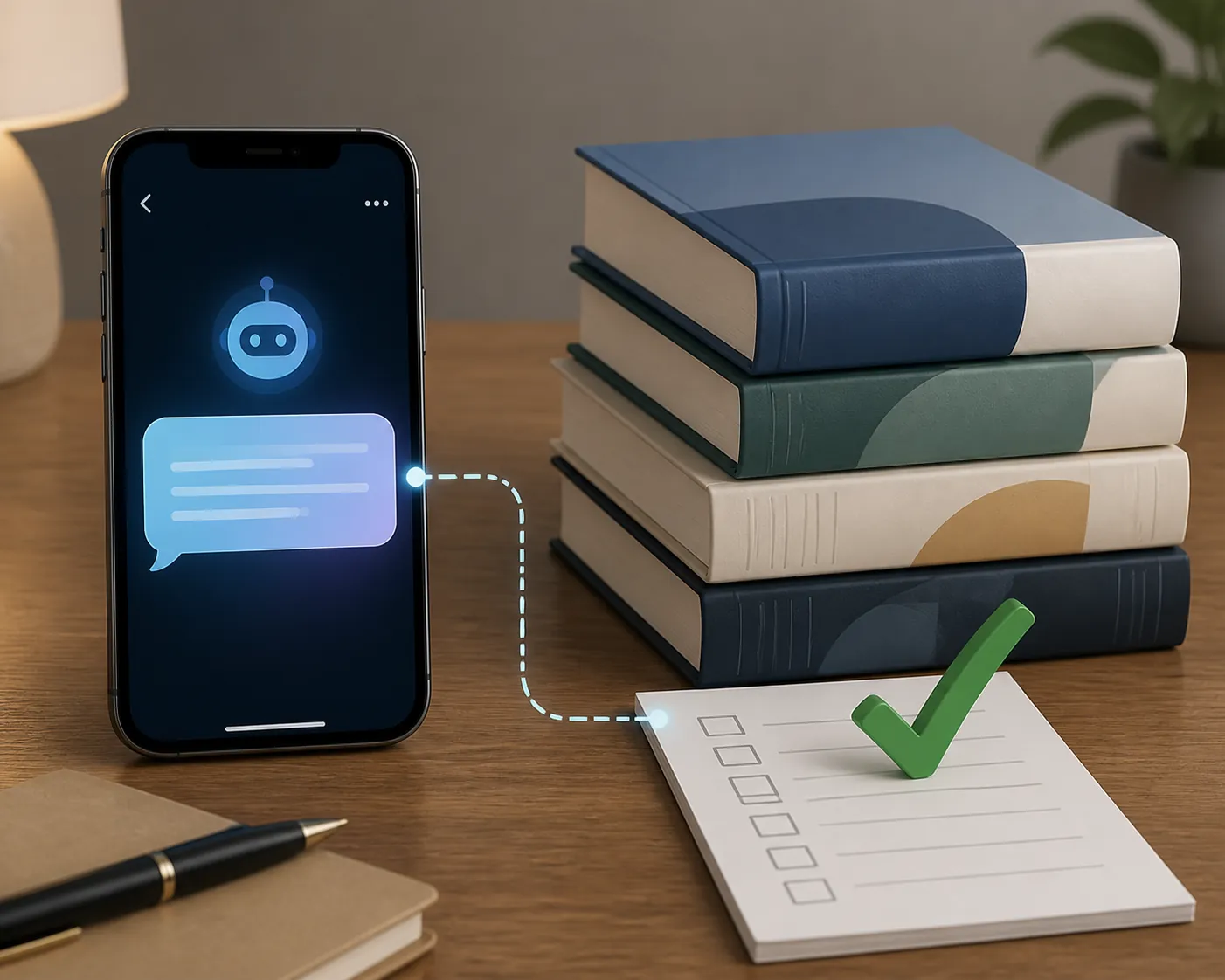
The operating rule is simple enough to remember while tired: use AI for explanation, planning, summarization, and practice support; verify anything exam-specific against the official source. For the exams StudyMethod covers, that usually means starting from the relevant GRE, MCAT, SAT, ACT, or ASVAB hub and then checking against the exam owner’s own practice materials.
Safety features are not a study plan
Post-lawsuit safeguards are real enough to notice, but not reliable enough to outsource judgment. A July 2026 Northeastern University report found that ChatGPT, Gemini, and DeepSeek each had an 81% failure rate on sensitive mental-health questions in a study of eight chatbots across 16 conditions.[6] That finding is about sensitive mental-health handling, not algebra tutoring or MCAT passage analysis. Still, it is the right kind of warning: guardrails do not generalize perfectly just because a company shipped them.
For students, that means two separate checks are needed. One is an emotional-safety check: if a chat is moving into distress, crisis, self-harm, coercion, or anything that feels like a substitute for a person who can intervene, stop treating the bot as a study tool. The other is an academic-reliability check: if the output affects what you will memorize, drill, or believe about the test, verify it before it becomes part of your notes.
Those checks are not anti-AI. They are the difference between using a tool and letting a tool quietly set the curriculum.
The copyright cases matter because chats are not private notebooks
The New York Times copyright litigation is a different OpenAI lawsuit, but students are right to notice it. A federal judge affirmed an order requiring OpenAI to produce 20 million de-identified ChatGPT chat logs in the copyright case.[7] “De-identified” is doing important work there. It means the order was not simply “hand over named student diaries,” but it also means chats can become evidence-like material in a legal process.

That is the privacy lesson students should take, not a melodramatic one. A chatbot conversation may be stored, reviewed, sampled, produced under legal process, used for safety analysis, or handled under terms that change by product and plan. If you would not want a professor, parent, employer, recruiter, or discovery vendor reading a detail, do not type it into a general-purpose chatbot as if it were a locked paper journal.
The German GEMA ruling pushes in the same trust direction from another angle. In November 2025, a Munich court ruled that ChatGPT training on song lyrics violated copyright, a decision The Guardian described as a landmark EU AI ruling.[8] That ruling is about copyright, not whether a student may use AI for SAT practice. But it adds to the same background fact: courts, rights holders, and AI companies are still fighting over what data went into these systems and what data can come out.
For a student, the useful response is boring and effective: keep personal identifiers, medical details, school discipline issues, immigration details, account credentials, and private accommodations information out of ordinary AI chats. If you need a fuller privacy treatment, StudyMethod’s ChatGPT studying privacy guide is the next stop.
So are ChatGPT, Gemini, Claude, and NotebookLM still worth using?
They can be. The lawsuit did not turn AI study tools into contraband, and it did not prove that every explanation they generate is suspect. It did expose the cost of treating an always-available chatbot as safer, more private, or more supervised than it is.
| Use case | Reasonable AI role | What still needs verification |
|---|---|---|
| Explaining a missed practice problem | Ask for a step-by-step explanation, then ask where your reasoning went wrong. | Check the final method and answer against the official explanation when one exists. |
| Building a study plan | Use AI to turn a test date, weak areas, and available hours into a weekly schedule. | Confirm content coverage against the exam owner’s outline, not the bot’s memory. |
| Summarizing notes | Ask for a cleaner version, a glossary, or a short quiz from your own material. | Confirm that no key term, formula, exception, or policy was dropped. |
| Generating practice questions | Use them as extra drills when official questions are limited. | Do not treat difficulty, scoring, or format as official unless it comes from the exam owner. |
| Sensitive personal or mental-health conversations | Do not use a study chatbot as the main support channel. | Use appropriate human, school, medical, emergency, or crisis resources. |
Different tools have different strengths. Gemini may be useful for planning across Google materials. Claude can be strong for long-document reading and rewriting. NotebookLM can help interrogate a bounded source set. ChatGPT Study Mode can slow students down instead of feeding them final answers. Those are product judgments, not lawsuit judgments. For side-by-side study planning, use StudyMethod’s Gemini vs. ChatGPT test; for Claude, use the Claude exam-prep test.
Paying for an AI plan after the OpenAI lawsuit is therefore not a moral verdict. It is a workflow decision. A paid plan is easier to justify if it saves measurable time on explanations, planning, document review, or spaced-review prompts and you still have official materials anchoring the session. It is harder to justify if you are paying mainly for confidence you have not earned by checking the answers.
A defensible rule for studying after the OpenAI lawsuit
Use AI study tools conditionally. Let them explain, organize, quiz, summarize, and help you restart a vague study session. Do not let them become the final authority on exam content, scoring rules, accommodations, registration policy, medical judgment, or crisis support.
For exam-specific claims, verify against official ETS, AAMC, College Board, ACT, and DoD sources. For tool choice, move from the lawsuit question to the narrower StudyMethod guides on AI safety, Study Mode, Gemini vs. ChatGPT, and Claude for exam prep. The lawsuit changed what responsible AI use has to notice. It did not remove the student’s last job: check the answer before you build a study night around it.
References
- Raine v. OpenAI, Wikipedia.
- OpenAI plans ChatGPT changes after suicide lawsuit, CNBC, August 26, 2025.
- Helping people when they need it most, OpenAI.
- ChatGPT Study Mode, OpenAI, July 29, 2025.
- AI Chatbot Lawsuit, Consumer Notice.
- Can AI chatbots help users in mental health crisis? New study finds serious guardrail failures, Northeastern Global News, July 27, 2026.
- ChatGPT creator must turn over 20M chat logs in copyright litigation, federal judge says, ABA Journal.
- ChatGPT violated copyright laws, German court rules, The Guardian, November 11, 2025.
Authoritative source
For the authoritative version of this contentHow to Read the '1 in 4 NFL Players CTE' Study
Report an error in this tool's output
Found something this tool got wrong beyond what's documented above? Report it so the accuracy log stays current.
Comments
Join the discussion with an anonymous comment.