

Wolf of Wall Street Docuseries Analysis for Film Students
Analyze how the 2026 Paramount+ docuseries The Real Wolf of Wall Street fact-checks Scorsese's film and what this reveals about narrative construction in documentary vs. dramatized adaptations. Film students learn key differences in truth-claims, persuasive techniques, and ethical obligations between the two mediums.
Updated:
A student watches Martin Scorsese’s The Wolf of Wall Street, then watches the 2026 Paramount+ docuseries The Real Wolf of Wall Street, and arrives at the obvious classroom question: so was the movie lying?
It is a useful question, but it is not a sufficient one. For film students, the analysis has to begin with the factual ledger, because the ledger is not minor. The defiant office speech in which Jordan Belfort declares, “I’m not f---ing leaving,” did not happen as the film stages it; according to the 2026 fact-checking coverage around the docuseries, Belfort quietly accepted a $2.6 million SEC settlement and left the firm.[1] The parking-lot confrontation in the film is also reshaped: the reported incident involved a security guard noticing Danny Porush’s luxury car, calling police, and officers finding $200,000 in a briefcase, not the movie’s escalated public fight.[1]
Those corrections matter. They also do more than catch a film cheating. Each one opens a window onto construction: where a dramatized adaptation compresses, where it intensifies, where it gives a character a theatrical exit instead of a bureaucratic one, and where it turns an institutional process into a scene the audience can feel.
The First Lesson Is Not Accuracy, but Function
The invented “I’m not leaving” speech is the cleanest teaching example because it is so satisfying as cinema. It gives Belfort a moment of operatic self-definition. It lets Leonardo DiCaprio turn refusal into performance. It lets the office become an audience, then makes the film audience join that audience. The scene has rhythm, release, and a dangerously attractive clarity: this is who he is, this is what he wants, this is why people follow him.
The reported reality is less usable in that way. A settlement, an exit, and regulatory paperwork do not supply the same thunderclap. That does not make the film’s choice invisible; it makes it more visible. The adaptation replaces administrative consequence with charismatic defiance. It builds dramatic closure at precisely the point where a quieter account would have made institutions, not personality, carry the scene.
The parking-lot incident works differently. Its fictionalization is less about giving Belfort a thesis statement and more about compression and escalation. A security guard spotting a car, calling police, and police finding money in a briefcase has investigative logic. It depends on attention, procedure, and follow-through. The film’s version pushes toward confrontation, because confrontation photographs better and explains itself faster. A student writing only “this did not happen” misses the more interesting point: the alteration changes whose intelligence the scene honors. In the reported version, the system notices. In the film version, spectacle dominates.
A Brisk Ledger Before the Deeper Comparison
Students still need the basic distinctions before moving into theory. The docuseries coverage identifies several film details as invented, altered, or supported by reported accounts. A compact version is more useful than a trivia hunt:
| Film element | What the later reporting says | Why it matters for analysis |
|---|---|---|
| The “I’m not leaving” speech | Belfort did not give the defiant speech; he accepted a $2.6 million SEC settlement and left. | The film creates a climactic performance where the reported event was quieter and institutional. |
| The parking-lot fight | The film fictionalizes the incident; police were called after a security guard noticed Porush’s luxury car and found $200,000 in a briefcase. | The film converts procedural discovery into visible escalation. |
| Stratton Oakmont details such as the goldfish, cousin marriage, flowers, and Forbes profile | These are among the details the fact-checking coverage says the film got right. | Accuracy exists beside invention, so the useful question is how each detail functions. |
| Restitution after the crimes | Belfort was ordered to pay $110 million in restitution and has paid back only a fraction. | The ethical problem becomes sharper when charisma is measured against unpaid harm. |
That last line is where the exercise stops being a parlor game. A false speech can be analyzed as adaptation technique. A fictionalized fight can be analyzed as cinematic compression. But the restitution figure changes the moral temperature of the comparison. If Belfort was ordered to pay $110 million and has paid back only a fraction, then the film’s seductions cannot be discussed as if they exist in a sealed aesthetic chamber.[1]
How Scorsese’s Film Persuades
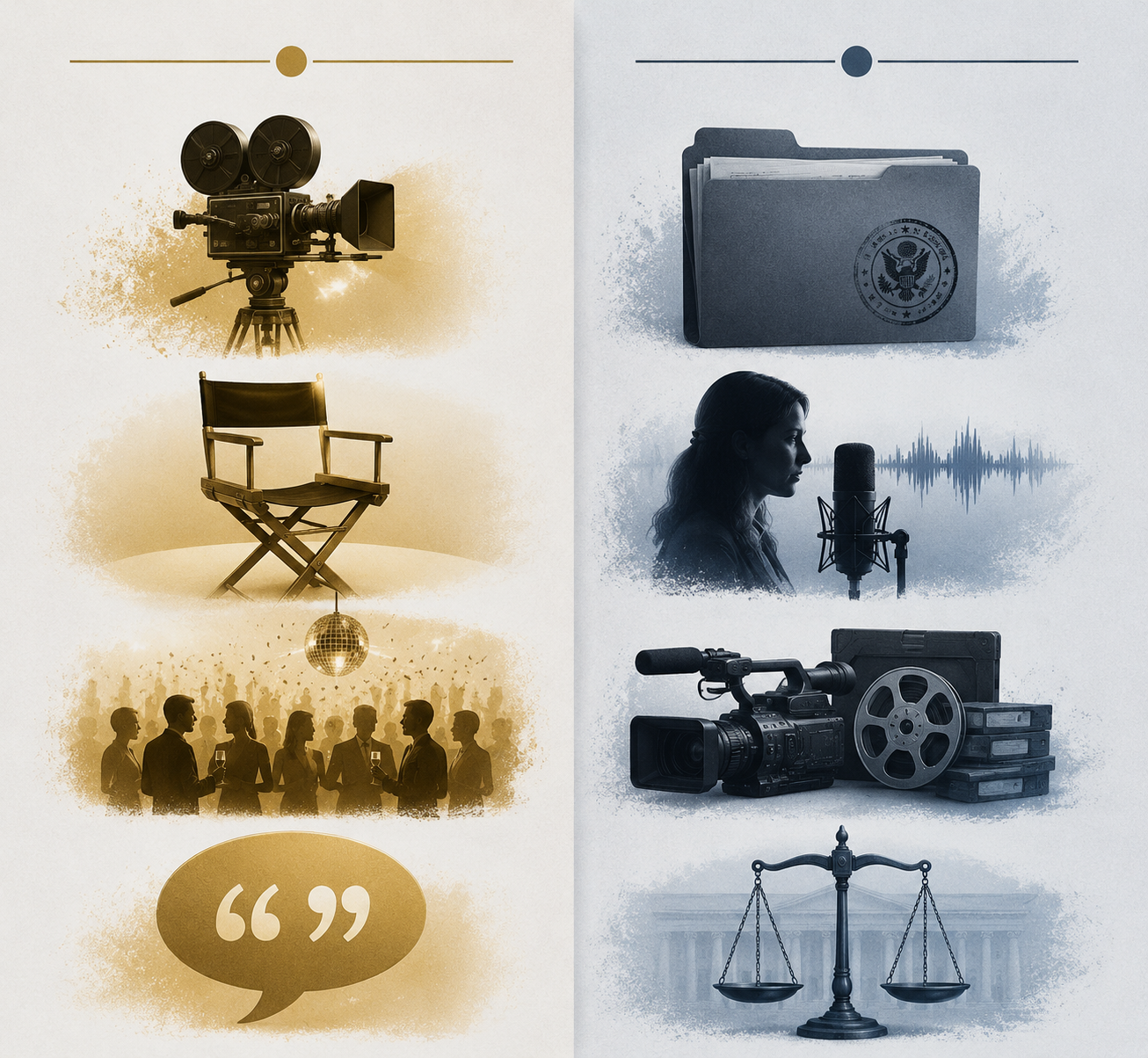
The Wolf of Wall Street does not persuade by pretending to be a sober courtroom record. It persuades by trapping the viewer inside Belfort’s tempo. The camera movement, voice-over, direct address, comic repetition, and accelerating excess do not merely illustrate his worldview; they organize the audience’s access to the world. The film’s intelligence lies there. It understands that corruption can be exhilarating before it is legible as damage.
Mikaela Wood’s academic analysis for Mapping Contemporary Cinema is useful here because it gives the film its strongest formal reading rather than treating style as decoration. Wood emphasizes how direct address and immersive technique position viewers in relation to Belfort’s perspective, making spectators feel implicated in the pleasures they are watching.[3] That is a more serious defense of the film than the familiar “it is obviously satire” shrug. The film’s address to the audience is not a neutral delivery system for plot; it is part of the moral machine.
Belfort often explains himself before anyone else can explain him. He narrates, demonstrates, interrupts, and charms. The film’s source dependency matters here: Scorsese’s version is rooted in Belfort’s memoir, which means the adaptation begins from a self-authored performance by the very figure whose appetites the film then turns into cinema. That does not automatically discredit the movie. It does mean students should ask what a memoir source gives a director: immediacy, voice, texture, self-mythology, and a built-in excuse for narrowness.
The narrowness is not accidental. Victims are not allowed to organize the film’s emotional field. Investigators do not become the center of narrative intelligence. Secondary witnesses remain largely outside the intoxication of Belfort’s account. The film’s famous excess depends on that imbalance. If the victims entered early and often, the comic machinery would grind differently. The sales calls, office rituals, and obscene celebrations would still be legible, but they would not float as freely.
This is why “accurate or inaccurate” is too blunt as an essay frame. The better question is: what kind of authority does the film claim? It does not claim the authority of a complete social record. It claims experiential authority. It says, in effect, this is what the frenzy felt like from inside the machine. The problem is that experiential authority can be powerful enough to crowd out other truths, especially when the performance is this funny, this rhythmic, and this well shot.
How the Docuseries Claims Authority
The Real Wolf of Wall Street arrives with a different contract. Premiering on Paramount+ on July 14, 2026, the docuseries enters a cultural field already shaped by Scorsese’s film and by the audience’s memory of DiCaprio’s Belfort.[1] It cannot simply tell the story as if the movie were not there. Its implied task is comparative from the start: here is what the famous version showed you, and here is what our evidence asks you to reconsider.
The docuseries builds that authority through materials the film does not foreground: FBI internal documents, archival footage, and victim interviews.[2] These are not magic objects. A document is not pure truth just because it looks official; an interview is not ethically complete just because it is painful; archival footage does not interpret itself. But these materials shift the burden of belief. Instead of asking viewers to submit to Belfort’s narration, the docuseries asks them to read across records, witnesses, and institutional memory.
That shift is especially important for students because documentary form often gets treated as if it merely corrects fiction. It does not. It selects. It sequences. It withholds. It decides which witness appears before which document, when music enters, when a pause is held, and when a face is allowed to carry moral weight. The docuseries may have stronger evidentiary tools than the dramatized film, but it still has rhetoric.
The distinction is not “constructed film” versus “transparent documentary.” It is one constructed object using performance, immersion, and adaptation from memoir, set against another constructed object using documents, archive, and testimony. The docuseries’ claim is narrower and more evidentiary. The film’s claim is more experiential and stylistic. Both solicit belief, but they solicit different kinds of belief.
What FBI Documents and Victim Interviews Change
FBI materials alter the center of intelligence. In Scorsese’s film, Belfort knows the room, controls the joke, and frequently gets to explain the scam in terms that keep him theatrically alive. Investigative documents move attention toward procedures: who tracked what, how patterns were established, how evidence accumulated, and how the story looked to people who were not trying to sell themselves as legends.
Victim interviews change the ethical frame more radically. Once people harmed by the fraud speak in their own register, the film’s selective absence becomes harder to treat as a neutral stylistic choice. The issue is not that every dramatized adaptation must distribute screen time democratically. No film can hold everything. The issue is that absence has consequences. It affects whose pain becomes structural and whose pain remains offscreen background noise.
USA Today’s coverage also notes comments from Howie Gelfand and FBI agent Gregory Coleman that reality was “even more insane” than the film.[1] That remark is useful because it prevents a lazy assumption: the documentary is not necessarily saying the film exaggerated because the real story was dull. It may be saying something more uncomfortable. The real story had plenty of absurdity, but absurdity attached to actual financial harm does not carry the same ethical meaning as absurdity staged mainly as comic propulsion.
The Victim Problem Is Also a Form Problem
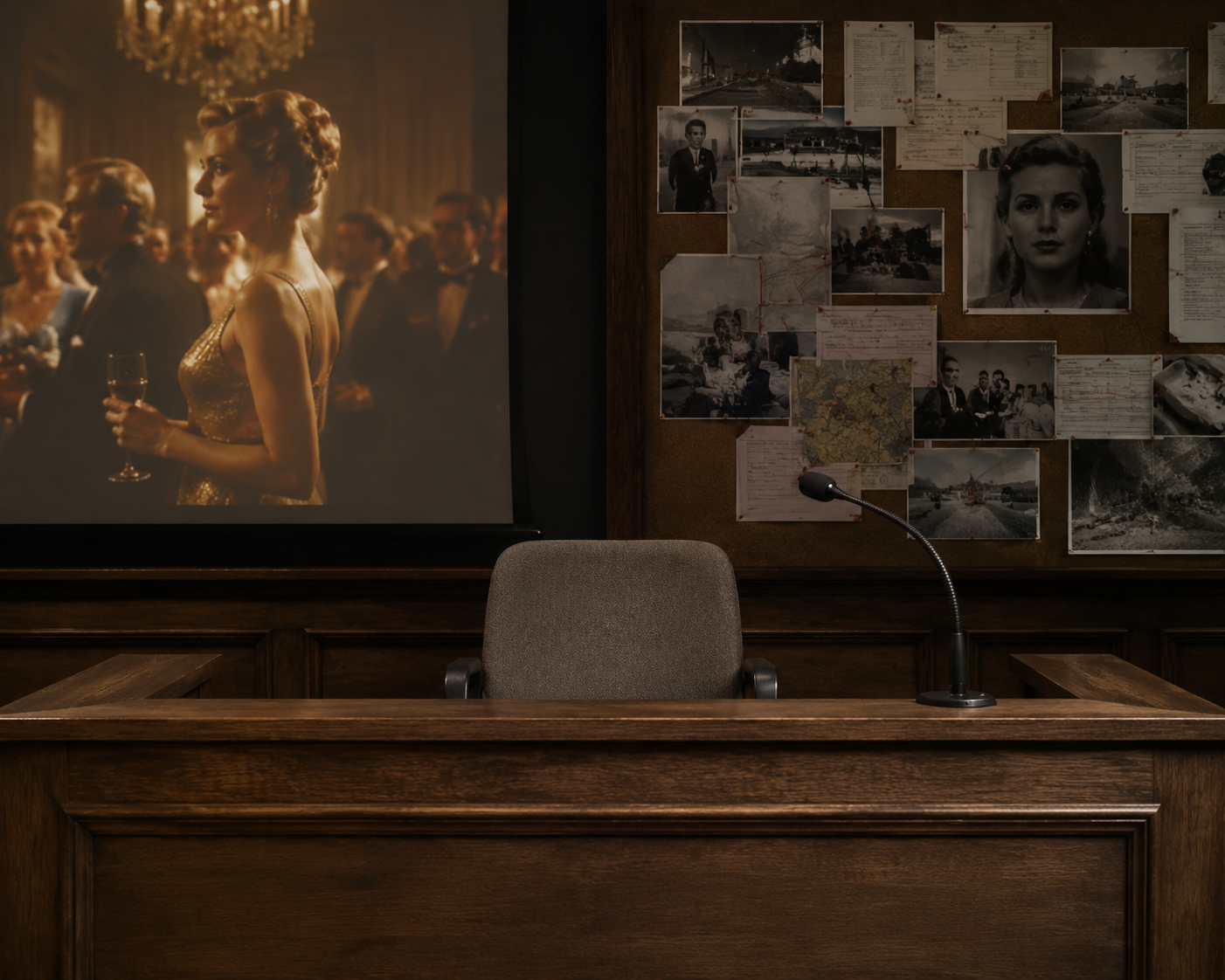
The most serious criticism of The Wolf of Wall Street has never been that it fails to announce that Belfort is bad. The film announces plenty. Its more difficult problem is that it makes his world cinematically abundant while leaving the people damaged by that world comparatively thin. Philip Conklin’s essay in The Periphery offers a pointed version of this critique, arguing that the film’s posture as a cautionary tale is hollowed out by its withholding of victim perspectives.[4]
That critique becomes sharper after the docuseries because absence can now be compared with presence. When victims are brought into the frame, the earlier absence stops looking merely like a choice of narrative focus and starts looking like a distribution of sympathy. Who receives comic timing? Who receives close-ups? Who gets a backstory? Who is reduced to the aftereffect of someone else’s appetite?
Film students should be careful here. It is too easy to write as if adding victims automatically makes a work morally superior or formally richer. Testimony can be used responsibly or exploitatively. It can deepen context, or it can be arranged as a credential for a conclusion already chosen. The better analytic move is to ask what obligations enter once the work invokes harmed people as more than an abstraction. A documentary that foregrounds victims takes on duties of framing, proportion, and care. A fiction film that sidelines them takes on the burden of explaining what that exclusion enables.
Restitution makes that burden concrete. The $110 million order and the reported minimal repayment do not merely add an afterword to Belfort’s story.[1] They expose a gap between cinematic consequence and lived consequence. The film ends within the gravitational field of performance: faces watching, audiences listening, desire circulating. The documentary’s victim material asks what remains after the performance has moved on.
A Practical Comparative Method for Student Essays
For an essay, do not organize the comparison as a scoreboard with one column for “true” and one for “false.” That can be a first note-taking stage, but it should not be the argument. A stronger structure moves from factual difference to formal function to ethical consequence.
- Start with a specific alteration: for example, the invented “I’m not leaving” speech or the fictionalized parking-lot incident.
- Describe what the alteration does formally: closure, escalation, comedy, pace, identification, or compression.
- Identify the source of authority: Belfort’s memoir and Scorsese’s immersive style, or the docuseries’ documents, archive, and testimony.
- Ask who gains a voice and who loses one under each form.
- Connect the formal choice to an ethical effect without pretending that documentary form is automatically innocent.
A weak thesis would say, “The documentary proves the movie is inaccurate.” A stronger thesis would say, “The documentary’s corrections reveal how Scorsese’s film transforms administrative and investigative events into scenes of charisma, while the docuseries builds authority through records and testimony that redistribute attention toward institutional process and victim harm.” The second version gives you something to analyze.
The same method works for the details the film got right. The goldfish, the cousin marriage, the flowers, and the Forbes profile should not be treated as decorative proof that the film is “basically true.” Their importance depends on use. A bizarre accurate detail can still serve mythmaking if it strengthens the atmosphere of unbelievable excess. Accuracy is not the same as balance.
Different Truth-Claims, Different Obligations
The Real Wolf of Wall Street does not make Scorsese’s film useless, and it does not reduce the film to a failed fact quiz. It makes the film more teachable because it reveals the seams. The invented speech, the altered parking-lot incident, the memoir-based perspective, the documentary’s FBI materials, and the victim interviews all help students see that “based on a true story” is not a single promise. It is a field of choices.
The dramatized film organizes reality through performance, speed, direct address, and complicity. The docuseries organizes reality through documents, archival material, sequencing, and testimony. One pulls viewers into Belfort’s worldview; the other asks viewers to reconsider that worldview through people and records the film largely keeps at the edge. Neither form escapes construction. The difference is what each construction asks us to believe, enjoy, excuse, or remember.
For film students, the pair is valuable precisely because it refuses the comfort of a simple verdict. The movie is not merely false because it invents. The documentary is not automatically pure because it documents. Together, they show how adaptation and documentary each organize reality, solicit belief, distribute sympathy, and decide who gets to speak.
References
- ‘Wolf of Wall Street’ documentary: Movie fact vs. fiction, Jordan Belfort, USA Today, July 14, 2026, link
- The Real Wolf of Wall Street Docuseries Premiere Date & Details, TV Insider, July 10, 2026, link
- The Wolf of Wall Street, Mapping Contemporary Cinema, Queen Mary University of London, link
- The Wolf of Wall Street, The Periphery, link
Comments
Join the discussion with an anonymous comment.