
A Student Analysis of Christopher Nolan's The Odyssey
This article breaks down every major change Christopher Nolan made to Homer's epic in the 2026 film, explains why each change was made, and offers a structured analysis for students writing essays or preparing for class discussions on the adaptation.
Updated:
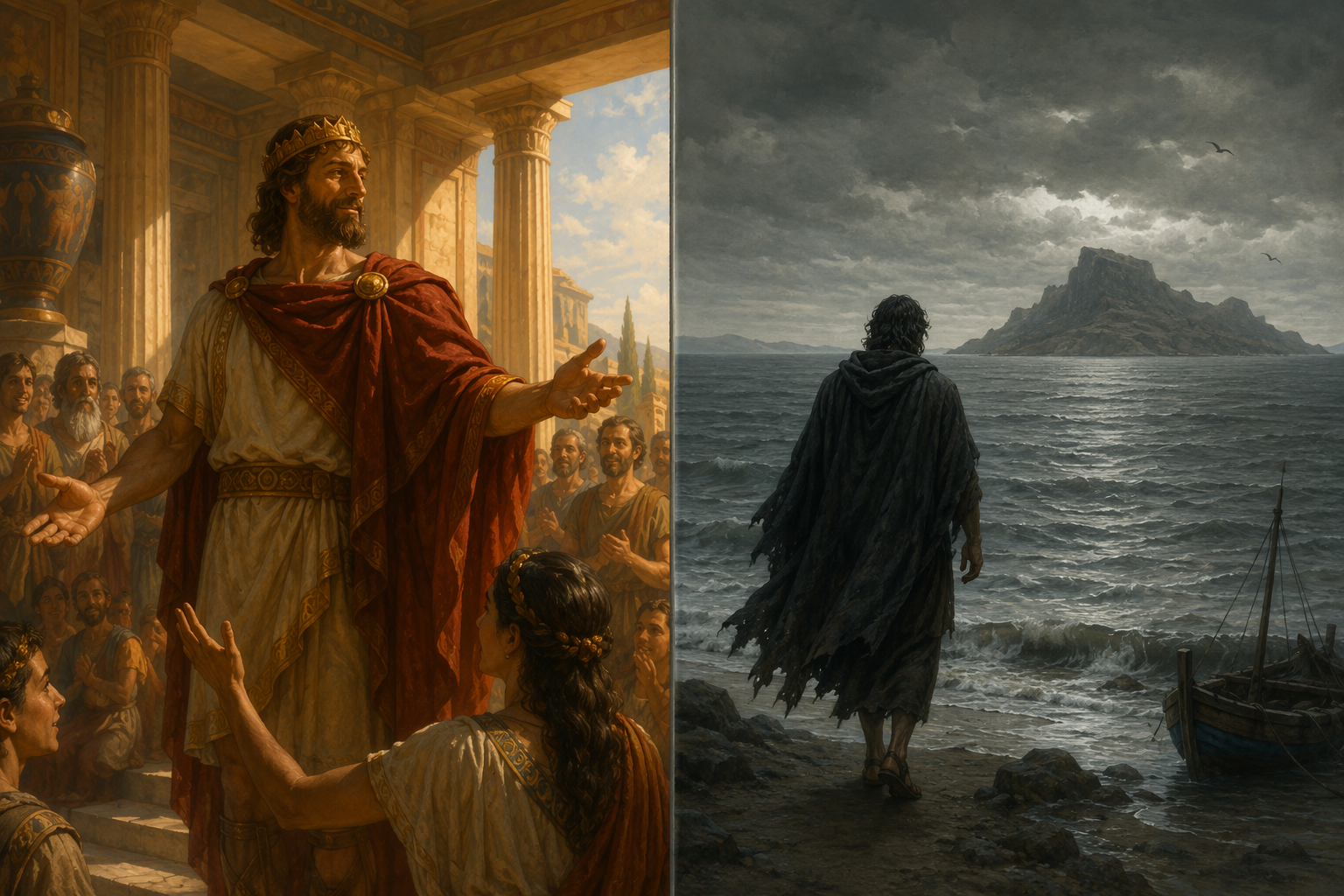
For students comparing Christopher Nolan’s 2026 film with Homer’s Odyssey, the most useful starting point is not “what did Nolan leave out?” It is “what kind of Odysseus does the film create by changing what it changes?” Homer’s Odyssey moves its hero, however painfully, back toward household, identity, kingship, and social order. Early explainers of Christopher Nolan’s 2026 film describe a very different destination: Odysseus does not simply reclaim home; he ends in self-imposed exile, carrying the moral consequences of what he has done.[1][2]
That ending matters because it changes the meaning of almost every earlier choice. If the film were only cutting for time, the missing gods, missing frame narrative, altered Cyclops episode, and heavier Trojan War material might look like separate simplifications. Taken together, they point toward a single adaptation argument: Nolan uses Homer’s epic to ask what victory costs, especially when the victorious man cannot separate cleverness from bloodshed.
One caution belongs near the front. The film was released on July 17, 2026, and much of the current public interpretation comes from reviews and ending explainers published immediately around release. Those pieces are useful, but students should treat some scene-level claims as provisional until they have checked them against the film itself and later criticism.
The Homeric Baseline: Return, Recognition, Order
Before comparing the film to the poem, students need a small but firm baseline. Homer’s Odyssey is not just a travel story. It depends on divine action, delayed recognition, cunning speech, tests of identity, household disorder, and eventual restoration. Odysseus returns to Ithaca, reveals himself, kills the suitors, reunites with Penelope, and moves back into the position from which the Trojan War and his long wandering had displaced him.
That does not make Homer’s ending simple or morally spotless. The poem contains violence, suspicion, grief, and the threat of renewed conflict. But its narrative direction is still restorative: the wandering king comes home, identity is recovered, and the household can be put back into order. Students who need a fuller foundation before attempting the film comparison can start with this Odyssey study guide.
Nolan’s film, as described in the first wave of coverage, does not merely modernize that pattern. It pressures it. The question becomes less “How does Odysseus get home?” and more “What if home cannot absolve what made his return possible?”
The Gods Recede, and Responsibility Moves Downward
The most important formal change may be the reduction of divine intervention. Vanity Fair’s change-by-change account identifies the minimized role of the gods as one of the film’s major departures from Homer.[3] The New Yorker’s review turns that into a criticism, arguing that this choice “turns an epic poem prosaic.”[4]
That complaint is worth taking seriously. In Homer, gods are not decorative. Athena protects, advises, and disguises Odysseus. Poseidon’s anger gives the wandering its cosmic pressure. Divine conflict helps explain why one man’s voyage has more than ordinary human difficulty. If those forces shrink, the poem’s mythic scale can shrink with them.
But the same change can support a different reading. When gods no longer dominate the moral architecture, human beings have fewer places to send the blame. Odysseus’s choices look less like movements inside a divine chess match and more like decisions made by a commander who survives because other people do not. The film’s world may feel less epic, but that loss of height creates a sharper view of accountability.
For an essay, this is a strong counterargument paragraph waiting to happen. A weaker claim would say, “Nolan removes the gods to make the story realistic.” A stronger claim would say, “By minimizing the gods, Nolan risks draining Homer’s mythic scale, but he also shifts moral pressure from supernatural forces onto Odysseus himself.” That version lets the evidence do real interpretive work.
The Trojan Horse Becomes a Wound, Not Just a Triumph
In many student summaries of the Odyssey, the Trojan Horse sits in the background: famous, clever, and already completed before the poem’s main action begins. Nolan’s film brings that deception into the emotional center of Odysseus’s story, according to Vanity Fair’s breakdown of major changes.[3]
That relocation changes the function of cleverness. In Homer, Odysseus’s intelligence is central to his survival and identity. He speaks carefully, hides his name, invents stories, tests others, and waits for the right moment. The Trojan Horse belongs to that same tradition of cunning, but when Nolan foregrounds it as an emotional burden, ingenuity no longer looks cleanly admirable.
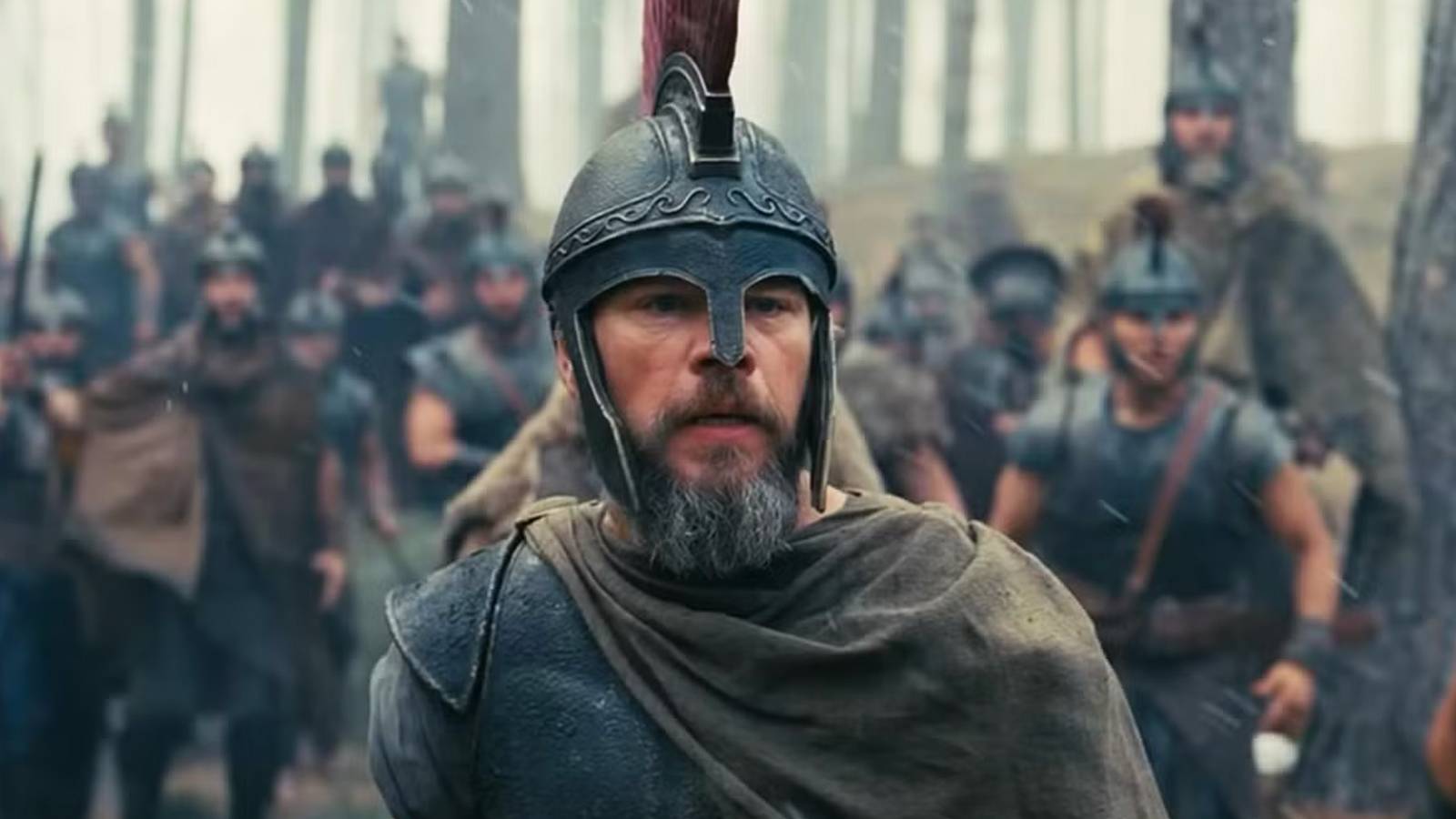
The classroom point is not that Nolan dislikes intelligence. It is that he asks what kind of intelligence wins wars by turning trust, ritual, and vulnerability into weapons. Once the Trojan Horse is treated as a psychic injury rather than a legendary achievement, Odysseus’s later suffering becomes less like bad luck after glory and more like the continuation of a violence he helped design.
Odysseus Changes from Cunning Survivor to Guilt-Ridden Veteran
Myke Cole’s Slate essay gives students the most direct vocabulary for this version of Odysseus: moral injury.[5] That phrase is more precise than simply calling him “traumatized.” Trauma can name what has been done to a person; moral injury emphasizes what a person believes he has done, permitted, or become.
This distinction matters because Nolan’s Odysseus is not being reframed only as a victim of war. He is a veteran and a commander whose suffering is tied to responsibility. The emphasis falls on guilt, memory, and the difficulty of returning to ordinary life after actions that cannot be neatly folded into heroic legend.
A student essay can use this as the bridge between character and structure. The film’s darker Odysseus is not just a new personality layered onto the same plot. He is the reason the altered plot makes sense. If the hero’s central problem is moral injury, then the story cannot end as comfortably with restored status. Kingship would look too much like reward.
The Missing Phaeacian Frame Narrows the Story Around Odysseus
Vanity Fair also notes the film’s removal of the Phaeacian frame narrative.[3] In Homer, Odysseus tells much of his own wandering to the Phaeacians before they help send him home. That structure matters because the hero is not only acting; he is narrating himself. He shapes his identity through performance, memory, and storytelling before an audience.
When that frame disappears, one of the poem’s richest classroom questions changes: how much do we trust Odysseus as the teller of his own adventures? Nolan’s version, at least as described in the early change lists, seems less interested in that layered storytelling problem and more interested in the burden carried by the man himself.[3]
This is a useful place for students to avoid overclaiming. Removing a frame narrative does simplify the poem’s narrative architecture. But it also concentrates attention. The film gives up some of Homer’s complexity around self-presentation in order to keep pushing the audience toward consequence, memory, and guilt.
Losing the “Nobody” Trick Weakens One Kind of Heroism
One of Homer’s most teachable episodes is the Cyclops scene, where Odysseus calls himself “Nobody” and uses language itself as an escape tool. Vanity Fair identifies the absence of that trick as another major film change.[3] For students, this is not a small missing detail. It alters one of the clearest examples of Odysseus’s identity as a verbal strategist.
In the poem, the “Nobody” trick shows cunning at its most elegant and dangerous. Odysseus survives because he understands timing, naming, and social response. The joke works because the Cyclops’s cry for help becomes absurd to everyone who hears it. The hero’s mind turns language into shelter.
Without that moment, the film has less room for the pleasurable brilliance of Homeric trickery. That absence fits the larger pattern. Nolan seems less drawn to cunning as delight than to cunning as contamination. The Trojan Horse becomes the more important deception because it carries a heavier moral charge.
The Athena Twist Makes Guidance Less Stable
The ending explainers from ComicBook.com and Collider both discuss a major Athena-related twist alongside the film’s changed ending.[1][2] Students should be careful with exact wording until they verify the scene themselves, but the reported change fits the film’s larger movement away from Homer’s relatively clearer divine support.
In Homer, Athena is not a vague symbol of wisdom. She is an active ally who helps Odysseus and Telemachus, engineers encounters, and supports the restoration of order. If Nolan complicates Athena’s role, the effect is not only theological. It makes guidance itself feel unstable. The hero can no longer rest inside a world where divine intelligence reliably confirms his return.
This matters for interpretation because the film’s Odysseus is already carrying guilt. A less stabilizing Athena means less reassurance that his suffering has a clean cosmic purpose. The story becomes lonelier, and that loneliness prepares the ground for exile.
The Exile Ending Rewrites the Whole Adaptation
The changed ending is the clearest evidence that Nolan is not aiming at Homeric restoration. ComicBook.com and Collider both describe the film as replacing the poem’s return to kingship with self-imposed exile.[1][2] That is not just a final-scene variation. It retroactively organizes the film’s other choices.
| Homeric movement | Nolan’s reported movement | Analytical consequence |
|---|---|---|
| Odysseus returns to Ithaca and reclaims his place. | Odysseus ends in self-imposed exile. | Homecoming becomes morally unresolved rather than socially restorative. |
| Cunning helps restore identity and household order. | Cunning is tied to the cost of war and deception. | Intelligence becomes ethically burdened. |
| Divine action helps frame the hero’s return. | The gods are minimized or complicated. | Responsibility shifts toward human choices. |
| The Trojan War is largely prior history. | The Trojan Horse becomes emotionally central. | Victory becomes a wound that the plot keeps reopening. |
In Homer, Odysseus’s return is difficult because he must survive monsters, storms, temptations, hostile men, and disorder at home. In Nolan, according to the early explainers, the final problem is not merely whether he can get back. It is whether return can mean restoration for a man defined by imperial violence.[1][2]
That is why the exile ending should receive more weight than a normal adaptation difference. A student should not write, “The movie changes the ending to be sadder.” The stronger version is: “By changing homecoming into exile, Nolan rejects the poem’s movement toward restored kingship and turns Odysseus’s survival into evidence of unresolved moral injury.”
The difference also affects Penelope, Telemachus, and Ithaca, even if a student’s essay focuses mainly on Odysseus. In the poem, the household is the destination that gives wandering its shape. In the film’s reported ending, the household cannot simply absorb the returning hero and make him whole. The cost of war follows him past the point where an epic return would usually settle the account.
How to Turn the Comparison into a Student Argument
The trap in a book-to-film essay is to make a list of differences and assume the list is analysis. A teacher can grade a claim more easily when each difference is connected to an effect. Use a three-part sentence pattern, not as a formula for every paragraph, but as a check on whether the argument is complete.
- Textual evidence: what Homer does in the poem.
- Adaptation choice: what Nolan changes, removes, or emphasizes.
- Interpretive consequence: how that choice changes the meaning of Odysseus, homecoming, violence, or responsibility.
For example, the missing “Nobody” trick should not be treated as a complaint by itself. It becomes useful when connected to a claim: Homer’s Odysseus survives through verbal brilliance, while Nolan’s film shifts attention away from playful linguistic mastery and toward the darker consequences of strategic deception.
The gods offer another good test. A thin paragraph says, “Nolan makes the story less religious.” A better paragraph says, “By reducing divine intervention, Nolan may lose some of Homer’s epic grandeur, but he also makes Odysseus’s violence harder to explain away as fate or divine conflict.” That sentence contains evidence, concession, and interpretation.
For teachers, Into Film has also published an educational resource connected to the film, with UK-curriculum-aligned discussion materials.[6] That can be useful for classroom planning. For an individual essay, though, the main task remains the same: do not ask whether the film is “faithful” before asking what its pattern of unfaithfulness is trying to say.
Usable Claims for Discussion or an Essay
These are not final verdicts on the film. They are starting claims a student can test against scenes, quotations, and class discussion.
- Nolan’s Odyssey changes the epic’s direction from heroic restoration to moral reckoning.
- The minimized gods reduce mythic scale, but they also make human responsibility harder to avoid.
- The Trojan Horse becomes the film’s emotional center because it turns Odysseus’s famous cunning into a source of guilt.
- Removing the Phaeacian frame narrows Homer’s interest in storytelling and self-presentation, concentrating the film on memory and consequence.
- The absence of the “Nobody” trick weakens one of Homer’s clearest celebrations of verbal intelligence and helps shift the film away from clever survival.
- The exile ending is the adaptation’s strongest evidence that Nolan is asking what victory costs rather than celebrating the hero’s return.
The most defensible overall reading is this: if the gods recede, if cunning becomes morally contaminated, if the Trojan Horse becomes a wound rather than a triumph, and if homecoming turns into exile, then Nolan’s The Odyssey is using Homer to question the cost of heroic victory. Students should keep that claim open to revision as they revisit the film, but it gives the comparison a clear spine: not fidelity versus infidelity, but restoration versus moral injury.
References
- The Odyssey Ending Explained: Why Christopher Nolan's Film Differs From Homer's Epic, ComicBook.com
- The Odyssey Ending Explained, Collider
- 10 Major Changes From Book to Screen, Vanity Fair
- The Odyssey Christopher Nolan Movie Review, The New Yorker, July 27, 2026
- The Odyssey Movie 2026 Christopher Nolan Veteran Trauma, Slate, July 2026
- The Odyssey, Into Film
Comments
Join the discussion with an anonymous comment.