

How to Study the 2025 Endangered Species Act Policy Changes
This guide breaks down the seven major ESA actions from 2025–2026 into a three-step before/after study framework, helping environmental policy students organize regulatory, statutory, and judicial changes without getting lost in legal jargon.
Updated:
The fastest way to get lost in the 2025 Endangered Species Act materials is to treat every headline as the same kind of legal event. They are not. As of Q3 2026, the cluster students usually mean by “ESA policy changes 2025” contains four proposed regulatory rules, one finalized definitional rescission that is not yet effective, one statutory exemption decision by the Endangered Species Committee, one failed congressional amendment, and a court decision sitting awkwardly across part of the regulatory field.
That sorting move matters before anyone starts arguing policy. A proposed rule is not law. A final rule is not the same thing as a statute. A God Squad exemption is not agency rulemaking. A bill that fails to receive a floor vote is not an ESA amendment. Once those categories are separated, the changes become studyable: for each action, identify the old rule, isolate the new action and its authority, then translate the practical effect into listing, critical habitat, consultation, or take.
First, Sort the Seven Actions by Legal Type
For exam purposes, start with status. It keeps “change” from becoming a vague word that does too much work.
| Action | Status as of Q3 2026 | Legal type | Main ESA function affected | Study handle |
|---|---|---|---|---|
| Section 4 listing and critical habitat proposal | Proposed | Agency rulemaking | Listing and critical habitat | Docket FWS-HQ-ES-2025-0039 |
| Section 4(d) threatened species proposal | Proposed | Agency rulemaking | Threatened species protections | Docket FWS-HQ-ES-2025-0044 |
| Section 7 consultation proposal | Proposed | Agency rulemaking | Federal agency consultation | Docket FWS-HQ-ES-2025-0029 |
| Section 4(b)(2) critical habitat exclusions proposal | Proposed | Agency rulemaking | Critical habitat exclusions | Docket FWS-HQ-ES-2025-0048 |
| Rescission of regulatory definition of harm | Finalized July 14, 2026; effective Sept. 14, 2026 | Agency rulemaking | Take prohibition | Habitat modification removed from regulatory harm definition |
| Endangered Species Committee exemption for Gulf oil and gas drilling | Granted March 31, 2026 | Statutory exemption | Section 7 consultation consequences | God Squad / Section 7(n) |
| H.R. 1897, ESA Amendments Act of 2025 | Failed to secure a floor vote on April 22, 2026 | Proposed legislation | Would have amended statutory law | Not law |
The four November 2025 proposals are the core regulatory package. The agencies tied them to specific ESA sections: Section 4 for listing and critical habitat, Section 4(d) for threatened species rules, Section 7 for interagency consultation, and Section 4(b)(2) for critical habitat exclusions. Their docket numbers—FWS-HQ-ES-2025-0039, FWS-HQ-ES-2025-0044, FWS-HQ-ES-2025-0029, and FWS-HQ-ES-2025-0048—are not decorative; they are how a student verifies the proposal, comments, and final-rule status instead of relying on someone else’s summary.[1][2]
The common thread across the five regulatory actions is post-Loper Bright agency interpretation. After the Supreme Court eliminated Chevron deference, agencies have less room to assume that courts will defer to reasonable agency readings of ambiguous statutes. That does not explain every ESA event in this period, but it does help explain why the regulatory actions repeatedly return to statutory text, agency authority, and the limits of interpretation.[3]
Use a Before/After Case Study Routine
Do not begin by memorizing who supports or opposes each change. Begin with the legal mechanics. The same three questions work for every action in the cluster:
- What was the prior rule, practice, or legal position?
- What changed, and what authority caused or justified the change?
- Which ESA function is affected: listing, critical habitat, consultation, threatened-species protections, or take?
This routine is especially useful because several 2025–2026 items sound similar in ordinary prose. “The administration changed ESA rules” could refer to a proposed Section 7 consultation rule, a final harm-definition rescission, or an attempted statutory amendment. Those are different legal objects with different consequences.
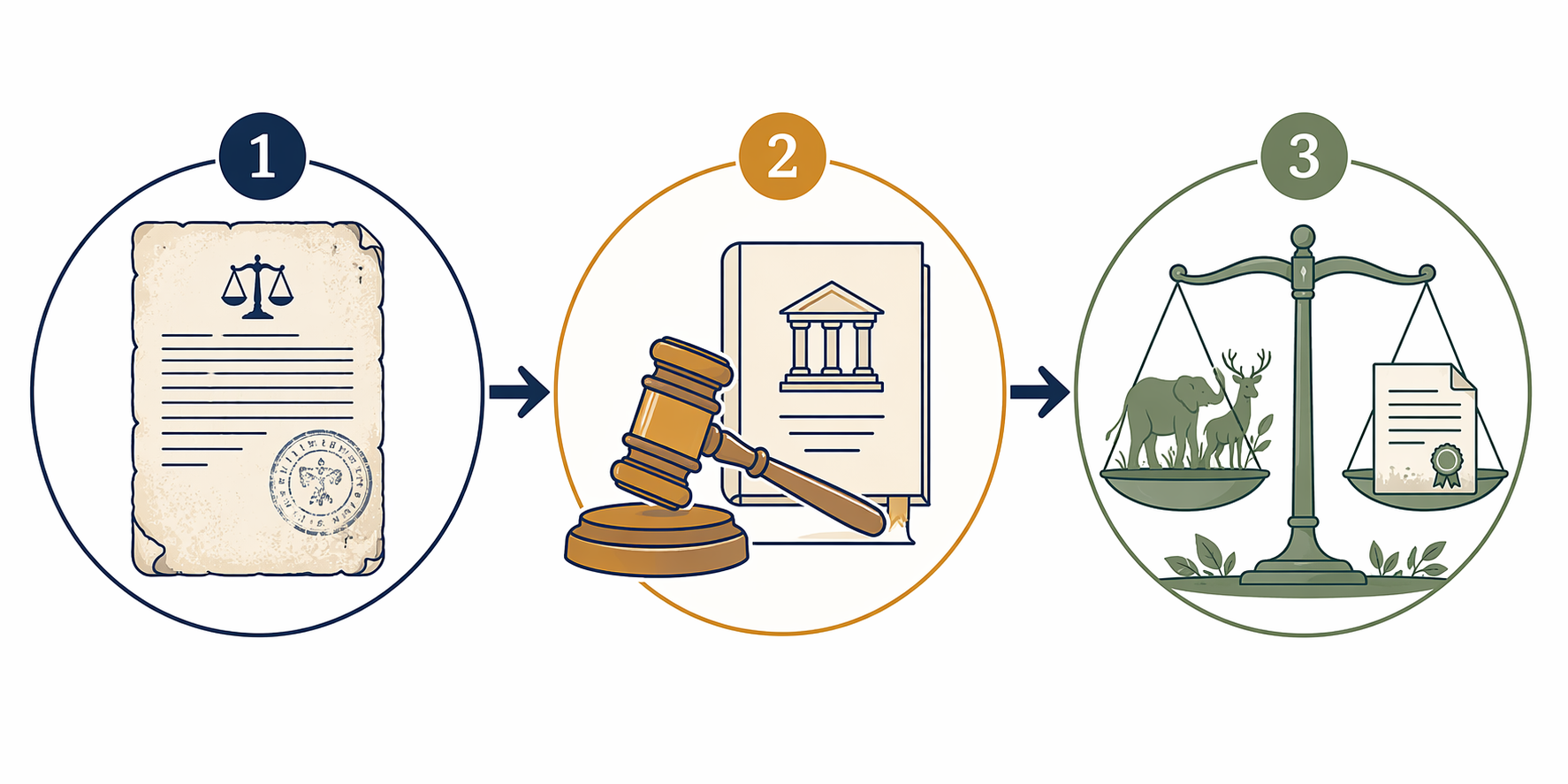
The Four November 2025 Proposed Rules Are One Regulatory Cluster, Not One Rule
The November 2025 proposals are the best place to practice the method because they look like one political package but map onto separate ESA functions. A clean set of notes should give each proposal its own row.
Section 4: Listing and Critical Habitat
Section 4 is where students should look for changes to how species are listed and how critical habitat is designated. The November 2025 Section 4 proposal belongs in that bucket, not in consultation or take. Its docket number is FWS-HQ-ES-2025-0039, and as of Q3 2026 it remains a proposal rather than a final rule.[1][2]
The before/after question here is not “Did the ESA become weaker?” That may be the policy debate, but it is too blunt for study notes. The better question is: what would the agencies have considered under the prior listing and critical-habitat framework, and what would the proposed text make easier, harder, mandatory, or unavailable?
Section 4(d): Threatened Species Rules
Section 4(d) governs protective rules for threatened species. That makes it easy to confuse with the take prohibition because both can affect what private and public actors may do around species habitat. Keep the distinction: Section 4(d) is about the protective rules agencies issue for threatened species; the harm-definition rescission concerns the meaning of “take” through “harm.” The November 2025 Section 4(d) proposal is tracked under docket FWS-HQ-ES-2025-0044.[1][2]
Section 7: Interagency Consultation
Section 7 is the federal-agency consultation provision. If a federal agency action may affect listed species or critical habitat, Section 7 is where the consultation machinery sits. The November 2025 Section 7 proposal is docket FWS-HQ-ES-2025-0029.[1][2]
This is also where litigation makes the study map messier. On March 30, 2026, Center for Biological Diversity v. Department of the Interior vacated three 2019 consultation provisions, even as the administration was proposing to reinstate similar approaches. That means students should not write as if the consultation field is settled. The correct note is narrower: the proposal exists, but the legal background includes active judicial disruption of related consultation provisions.[3]
Section 4(b)(2): Critical Habitat Exclusions
Section 4(b)(2) is not just “critical habitat” in general. It concerns exclusions from critical habitat. That matters because exclusion analysis asks a different question from designation itself: not simply whether an area qualifies, but whether and how the agency may exclude an area after considering relevant impacts. The November 2025 proposal is docket FWS-HQ-ES-2025-0048.[1][2]
A useful exam answer would separate the Section 4 listing and critical-habitat proposal from the Section 4(b)(2) exclusions proposal. They may travel together politically, but they do not perform the same legal task.
The Harm Rescission Is the Finalized Change to Watch Closely
The harm-definition rescission deserves more space than the other finalized actions because it changes the practical reach of the ESA’s take prohibition. The agencies proposed the rescission in April 2025, finalized it on July 14, 2026, and set an effective date of September 14, 2026.[3]
Before the rescission, the regulatory definition of “harm” included significant habitat modification or degradation that actually kills or injures wildlife. That interpretation has a long legal history because the Supreme Court upheld it in Babbitt v. Sweet Home Chapter of Communities for a Great Oregon in 1995. The 2026 final rule reverses that regulatory position by removing habitat modification from the definition of harm.[3][4]
For study purposes, this is the cleanest before/after case in the whole cluster. Before: certain habitat modifications could count as harm, and therefore as take, when they actually killed or injured protected wildlife. After the effective date: habitat modification is no longer included in the regulatory definition of harm. The affected ESA function is take, not listing, not critical habitat designation, and not congressional amendment.
This is also where habitat-loss context belongs. If 81% of listed species are associated with habitat loss, then narrowing the regulatory bridge between habitat modification and take has obvious conservation-policy significance.[5] That number does not prove how courts will apply the rescission, and it does not by itself measure species outcomes. It does explain why this definition is not a technical footnote.
The legal authority thread is post-Loper Bright textualism about agency interpretation. The strongest version of the argument is not that Loper Bright mechanically required the rescission. It is that, after Chevron deference disappeared, the agencies faced a less forgiving judicial environment for regulatory definitions that extend statutory terms. Industry-side legal analyses treat the rescission and the proposed rules as part of that broader recalibration, which is useful to read alongside environmental trackers rather than instead of them.[4][6]
Public Comments Show Stakes, Not Legal Effect
The four November 2025 proposed rules drew more than 387,000 public comments opposing them during a 30-day comment period.[7] That is politically important and worth remembering. It is not the same as a final legal outcome.
In class discussion, comments can support a point about salience, mobilization, and administrative process. They should not be used as proof that the rules are unlawful, final, effective, or empirically harmful. The Administrative Procedure Act requires agencies to deal with significant comments in the rulemaking process, but the existence of a large comment number is not itself the before/after change.
The God Squad Exemption Belongs in a Separate Box
The Endangered Species Committee, often called the God Squad, is memorable precisely because it is rare and statutory. It met for only the fourth time in 48 years on March 31, 2026, and unanimously exempted Gulf oil and gas drilling from ESA consultation requirements.[7]
That should not be described as another agency rule change. The cleaner description is: a statutory exemption process under Section 7(n) produced a project- or category-specific exemption from ordinary consultation consequences. It affects consultation, but through a different legal pathway from the November 2025 Section 7 proposed rule.
The before/after method still works. Before the exemption, the covered federal actions faced ordinary ESA consultation constraints. After the exemption, the specified Gulf oil and gas activity received relief through the committee process. The authority is not Chevron, Loper Bright, or a proposed regulation; it is the ESA’s own exemption mechanism.
H.R. 1897 Is Useful Because It Failed
H.R. 1897, the ESA Amendments Act of 2025, attempted to codify many regulatory changes into statutory law, but it failed to secure a floor vote on Earth Day, April 22, 2026.[7][5] That makes it a good test of whether students are keeping legal categories separate.
A statute would be more durable than an agency regulation because Congress would be changing the ESA itself. A regulation can be revised through agency rulemaking, challenged under administrative law, or reversed by a later administration that follows the required process. H.R. 1897 did not become law, so it belongs in notes as a failed legislative amendment, not as one of the operative ESA changes.
Use Statistics as Exam Anchors, Not as the Spine of the Answer
A few numbers are worth memorizing because they help situate the policy fight. They do not replace the legal-status table.
- 99% of listed species have not gone extinct under the ESA.[5]
- Only about 3% of listed species have been delisted due to recovery, though recovery-rate methodology is contested.[5]
- 81% of listed species are associated with habitat loss.[5]
- The average listing timeline is 12.1 years.[5]
- More than 107 million acres of critical habitat have been designated.[5]
Those numbers come from reform-oriented and advocacy-adjacent materials, including CEI’s July 2026 study drawing on PERC and FWS data. That does not make them unusable, but it does mean they should be framed carefully, especially where recovery rates differ by methodology.[5] Michigan State University’s May 2025 expert discussion is useful as a conservation-side counterweight when explaining why habitat and implementation timelines matter.[8]
The best use of these statistics is limited and concrete. The 81% habitat-loss figure helps explain why the harm rescission is the most consequential finalized regulatory change. The recovery and extinction figures help frame competing narratives about ESA success. The acreage and timeline figures help explain why critical habitat and listing procedures attract so much attention. None of them tells you whether a particular proposed rule has legal effect today.
A Study Table You Can Reproduce from Memory
If you can rebuild this table without looking at a news article, you understand the cluster well enough to write a coherent exam answer or seminar memo.
| Action | Before | After or proposed change | Authority or driver | Affected ESA function | Uncertainty |
|---|---|---|---|---|---|
| Section 4 listing and critical habitat proposal | Existing listing and critical-habitat rules governed agency analysis | Proposed revisions to listing and critical-habitat regulations | Agency rulemaking in a post-Loper Bright environment | Listing and critical habitat | Proposed, not final as of Q3 2026 |
| Section 4(d) threatened species proposal | Existing threatened-species protective-rule framework applied | Proposed revisions to Section 4(d) treatment | Agency rulemaking in a post-Loper Bright environment | Threatened species protections | Proposed, not final as of Q3 2026 |
| Section 7 consultation proposal | Existing consultation rules applied, with 2019 provisions affected by later litigation | Proposed revisions to consultation regulations | Agency rulemaking plus litigation overlay | Federal consultation | Court vacatur creates legal gray zone |
| Section 4(b)(2) critical habitat exclusions proposal | Existing exclusion analysis governed critical-habitat decisions | Proposed revisions to exclusion framework | Agency rulemaking in a post-Loper Bright environment | Critical habitat exclusions | Proposed, not final as of Q3 2026 |
| Harm-definition rescission | Regulatory harm definition included certain habitat modification that actually killed or injured wildlife | Final rule removes habitat modification from harm definition, effective Sept. 14, 2026 | Agency rulemaking after Loper Bright; reversal of Sweet Home-era regulatory position | Take prohibition | Finalized but not yet effective on July 19, 2026 |
| God Squad exemption | Covered Gulf oil and gas actions faced ordinary consultation constraints | Endangered Species Committee granted exemption | ESA Section 7(n) statutory exemption process | Consultation consequences | Exemption-specific; not a general rule rewrite |
| H.R. 1897 | ESA statutory text remained unchanged | Bill would have codified some changes but failed | Congressional legislation | Potentially multiple ESA functions | Not law |
The table also shows where Loper Bright belongs. It is strongest as a driver for the regulatory cluster: the four proposed rules and the harm rescission. It is weaker as an explanation for the God Squad decision, because that action uses a statutory exemption path. It is background rather than legal effect for H.R. 1897, because a failed bill does not change the ESA.
A careful answer can still have a point of view. It can say that the harm rescission is especially significant because habitat loss is central to species endangerment and because the prior harm definition connected habitat modification to the take prohibition. It can say that the November 2025 proposals would matter if finalized. It can say that the God Squad exemption is rare and important without pretending it rewrites the regulations. Precision is not neutrality; it is what keeps the argument from collapsing into a pile of headlines.
References
- FWS Press Release, U.S. Fish and Wildlife Service, Nov. 19, 2025
- NOAA Fisheries Action Page, NOAA Fisheries
- Harvard EELP ESA Tracker, Harvard Environmental & Energy Law Program
- Holland & Knight Legal Analysis, Holland & Knight, Nov. 2025
- CEI Study, Competitive Enterprise Institute, July 2026
- Beveridge & Diamond, Beveridge & Diamond
- National Geographic, July 16, 2026
- MSU Ask the Expert, Michigan State University, May 2025
Comments
Join the discussion with an anonymous comment.