
Earthquake Prep Tips for Dorm and Rental Living
Practical, low-cost steps college students can take to prepare for earthquakes while living in dorms or rentals — including building a go-bag under $50, identifying shelter spots in every room, and setting up a communication plan with roommates and family.
Updated:
Before you buy anything, stand in your room and ask where you would go if shaking started while you were in bed, at your desk, in the shower, or in the kitchen. That is the practical version of earthquake preparedness tips for dorms and rentals: a few known cover spots, a small kit you can reach, and a plan that still works when roommates are half-asleep. Earthquakes are not just a California problem; the Red Cross says 45 states and territories are at moderate to very high risk, and FEMA's 2023 survey found only about 51% of adults felt prepared while 57% had taken three or more preparedness actions.[1][2]
Start with where you can cover
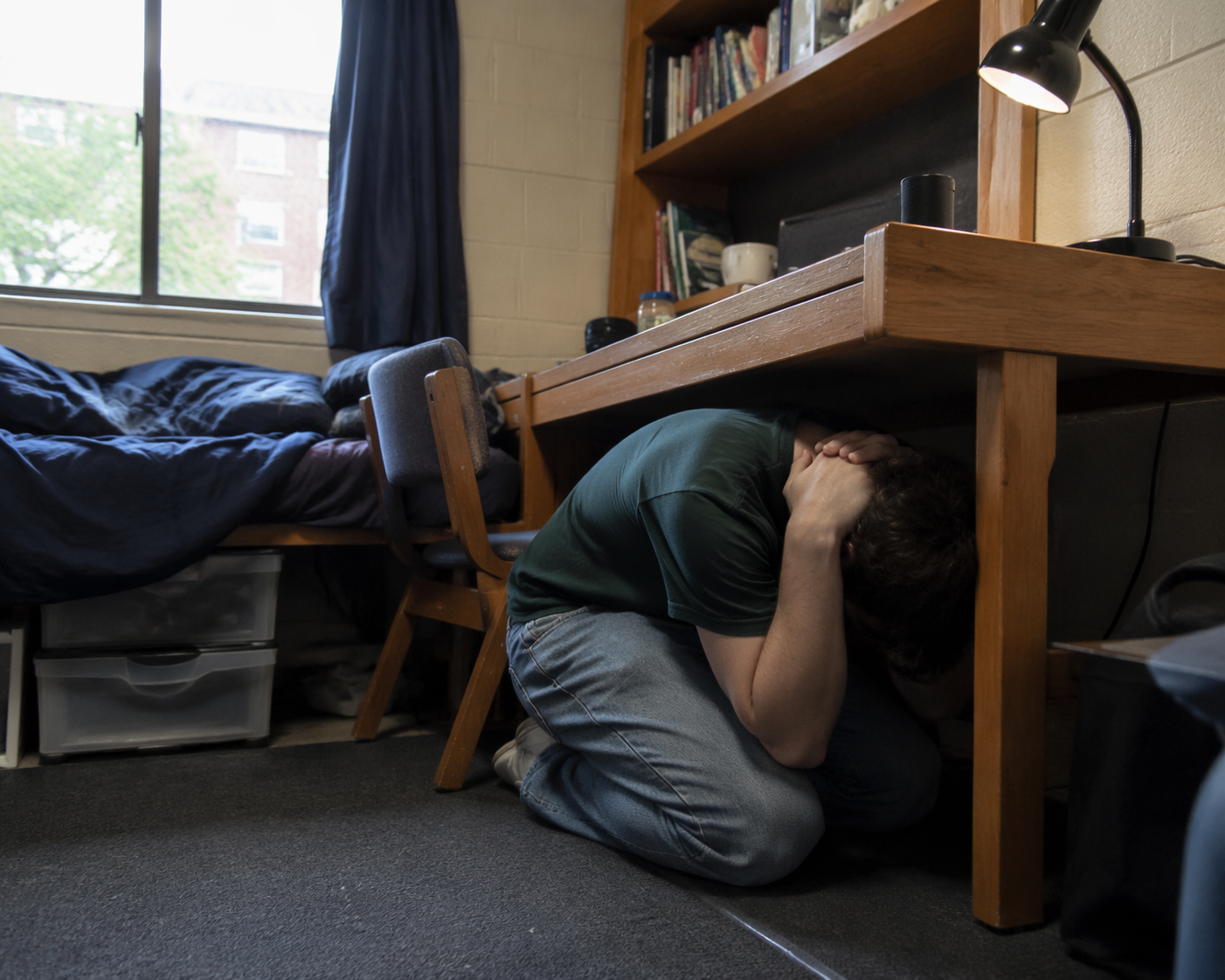
The move to practice is Drop, Cover, Hold On. The CDC says most earthquake injuries come from falling objects or being knocked down, so the job is to get low, protect your head and neck, and stay put until the shaking stops. Doorways are not automatically safer in modern buildings, so do not make a doorway your default plan.[3][4]
| Where you are | What to do | What to skip |
|---|---|---|
| Bed | Stay low, protect your head and neck, and keep away from shelves, lights, and windows. | Running into the hallway. |
| Desk or study area | Drop under a sturdy desk and hold on. | Trying to outrun tall furniture. |
| Kitchen | Move away from cabinets, glass, and hot surfaces as quickly as you can, then get low and cover. | Grabbing pans or dishes. |
| Bathroom | Get low, shield your head, and stay away from mirrors and glass. | Opening the door and moving through the room mid-shake. |
| Common room | Use the sturdiest table or interior spot that is not under windows or tall unsecured furniture. | Standing in a doorway or next to a bookcase. |
The point of the room scan is not to find a perfect spot that works everywhere. It is to have a default answer in every place you actually spend time. In a dorm, that might be the desk you study at, the side of the bed you sleep on, the corner of a shared kitchen, and the interior wall near the bathroom door. If the room changes, the cover plan changes with it.
Build a kit you can keep in a dorm
A student kit does not need to look like a garage shelf. Ready.gov's basic list and the Red Cross bed-kit idea both work well for dorms: keep essentials in a backpack or small bag, and if possible tie a second mini-kit to the bed frame so your shoes and flashlight are within reach in the dark.[1][5] For current prices, a functional under-$50 setup is more of a budget target than a guarantee, and it depends on what you already own and what discount stores charge that week.[5][6]
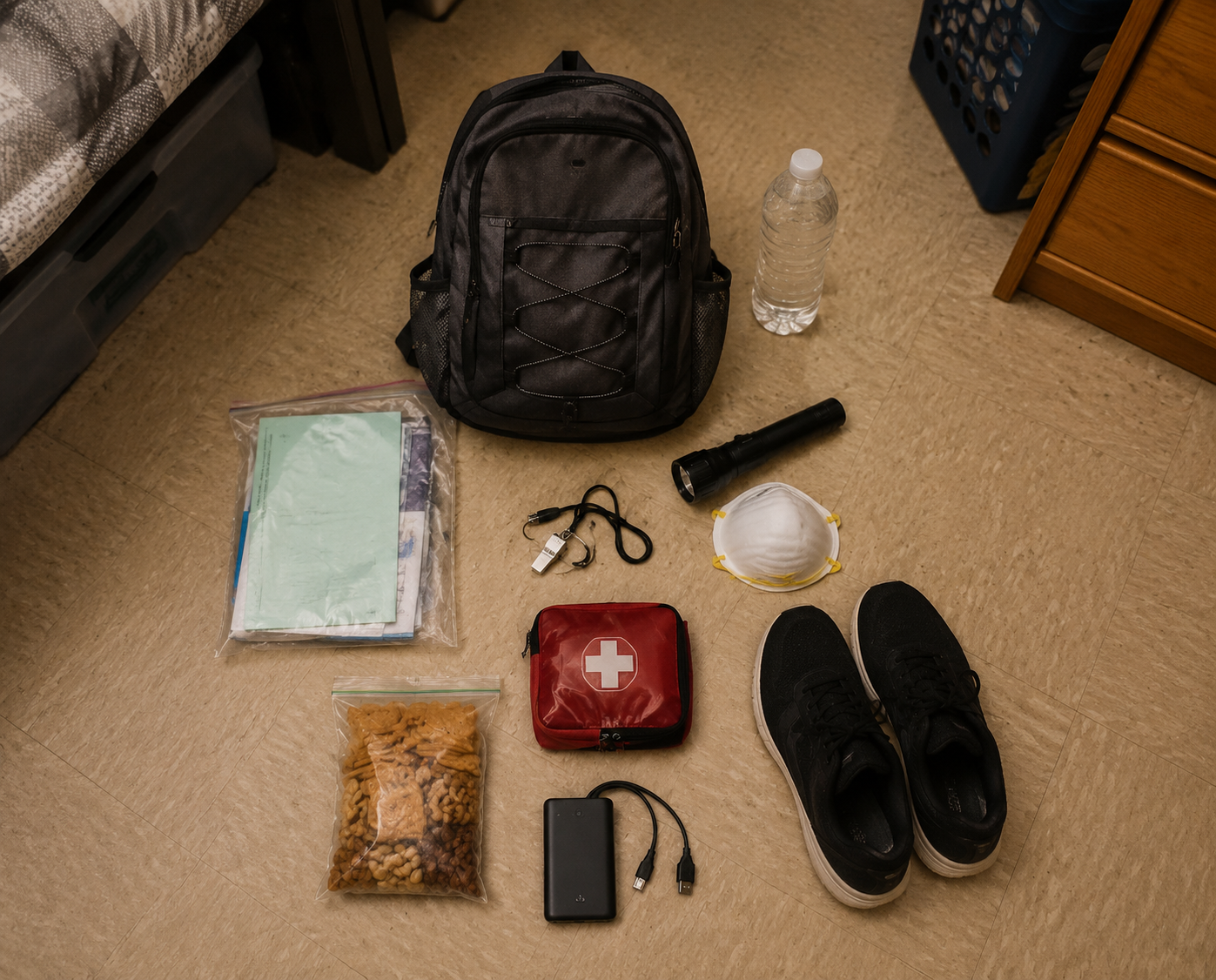
- Must-haves: water, flashlight, sturdy shoes, dust mask, whistle, portable charger, basic first aid, any medications you need, copies of key info, and a few shelf-stable snacks.[1][5]
- Water minimum: keep at least 1 gallon per person per day for at least 3 days, and more if your closet, under-bed space, or shelf can handle it.[5]
- Nice-to-haves: glasses or contacts, work gloves, small cash, hygiene items, and a paper map.
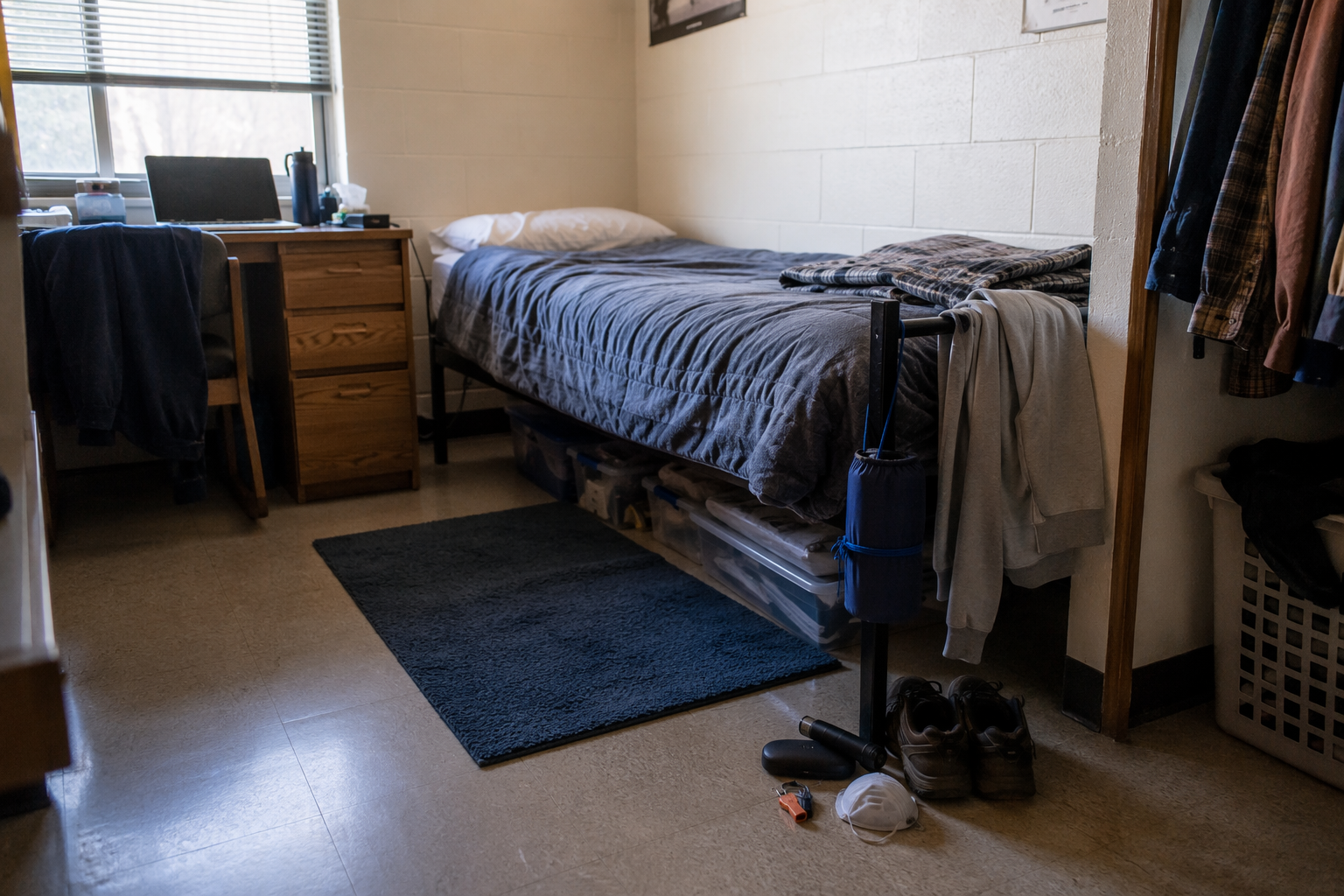
- Bed-kit version: tie a small bag to the bed frame with shoes, a flashlight, glasses if you wear them, a dust mask, and a whistle so you are not searching the floor after a shake.[1]
If you already own a backpack and a charger, you may only need a short shopping list to finish the rest. That is the useful version of earthquake prep in student housing: not a perfect loadout, just a bag you can carry, reach, or grab without needing permission from a landlord or a resident advisor.
Make the communication plan before the shaking
A group chat is useful until cell service is jammed, the battery is low, or everyone is assuming someone else already texted. Pick one out-of-area contact, one meeting place near the building, and one backup away from campus so roommates and family know where to look first. That is also where ShakeAlert helps in California, Oregon, and Washington: it can give roughly 10 to 60 seconds of warning, which is enough time to get into Drop, Cover, Hold On, not enough time to plan an evacuation.[7]
- Share one out-of-area contact with roommates and family.
- Save campus emergency alerts and local alerts on your phone.
- Decide how you will check in: "I'm okay," "I need help," or "I am outside."
- Make sure at least one person knows where your kit lives.
- Practice once in daylight and once at night so nobody has to improvise when the room is dark.
That is enough to be meaningfully safer: known cover spots, a small kit that lives where you live, alerts where they are available, and a plan that roommates and family actually know.
References
- Earthquake Safety — American Red Cross https://www.redcross.org/get-help/how-to-prepare-for-emergencies/types-of-emergencies/earthquake.html
- 2023 National Household Survey — FEMA https://fema-community-files.s3.amazonaws.com/2023-National-Household-Survey.pdf
- Stay Safe During an Earthquake — CDC https://www.cdc.gov/earthquakes/safety/stay-safe-during-an-earthquake.html
- Seven Steps to Earthquake Safety — Earthquake Country Alliance https://www.earthquakecountry.org/sevensteps/
- Build a Kit — Ready.gov https://www.ready.gov/kit
- How to Prepare an Earthquake Emergency Kit — CRMP https://www.crmp.org/resources/blog/how-to-prepare-an-earthquake-emergency-kit
- ShakeAlert Earthquake Early Warning — USGS https://www.usgs.gov/programs/earthquake-hazards/shakealert
Comments
Join the discussion with an anonymous comment.