
What Blade Runner 2049 Says About Consciousness and Moral Status
This analysis examines how Blade Runner 2049 uses K's journey to argue that subjective experience, not biological birth, determines moral worth — a framework students can apply to philosophy essays on consciousness and AI ethics.
Updated:
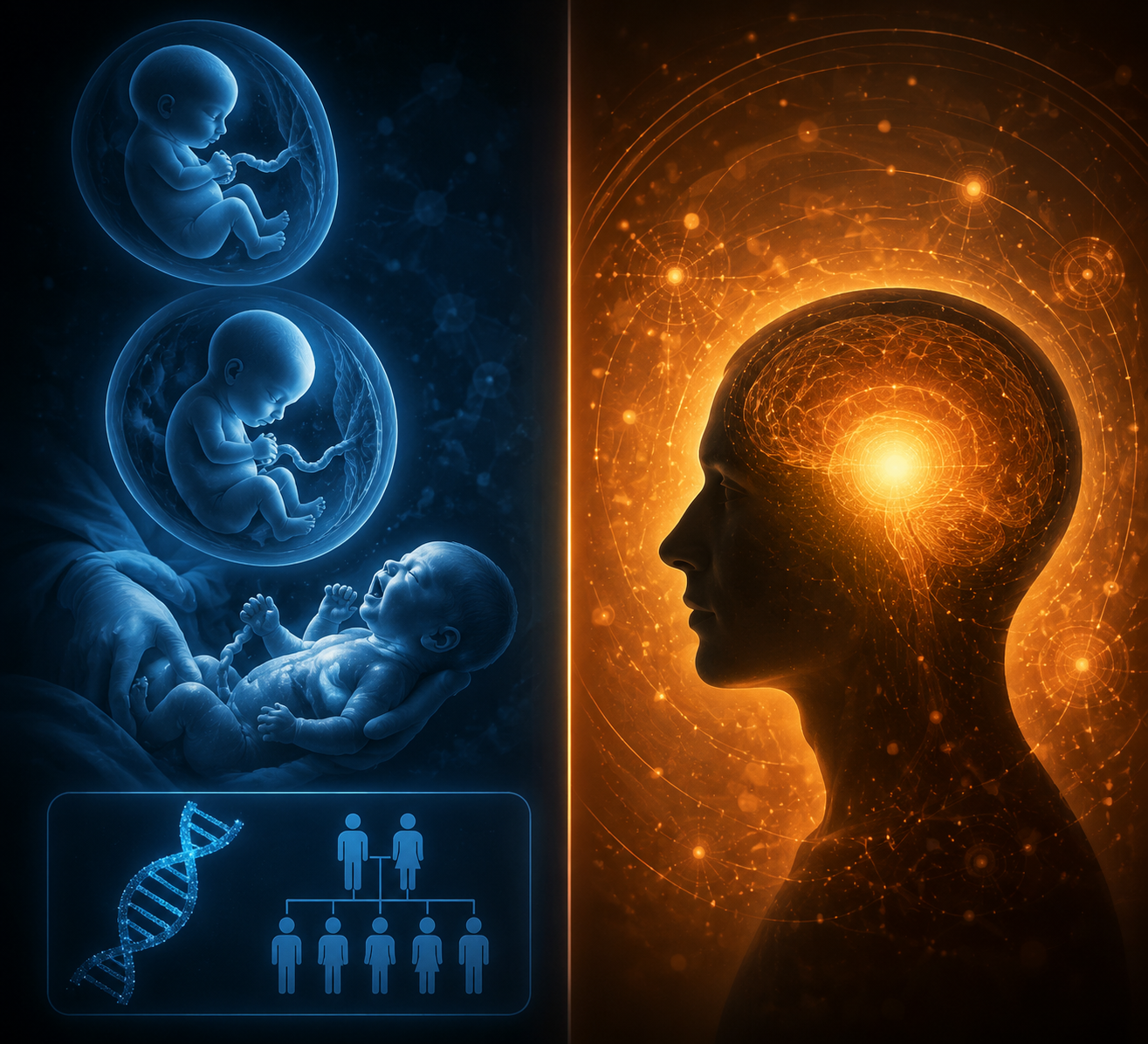
If you are writing about Blade Runner 2049 for a philosophy or film studies essay, the safest starting point is not "Is K human?" It is a sharper question: what would make K morally matter? The film keeps separating two things students often blur together. One is biological origin, the fact of being born naturally or manufactured. The other is consciousness, the subjective fact that there is someone there for whom life feels like something.
That distinction is the backbone of the argument. A body can be manufactured, cloned, or engineered and still raise the same philosophical problem if there is an inner life there. Philosophy Now's student-level analysis is useful because it gives a clean vocabulary for this: Nagel's idea of consciousness as "what it's like" to be a being, Chalmers' hard problem of why physical processes produce experience at all, and the familiar thought experiment of the philosophical zombie, which looks human but has no inner life. It also connects those ideas to the LaMDA controversy in a way students can actually use in an essay, rather than just name-dropping theory [1].
K Makes the Question Visible
K is not written as a philosophical abstraction. The film gives him a sequence of experiences that steadily make consciousness visible: he obeys orders, absorbs pain, wants recognition, hopes his memories might mean something, and then has that hope damaged when he learns how uncertain his origin is. None of that proves a soul in a religious sense, and the film does not need to. What matters is that it stages a being whose inner state changes under pressure. Fear, longing, disappointment, and choice are doing the argumentative work.

That is why K's arc matters more than any simple reveal about his birth. He begins as someone who seems designed to treat himself as disposable. By the end, he acts from commitment rather than obedience. The final choice is the film's clearest moral claim: whatever K is biologically, he is not just a machine executing code. He can weigh a decision against pain and desire and still decide to act. For students, that is the move that shifts the discussion from identity to moral status.
The film also stays honest about its own ambiguity. It never settles K's "soul" in a tidy way, and it does not have to. In fact, the uncertainty is part of the point. If a film has to prove consciousness with a laboratory test before it can ask whether a being deserves moral consideration, then almost every ordinary human relationship would be in trouble too. Blade Runner 2049 keeps the question open while showing enough of K's interior life to make dismissal harder.
The original Blade Runner matters briefly here, especially for thematic continuity. A short internal link to the Ridley Scott study guide can situate the sequel within the franchise's larger concern with what counts as a person, but the philosophy still belongs to K's arc first.
Moral Status Does Not Come From Birth
Julian Savulescu gives the strongest ethical frame for this argument. In his reading, the film exposes "clonism," or discrimination against bioengineered beings, and treats it as morally empty once consciousness is in view. If a being can think, feel, fear, and suffer, then its biological origin is not a good basis for denying moral status [2]. That is the essay move students should notice: the film does not merely suggest that replicants are sympathetic; it implies that consciousness, not birth, is what makes domination wrong.
It is worth keeping the claim narrow here. Savulescu's position is philosophically provocative, not universally accepted. Some arguments still try to give origin moral weight, especially when people worry about responsibility, natural kind boundaries, or social order. But the film does not spend much time defending those objections. It repeatedly returns to what K can experience, not where he came from. That is why the film works so well for an essay about moral status: it keeps forcing the reader back from genealogy to phenomenology.
Discrimination In The Film And Outside It
The social critique becomes easier to state once the consciousness argument is in place. An Open Oregon student essay connects replicant discrimination to racism and classism, which is useful precisely because it grounds the film's abstract hierarchy in recognizable forms of exclusion [3]. The point is not that replicants and human racial groups are the same. The point is that the logic of ranking beings by origin, pedigree, or usefulness has real political history behind it.
That same essay also notes an irony students should not miss: the film's Los Angeles is supposed to be densely multicultural, yet its cast is much whiter than the city's real demographics [3]. That observation should stay brief, but it matters. It reminds readers that films about hierarchy can reproduce their own visual exclusions even while criticizing hierarchy in the story. Used carefully, that tension makes the essay stronger, not less fair.
What This Means For AI Ethics
The film's real contemporary force is that it does not stop at replicants. It pushes toward the harder question students now face in AI ethics: if a future system were genuinely conscious, would its created status excuse us from caring about its suffering? The responsible answer is no. Origin alone is too weak to justify domination if there is someone there who can experience pain, desire, hope, and injury. That is a far more defensible conclusion than any claim that the film has "proved" AI consciousness. Blade Runner 2049 does not settle the hard problem of consciousness. It does something more useful for a student essay: it shows how quickly the moral question changes once a being's inner life is taken seriously.
References
- What it Means to be Human: Blade Runner 2049 — Philosophy Now
- Blade Runner 2049: Identity, humanity and discrimination — University of Melbourne
- Blade Runner 2049 (2017) — Open Oregon
Comments
Join the discussion with an anonymous comment.