
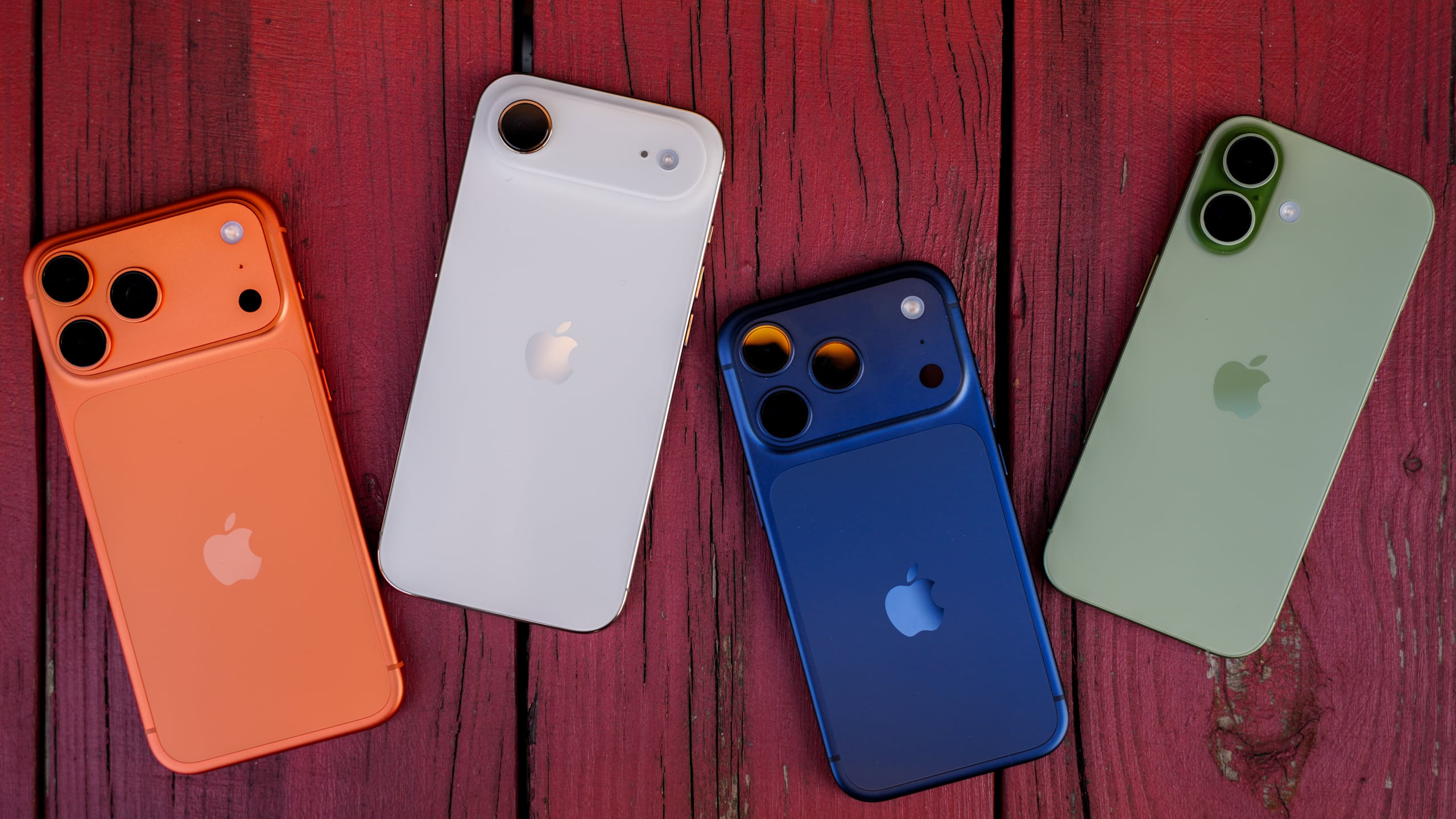
Which iPhone Is Best for Students in 2025?
Choosing the right iPhone as a student means balancing battery life, storage, camera quality for scanning, and study-enhancing AI features. This guide compares the iPhone 17 series and older models across budget tiers to help you find the best fit for your campus routine.
Updated:
If you searched for the best iPhone for students 2025 and landed here in Q3 2026, the timing needs one quick cleanup: the iPhone 17 lineup launched in late 2025 and is still the relevant current generation, while the iPhone 17e is now the current budget iPhone. That matters because the student choice is no longer “old SE versus expensive flagship.” It is a $599 iPhone 17e, a $799 iPhone 17, leftover iPhone 16 stock, and a shifting pile of refurbished iPhone 15 and iPhone 16 deals.
Short version: most students should buy the iPhone 17 if the budget reaches $799. If $599 is the hard ceiling, the iPhone 17e is the sensible new-phone pick. If the budget is below $600, certified refurbished can make sense, but only after checking warranty, battery condition, storage, and Apple Intelligence support. The cheapest listing is not always the cheapest four-year phone.
The Quick Verdict By Student Budget
| Budget | Best fit | Why it makes sense for students | Watch out for |
|---|---|---|---|
| Around $600 | iPhone 17e | $599, 256GB base storage, A19 chip, MagSafe, Ceramic Shield 2, and a PCMag-tested 22-hour battery result make it a serious student phone rather than a bare-minimum compromise.[1] | No ProMotion display, less camera flexibility than iPhone 17. |
| Around $800 | iPhone 17 | $799, 256GB base storage, 120Hz ProMotion, a 48MP camera, full Apple Intelligence support, and PCMag’s roughly 24.5-hour battery result make it the best overall value for most students.[1] | Costs $200 more than the 17e, so the upgrade should solve real daily friction. |
| Around $1,100 | iPhone 17 Pro | $1,099 makes sense mainly for film, photography, design, or heavy video students who will actually use the triple 48MP cameras, ProRes video, 4K120fps, or sustained-performance hardware. | Overbuying is easy if the phone is mostly for notes, group chats, maps, banking, and photos. |
| Below $600 | Certified refurbished iPhone 16 or selected iPhone 15 models | Refurb.me’s 2026 guide shows refurbished iPhone 16 listings around $450–500 and iPhone 15 listings around $375–450, depending on condition and availability.[2] | Prices fluctuate, base iPhone 15 lacks Apple Intelligence, and warranty quality matters. |
One buying myth should be removed before anyone starts budgeting: Apple’s education pricing in the U.S. does not apply to iPhones. Apple’s education store is for Mac and iPad purchases, not discounted iPhones.[3] If a parent is counting on a student iPhone discount at checkout, that money is probably not coming off the bill.
Why The iPhone 17 Is The Safest Default Pick
The iPhone 17 is the model that best matches the ordinary student day: unplug in the morning, answer messages on the way to class, scan a worksheet before lunch, record a lecture, check banking or transit, take photos, work a campus shift, and still have enough battery for the ride home. It is not the most exciting iPhone Apple sells. That is part of the point.
At $799, the iPhone 17 starts with 256GB of storage, which is a quiet but important student feature.[1] Finals week is when storage mismanagement becomes a problem: downloaded readings, lecture recordings, screenshots, group-project videos, app caches, and photos do not politely wait until winter break. A 256GB base model gives a student more room before the phone starts nagging them to delete things at the worst possible time.
The display also matters more than spec-sheet shoppers sometimes admit. ProMotion is not just a “nice scrolling” feature for people who watch phone reviews. A smoother 120Hz display makes long reading sessions, PDFs, calendars, messages, and note review feel less tiring. A student may not describe it that way in a store, but they will feel the difference after months of using the device.
The 48MP camera is not mainly about becoming the group photographer. It is about readable scans: syllabi, whiteboards, lab sheets, library pages, club flyers, handwritten notes from a classmate. A weak camera can turn a useful scan into a gray blur that gets reopened five times and still does not answer the question. The iPhone 17 gives students a better margin for everyday capture without forcing them into Pro pricing.
Battery life is the other reason the iPhone 17 earns the default recommendation. PCMag measured roughly 24.5 hours for the iPhone 17 in its testing, compared with 22 hours for the iPhone 17e and 32 hours for the iPhone 17 Pro Max.[1] Those numbers should not be treated as a promise for every student, because test methods differ across publications and real life includes bad cellular reception, hot buses, navigation, and video. Still, the ranking is useful: the iPhone 17 gives a strong cushion without pushing the buyer into a $1,000-plus phone.
When The iPhone 17e Is The Right Answer
The iPhone 17e deserves more respect than the old budget-iPhone conversation usually allowed. At $599 with 256GB of storage, the A19 chip, MagSafe, Ceramic Shield 2, and PCMag’s 22-hour battery result, it covers the needs that actually make or break a student phone.[1] It is the right answer when the extra $200 for the iPhone 17 would come from money needed for books, commuting, lab fees, or a better laptop.
The trade-off is not that the 17e is “bad.” The trade-off is that the iPhone 17 gives a nicer screen and a more useful camera system for the years when the phone is doing everything. If a student mostly needs messaging, maps, campus apps, banking, photos, and enough storage to stop babysitting the phone, the 17e is a strong entry point. If that same student scans documents constantly, reads on the phone for long stretches, or wants the smoother screen for daily use, the iPhone 17 earns its upgrade cost.
The important comparison is not iPhone 17e versus an imaginary perfect phone. It is iPhone 17e versus the tempting older model sitting in a carrier promo or marketplace listing. A new 17e with current-generation storage and support is often a calmer purchase than an older discount that needs a case, a battery check, a warranty gamble, and several small compromises explained away.
Apple Intelligence Matters Only If It Solves Student Tasks
Apple Intelligence should not be treated as magic dust sprinkled over a purchase. For students, the useful parts are specific: Voice Memo transcription for lectures, Writing Tools for cleaning up drafts, Call Screening for unknown internship or campus-job calls, and Live Translation for language study or multilingual conversations. Those features are available on iPhone 15 Pro and newer, plus any iPhone 16 or iPhone 17 model, according to the compatibility boundary in Apple’s current Apple Intelligence rollout materials and buying guides.[4]
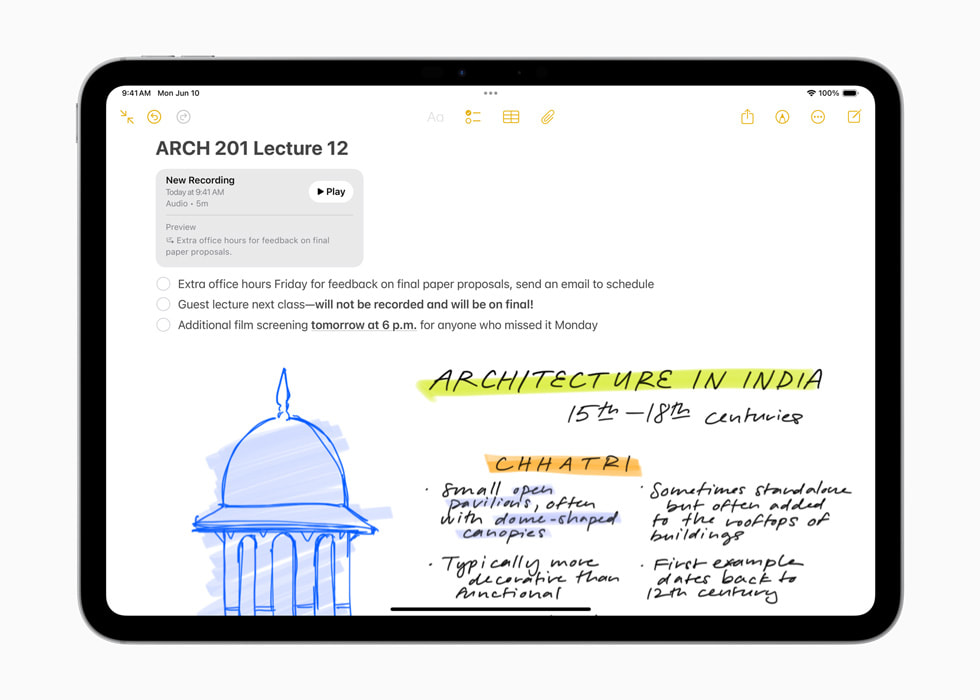
That compatibility line changes the refurbished calculation. A refurbished iPhone 15 may be cheap and perfectly pleasant as a phone, but the base iPhone 15 does not give a student those Apple Intelligence tools. A refurbished iPhone 15 Pro can, if the price and condition are right. A refurbished iPhone 16 can as well. This is where “deal” needs a little supervision: the listing price is only one part of the student value.
A student who never records lectures, does most writing on a laptop, and does not care about AI-assisted language or call features can spend less without pretending otherwise. But a student who expects the phone to help process classes, messages, voice notes, and documents should not buy just below the compatibility line to save a small amount. That is how a bargain becomes an annoyance by sophomore year.
The Refurbished Route Below $600
Refurbished iPhones are not a bad idea for students. They are just not one idea. A certified refurbished iPhone 16 around $450–500 is a very different purchase from a heavily used marketplace iPhone with no clear battery health, no warranty, and unknown repair history. Refurb.me’s 2026 refurbished guide places iPhone 16 listings around $450–500 and iPhone 15 listings around $375–450, but those are market ranges, not fixed prices.[2]
- Pick refurbished iPhone 16 if the price is clearly below the 17e, the storage is enough, and warranty terms are acceptable.
- Consider refurbished iPhone 15 Pro only if Apple Intelligence support matters and the price does not creep close to a new iPhone 17e.
- Treat base iPhone 15 as a budget phone, not an AI study-tool phone.
- Avoid any refurbished listing that hides battery condition, return policy, storage capacity, or carrier lock status.
The parent-friendly version is simple: certified refurbished can be smart when it lowers the price without shortening the useful life too much. It is not smart when the student loses the features that made the newer models worth considering in the first place.
Where The Pro Models Actually Make Sense
The iPhone 17 Pro is the power-user pick, not the honor-roll default. At $1,099, it is justified when coursework or paid work can use the triple 48MP cameras, ProRes video, 4K120fps recording, or hardware built for longer demanding sessions. Film students, photography students, design students, social teams producing serious campus media, and students who edit a lot of mobile video can make a real case for it.
For everyone else, the Pro premium should be treated as optional comfort. The iPhone 17 already covers the student basics extremely well: battery, storage, camera quality for documents, current software features, and a better display than older standard models. A Pro phone bought mainly for status is not a student investment; it is a luxury purchase wearing a productivity badge.
The iPhone 17 Pro Max has the obvious battery advantage. PCMag measured 32 hours in its testing, the highest figure in this comparison.[1] That can matter for commuters, student athletes, travel-heavy students, or anyone regularly away from outlets from early morning to late night. But size, price, and pocketability are real trade-offs. A phone that lasts forever but is annoying to carry across campus is not automatically the better student phone.
Older Models To Be Careful With
The awkward model in the middle is the iPhone 16 at $699. It costs $100 more than the iPhone 17e while starting with 128GB instead of 256GB, and it does not give students the iPhone 17’s ProMotion display.[1] Unless a carrier deal changes the math dramatically, it is hard to make that purchase feel tidy.
The iPhone 16 Plus at $799 has a similar problem. It lands at the same price as the iPhone 17 while giving up the iPhone 17’s display advantage. A student who wants a larger screen may still be tempted, but paying current iPhone 17 money for last year’s weaker display value is not where most buyers should land.
The iPhone 14 and older models are the ones to approach with the most skepticism for a four-year student plan. The problem is not that they stop working the day classes start. The problem is the support window, battery age, storage limits, and feature gap by senior year. WIRED’s current iPhone buying guide also places older models in the avoid-or-be-careful category rather than treating them as obvious bargains.[5]
A Practical Buying Rule
Start with the budget, then check the daily friction points. If the student regularly leaves home before 8 a.m., has labs or activities into the afternoon, scans paper, records audio, and keeps thousands of photos and messages, the iPhone 17 is the cleanest recommendation. It is not the cheapest phone in the lineup, but it is the one least likely to create avoidable problems during the years it needs to last.
If $599 is the ceiling, buy the iPhone 17e and do not apologize for it. It has the storage, battery result, chip, and modern features to be a credible student phone. If the ceiling is below that, look at certified refurbished iPhone 16 first, then selected iPhone 15 or iPhone 15 Pro listings depending on whether Apple Intelligence matters. Skip older “deals” that save money at checkout by removing the study tools, support runway, or battery confidence the student will need later.
Comments
Join the discussion with an anonymous comment.