
GENERAL Planner
What a Back-to-School Study Routine Actually Needs
A back-to-school study routine can look finished before it has done any studying. Four clean blocks labeled “study bio” or “review history” feel responsible, especially in the first week, but they do not say what the student will actually do with the material, when memory will be tested, or what happens when Wednesday goes sideways.
The useful question is not “How many hours can I block out?” It is: “How will this routine make me come back to the material often enough, test myself before I feel ready, protect the sleep I need to perform, and keep going after a missed day?” A back-to-school study routine for students works when the calendar holds those mechanisms, not just available time.
The calendar has to schedule retention, not just effort
The cleanest way to see the problem is the spacing comparison. A student can study for three hours in one sitting, or study for 30 minutes a day for six days. The total time is identical, but the spaced version produces significantly more long-term learning; even some spacing is better than none [1].
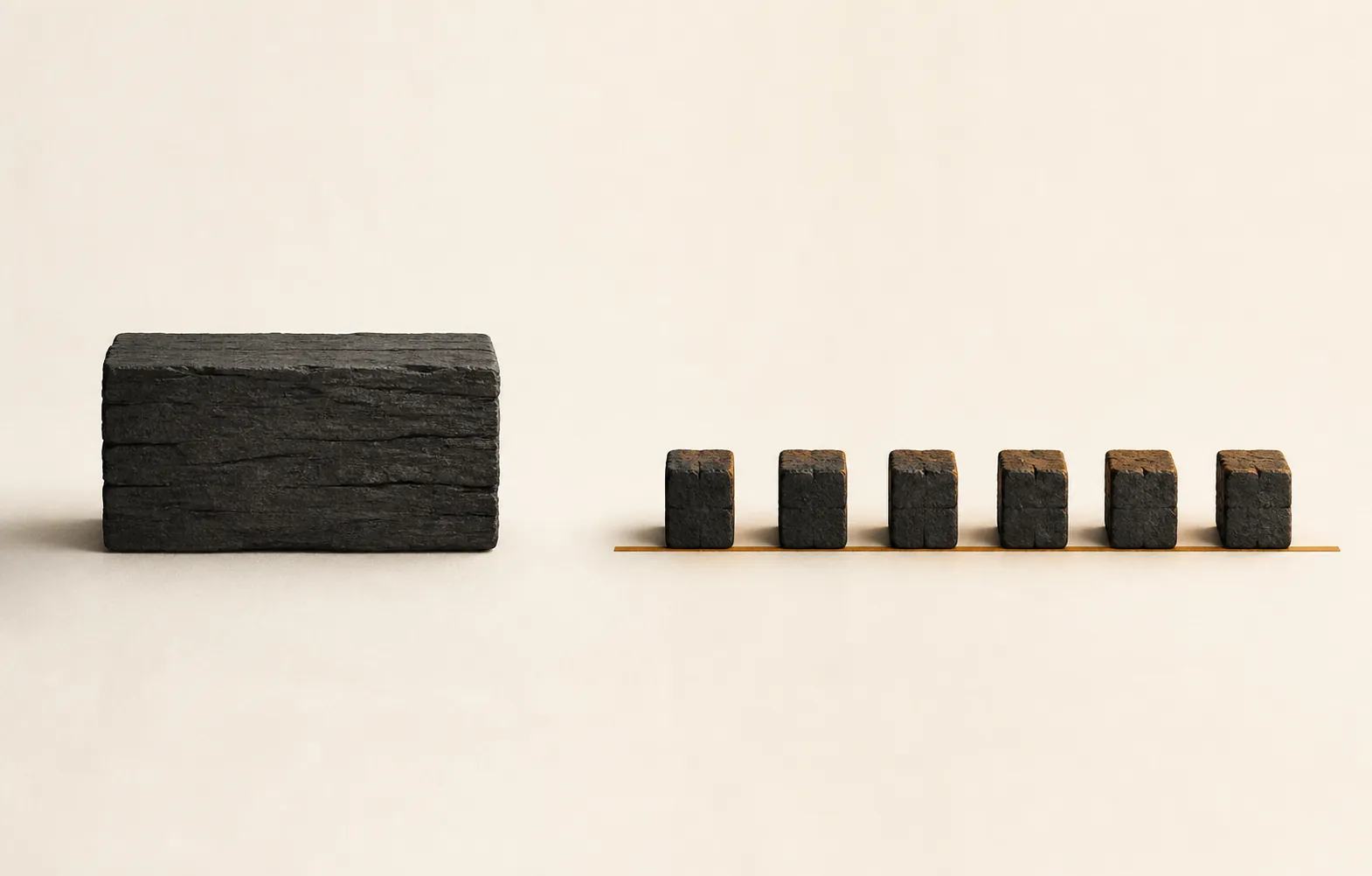
That one comparison should change the shape of the week. If biology has a quiz next Friday, the routine should not save biology for Thursday night because Thursday is “open.” It should put the student back in contact with biology soon after class, then again on later days, with at least some of that time spent trying to recall the material without looking.
Cornell’s Learning Strategies Center gives the routine a practical first move: review soon after class. Its study-schedule guidance says one hour spent soon after class can do as much as several hours a few days later, and it also notes that concentration drops after roughly 90 minutes [2]. Those two points are enough to make a better weekly plan than most decorative planners do.
| Instead of writing | Schedule this |
|---|---|
| “Study chemistry, 7–9 p.m.” | “Chemistry: 15-minute same-day review, then 35 minutes of practice problems tomorrow.” |
| “Read history chapter.” | “History: make a blank outline from memory, then check the chapter.” |
| “Math catch-up Sunday.” | “Math: 25–40 minutes after each problem-set class, plus one weekend error review.” |
| “Exam review week.” | “Short retrieval blocks starting now, with longer mixed practice closer to the exam.” |
A good routine still uses a planner. It just asks the planner to carry more precise instructions. “Review notes” is usually too vague; it lets rereading pass for learning. “Close notes and write the three causes from memory” gives the brain a job. “Redo missed odd-numbered problems without the solution open” gives math practice a job. “Make five flashcards” is weaker than “answer yesterday’s five cards without looking, then revise the ones I missed.”
The first week of school is also the right time to build the retrieval habit before the workload gets dramatic. After class, the student can spend a small block doing three things: write what the teacher emphasized, pull out likely test questions, and try to answer a few from memory. That is not a full study session. It is a memory handoff, and it prevents the familiar Sunday problem where the notes look recognizable but not usable.

A workable weekly routine
For a high school or college student, the weekly routine can be simple enough to survive a tired night. It does not need a different color system for every subject. It needs a few repeatable appointments with the material.
- Same-day review after each demanding class: 10–20 minutes to identify what matters and retrieve the main points.
- Next-day retrieval: a short block where the student answers questions, solves problems, explains a process, or rebuilds an outline without notes.
- A later-in-the-week return: mixed practice or self-testing that brings earlier material back before it feels gone.
- One longer weekly repair block: not for all studying, but for missed problems, weak topics, lab write-ups, essays, or exam prep.
The longer block should not become a three-hour fog. Cornell’s roughly 90-minute concentration warning is useful here: a long session should be split, or it should switch tasks before the student is merely sitting near the textbook [2]. A 75-minute math block followed by a real break and a 45-minute history retrieval block is usually more honest than writing “study 6–9” and hoping attention remains intact.
This is where students with sports, jobs, rehearsals, or commuting time often need permission to stop imitating an idealized schedule. Short regular sessions can beat irregular heroic ones. If practice ends late, a 25-minute retrieval block and a protected bedtime may be a better academic choice than a two-hour late-night performance of seriousness. For a version built around athletics, the balancing sports and studying guide applies the same idea to crowded weekly calendars.
What counts as retrieval
Retrieval does not have to mean flashcards, though flashcards can help. It means the student tries to produce the answer before checking. That can look like solving a problem from a blank page, explaining a concept out loud, drawing a process from memory, writing a thesis and evidence list without the book, or taking a short practice quiz.
The test is whether there is a moment of effort before feedback. Highlighting has no such moment. Copying notes usually has no such moment. Watching a solution video may be useful after a failed attempt, but if it replaces the attempt, the routine is scheduling exposure rather than retrieval.
Students using spaced-repetition tools should keep that distinction in mind. A deck can create excellent return intervals, but it can also become a pile of tiny recognitions. The Anki-for-the-MCAT guardrails are written for medical-test prep, but the warning applies broadly: spaced repetition is strongest when the question forces recall and the student repairs misses instead of just clicking through.
Make the routine start from a cue, not from motivation
The routine needs an obvious beginning. “Study more after school” asks the student to negotiate with themselves every day. “After I put my backpack down, I open the chemistry notebook for 12 minutes” is much easier to repeat. The cue can be arriving home, leaving a lecture hall, finishing dinner, sitting down in the library, or plugging in a laptop at the same desk.
The habit evidence should calm students down, not sell them a countdown. A British Journal of General Practice article summarizing Lally and colleagues’ work reports that automaticity plateaued on average around 66 days after the first daily performance, with a wide 18-to-254-day range; it also notes that missing one performance did not seriously impair habit formation [3].
That research came from adult health behaviors such as eating fruit, drinking water, exercise, and stretching, not from a direct study of academic routines [3]. So it should not be treated as proof that every student’s study plan becomes automatic on day 66. The reasonable extrapolation is gentler and more useful: habits often take weeks, vary widely by person and behavior, and are not destroyed by one missed day.

That matters in week three, when the back-to-school shine has worn off and the first missed Tuesday feels like evidence of failure. It is not a reset. The next cue still counts. If the student misses the after-dinner review, the repair is not a new system; it is a smaller version of the same one the next time the cue appears.
| If this happens | Do this instead of restarting |
|---|---|
| You miss one planned session | Do the next scheduled retrieval block. Do not double the next night automatically. |
| You are too tired for the full block | Do the first 10 minutes: open notes, write what you remember, mark one weak point. |
| A long assignment eats the evening | Protect the sleep cutoff, then move the repair block to the next open slot. |
| You fall behind in one subject | Use the weekly repair block for that subject before adding more routine complexity. |
Put sleep inside the study plan
Sleep should not be treated as a reward for finishing. It belongs in the routine as a constraint, the same way class time and due dates do. A 2023 Carnegie Mellon University report on a study of more than 600 first-year students found that students sleeping under six hours showed a pronounced GPA decline, and each hour of sleep lost corresponded to roughly a 0.07 lower end-of-term GPA [4].
For routine design, the takeaway is plain: choose a sleep floor or evening cutoff before the week gets messy. That might mean no new problem set after 10:30 p.m., no flashcard backlog after the bedtime alarm, or no “I’ll just finish everything” rule on school nights. A routine that depends on cutting below six hours of sleep is borrowing from the performance it claims to protect.
The cutoff also makes the routine more honest. If there are only 45 usable minutes left before sleep, the student can choose the highest-value task: tomorrow’s retrieval, the missed math problems, the essay outline, or the exam set. Without the cutoff, everything expands until sleep is the only thing left to sacrifice.
Use timers to manage fatigue, not to prove discipline
Timed focus blocks are useful when they prevent a study session from becoming a long blur. They are less useful when the timer becomes a little dictator that interrupts genuine momentum.
The evidence is promising but not perfectly tidy. A 2025 scoping review covering 32 studies and 5,270 participants found structured Pomodoro intervals were associated with roughly 20% lower fatigue and 15–25% increases in self-rated focus compared with self-paced breaks [5]. The same review also flags limitations, including the possibility that rigid timing can interrupt flow, and some included findings suggest Pomodoro breaks may speed fatigue increase on certain measures [5].
So the practical rule is not “everyone must do 25 minutes.” It is “decide where the break goes before fatigue makes the decision for you.” A student might use 25/5 for flashcards, 40/10 for reading with notes, or 60/10 for problem sets. For a longer session, the break should be real enough to reset attention: stand up, refill water, look away from the screen, and do not let the phone turn five minutes into a second task.
Phones deserve a place in the plan because they shrink study blocks without changing their label. Gloria Mark’s interruption research, discussed in The New York Times, reported that it can take about 25 minutes to return to a task after an interruption [6]. A two-hour block with repeated checking is not the same as two hours of study. If the phone has to stay nearby, the routine should specify the rule: away during retrieval, checked only during breaks, or left outside the room for the first focus block.
Planner tools can hold the routine, but they cannot create it
A template can help once the routine has real parts to hold: same-day review, next-day retrieval, later spacing, repair block, sleep cutoff, and focus-break structure. Before that, a prettier planner only makes a vague plan easier to admire.
Students who like digital systems can use the Airtable study planner templates to turn the routine into repeatable weekly blocks. The important part is to name the action, not just the subject. “Physics retrieval: circuits problems without notes” is a usable calendar item. “Physics” is a wish.
Some students also need the routine adjusted for how they process information. The same basic mechanisms can be made more accessible through chunking, shorter regular sessions, and retrieval formats that do not rely only on dense written notes. The guide to studying with dyslexia shows how those adaptations can fit into a study plan without abandoning retrieval practice.
When the routine becomes exam prep
The general back-to-school routine is the base layer. Once a student is preparing for a major exam, the same structure needs an exam timeline: content review, spaced retrieval, practice sets, full-length tests when appropriate, and repair work based on errors.
High school juniors starting SAT or ACT prep can use the school-week routine to protect regular classes while adding small, repeated test-prep blocks. College students preparing for larger exams need a more explicit runway. For example, the 12-week MCAT study plan shows how a routine scales into content phases, practice phases, and full-length review. GRE students can start from the GRE prep hub and build weekly study blocks around the same principles.
A routine does not need to be intense or beautiful to work. It needs to bring the student back to the material at useful intervals, make memory work visible, stop before sleep is treated as expendable, and survive long enough to become familiar.
References
- The most common question I get asked about retrieval practice (and the answer), retrievalpractice.org.
- Guidelines for Creating a Study Schedule, Cornell Learning Strategies Center.
- Making health habitual: the psychology of ‘habit-formation’ and general practice, British Journal of General Practice, 2012.
- Nightly sleep is key to student success, Carnegie Mellon University, 2023.
- The Pomodoro Technique for Enhancing Academic Focus and Reducing Fatigue: A Systematic Scoping Review, 2025.
- Brain, Interrupted, The New York Times.
Fill in this timeline
This is a skeleton schedule, not a performance claim — for section-by-section strategy to fill in each slot, read the exam hub. For evidence that a similar timeline worked, compare against real outcome logs.