
Provo Canyon School Abuse Allegations: A Student Safety Checklist
After the Provo Canyon School abuse allegations, this checklist helps parents identify warning signs in residential treatment programs—from licensing actions to communication restrictions—so they can make safer decisions for their child.
A parent usually does not start researching residential treatment because life feels calm. The search often begins after school refusal, self-harm, aggression, substance use, running away, hospitalization, or months of appointments that did not hold. That is exactly when a polished admissions page can feel like relief: licensed program, trained staff, structured days, therapeutic setting, immediate opening.
The Provo Canyon School abuse allegations make one lesson hard to ignore: the safety question cannot stop at whether a program is licensed, accredited, or well-known. In a 2020 investigation, the Center for Health Journalism reported that Utah licensing data showed 341 investigations at Provo Canyon School over five years, with 27 substantiated violations during that period.[1] The same broad category of official oversight that can reassure parents can also contain warning signs, if families know where to look.
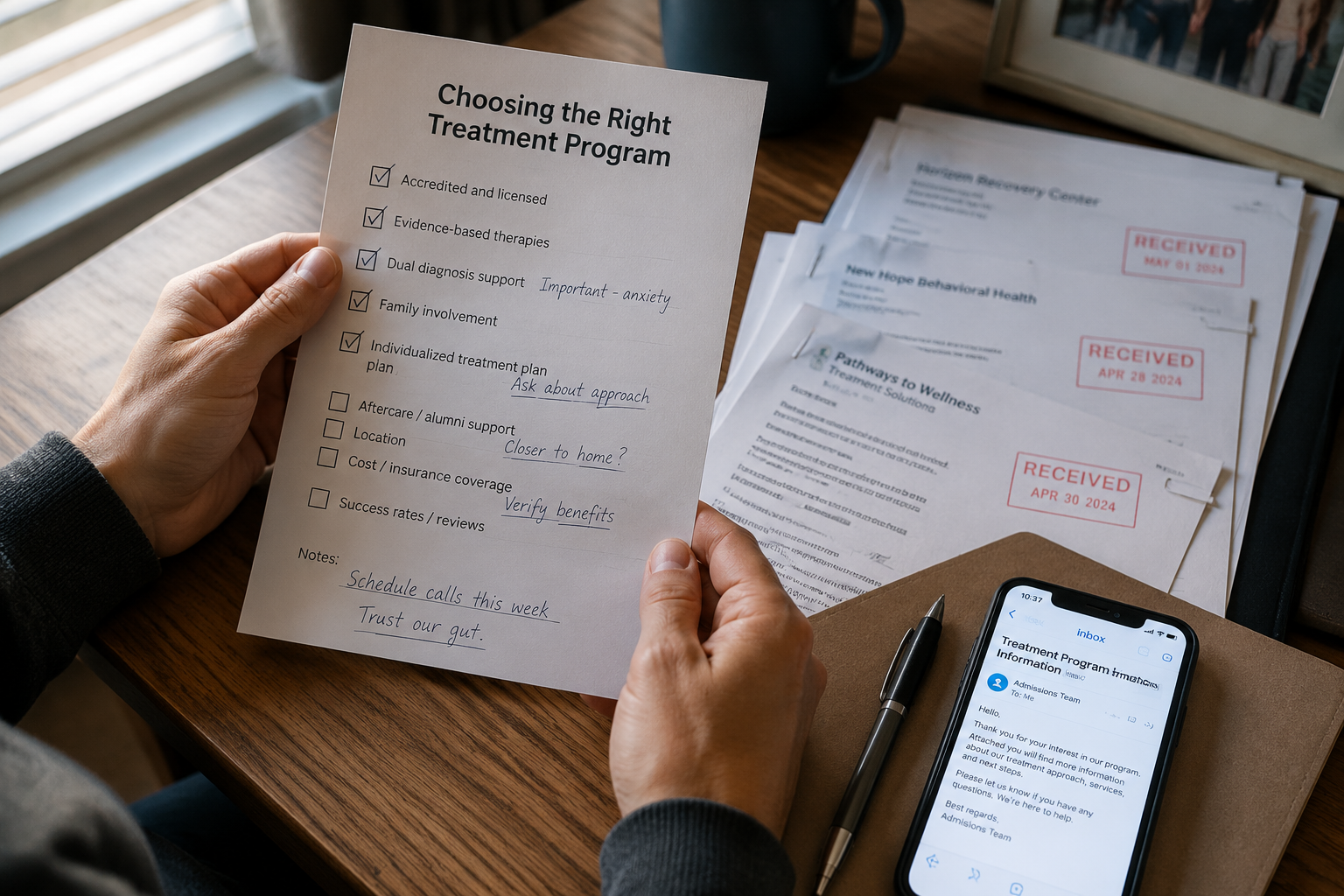
This checklist is for the moment before the deposit, before transport is arranged, before a parent signs an admissions packet while being told there is no time to wait. It does not assume every residential program is abusive. It does assume that a child inside a closed setting needs more than trust. The parent has to be able to verify safety claims independently, in writing, before enrollment.
Start With Records, Not Reassurance
The first document to request is not the brochure. It is the licensing record. Ask the program for its exact licensed name, license number, licensing agency, and current license status. Then check the state licensing database yourself. If the admissions office sends a certificate but not the agency link, keep asking.
Provo Canyon School shows why the distinction matters. The Salt Lake Tribune reported that Utah licensers placed the school on conditional license status in multiple years, including 2012, 2013, 2015, and 2025, with findings that included staff injuring children during restraints.[2] A conditional license is not the same thing as an unlicensed operation. That is the point: a program can still be operating while regulators have already found serious problems.
Do not treat a high number of inspections as proof of safety by itself. It may mean oversight is active. It may also mean complaints and incidents keep generating regulatory attention. The parent’s job is to read the pattern: what was alleged, what was substantiated, whether children were injured, whether the same category of violation appears again, and whether the corrective plan can be verified.
| Record to Check | What to Look For | What Should Slow You Down |
|---|---|---|
| Current license status | Active, conditional, probationary, suspended, revoked, or recently changed status | Any conditional status the program minimizes as routine |
| Complaint and investigation history | Substantiated findings, repeated allegations, incident categories, dates | Patterns involving restraints, injuries, medical neglect, isolation, or staffing |
| Corrective action plans | Specific changes, deadlines, follow-up inspections | Vague promises without evidence that the fix was completed |
| Ownership and campus history | Name changes, campus closures, related entities | A program that discusses reputation but not its full regulatory history |
In July 2026, Utah revoked the license of Provo Canyon School’s original campus, according to The Salt Lake Tribune.[3] A revocation is a late-stage public action. Parents making decisions months or years earlier need to notice the earlier paper trail: conditional status, injury findings, repeated complaints, and corrective actions that do not seem to end the underlying risk.
The Written Questions That Matter Most
A safe admissions process should tolerate detailed questions. It should not turn a parent’s diligence into a problem. Ask by email, not only by phone, so the answer becomes part of the record.
- What is the program’s current license status, and has it ever been conditional, suspended, revoked, or under corrective action?
- How many substantiated licensing violations has the program had in the past five years, and what categories did they involve?
- Will you send the last three licensing inspection reports and any corrective action plans?
- What state agency receives complaints from parents or students, and how can a family contact that agency directly?
- Has the campus, ownership group, or operating name changed after licensing actions or lawsuits?
A refusal is not automatically proof of danger. Some records may need to come from the state instead of the program. But a program that frames basic licensing questions as hostile, irrelevant, or impossible to answer is giving you information.
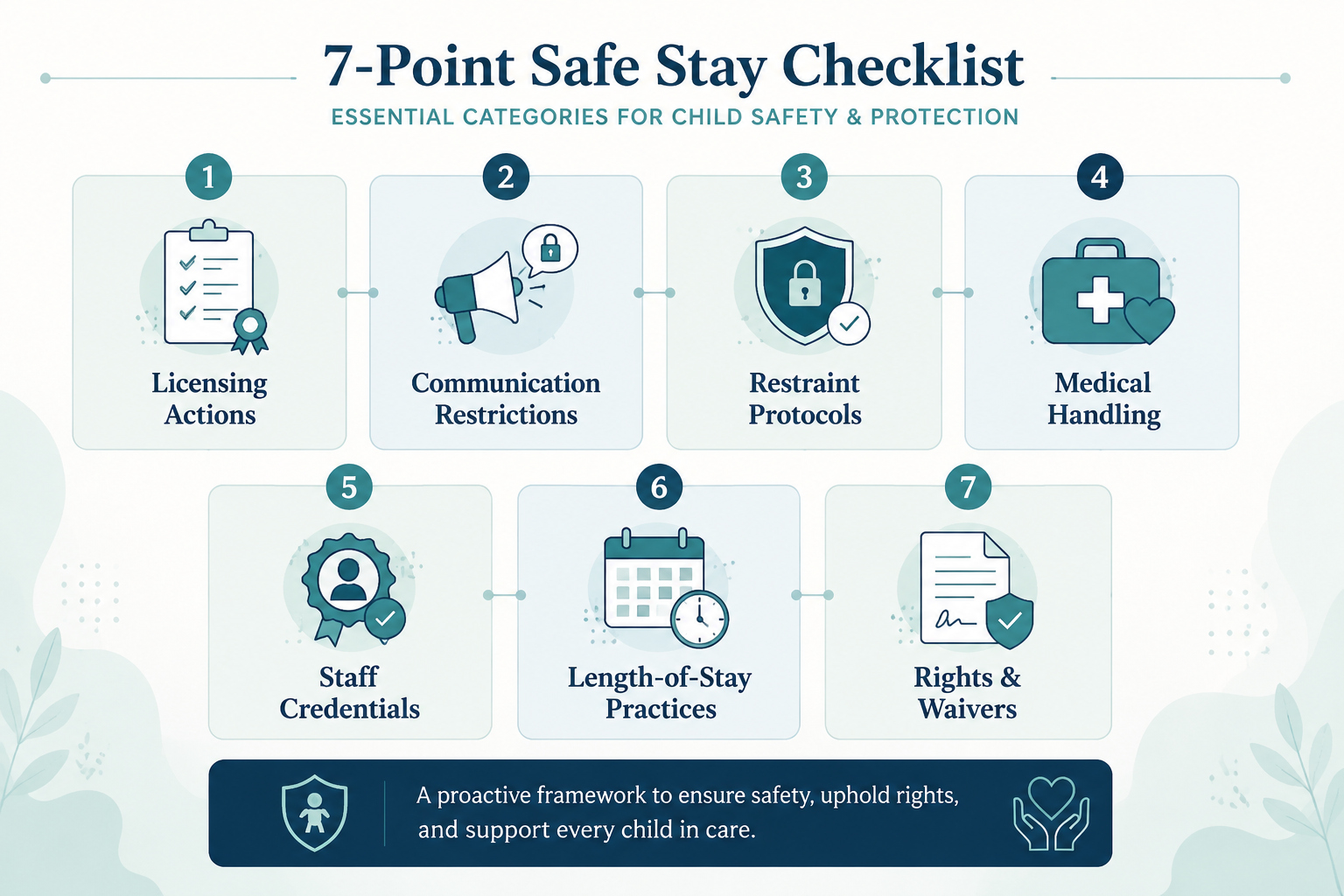
Communication Rules Can Become Safety Rules
Before enrollment, ask exactly how your child can contact you, an attorney, a licensing agency, a guardian ad litem, a caseworker, a therapist outside the program, or emergency services. Ask when calls can be monitored, delayed, ended, or withheld. Ask whether incoming mail is opened. Ask whether a student can report abuse without first going through the same staff responsible for daily control.
Unsilenced’s red-flag list for the troubled teen industry identifies restricted communication, involuntary admission, isolation rooms, pressure-point restraints, and chemical sedation without real-time doctor authorization among warning signs families should examine closely.[4] A parent does not have to accept every advocacy group conclusion as a final verdict on a specific program. But the categories are useful because they point to the places where a child can lose ordinary ways to ask for help.
The practical test is simple: if your child says, “I am being hurt,” what happens next? Who hears it? Who is required to document it? Can the child reach someone outside the chain of command? Can the parent call the licensing agency without retaliation against the student? A program should be able to answer those questions without improvising.
Restraint and Medication Policies Need Plain Language
Restraint is where vague therapeutic language becomes dangerous. Ask for the written policy on physical restraint, mechanical restraint, seclusion, isolation, emergency medication, and chemical sedation. If the program says restraint is used only as a last resort, ask what that means in minutes, in staff approvals, in medical review, and in parent notification.
The Provo Canyon record makes this more than a paperwork exercise. Public records cited in reporting described a 14-year-old foster child at Provo Canyon School who was injected 17 times, including with Haldol, and restrained more than 30 times during a three-month period.[2] That kind of case should push parents past the phrase “crisis stabilization” and toward exact questions: Who can authorize an injection? Is a physician contacted in real time? Is the parent notified before or after? Does every restraint trigger outside review?
- Ask for the restraint log template before enrollment.
- Ask whether parents receive same-day notice of every restraint, seclusion, injury, and emergency medication.
- Ask who reviews restraint frequency for individual students and for the whole campus.
- Ask whether restraint data is reported to the state, an accreditor, or another outside body.
- Ask what specific techniques are banned.
A parent should be especially cautious when a program treats restraint data as internal behavior-management information rather than safety information. The child bears the consequence. The parent needs access to the record.
Medical Emergencies Are Not an Admissions Talking Point
Ask what happens when a student may have a concussion, broken bone, overdose, seizure, severe allergic reaction, suicidal crisis, or unexplained loss of consciousness. The answer should name who assesses the child, when 911 is called, who can override that decision, how parents are notified, and whether staff ever transport a student internally instead of calling emergency medical services.
In 2026 reporting about Provo Canyon School, The Salt Lake Tribune described an incident involving a boy with a fractured jaw and brain bleed in which staff delayed about an hour before calling 911 and used internal nonmedical transport first.[5] The Disability Law Center’s June 2026 report described “shocking” conditions at the school, including violence, self-harm, inadequate medical care, and chronic staffing shortages.[6]
Those facts do not tell a parent what every program would do in an emergency. They do show why “we have medical staff” is not enough. A nurse on site does not answer the transport question. A crisis plan does not answer the 911 question. A parent notification policy that says “as appropriate” does not answer who decides what appropriate means.
Staffing, Credentials, and Caseloads
Staff credentials are not decorative. Ask who provides therapy, who supervises direct-care staff, who handles medication, and who is on site overnight. Parent guidance drawing on National Association of Therapeutic Schools and Programs-style questions commonly emphasizes staff credentials, caseloads, accreditation, and outcome measurement as core areas to examine before choosing a teen treatment facility.[7]
| Question | Why It Matters |
|---|---|
| What licenses do therapists hold, and in which state? | A clinical title should be verifiable through a state licensing board. |
| What is the average caseload per therapist? | A child cannot receive meaningful treatment if clinical access is mostly theoretical. |
| Who is with students overnight? | Many serious incidents happen outside scheduled therapy hours. |
| What training do direct-care staff receive before working alone? | The least credentialed staff may have the most physical control over students. |
| What were staff turnover and vacancy patterns over the past year? | Chronic vacancies can turn a written policy into a paper promise. |
If a program gives only aggregate credentials, ask for role-specific answers. “Our team includes licensed clinicians” does not tell you whether your child will see one, how often, or under what supervision.
Accreditation Helps Only If You Know What It Covers
Accreditation can be meaningful. It can also be misunderstood. Ask which entity accredits the program, what part of the operation is accredited, when the last review occurred, whether any corrective actions were issued, and whether the accreditor reviews restraint, medication, staffing, complaints, and student rights.
Then verify the claim directly with the accrediting organization. A school-accreditation claim may not speak to clinical safety. A therapeutic-program accreditation may not tell you how often a child can call home. A membership badge is not the same thing as a finding that a specific campus is safe today.
Length of Stay and Financial Pressure
Ask how the program decides when a student is ready to leave. The answer should not depend mainly on prepaid months, parent compliance, vague “level” systems, or the student admitting the program is helping. Request the discharge criteria in writing before admission.
- What clinical goals must be met for discharge?
- Who can recommend discharge against the program’s financial interest?
- Can parents remove a child at any time, and what are the financial penalties?
- Does the program use levels, points, or privileges to control family contact?
- What happens if an outside clinician disagrees with continued placement?
Pressure to enroll quickly deserves particular caution. Urgency may be real in a family crisis, but urgency should not erase verification. A program that will not let you pause long enough to check licensing records, speak with an outside clinician, or review the contract is asking you to treat panic as due diligence.
Rights, Waivers, and Outside Complaint Paths
Read every waiver as if something goes wrong. Look for language about mandatory arbitration, limits on lawsuits, consent to restraint or medication, communication monitoring, search policies, transport, isolation, and parent notification. Ask an attorney or qualified advocate to review anything you do not understand before signing.
Utah’s 2021 SB0127 addressed youth residential treatment oversight, including limits and reporting requirements related to restraint and seclusion.[8] Reform laws matter, but the Disability Law Center’s 2026 concerns about Provo Canyon School show why parents still need to verify how rules work on a specific campus, with current staff and current students.[6]
The minimum acceptable answer is not “students have rights.” Ask for the student rights handbook. Ask how students receive it. Ask whether a child can keep a copy. Ask who investigates complaints. Ask whether reports can be made privately to the state or to a disability-rights organization. Ask whether parents are notified when a child files a complaint.
When an Answer Should Stop the Process
Not every imperfect answer means a program is unsafe. Records can be messy. Staff may need time to gather documents. State databases vary. Some harms are hidden even when records look clean, and some programs with past findings may have made real, verifiable changes. The issue is whether the program lets you test its safety claims.
Stop or get outside consultation if the program will not provide its license number, discourages contact with regulators, will not share restraint and emergency policies, treats family communication as a privilege to be earned, asks for broad consent to medication without clear medical review, pressures immediate enrollment, or requires legal waivers you do not understand.
Also slow down if the program answers every concern with reputation: years in operation, beautiful campus, celebrity graduates, accreditation seals, testimonials, or “we save lives.” None of those answers the operational questions that matter once a child is inside: who can touch them, medicate them, isolate them, silence them, transport them, document an injury, and call for outside help.
Before You Sign
Before any deposit, transport arrangement, or admissions signature, independently verify the program’s licensing and enforcement history. Request written policies on communication, restraint, emergency medication, medical emergencies, staffing, outcomes, discharge, rights, and waivers. Send your questions in writing and keep the answers.
Residential care is not the only mental-health support path for every student. For some families, outpatient care, school-based supports, crisis services, family therapy, or other community-based options may be part of the discussion with qualified clinicians. When residential placement is on the table, the Provo Canyon School case should not leave parents only with fear. It should leave them with a paper trail to demand before handing over a child’s safety.
References
- Part 2: Provo Canyon School's history of abuse accusations, Center for Health Journalism
- Provo Canyon School staff hurt kids, Utah licensers found, The Salt Lake Tribune
- Utah closes Provo Canyon School's original campus, The Salt Lake Tribune
- Red Flags of the Troubled Teen Industry, Unsilenced
- 'Shut it down': Paris Hilton calls for Provo Canyon School's closure, The Salt Lake Tribune
- 'Shocking' conditions at Provo Canyon School (Disability Law Center), The Salt Lake Tribune
- How to Choose a Residential Treatment Center for Teens, Muir Wood Teen
- SB0127 Utah Legislature 2021, Utah Legislature, 2021
Apply This Method
Related Methods
- The Student Impact of Provo Canyon School's License Revocation
Utah's revocation of Provo Canyon School's license forces both campuses to close within weeks, leaving nearly 200 students facing urgent questions about credits, transcripts, and re-enrollment. This article outlines the key educational risks and what families should know to navigate the transition.
- Student placement options after Provo Canyon School closes
With Provo Canyon School's campuses closing in August 2026, families need clear guidance on the three main placement pathways — transfer to another licensed residential program, return to a home school district, or step-down to outpatient care. This article documents the exact steps for transferring academic records, preserving credits, and reactivating IEPs or 504 plans.
- How to Analyze a Settlement Case Study for Law Students
Most civil cases settle before trial, yet law school curricula focus almost exclusively on appellate opinions. A five-part framework for analyzing settlement case studies — covering negotiation dynamics, leverage, and economic incentives — gives law students a crucial advantage in exams and clinic preparation.
Comments
Join the discussion with an anonymous comment.