
GRE Exam Hub
Student Visa Revoked? How to Continue Your Studies
A visa revocation alone does not end F-1 status or the right to attend classes — it only blocks re-entry. Compare staying enrolled, reinstatement, transfer, and depart-and-re-enter by timeline, cost, and risk to choose the route that protects your degree and OPT eligibility.
- gre
- mcat
- asvab
- sat
- act
- digital-adaptive
- official-material
- section-strategy
- test-date-timeline
Last reviewed: August 25, 2026. This article is about U.S. F-1 students first; J-1 students should do similar record-first triage through their sponsor.
If your student visa was revoked, do not start with the visa stamp. Start with the record. A visa revocation by itself normally affects your ability to use that visa to enter the United States; it does not, by itself, cancel F-1 status or automatically stop you from attending class if you are already in the U.S. and otherwise maintaining status. The record that decides the next move is your SEVIS record: Active, Terminated, or something your school believes was wrongly changed. The National Immigration Forum makes this distinction plainly: visa revocation and SEVIS termination are separate events, and students with revoked visas may still remain enrolled if they maintain their status requirements.[1]

| What happened | What it usually changes | The next practical question |
|---|---|---|
| Visa revoked, SEVIS still Active | You likely cannot re-enter on that visa, but current U.S. enrollment may continue if you keep maintaining F-1 status.[1] | Can you stay enrolled, avoid travel, and keep the same SEVIS record? |
| SEVIS record Active and you want another school | A transfer may preserve the same SEVIS ID if transfer rules are followed and the record remains Active.[2][3] | Will the transfer release date and new program start date keep you continuously eligible? |
| SEVIS record Terminated | ICE guidance treats this as a record status that generally requires reinstatement or departure, depending on the facts.[4] | Was the termination erroneous, and if not, are you still within the reinstatement window? |
| You are out of status even without understanding why | Your study plan is now tied to fixing status, not merely explaining the revoked visa. | Can the DSO support correction or reinstatement, or is departure the only workable route? |
If SEVIS is Active, protect the record first
An Active SEVIS record is the least disruptive scenario. It means the school record has not been terminated, so the immediate goal is boring but important: keep attending, keep a full course load unless your DSO has authorized an exception, avoid unauthorized employment, and do not travel internationally unless you have a re-entry plan that accounts for the revoked visa.
Schools generally do not verify student work authorization through the I-9 process just to keep a student enrolled in classes, which is one reason a revoked visa stamp does not automatically force the school to remove a student from courses.[5] That does not make the situation harmless. It means the problem has shifted from “Can I sit in class tomorrow?” to “Can I avoid creating a second problem that terminates my SEVIS record?”
If you can finish the semester or degree at the same school, that is often the cleanest academic route. The visa stamp becomes urgent only when you need to leave and come back. If you do leave, the revoked visa cannot be used for re-entry; you would need a new visa or another lawful basis for admission, and that new application may reopen the facts behind the revocation.
Transfer while Active is different from transferring after termination
If your plan is to move to another U.S. school, the Active record matters even more. ICE’s F-1 transfer guidance and the USCIS Policy Manual describe transfer as a SEVIS-based process: the current school releases the SEVIS record, and the new school issues the transfer-pending or transfer-completed Form I-20 under the same SEVIS ID when the requirements are met.[2][3]
That is the version of transfer that best protects continuity. It is not the same as leaving the United States, getting a new initial I-20, and starting over. A student with a revoked visa but an Active SEVIS record should be careful not to accidentally turn a manageable transfer into an initial-entry problem by traveling before the transfer is complete or before a new visa strategy exists.
- Ask the DSO for the exact SEVIS status shown today, not just whether your “visa was revoked.”
- Confirm whether the school considers you to be maintaining status this term.
- If transferring, get the SEVIS release date, new program start date, and any travel restriction in writing.
- Do not assume a transfer solves re-entry. If the visa was revoked, the airport problem remains.
If SEVIS is Terminated, the path narrows quickly
A Terminated SEVIS record is where headlines do the most damage. Some recent litigation positions described SEVIS termination as an internal records action rather than, by itself, a formal removal order. At the same time, ICE’s public school guidance tells students with terminated records that they generally must regain status through reinstatement or depart.[4][6] Those two statements do not fit neatly together, and a student should not be asked to pretend they do.
The practical campus consequence is still real: a terminated record can block transfer, practical training, travel signatures, and ordinary DSO processing. It can also leave the student exposed if another immigration event occurs. This is the point where school advising and legal advice need to be specific, not generic: What was the termination reason? Was it school-entered, government-entered, or possibly erroneous? How many days have passed? Is the student still enrolled full time?
First check whether the termination was wrong
Before jumping to reinstatement, the DSO should check whether the SEVIS termination was entered in error or based on data that can be corrected. DSO-facing guidance from Huang-Hu describes the data-correction route through SEVP for erroneous terminations, which is different from asking USCIS to forgive a student’s status violation.[7]
That distinction matters because a corrected record and a reinstated record are not the same remedy. Data correction says, in effect, the record should not have been terminated that way. Reinstatement says the student fell out of status and is asking USCIS to restore F-1 status. One is a record-fix route; the other is an application with filing fees, processing time, and denial risk.
Reinstatement is a status repair, not a quick reset button
For an F-1 student whose SEVIS record is Terminated and who is not leaving the United States, reinstatement usually means working with the DSO on a reinstatement I-20 and filing Form I-539 with USCIS. ICE’s termination guidance points students toward reinstatement or departure after termination, and campus ISS offices commonly describe reinstatement as available only when the student can show eligibility and file promptly, usually within five months of falling out of status unless a narrow exception applies.[4][8][9]
The five-month window is one of the few deadlines that should make everyone stop talking in abstractions. If the student is still inside it, the DSO can evaluate whether reinstatement is supportable. If the student is outside it, reinstatement may still be argued in limited circumstances, but the burden is heavier and the route becomes less predictable. A student who waits because “the visa issue might clear up” can quietly lose the cleaner repair option.
| Reinstatement requirement or consequence | What it means for school planning |
|---|---|
| DSO support and reinstatement I-20 | The school has to participate; this is not a form the student should treat as separate from the academic record.[8][9] |
| Full-time study while pending | Many campus instructions require the student to keep studying full time while the request is pending, unless an authorized exception applies.[9][10] |
| No unauthorized work | Employment benefits are usually unavailable while reinstatement is pending; CPT or OPT planning may have to pause.[9][10] |
| Avoid international travel while pending | Leaving generally abandons the inside-the-U.S. reinstatement strategy and moves the student toward re-entry instead.[9] |
| Processing can take months | University ISS pages describe processing windows around 4 to 12+ months, so the academic calendar may move faster than the immigration case.[9][10] |
| If denied, departure may be required quickly | Campus guidance warns students that denial can trigger a short departure period, commonly described as 15 days.[9][10] |
Fees also need a date stamp. One April 2025 practitioner snapshot listed Form I-539 at $370 plus an $85 biometrics fee, and listed the I-901 SEVIS fee for a new record at $350.[8] Those numbers should be rechecked before filing or budgeting in 2026; the point is not the exact old amount, but that reinstatement and re-entry both carry costs beyond tuition.
Compare the four routes by what they preserve
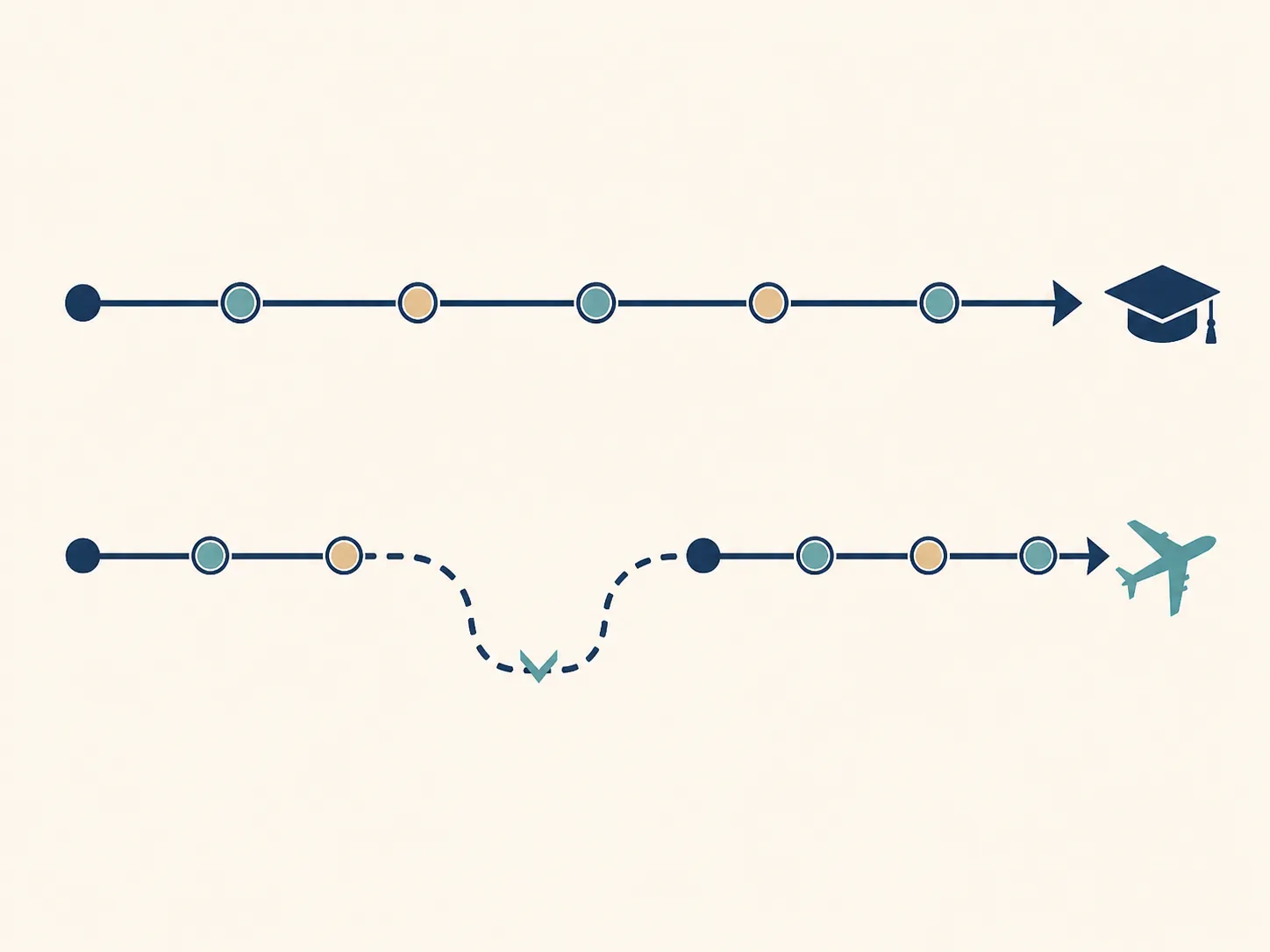
The best route is not the one that sounds strongest in a forum post. It is the route that preserves the most of your degree timeline, SEVIS continuity, and practical-training eligibility while keeping risk tolerable.
| Route | When it fits | Timeline effect | Main cost | Main risk |
|---|---|---|---|---|
| Stay enrolled with Active SEVIS | Visa revoked, but SEVIS remains Active and student is maintaining status | Least disruption; degree progress can continue | Usually normal tuition and living costs | International travel becomes dangerous without a new visa strategy |
| Transfer with Active SEVIS | Student needs a different U.S. school and can transfer before termination | Can preserve SEVIS continuity if transfer rules are met.[2][3] | Transfer deposits, new-school costs, possible delayed start | Mistimed release date, travel, or program gap can create status problems |
| SEVP data correction | Termination appears erroneous or record-based rather than a true student violation | Can be faster than reinstatement if SEVP accepts the correction, but timing is not guaranteed.[7] | DSO time, documentation, possible legal help | If correction fails, the student may have lost time inside the reinstatement window |
| Reinstatement in the U.S. | SEVIS Terminated, student is eligible, DSO supports the case, and timing is workable | Study may continue while pending, but work/travel are constrained and processing can last months.[9][10] | USCIS filing costs, possible attorney cost, delayed work authorization | Denial can force quick departure and may damage later planning |
| Depart and re-enter | Reinstatement is unavailable, too risky, too slow, or not supported | Often restarts the student as an initial F-1 and can reset CPT/OPT timing.[2] | Travel, new visa application, SEVIS fee, lost time | Visa refusal, airport refusal, unlawful-presence consequences in some cases |
Depart and re-enter is the fallback, not the easy version
Leaving the United States can be the right answer. It can also be the answer that costs the most academically. The usual re-entry route means getting a new initial Form I-20, paying any required SEVIS fee, applying for a new visa if the old one was revoked or expired, and presenting yourself for admission again. Murthy Law Firm’s reapplication-from-abroad discussion treats visa cancellation as a problem that must be dealt with through a new consular application before the student can return.[11]
The practical-training consequence is the piece students underestimate. If departure and re-entry put you on a new initial F-1 record, you may have to complete one full academic year again before becoming eligible for CPT or OPT. ICE transfer and training guidance treats that one-academic-year requirement as a threshold for key F-1 training benefits.[2] For a student two semesters from graduation, that can turn a survivable visa problem into a lost internship or delayed OPT plan.
Departure can also make past unlawful presence matter. The research materials flag the familiar bars: departure after 180+ days of unlawful presence can trigger a 3-year bar, and departure after 1+ year can trigger a 10-year bar.[8] Do not self-diagnose those clocks from memory. If denial, termination, or a long status gap is in the file, this is where individual legal advice is not a slogan; it is risk control.
If you do use the depart-and-re-enter route, treat re-entry as its own project. A revoked visa can affect the consular interview, and the airport inspection is separate from the visa appointment. For that part of the plan, pair your school documents with a careful re-entry file; StudyMethod’s airport-focused checklist on avoiding airport detention as an international student is the more relevant next read than another general visa headline.
The 2025–2026 enforcement numbers explain the panic, not the individual answer
The numbers in this area have moved fast and have not always measured the same thing. The National Immigration Forum reported, as of May 7, 2025, more than 1,600 visa revocations and more than 4,700 SEVIS terminations in the student-visa context.[1] BBC later reported, citing the State Department, that more than 6,000 student visas had been revoked as of August 18, 2025.[12] Those are not interchangeable counts. The National Immigration Forum count separated visa revocations from SEVIS terminations; the BBC count concerned visa revocations. Treat SEVIS termination as a separate record event.
The 2026 timing context adds pressure but does not change the first fork. A DHS final rule published July 17, 2026 and scheduled to take effect September 15, 2026 would replace duration-of-status admission with fixed admission periods, generally capped at four years for new F-1 admissions, and would shorten the post-completion grace period to 30 days; The Conversation also reported that a coalition lawsuit challenging the rule was filed August 18, 2026.[13] For planning the next admission or re-entry, read that alongside StudyMethod’s fixed-admission-rule explainer. For the question in front of you today, the order still starts with SEVIS status.
Do the academic math before choosing the immigration route
Immigration status decides whether you can stay or re-enter. Academic planning decides whether the route still leaves you with a usable degree plan. A reinstatement case that takes months may preserve continuity but block work authorization while pending. A departure route may feel cleaner but restart the CPT/OPT clock. A transfer may save the SEVIS ID but push graduation into a later term. None of those outcomes is just paperwork.
Build a one-page timeline with four dates: current term end, next required enrollment date, expected graduation date, and the first date you need CPT or OPT. If you are also preparing a backup application, add test-score expiration dates. UC San Diego’s Graduate Division, for example, states that GRE scores are valid for five years and TOEFL scores for two years.[14] That is admissions planning, not immigration law, but it matters if a visa route pushes you into a later cycle.
For a student trying to preserve OPT value, the financial side belongs in the same document as the status plan. StudyMethod’s OPT fee and study ROI model and $100k U.S. study-plan guide are better places to model that cost stack. If the backup route includes new applications, connect the immigration timeline to GRE and graduate application strategy and TOEFL or English-prep planning before the score window becomes another emergency.
So the working answer to “student visa revoked, how to continue studies?” is: confirm SEVIS status today; if Active, keep the record clean and transfer only through the proper SEVIS process; if Terminated, check data correction first and reinstatement quickly; if neither works, depart and re-enter with eyes open about visa refusal, airport risk, and the CPT/OPT reset.
References
- Explainer: Revocation of Student Visas and Termination of SEVIS Records, National Immigration Forum, May 7, 2025
- F-1 Transfers, ICE
- Chapter 4 - Extension of Stay, Change of Status, and Transfer, USCIS Policy Manual
- F and M Student Record Termination Reasons in SEVIS, ICE
- A Foreign Student Whose Visa Has Been Revoked By Trump Should Still Be Able To Continue To Attend School, Cyrus Mehta, March 2025
- SEVIS Termination and F-1 Visa Revocation Developments, Murthy Law Firm, April 24, 2025
- SEVIS, Huang-Hu
- F-1 Visa Revoked and SEVIS Status Terminated, M.W. Peterson Law
- Regaining F-1 Status, University of Washington International Student Services
- Reinstating F-1 Status, Elmhurst University
- Cancellation of Student Visa and Visa Reapplication from Abroad, Murthy Law Firm, January 28, 2013
- US says more than 6,000 student visas revoked due to law-breaking, BBC, August 18, 2025
- A seemingly technical change to international student visas could disrupt teaching and research at US universities, The Conversation
- FAQ: Test Scores, UC San Diego Graduate Division
Related exhibits & inventory
Verified outcomes
Planners
No planner filed for this exam yet
A downloadable timeline template for this exam hasn't been published yet.
Tool verdicts
AI-tool cautions
No AI tools tested for this exam yet
No hands-on AI-accuracy logs have been filed for this exam.
Questions about this plan
Ask a question about a specific section, timeline, or citation in this plan — or flag something that needs correcting.
Comments
Join the discussion with an anonymous comment.