F-1 Exam Hub
How to Avoid Airport Detention as an International Student
A preparation checklist for F-1 students entering the US: verified documents, rehearsed truthful answers, a sanitized phone, and knowing what not to sign in secondary inspection — with rules in force now kept separate from the DHS changes effective September 15, 2026.
- gre
- mcat
- asvab
- sat
- act
- digital-adaptive
- official-material
- section-strategy
- test-date-timeline
The inspection that matters most begins before the semester does: a student at the airport counter, passport open, I-20 in hand, officer waiting. A valid F-1 visa and a valid I-20 are necessary, but they are not a promise of entry. At the port of entry, the CBP officer has final admissibility authority under INA § 235, and that is why preparation has to be more practical than comforting.[1]
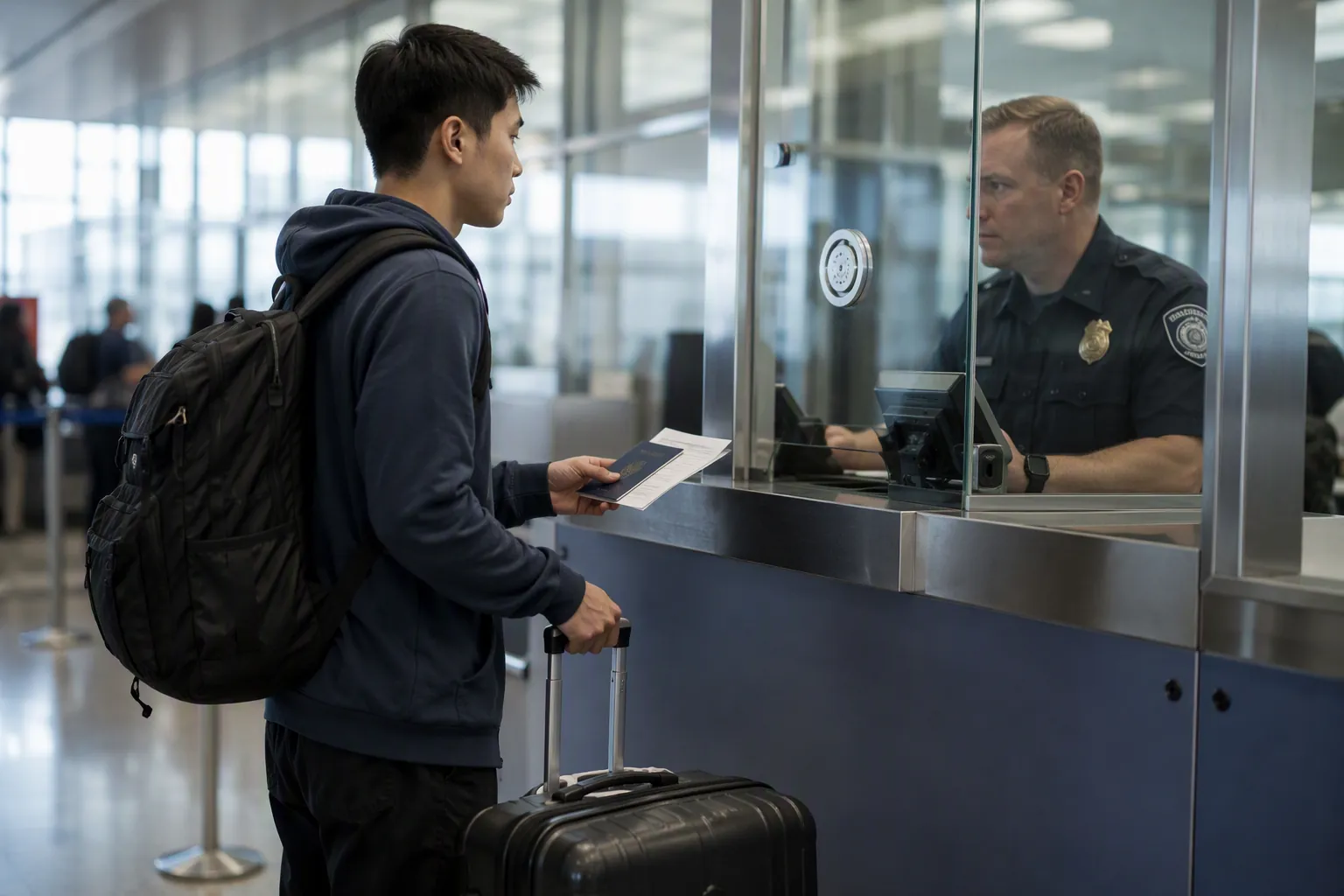
For international students trying to avoid airport detention while studying abroad in the United States, the goal is not to outsmart inspection. The goal is to remove the ordinary triggers that make an officer slow down: expired signatures, SEVIS timing problems, weak funding explanations, inconsistent answers, or device content that creates more questions than the student can answer clearly.
A perfect folder cannot guarantee admission. It can, however, keep a survivable document check from becoming a crisis.
| Before you fly | What to make ready |
|---|---|
| Verify documents | Passport, F-1 visa, signed I-20, SEVIS I-901 receipt, and financial proof in paper form. |
| Check SEVIS and timing | Confirm your program start date, entry window, travel signature, and active SEVIS record with your DSO. |
| Rehearse truthful answers | Be able to explain your school, program, funding, housing, travel history, and post-arrival plan without sounding scripted. |
| Prepare your phone | Remove irrelevant risky content before travel, organize what remains, and do not carry confusing material you cannot explain. |
| Plan for secondary inspection | Know your DSO contact, stay factual, do not lie, and do not sign anything with legal consequences you do not understand. |
The folder should answer the first ten minutes of questions
The most useful airport folder is not thick. It is accurate, current, and easy to search while you are tired. Keep the essential documents in your personal item, not in a checked suitcase, and do not rely on a dying phone as your only copy.
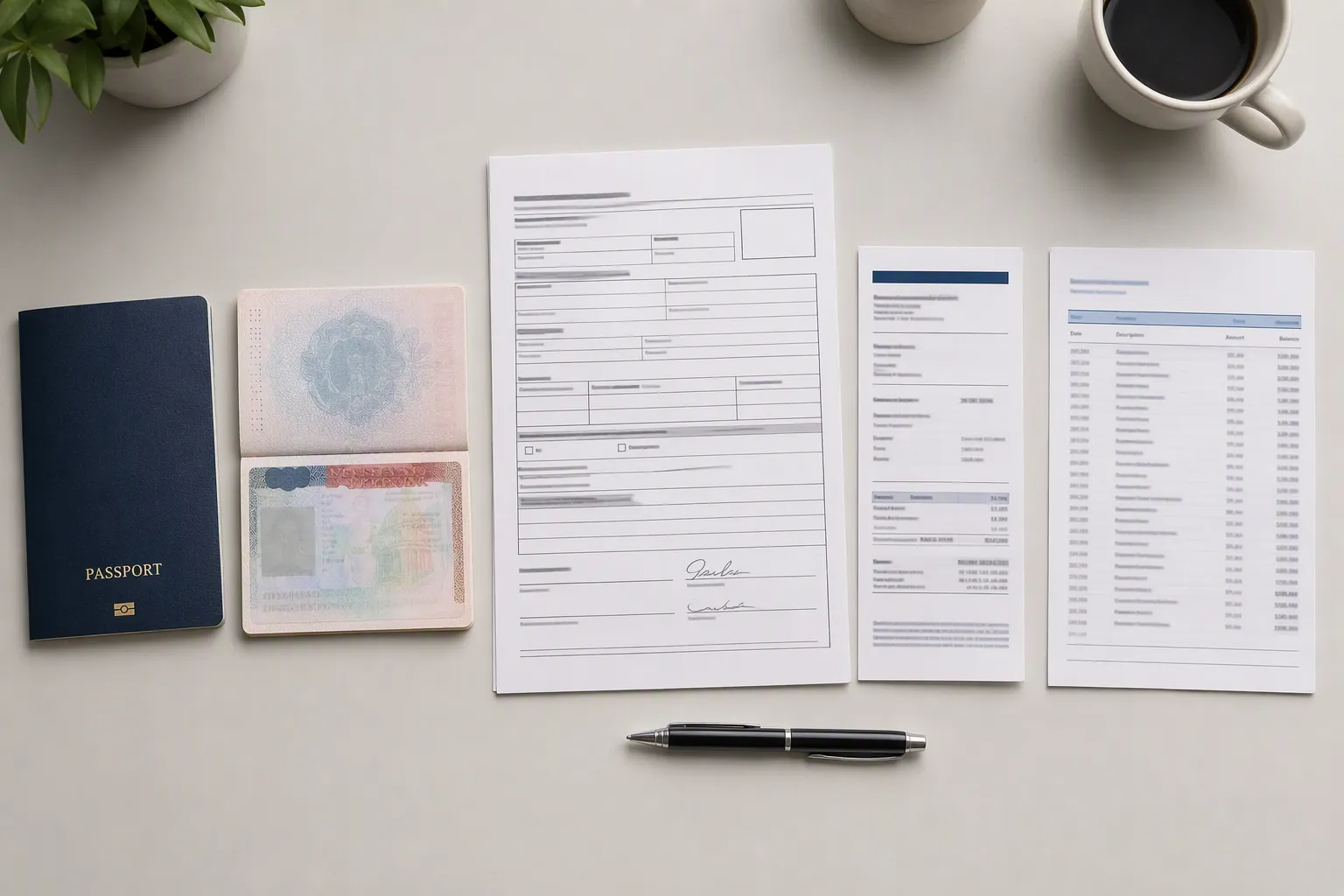
- Passport: it should be valid for at least six months beyond the date you enter, unless an exception applies to your country.
- F-1 visa stamp: confirm that the visa is valid on the day you arrive and that it matches the status you are requesting.
- Form I-20: bring the most recent version, signed by you and endorsed for travel by your DSO if you are a continuing student.
- SEVIS I-901 fee receipt: print the $350 payment receipt, even if you can also access it online.
- Financial proof: carry bank letters, scholarship letters, assistantship offers, sponsor documents, or school funding letters that match the story you will tell at the counter.
University international offices commonly tell students to carry these documents for arrival and to expect CBP to review both identity and eligibility for the requested status.[1][2]
The date on the I-20 deserves special attention. New F-1 students may not enter the United States more than 30 days before the program start date listed in SEVIS guidance.[3][4] If your flight arrives on the wrong side of that window, the issue is not solved by confidence, a hotel booking, or a polite explanation. Check the program start date on the I-20 against the actual landing date, not just the departure date from your home airport.
For continuing students, the travel signature is the mistake I would look for first. ICE’s SEVIS travel guidance states that a DSO travel signature is valid for 12 months for active F-1 students, but only 6 months for students on OPT or STEM OPT.[4] A student returning in August with a signature from the previous summer may be fine or may be outside the window, depending on the exact dates and status. Count the months before you buy the ticket, then ask your DSO for a new I-20 if the signature will expire before reentry.
Financial proof should not be treated as decoration. If your I-20 says family funds, your documents should show family funds. If your tuition is covered by an assistantship, carry the award or appointment letter. If a sponsor is paying, know who the sponsor is, what the relationship is, and why the sponsor can support you. The officer does not need your life story, but a vague “my parents will pay” is weaker than a short answer backed by paper.
Before travel, email your DSO if anything has changed: deferred admission, a late start, a new funding source, a new school, an OPT employer change, or a long absence from the United States. If your SEVIS record is not in the status the officer expects, your documents may look correct while the database tells a different story.
Answer like a real student, not like a script
Primary inspection is usually the first counter or kiosk-and-officer interaction. The officer checks your passport, visa, immigration documents, fingerprints or photo, and basic purpose of travel. If something needs more review, you may be sent to secondary inspection, where officers can take more time to check records, ask questions, or contact other systems or offices.[1][2][5]
The interview is not an oral exam, but you should be able to answer ordinary questions without contradiction. Expect simple questions: Which school are you attending? What degree or program? When does it start? Where will you live? Who is paying? Why were you outside the United States? Are you working? What will you do after arrival?
Good answers are short, true, and supported by documents. “I am starting a master’s in electrical engineering at this university on this date. My first semester is funded by a departmental scholarship and family savings. I have the letter and bank statement here.” That answer is not fancy. It gives the officer a clean line from status to program to funding.
What causes trouble is often the gap between documents and speech. A student says they are entering for school but cannot name the campus. A student says they are not working, then describes paid work not authorized under F-1 rules. A student says a relative is paying but carries documents showing a different sponsor and cannot explain the change. A student on OPT gives an employer name that does not match the I-20. None of those inconsistencies automatically proves wrongdoing, but each gives the officer a reason to keep asking.
Do not memorize a “perfect” answer that is not true. If you are nervous, say you are nervous. If you do not understand a question, ask the officer to repeat it. If you need to look at your I-20 for the exact start date, do that. Guessing is worse than checking.
If you are sent to secondary, slow down
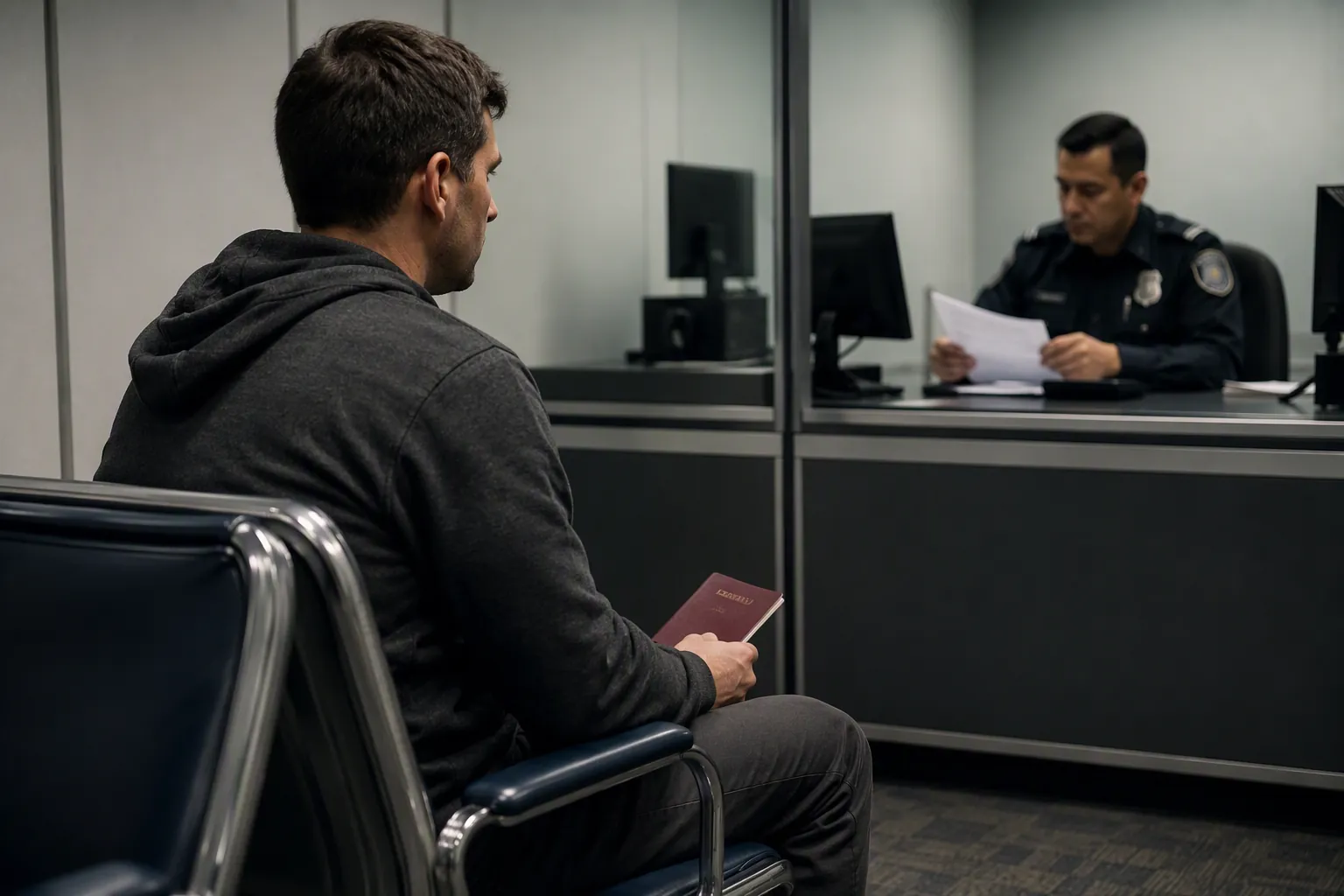
Secondary inspection is not the same as denial. It means the officer wants more time or more information. Students are referred for many reasons: document questions, SEVIS mismatches, name checks, travel history, funding concerns, prior status issues, or answers that did not line up at primary inspection.[2][5]
Once you are there, the most important rule is also the plainest: do not lie. Legal analysis of airport secondary inspection warns that a false statement to an officer can create far more serious immigration consequences than the original document issue, including the risk of a permanent fraud or misrepresentation bar under INA § 212(a)(6)(C).[6]
Keep your answers narrow. If the officer asks who is funding you, answer that question. If the officer asks about your employment, explain your current authorization and provide the document that supports it. Do not volunteer guesses about long-term immigration plans, political opinions, side projects, or friends’ situations because you feel silence is rude. Airport questioning rewards accuracy, not over-explaining.
Have your DSO’s phone number and emergency email printed. You may ask whether the officer can contact your school or allow you to contact your DSO. That request may or may not be granted immediately, but it is much more useful to provide a real office number than to scroll through messages looking for someone awake in a different time zone.
Be especially careful with documents placed in front of you. If you are asked to sign a statement, withdrawal, abandonment, or any form you do not understand, ask what it is and what the consequence will be. Modern Law Group’s 2026 legal analysis notes that Form I-407, where relevant, is a voluntary abandonment form, and that expedited removal under INA § 235(b)(1) can carry a five-year bar.[6] F-1 students may encounter different paperwork depending on the situation, but the operational rule is the same: do not sign away a status, admit a fact, or accept a legal consequence you do not understand just to get out of the room faster.
This article is planning information, not legal advice. If an officer says you are inadmissible, offers withdrawal of your application for admission, or mentions expedited removal, the situation has moved beyond ordinary travel preparation. Ask clearly what is happening and, if possible, request the opportunity to speak with your school or an immigration attorney.
Prepare your phone before you leave for the airport
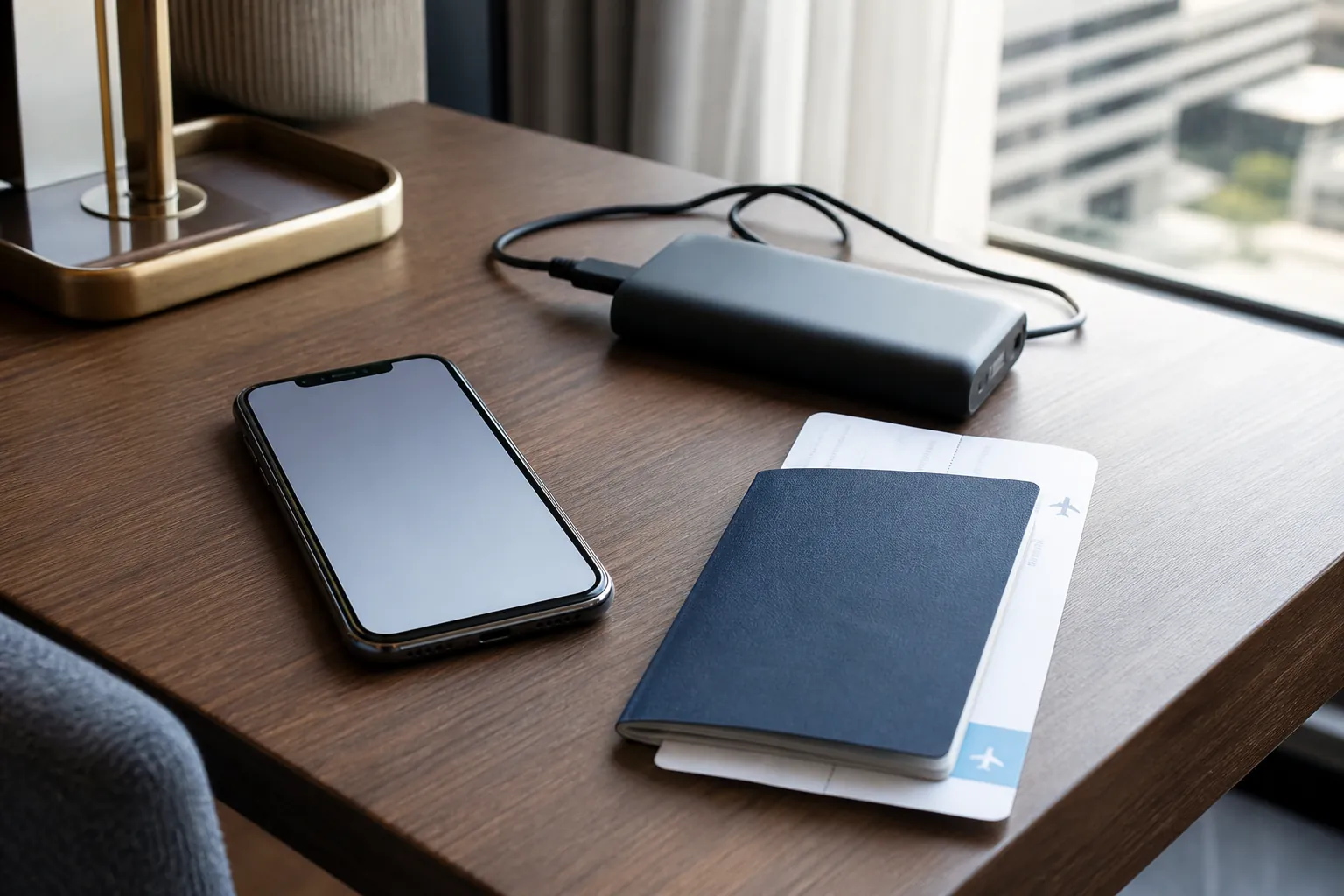
Phone searches are not the whole airport story, but they are real enough to prepare for. CBP reported 55,318 electronic device searches in FY2025, representing about 0.01% of arriving international travelers. CBP also says 92% of those searches were basic manual searches, while advanced searches using external equipment require reasonable suspicion or a national security concern under CBP Directive 3340-049A.[7]
Those numbers cut both ways. Most travelers are not searched. A small percentage still represents thousands of people, and the search can matter if the phone contains material that appears to contradict your stated purpose of travel or raises a separate admissibility concern.
Prepare the device you carry as deliberately as you prepare your I-20. Before travel, remove content you do not need to bring across the border: old screenshots, jokes without context, angry fragments, pirated material, work files unrelated to your studies, or messages that make innocent plans look like unauthorized employment. Do this before the trip, not while standing in line after you see an officer.
Do not delete or hide material after an officer asks to inspect a device. That can make a manageable question look like obstruction. The better approach is to travel with a clean, boring, explainable phone: necessary apps, necessary contacts, school documents if you also keep paper copies, and no avoidable clutter that requires a tired stranger to reconstruct your intent.
Students whose research, activism, journalism, or online work touches sensitive subjects should be especially careful to separate academic explanation from casual fragments. If your research involves social media, political movements, public health, conflict, sanctions, or security topics, carry a clear university letter describing the academic purpose. The site’s related guide on social-media research and graduate travel risk is worth reading before you fly.
Headlines are context, not a preparation plan
Recent reporting has made students more anxious for understandable reasons. NBC News reported several high-profile cases involving travelers or visa holders stopped, searched, or detained, including Tufts student Rumeysa Ozturk, a French researcher, a Lebanese doctor, and Canadian Jasmine Mooney.[8] Forbes also reported a 28.5% decline in arriving international students in July 2025 compared with July 2024, based on preliminary ADIS/I-94 data excluding Canada and Mexico.[9]
Those reports are not proof that every student is likely to be detained. They do show why preparation has to be specific. A student cannot control the news environment, an officer’s discretion, or a government database flag. A student can control whether the I-20 is current, whether the SEVIS receipt is printed, whether the funding answer matches the documents, and whether the phone contains avoidable confusion.
Rules in force now are not the same as the September 15, 2026 rule change
As of August 3, 2026, students traveling in the next few weeks should not treat the upcoming DHS rule as if it is already in force. DHS announced a final rule in July 2026 ending Duration of Status for F, J, and I nonimmigrants, with an effective date of September 15, 2026. DHS describes the new framework as including a fixed admission period capped at four years, mandatory federal extension applications, and a 30-day grace period.[10]
That matters because students will make bad travel decisions if current and future rules are blended together. If you are arriving before September 15, prepare under the rules in force at the time of entry and follow your school’s current DSO guidance. If you are planning travel or program changes on or after September 15, read the rule-specific planning guide, How the New Visa Ruling Reshapes International Students’ Study Plans, and confirm your own timing with your DSO.
The airport checklist does not change in spirit after September 15: documents, SEVIS accuracy, truthful answers, and clean records will still matter. What changes is the admission framework behind those documents, which is exactly why the dates should stay visible.
What preparation can and cannot do
Preparation cannot remove CBP discretion. It cannot guarantee that a database check will clear quickly, that a device will not be searched, or that an officer will accept every explanation at primary inspection.
It can remove the common avoidable triggers: an expired travel signature, a too-early arrival, missing SEVIS proof, a funding answer with no paper support, a scripted explanation that falls apart under one follow-up question, or a phone full of material the student cannot explain. That is the work worth doing before the suitcase is zipped.
References
- Port of Entry: What to Expect When Arriving, Washington University OISS.
- Secondary Inspection at the U.S. Port of Entry, University of Michigan International Center.
- Students, ICE SEVIS.
- Travel, ICE SEVIS.
- Arriving in the U.S.: Immigration Inspection, Yale OISS.
- CBP Secondary Inspection — Your Rights When Pulled Aside at the Airport in 2026, Modern Law Group.
- Border Search of Electronic Devices at Ports of Entry, U.S. Customs and Border Protection.
- Trump immigration crackdown has detained visitors, searched devices and revoked visas. What travelers should know, NBC News.
- Immigration Data Show Steep Decline In Arriving International Students, Forbes, August 21, 2025.
- Trump Administration Issues Final Rule to End Foreign Student Visa Abuse, U.S. Department of Homeland Security, July 16, 2026.
Related exhibits & inventory
Verified outcomes
No verified outcomes on file for this exam yet
See Methodology for how outcome evidence is disclosed once logged.
Planners
No planner filed for this exam yet
A downloadable timeline template for this exam hasn't been published yet.
Tool verdicts
AI-tool cautions
No AI tools tested for this exam yet
No hands-on AI-accuracy logs have been filed for this exam.
Questions about this plan
Ask a question about a specific section, timeline, or citation in this plan — or flag something that needs correcting.
Comments
Join the discussion with an anonymous comment.