
ASVAB Exam Hub
ASVAB San Andreas Fault Geology Study Guide
Study the San Andreas Fault as the one master example for ASVAB General Science earth science: learn the transform boundary, fault types, and earthquake vocabulary the subtest can test, then check your understanding with ASVAB-format practice questions.
- gre
- mcat
- asvab
- sat
- act
- digital-adaptive
- official-material
- section-strategy
- test-date-timeline
For ASVAB General Science, the San Andreas Fault is useful because it is not just “that famous California fault.” It is the cleanest exam example of a transform boundary: the Pacific Plate slides northwest past the North American Plate, and that sideways motion produces strike-slip faulting and earthquakes rather than volcanoes. If you are using the broader ASVAB exam prep guide, treat this page as the plate-tectonics shortcut: one real system, several testable concepts.
The load-bearing sentence is simple: the San Andreas Fault is a strike-slip fault along a transform plate boundary, where the Pacific Plate moves northwest relative to the North American Plate. USGS identifies the San Andreas as the classic place where those two plates slide past one another, and the National Park Service uses it as a major example of transform plate-boundary motion.[1][2]
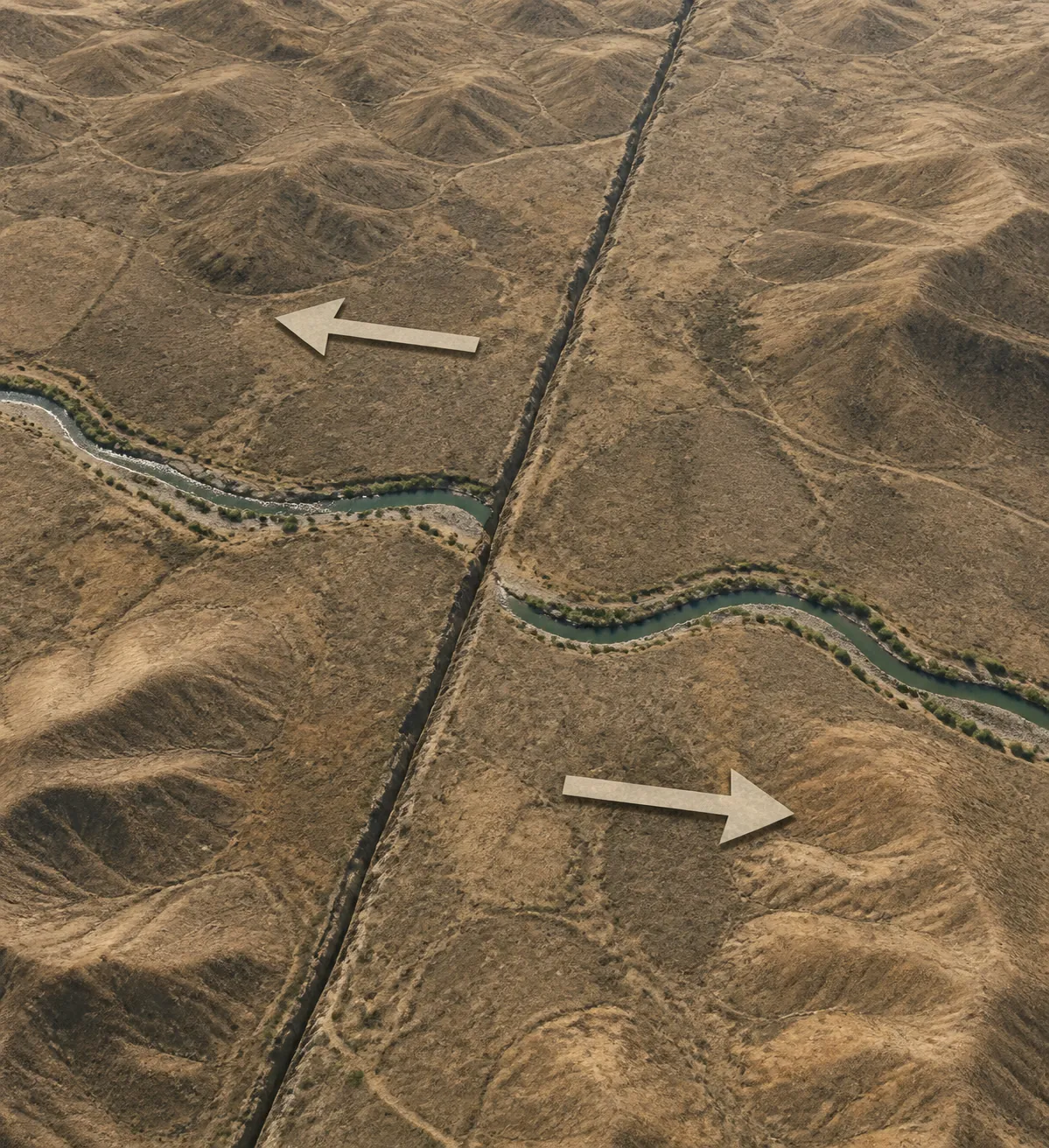
The one picture to keep in your head
Picture a long break in the crust. Land on the Pacific Plate side is being carried northwest relative to land on the North American Plate side. The plates are not crashing head-on. They are not pulling apart to open a gap. They are sliding past each other horizontally.
That one picture answers three different ASVAB-style questions:
- Boundary type: transform.
- Fault motion: strike-slip, meaning mostly horizontal movement along the fault.
- Main hazard produced by that motion: earthquakes, not a volcanic arc.
The exam trap is usually not obscure geology. It is category confusion. A question may describe plates sliding side by side, then offer “convergent,” “divergent,” and “transform.” Do not let the word “fault” make you forget the plate-boundary category. A transform boundary is the plate-scale setting; a strike-slip fault is the fault-motion vocabulary that fits the San Andreas example.
Transform, convergent, divergent: sort by motion first
For a timed science subtest, sort plate boundaries by how the plates move. If you start with landforms or disasters, you make yourself memorize too much. Motion comes first; the consequences follow.
| Boundary type | Plate motion | Common ASVAB clue | Do not confuse it with |
|---|---|---|---|
| Convergent | Plates move toward each other | Collision, subduction, mountain building, volcanic arc | Transform sliding |
| Divergent | Plates move away from each other | Seafloor spreading, rift, magma rising to make new crust | Strike-slip motion |
| Transform | Plates slide horizontally past each other | Earthquakes along a fault; San Andreas example | Subduction volcanoes or mid-ocean-ridge volcanism |
The volcano contrast matters because test writers love it. Convergent and divergent boundaries can involve magma formation or magma rising; transform boundaries are mainly sideways shear zones and do not normally create magma as their defining process.[3][4]
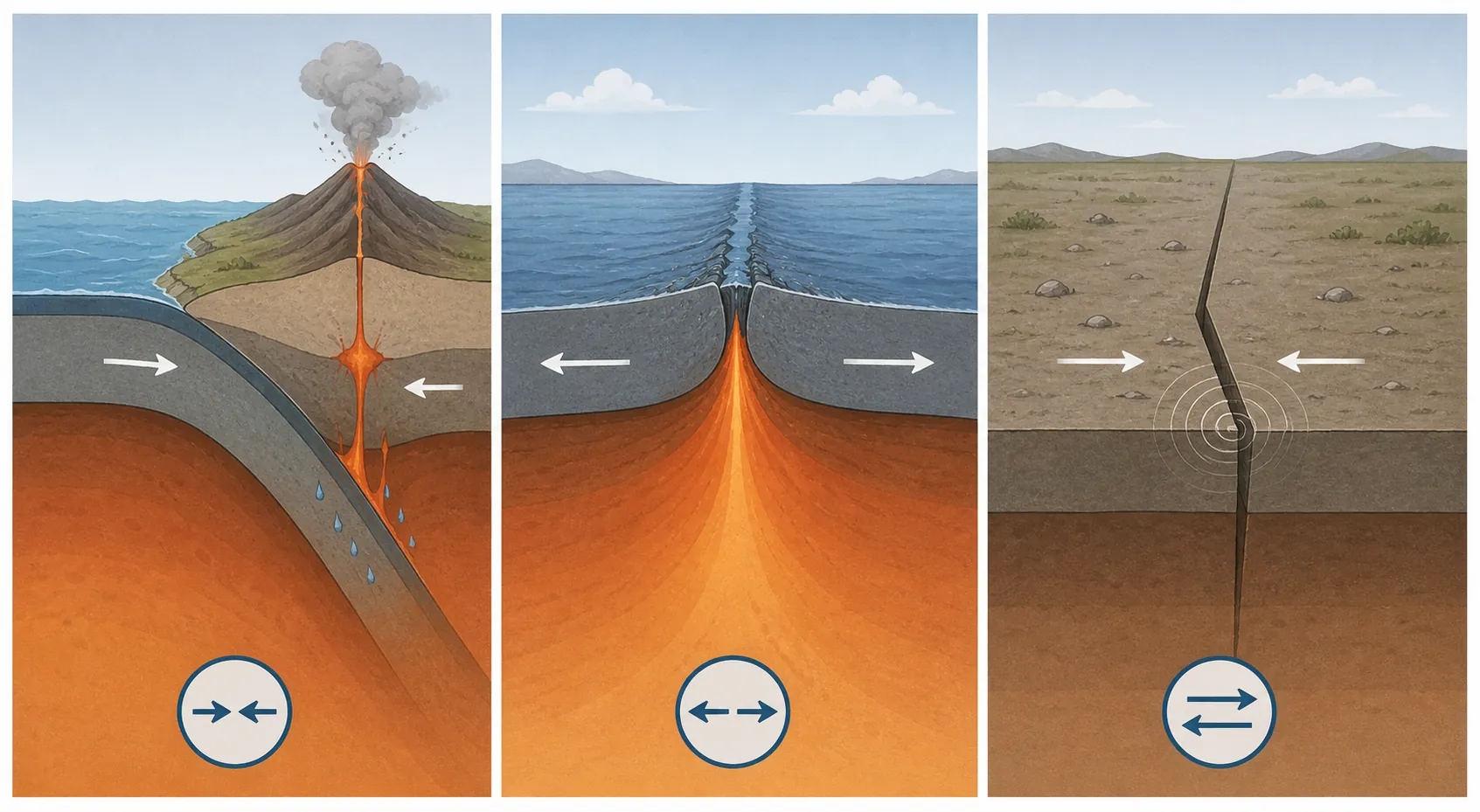
So if an answer choice says the San Andreas Fault produces a chain of volcanoes because one plate is diving beneath another, that answer has imported the wrong boundary model. Subduction belongs with convergent boundaries. Seafloor spreading belongs with divergent boundaries. The San Andreas model is sideways motion and earthquakes.
Why sideways motion makes earthquakes
A transform boundary does not have to move smoothly every second. Parts of the fault can lock because of friction. Plate motion continues, stress builds, rocks bend slightly, and then a stuck section can rupture. The sudden slip releases energy as seismic waves. That is the earthquake mechanism you need: slow plate motion, stored stress, sudden release.
The motion is slow enough to sound harmless if you only hear the yearly number. USGS describes tectonic plate motion near the San Andreas in the neighborhood of about 2 inches, or about 50 millimeters, per year — a common fingernail-growth comparison.[5]
Be careful with what that number measures. The broader plate-boundary zone and the San Andreas Fault itself are not identical measuring sticks. The National Park Service describes Pacific–North American transform motion at roughly that few-centimeters-per-year scale, while a separate summary gives the San Andreas Fault’s average slip rate as about 20 to 35 millimeters per year.[2][6]
That distinction is more scientific honesty than ASVAB burden. You probably will not be asked to compare slip-rate sources. But the concept is testable: tiny annual motion can accumulate into a sudden earthquake when a locked section breaks.
Locked segments, creeping segments, and aseismic creep
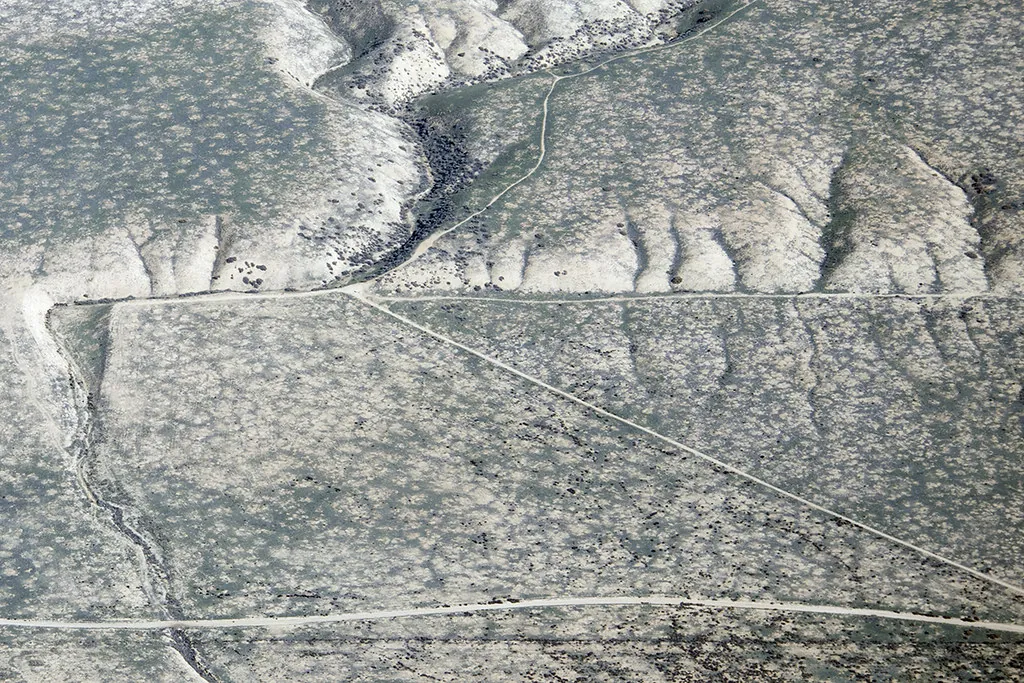
The San Andreas is better thought of as a fault system or zone than as one perfectly uniform crack. Some sections are locked and store elastic strain. Other sections creep, meaning they move gradually. Aseismic creep is movement along a fault without the shaking of a typical earthquake; USGS uses the term for fault motion that occurs without detectable earthquake shaking.[5]
Parkfield, in central California, is useful because it keeps this vocabulary from floating around as definitions only. USGS describes Parkfield as a well-studied part of the San Andreas system, with a history of about magnitude 6 earthquakes recurring on an average interval of roughly 22 years in the historical record used for that study.[7]
Do not turn Parkfield into a memorization project. For ASVAB purposes, the point is narrower: a transform fault can have different behaviors along different segments. “Locked” suggests stress can accumulate. “Creeping” suggests gradual slip. “Aseismic” means without seismic shaking strong enough to be counted as an earthquake in the usual sense.
Earthquake vocabulary the San Andreas helps you remember
Once the transform-boundary model is in place, the earthquake terms become easier. They are not random vocabulary; they describe where rupture starts, where shaking is observed, and how the event is measured.
Hypocenter vs. epicenter
The hypocenter, also called the focus, is the point underground where rupture begins. The epicenter is the point on Earth’s surface directly above the hypocenter.[5]
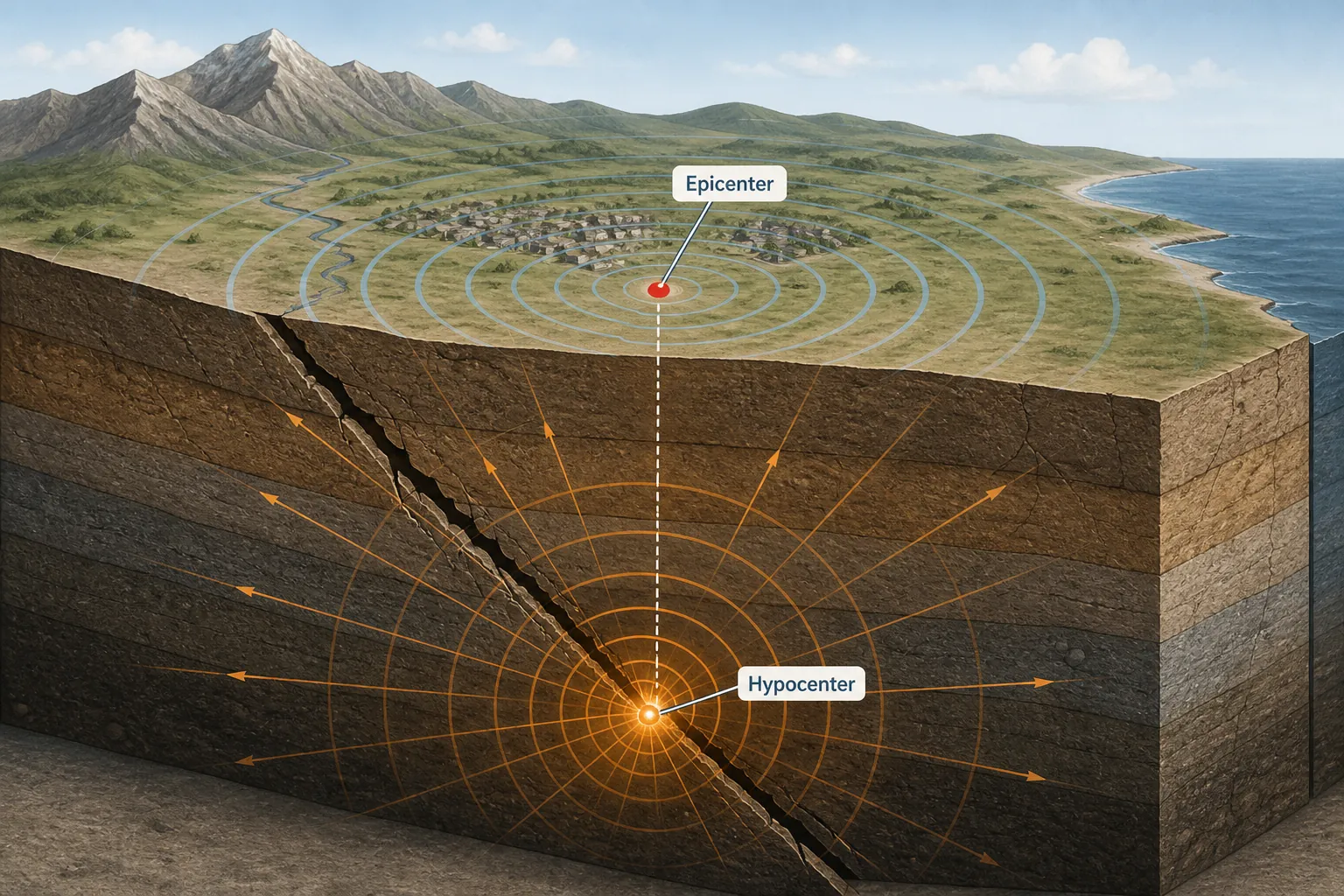
An ASVAB question may hide this in wording. If it asks for the surface location above the earthquake’s starting point, choose epicenter. If it asks where rupture begins inside Earth, choose hypocenter or focus.
Magnitude vs. intensity
Magnitude describes the size of the earthquake itself. Intensity describes the shaking and effects at a particular place. One earthquake has one magnitude value, but intensity can vary from place to place depending on distance, ground conditions, building response, and other local factors.[5]
That is why “stronger shaking in one neighborhood than another” is intensity language, not a new magnitude for the same earthquake.
Fault, fault zone, and plate boundary
A fault is a fracture or zone of fractures where rocks have moved. A plate boundary is where tectonic plates meet. The San Andreas Fault system is part of the larger Pacific–North American transform boundary. That is why two answer choices can both sound related but only one fits the question being asked.
| If the question asks... | Choose the concept... |
|---|---|
| What type of plate boundary is represented by the San Andreas? | Transform boundary |
| What type of fault motion is shown by horizontal sliding? | Strike-slip faulting |
| What point is directly above the focus? | Epicenter |
| What describes earthquake size? | Magnitude |
| What describes local shaking effects? | Intensity |
| What kind of gradual motion can happen without normal earthquake shaking? | Aseismic creep |
If you want more earthquake-process vocabulary after this, the article on physical mechanisms behind earthquake swarms is a useful next stop. Keep it secondary, though. Swarms are not the core San Andreas ASVAB model; transform motion is.
How a test question can disguise the same idea
The San Andreas may appear by name, but the exam can also test the concept without naming it. Watch for these clue patterns:
- “Two plates slide horizontally past each other” means transform boundary.
- “Horizontal movement along a fault” means strike-slip fault.
- “Earthquakes but little or no volcanic activity” often points to a transform setting.
- “Surface point above the focus” means epicenter.
- “Amount of energy released” or “size of the earthquake” points to magnitude.
- “Damage or shaking at a location” points to intensity.
A historical reference can appear, but it usually serves the vocabulary rather than the story. The 1906 San Francisco earthquake was about magnitude 7.8 and caused roughly 3,000 deaths, making it a major San Andreas event in U.S. earthquake history.[8] For a General Science question, the useful takeaway is still the boundary and fault type: transform boundary, strike-slip motion.
Use the same study habit you would use with other ASVAB earth-science topics: compress the system into testable cause and effect. In hurricane science, you sort warm water, pressure, and rotation. In moon science, you sort phases and orbital position. In tornado watch versus warning, you sort risk from confirmed danger. Here, sort boundary motion first.
ASVAB-style practice questions
Use these like a timing drill. Read the clue, identify the category, then check the explanation.
1. The San Andreas Fault is best known as an example of which type of plate boundary?
- A. Divergent
- B. Transform
- C. Convergent
- D. Continental rift
Answer: B. Transform. The clue is plates sliding past each other horizontally. Divergent means moving apart; convergent means moving together.
2. Which phrase best describes strike-slip motion?
- A. One plate sinks beneath another
- B. Plates pull apart and magma rises
- C. Rocks move mostly horizontally along a fault
- D. Lava builds a volcanic island chain
Answer: C. Strike-slip is sideways fault motion. Choices A, B, and D borrow from convergent or divergent settings.
3. Why are earthquakes common along transform boundaries such as the San Andreas, while volcanoes are not the main expected feature?
- A. Transform boundaries create large magma chambers under every fault
- B. Transform boundaries involve horizontal sliding, friction, stress buildup, and sudden slip
- C. Transform boundaries only occur under oceans
- D. Transform boundaries prevent rocks from breaking
Answer: B. The earthquake comes from stress release along a fault. Volcanoes are more closely tied to magma-producing settings, especially many convergent and divergent boundaries.
4. The point on Earth’s surface directly above where an earthquake rupture begins is called the:
- A. Epicenter
- B. Hypocenter
- C. Mantle plume
- D. Subduction zone
Answer: A. The hypocenter, or focus, is underground where rupture starts. The epicenter is the surface point directly above it.
5. A news report says an earthquake had one measured size, but shaking was severe in one town and mild in another. Which pair of terms best matches that description?
- A. One magnitude; different intensities
- B. One intensity; different magnitudes
- C. One epicenter; different hypocenters
- D. One volcano; different faults
Answer: A. Magnitude describes the earthquake’s size. Intensity describes the shaking and effects at a location, so it can vary from place to place.
6. A section of a fault moves gradually without producing typical earthquake shaking. Which term best fits that motion?
- A. Subduction
- B. Aseismic creep
- C. Volcanic eruption
- D. Seafloor spreading
Answer: B. Aseismic creep means gradual fault movement without the usual earthquake shaking. It is one reason the San Andreas is better studied as a fault system with different segment behaviors, not a single line that behaves the same everywhere.
References
- Earthquake Facts & Earthquake Fantasy, USGS
- Transform Plate Boundaries, National Park Service
- Plate Tectonics and Plate Boundaries AP Environmental Science Review, Albert.io
- Plate Tectonics, Save My Exams
- Cool Earthquake Facts, USGS
- San Andreas Fault, Wikipedia
- Parkfield tectonic setting, USGS
- The Great 1906 San Francisco Earthquake, USGS
Related exhibits & inventory
Verified outcomes
No verified outcomes on file for this exam yet
See Methodology for how outcome evidence is disclosed once logged.
Planners
No planner filed for this exam yet
A downloadable timeline template for this exam hasn't been published yet.
Tool verdicts
AI-tool cautions
No AI tools tested for this exam yet
No hands-on AI-accuracy logs have been filed for this exam.
Questions about this plan
Ask a question about a specific section, timeline, or citation in this plan — or flag something that needs correcting.
Comments
Join the discussion with an anonymous comment.