
Why Analysts Compare Trump to Jimmy Carter in 2026
This analysis explains why respected analysts repeatedly compare Donald Trump's second term to Jimmy Carter's single term, grounded in three linked crises: Iran conflict, economic fallout, and approval collapse. It examines the evidence behind the parallel and what distinguishes the two presidencies.
Updated:
As of July 19, 2026, the serious version of the Trump-Carter comparison rests on three linked pressures: an Iran-centered crisis, an inflation and oil shock, and a presidency losing public confidence while events outrun the White House. Strip away the easy personality takes and that is the mechanism. Carter became a one-term symbol not simply because voters disliked his style, but because the hostage crisis, the failed rescue, and punishing inflation fused into a judgment that he could not master the moment. Trump is now being measured against the same kind of trap, and the comparison has become harder to dismiss because he has used Carter as a warning inside his own circle.
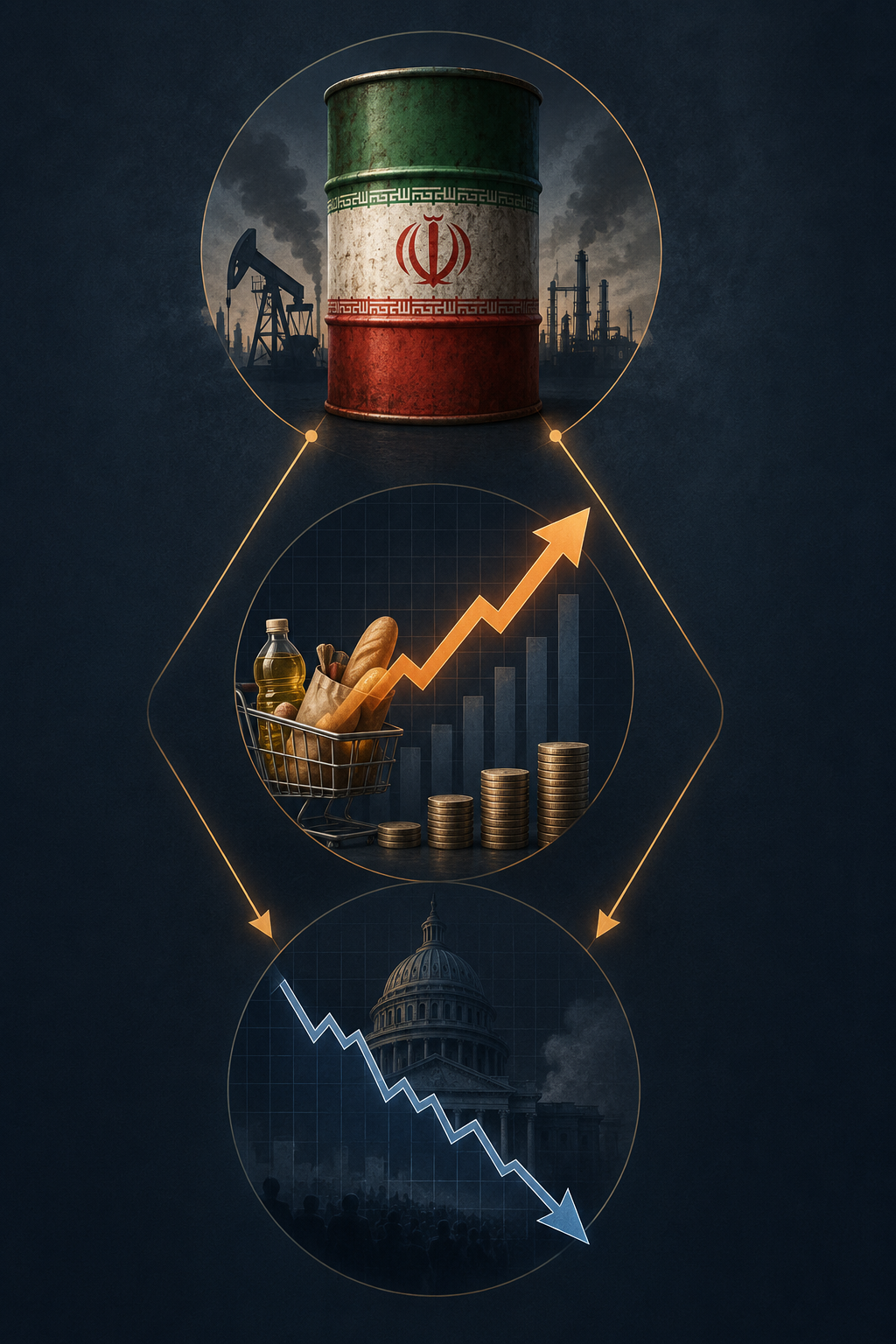
For anyone asking why analysts now compare Trump with Jimmy Carter, that is the useful answer. The point is not that Donald Trump and Jimmy Carter share a temperament, a governing philosophy, or a moral vocabulary. They plainly do not. The point is that both presidencies have been defined, politically, by the same chain reaction: Iran crisis first, economic pain next, approval collapse after that.
Carter Is the Baseline Because Iran Became the Whole Presidency
The Carter reference has survived because it is not vague. Fifty-two Americans were held hostage in Iran for 444 days, a crisis that began in November 1979 and did not end until January 1981. Operation Eagle Claw, the attempted rescue mission in April 1980, failed in the Iranian desert and killed eight U.S. servicemen.[1][2]
Those facts still carry political weight because they describe more than a foreign-policy setback. They describe a presidency trapped in public view. Every day the hostages remained captive was another day in which the government appeared unable to recover its citizens. Every failed maneuver made the gap between presidential intention and presidential control more visible.
The economic setting made that judgment harsher. Inflation reached 14.7% in April 1980, a level that turned ordinary bills, wage bargaining, savings, and household planning into daily reminders that the country was off balance.[2] Carter did not need every voter to follow the details of monetary policy or the geopolitics of oil. The prices did the translating.
This is why Carter became the shorthand. His presidency was not ruined by one bad headline. It was worn down by a foreign crisis that would not end, an economy that punished patience, and a public that increasingly read both as evidence of helplessness. By the time his approval fell to roughly 28% at its low point, the collapse was not merely ideological. It was managerial.[3]
Trump Enters the Comparison Through the Same Chain
Trump’s second term reaches the Carter comparison through a different doorway, but it arrives in a familiar room. In the reporting that has driven the analogy in 2026, the central sequence is Iran escalation, oil-market disruption, rising inflation, heavy defense costs, and a sharp drop in approval. TIME framed the danger directly in March 2026: a president who had long mocked Carter was now at risk of reliving the conditions that made Carter a cautionary figure.[1]
The Iran piece is the hinge. Trump’s policy is described in the 2026 coverage as a war that followed his earlier break with the nuclear deal framework, with Iran’s blockade of the Strait of Hormuz magnifying the oil shock.[1][4] That matters because the Strait is not just another foreign-policy location in the political imagination. When conflict there hits energy prices, it travels quickly from briefing rooms to gas stations, freight costs, grocery prices, and voter patience.
TIME reported May 2026 inflation at 4.2% year over year, describing it as a three-year high.[1] That is nowhere near Carter’s 1980 peak, and the difference should not be blurred. But political damage is not measured only by whether one number equals another across eras. It is also measured by direction, timing, and blame. A president already managing a war with Iran does not receive much benefit from explaining that the earlier precedent was worse.
The fiscal burden adds another layer. Rolling Stone reported that the Pentagon had spent more than $30 billion on the Iran war and requested a $1.5 trillion budget increase.[4] Those figures do not prove the war alone caused Trump’s political deterioration. They do show why the comparison has acquired more substance than a cable-news metaphor. A war presented as an assertion of strength has become an expanding claim on money, attention, and administrative capacity.
| Pressure | Carter baseline | Trump in 2026 |
|---|---|---|
| Iran crisis | 52 American hostages held for 444 days; failed rescue killed 8 servicemen | Iran war after escalation; Strait of Hormuz blockade reported in 2026 coverage |
| Inflation and oil | Inflation peaked at 14.7% in April 1980 | May 2026 inflation reported at 4.2% year over year, a three-year high |
| Approval | Low point around 28% | Approval reported around 35% |
The Approval Collapse Gives the Analogy Its Bite
Historical comparisons are cheap when they float above polling. They become harder to ignore when the numbers start to rhyme. Rolling Stone reported Trump’s approval plunging to about 35% amid the Iran war.[4] Carter’s low point, by comparison, was about 28%.[3] Again, these are not identical figures, and they come from different political environments. But the range is politically dangerous enough that the analogy stops sounding ornamental.
Approval ratings are often treated as scoreboards, but in this comparison they work more like stress tests. They show how much room a president has left when events demand more patience from the public. A leader with strong approval can ask voters to wait through a complicated foreign crisis. A leader in the 30s is asking the same people to absorb higher prices, war spending, uncertainty, and explanations from an administration they have already begun to distrust.
That is where the Carter shadow does its political work. The public does not need to decide that Trump resembles Carter as a person. The more damaging conclusion is simpler: the presidency looks pinned down by an external crisis while domestic life becomes more expensive. Once that perception settles, speeches about resolve can start to sound like proof that the problem has no easy exit.
Trump’s Own Carter Warning Changed the Status of the Comparison
The most revealing detail in the 2026 coverage is not from an analyst. It is from Trump. TIME and AP reported that Trump told aides in June 2026 that he “didn’t feel like being Jimmy Carter,” a reference to avoiding the kind of failed rescue operation that helped define Carter’s decline.[1][5]
That sentence matters because it shows the analogy had entered the administration’s own risk calculations. Presidents and their advisers can dismiss commentary; they have a harder time dismissing a precedent they are privately using to guide choices. Carter was no longer just a name attached by critics. He had become the failure mode Trump wanted to avoid.
There is also a personal history to the language, though it should not carry more weight than the crisis itself. Trump had mocked Carter as “a terrible president,” then praised him as “a good man” after attending his funeral in 2025, before returning to Carter in 2026 as a cautionary example while facing Iran, inflation, and legacy questions.[5][6] That evolution is politically useful because it tracks Carter’s movement in Trump’s own rhetoric: from insult, to ceremonial respect, to operational warning.
The temptation is to turn that into a story about Trump’s contradictions. There are enough of those elsewhere. Here, the more important fact is that even Trump recognized the danger of a Carter-shaped failure: Americans at risk, military options carrying heavy downside, and a presidency that could be branded by one botched move.
The Crucial Difference: Carter’s Restraint, Trump’s Escalation
The comparison breaks if it pretends the two presidents reached the crisis by the same route. Carter’s Iran catastrophe was a crisis of restraint, captivity, and a rescue mission that failed. Trump’s is a crisis of escalation and sustained war. That tactical difference is not cosmetic. It changes who made which choices, what risks were accepted, and how responsibility is likely to be assigned.
Carter looked overtaken by events he could not resolve. Trump risks looking trapped by events his own escalation helped set in motion. One presidency was humiliated by the inability to free hostages without disaster. The other is being tested by whether military force can produce a political outcome worth the oil shock, inflation pressure, and defense spending that have followed.
That difference should sharpen the analysis, not end it. The Carter analogy does not require identical motives or identical tactics. It requires a similar political structure: Iran at the center, economic pain radiating outward, public approval falling, and the president increasingly judged by whether he can regain control. On that structure, the comparison has earned its way in.
Why Nixon and Hoover Comparisons Do Less Work Here
Other historical comparisons are available. Nixon analogies tend to surface whenever Trump’s fights over power, law, and institutional legitimacy dominate the discussion. Hoover analogies appear when economic distress becomes the central frame. Those comparisons can illuminate pieces of Trump’s politics, but they do not join the Iran, inflation, oil, war-cost, and approval story as neatly as Carter does.
For readers who want the broader academic method behind presidential comparisons, the political-science framework is a different exercise from this Iran-focused account. The question there is how scholars evaluate legacy; the question here is why the current news cycle keeps returning to Carter. The answer is narrower and stronger: the same type of crisis has begun to define the presidency. A related framework is available in Comparing Carter and Trump Through a Political Science Lens.
The Comparison Is Now Structural, Not Just Rhetorical
The lazy version of the Trump-Carter analogy would stop at outsider status, media resentment, or the simple fact that both men became useful foils for their enemies. Fortune’s AP-based comparison noted that both were political outsiders who railed against the media, but those traits are too broad to explain why the analogy intensified in 2026.[7] Plenty of presidents fight the press. Far fewer are defined by an Iran crisis that feeds inflation anxiety and a collapse in public standing.
The stronger comparison is colder than the personality version. Carter’s presidency became a lesson in how a foreign crisis can consume a domestic agenda. Trump’s second term is now being tested against that same lesson, with the added burden that his crisis is tied to active escalation and large continuing costs. Voters do not experience that as a clever historical analogy. They experience it as prices, uncertainty, service members deployed, hostages or civilians at risk, and a government asking for trust while its room to maneuver shrinks.
That is why the comparison keeps coming back. Not because Trump is Carter in character, and not because 2026 is a rerun of 1980. It keeps coming back because the presidency is being measured against a familiar pattern of crisis: Iran abroad, inflation at home, approval falling underneath. Once Trump himself says he does not want to “be Jimmy Carter,” the analogy is no longer just something being thrown at him. It is part of the danger he is trying to survive.[1][5]
References
- Trump, Who Mocked Carter's Legacy, Now Risks Reliving It, TIME
- Presidency of Jimmy Carter, Wikipedia
- Donald Trump Faces Becoming the President He Ridiculed: Jimmy Carter, Northeastern/Newsweek
- Donald Trump Has Turned Into Jimmy Carter Amid Iran War, Rolling Stone
- Trump shifts his tone on Jimmy Carter while grappling with Iran, inflation and his own legacy, AP via WJTV
- Trump's praise of Carter in death after jeering him in life deepens a contradictory relationship, AP
- Trump and Carter were both political outsiders who railed against the media, Fortune/AP
Comments
Join the discussion with an anonymous comment.