
Tornado Watch Issued: What Should You Do Now?
A tornado watch means conditions are favorable — but most guides skip what to actually do during this preparation window. This article gives you a clear, step-by-step action plan covering home, car, school, and outdoor scenarios so you're ready if a warning follows.
Updated:
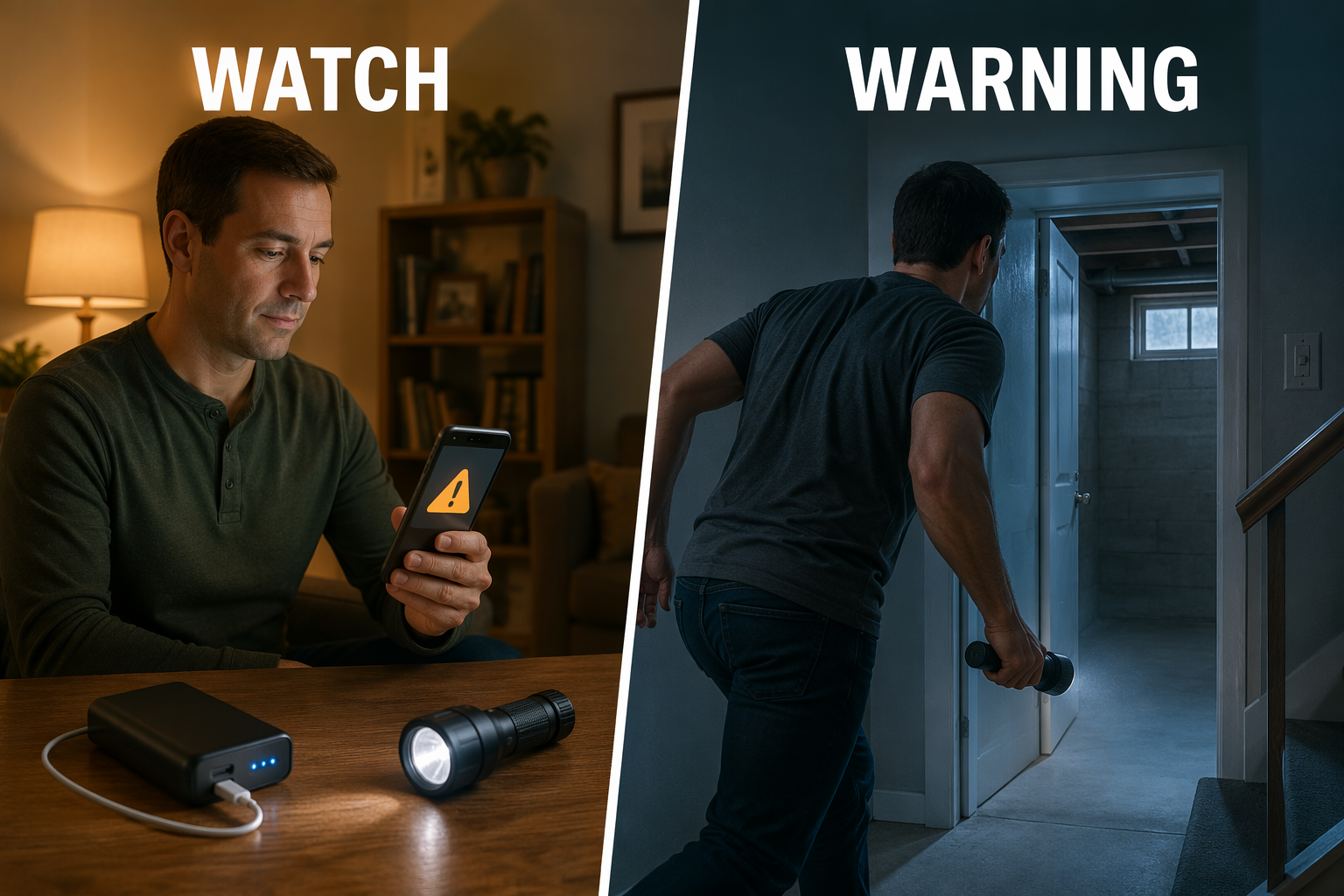
A tornado watch means conditions are favorable for tornadoes. A tornado warning means a tornado has been sighted or indicated by radar; a tornado emergency is a rare alert for a confirmed, dangerous tornado causing a severe threat to life and property.[1] A watch is not the moment to shelter as if a tornado is already overhead; it is the moment to get ready so a warning does not catch you searching for shoes, chargers, keys, pets, or a safe room.[1][2]
The National Weather Service’s watch guidance is straightforward: review and discuss emergency plans, take inventory of supplies, and check your safe room.[2] Most people in a watch area will not see a tornado, but the watch still calls for visible, concrete preparation. That usually means making the next warning easier to act on, not trying to predict whether your street will get hit.
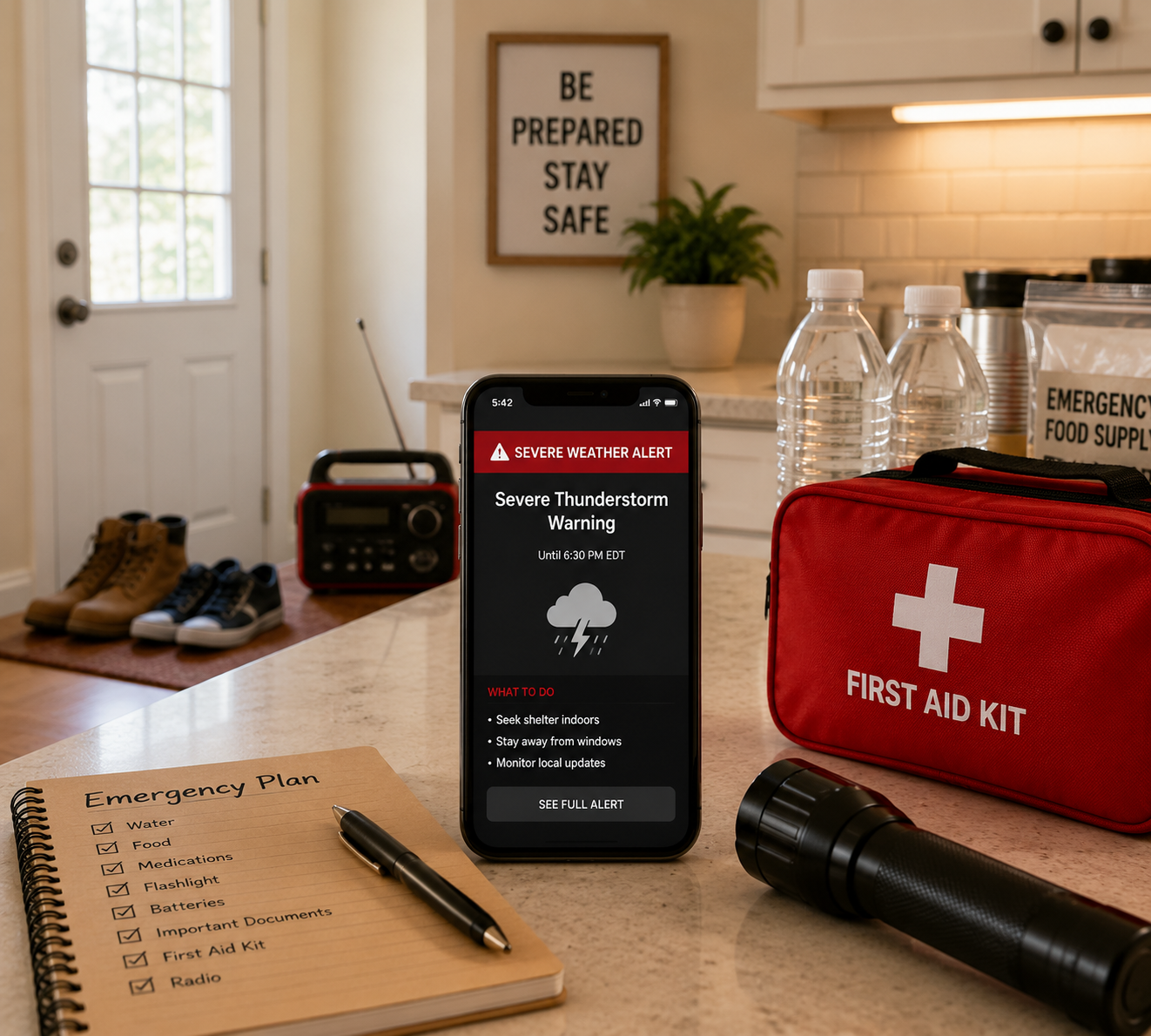
- Turn on reliable alerts now. Keep your phone charged, keep a weather app or weather radio on, and make sure you will actually hear the next alert.[3][4]
- Charge your phone and power bank before you need them. If the power goes out later, this is the easiest way to keep receiving warnings.[3][4]
- Put essentials where you can grab them fast: shoes, flashlight, keys, wallet, medications, glasses, pet leash or carrier, and basic go-kit items.[3]
- Make sure everyone in the home knows the shelter location and the fastest route to it.[2]
- Clear the path to the basement, storm shelter, or interior room now, while you still have time to move normally.[2]
- If you can safely delay a nonessential trip, do it before the watch turns into a warning.[4]
At home, the point is to remove friction. When the warning comes, the safest place is usually the lowest level of a sturdy building, in an interior room away from windows; if you have a basement or storm shelter, know exactly how to reach it now.[6][7] If you live in a mobile home, treat the watch as your chance to arrange a sturdier shelter before conditions worsen.[5]
If You Are Away From Home
In a Car
During a watch, the safest move is often not to start the drive in the first place. If the trip is optional, postpone it. If you must be on the road, keep alerts on and know the nearest sturdy building along your route so you are not improvising when the weather changes.
At School, in a Dorm, or in an Apartment
School staff should already know the shelter area and should be able to reach it within about three minutes, which is why the watch is the time to confirm the plan, not invent one.[9] Dorm and apartment residents should identify the lowest floor, a small interior room, or a stairwell area away from windows before the warning arrives.[8] If you share a building, learn which hallways or rooms are posted as the emergency shelter and which route gets you there fastest.
Outdoors
If you are outside, use the watch to decide where the nearest real shelter is on every route you take. Do not assume you will have time to figure it out later. Parks, fields, job sites, and sports areas should all have a clear plan for where people go if a warning is issued.
What Not To Do
- Do not open windows. That does not make shelter safer.[5]
- Do not shelter under an overpass.[5]
- Do not stay in a mobile home if you can reach a sturdier shelter.[5]
- Do not wait for visual confirmation. A watch is already the signal to prepare before the next alert arrives.[1][2]
If The Watch Becomes A Warning
When the alert changes to a warning, the job changes too: stop what you are doing, get to the lowest floor of a sturdy building, move into an interior room away from windows, and protect your head and neck.[6][7] If you are at school, move to the designated shelter area immediately.[9] If you are in a dorm or apartment, go to the preselected interior space, not the hallway window or balcony.[8] The watch should end with everything already in reach, so the warning is only a move, not a scramble.
References
- NWS Understand Tornado Alerts — National Weather Service — weather.gov/safety/tornado-ww
- NWS Prepare! Don't Let Tornadoes Take You by Surprise — National Weather Service — weather.gov/safety/tornado-prepare
- Red Cross Tornado Safety Tips — American Red Cross — redcross.org/get-help/how-to-prepare-for-emergencies/types-of-emergencies/tornado.html
- Ready.gov Tornadoes — Ready.gov — June 2026 — ready.gov/tornadoes
- NWS Tornado Safety Rules — National Weather Service — weather.gov/bmx/sps_torsafetyrules
- NWS What to Do During a Tornado — National Weather Service — weather.gov/safety/tornado-during
- CDC Safety Guidelines: During a Tornado — CDC — cdc.gov/tornadoes/safety/stay-safe-during-a-tornado-safety.html
- SPC Online Tornado FAQ — Storm Prediction Center — spc.noaa.gov/faq/tornado/safety.html
- NWS Severe Weather Preparedness Guide for Schools — National Weather Service — weather.gov/grb/schools
Comments
Join the discussion with an anonymous comment.