
Your Guide to SAT Test Tutoring Near Me
Learn how to find, evaluate, and choose the right SAT test tutoring near you. This guide provides a structured framework for comparing qualifications, pricing, and teaching styles so parents can avoid overpaying and select a tutor who actually improves scores.
Updated:
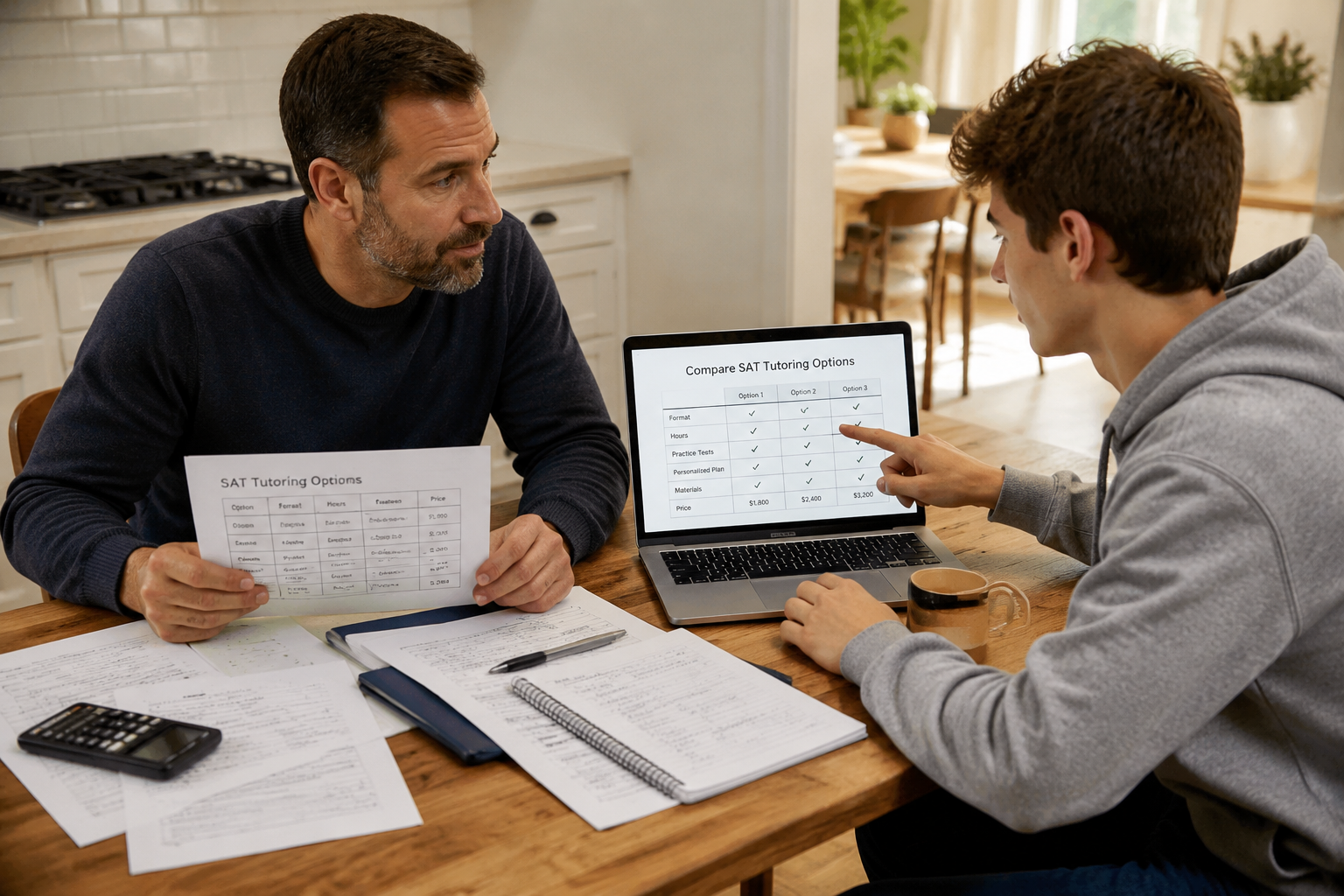
Typing sat test tutoring near me is a reasonable way to start. It is not a reliable way to choose. The first results may include a local center, a national company with a nearby franchise, an independent tutor working from a home office, a marketplace profile, and an online tutor who is nowhere near you but has stronger digital SAT experience than anyone within ten miles.
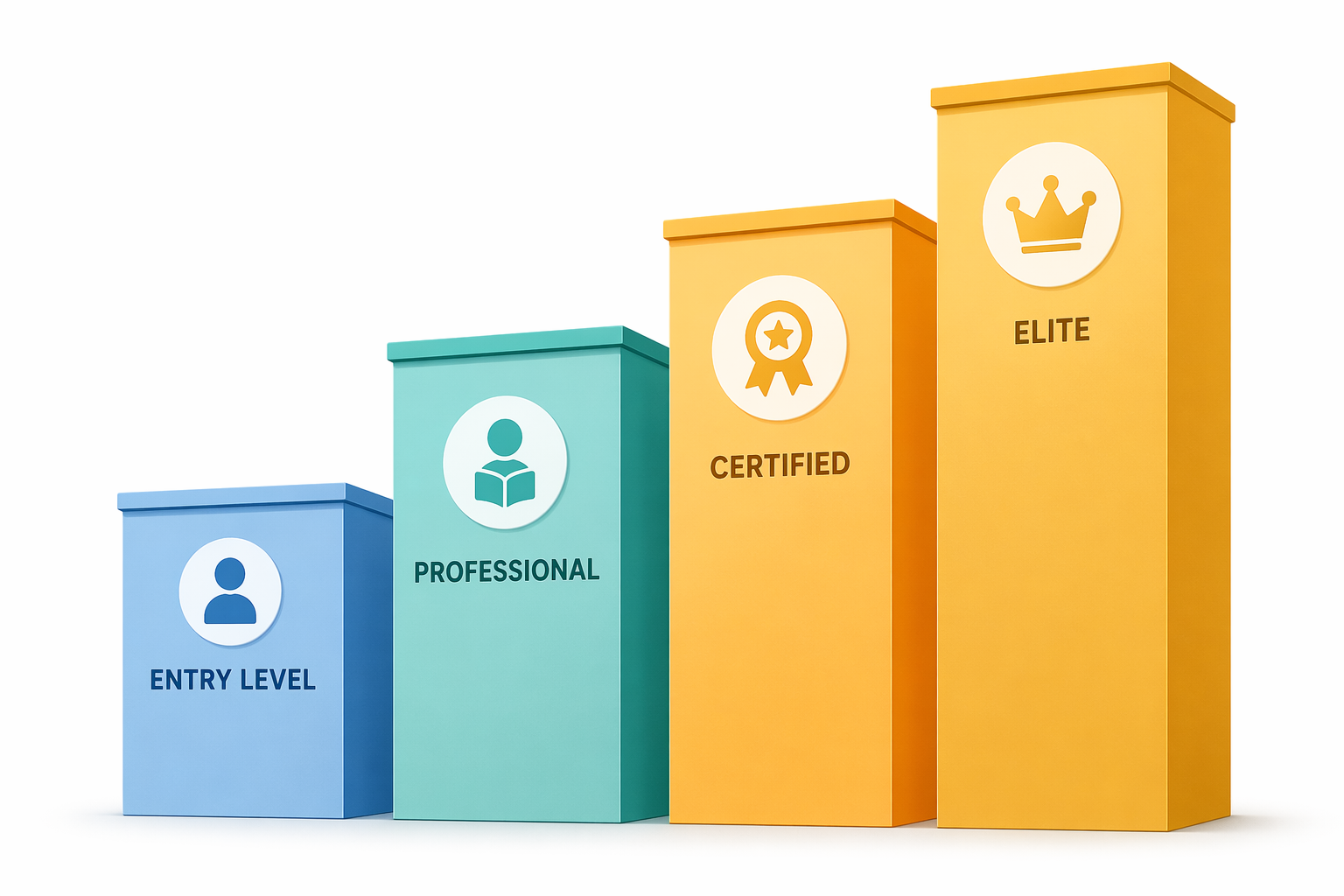
That matters because the cost spread is wide enough to make even careful parents feel unsteady. Entry-level SAT tutors often charge $45–$75 per hour, experienced professionals $75–$125 per hour, company-certified tutors $125–$300+ per hour, and elite specialists $200–$500+ per hour. Most families spend somewhere between $1,500 and $6,000 overall, while a 20-hour package can range from about $900 with a budget independent tutor to $10,000+ with an elite specialist.[1]
Those numbers do not mean the most expensive tutor is the safest choice. They also do not mean the lowest hourly rate is the bargain. A $75 tutor who gives unfocused homework for ten weeks can waste more than a $175 tutor who quickly identifies a student’s timing problem, teaches the digital format cleanly, and assigns targeted practice. The useful question is not “Who is closest?” or “Who is cheapest?” It is: who can show relevant score improvement history, teach the current SAT, and work well with this student before you commit to a large package?
Start With the Student, Not the Search Results
Before calling tutors, write down three things: the student’s latest baseline score, the target score range, and the test date. If there is no recent baseline, have the student take an official-style digital practice test first; otherwise every tutor conversation becomes guesswork. Families who need that starting point can use a guide to taking SAT practice tests with Bluebook and Khan Academy before paying anyone.
A student aiming for a modest increase before a school-day SAT may need a different tutor than a student trying to move from strong to near-perfect. A student who understands the math but runs out of time needs different instruction than a student who guesses through grammar rules. A student who freezes on adaptive tests needs someone who can manage pacing and confidence, not just someone with high credentials.
Most students who use one-on-one tutoring need about 15–25 hours over 2–3 months for meaningful score improvement, and tutoring providers commonly report gains in the 100–300 point range.[2] Treat that range as a reference point, not a promise. It is provider-reported, and it depends on starting score, practice quality, attendance, test timeline, and how honestly the tutor diagnoses weaknesses.
What Local SAT Tutoring Usually Costs
Local quotes vary by geography, demand, credentials, and whether the tutor works independently or through a company. The available pricing research is stronger for national ranges than for exact city-by-city comparisons, so use the benchmarks as a way to normalize quotes rather than as a perfect map of your town.
| Tutor tier | Typical hourly range | What the price may include |
|---|---|---|
| Entry-level tutor | $45–$75/hr | Basic SAT help, newer tutor, less formal track record |
| Professional tutor | $75–$125/hr | More experience, clearer method, stronger subject knowledge |
| Company-certified tutor | $125–$300+/hr | Company vetting, training, curriculum, scheduling support |
| Elite specialist | $200–$500+/hr | High-end score goals, selective availability, extensive test-prep background |
When two tutors quote very different rates, compare the full package instead of the hourly number alone. Ask how many hours they recommend, whether practice-test review is included, whether homework is customized, whether parents receive progress updates, and whether unused hours can be refunded or rolled over. A lower hourly rate can become less attractive if the plan is vague and the tutor cannot explain how the student’s score is supposed to move.
Online tutoring often costs 10–25% less than in-person tutoring because travel time is not billed.[3] That discount should not be dismissed as a weaker option. The SAT is now exclusively computer-based, so an online session that uses screen-sharing, digital annotation, and timed digital practice may resemble the real testing environment more closely than an in-person session built around printed worksheets.[3]
If you are still deciding how much “near me” should matter for a computer-based exam, the companion guide Does SAT Prep Near Me Really Matter for the Digital SAT? is worth reading before you narrow the search too aggressively.
Compare Provider Types Before You Compare Names
A parent searching locally is often comparing different business models without realizing it. A nearby test-prep center, a national company, and an independent tutor may all appear beside each other in search results, but they are not selling the same thing. PrepMaven’s review of 75 tutoring services groups SAT tutoring options into five broad provider types: company-affiliated tutoring, independent tutors, marketplaces, online-only platforms, and local test-prep centers.[2]
Company-affiliated tutoring
Company-affiliated tutoring usually costs more than hiring an independent tutor directly. PrepMaven reports that companies may charge a 20–40% premium over independents, often in exchange for tutor vetting, training, curriculum, administrative support, and backup coverage if a tutor becomes unavailable.[2]
That premium can be rational for families who want structure. If your student has a tight testing window, a company’s ability to replace a tutor mid-cycle may matter. If you do not have time to evaluate every tutor yourself, centralized vetting may reduce risk. The mistake is assuming the brand name automatically tells you who will sit with your child for the next 15–25 hours. Ask about the specific tutor, not just the company’s average results.
Independent tutors
Independent tutors can offer excellent value when they have a clear SAT method, digital test experience, and a history of student improvement. They may have lower overhead, more flexible scheduling, and more direct communication with parents. They also require more vetting from you. There may be no supervisor, no substitute tutor, no formal curriculum, and no obvious way to verify claims beyond references and documentation.
An independent tutor is not automatically less qualified than a company tutor. Some leave companies precisely because they have enough demand to work on their own. But if an independent tutor cannot explain the digital SAT, cannot describe how they track progress, or resists a trial session, the lower hourly rate should not comfort you.
Tutor marketplaces
Marketplaces make comparison easy and quality uneven. You may see dozens of profiles, hourly rates, reviews, and credentials in one place. That convenience helps with initial screening, but marketplace reviews often tell you whether a tutor was responsive or likable more clearly than whether the tutor improved SAT scores. Look for tutors who give SAT-specific evidence, not just general math or English tutoring experience.
Online-only platforms
Online-only platforms may be the strongest fit when local options are thin or overpriced. They can widen the tutor pool, reduce travel logistics, and make it easier to work directly in digital SAT tools. The tradeoff is that you need to watch student engagement carefully. Some students participate more freely online; others disappear behind the screen. A trial session reveals that faster than any consultation call.
Local test-prep centers
Local centers can be useful when they know nearby school calendars, common testing timelines, and regional parent expectations. They may also offer group classes, mock tests, and hybrid plans. The question is whether the one-on-one tutoring is genuinely individualized or simply attached to the same curriculum used for everyone. If the recommendation sounds identical before and after they see the student’s score report, keep asking.
Families considering a less expensive group format can compare the tradeoffs in How to Find the Best SAT Prep Classes Near You in 2026. A class can work for students who need structure and broad review; tutoring is usually the better fit when the student has specific weaknesses, an ambitious score target, or limited time.
The Questions That Expose Whether a Tutor Is Specific Enough
A polished consultation can make every tutor sound personalized. The useful questions are the ones that force the provider to leave sales language and describe actual practice. You are listening for specificity, not perfection.
- What score improvements have your recent SAT students made, and from what starting scores? Strong answers separate typical outcomes from exceptional cases and avoid treating a 100–300 point provider-reported range as a guarantee.[2]
- How much of your recent work has been with the digital SAT? A tutor who mainly taught the paper SAT years ago may still be skilled, but they should be able to explain adaptive testing, on-screen pacing, and digital practice routines.
- How would you use this student’s practice-test report to build the first month of tutoring? Listen for diagnosis by question type, timing, content gaps, and careless-error patterns.
- What happens between sessions? Good tutoring usually includes targeted homework and review. If the answer is only “we will go over whatever they bring,” the plan may be too passive.
- Do you offer a trial or shorter initial commitment before a large package? A trial protects both the budget and the student’s time.
- If the assigned tutor becomes unavailable, what backup coverage exists? This matters most with company-affiliated tutoring and tight test dates.
- How are packages priced, and what happens to unused hours? Pressure to buy a large package before a tutor has seen the student work is a warning sign.
The best answers sound grounded. A tutor might say that a student with strong algebra but weak grammar needs a different plan than a student losing points to time pressure. A company might explain how it matches tutors, when it changes tutors, and how it reviews progress. An independent tutor might show anonymized score histories or describe how they document practice-test changes over time.
Vague answers are not small details. “All of our tutors are excellent,” “we personalize everything,” or “most students improve a lot” does not tell you how the work will happen. Parents are not being difficult when they ask for evidence. They are being asked to spend real money on a result that no ethical tutor can guarantee.
Use the Trial Session as Evidence, Not a Courtesy
A trial session is not just a vibe check, although the vibe matters. It is the first chance to see whether the tutor can turn a student’s mistakes into instruction. Give the tutor a recent practice-test report or a small set of missed questions. Then watch what happens.
- Does the tutor ask the student to explain their thinking before correcting them?
- Does the student talk, ask questions, and admit confusion?
- Does the tutor distinguish content gaps from pacing problems?
- Does the session use digital tools in a way that resembles the actual SAT?
- Does the tutor end with a concrete next step rather than a generic promise?
This is where a spreadsheet reaches its limit. A tutor can have the right price, the right profile, and the right claims, and still be wrong for a particular teenager. Some students need calm repetition. Some need brisk challenge. Some need a tutor who will not let them hide behind “I get it” when they do not. The trial is where that becomes visible.
Red Flags Worth Taking Seriously
No tutor can honestly guarantee a score. They can describe past results, explain methods, assign work, and adjust instruction. The student still has to practice, show up, and perform on test day. Be cautious with any provider that treats improvement as automatic.
- Guaranteed score claims without clear conditions or documentation
- No recent digital SAT experience
- Tutor qualifications described only in broad language
- Pressure to buy a large package before a trial or diagnostic review
- No explanation of how progress will be measured
- No backup plan when a company assigns a specific tutor
Also be careful with prestige that is not connected to teaching. A high scorer is not automatically a good tutor. A selective college name is not a curriculum. A long résumé does not tell you whether the tutor can help your student stop missing paired evidence questions, manage module timing, or recover after a bad practice test.
A Practical Decision Threshold
After you have a baseline score, two or three serious quotes, and at least one trial session, the decision usually becomes clearer. The right SAT tutor does not have to be the closest result or the most famous company. The right tutor should be able to show relevant score-improvement history, demonstrate current digital SAT fluency, explain how they would teach this student, and make pricing understandable without rushing you.
If a tutor meets those conditions and the student is willing to work with them, the choice is defensible. If one of those pieces is missing, keep looking before turning a nervous search for “sat test tutoring near me” into a $3,000 act of panic.
References
- How Much Does SAT Tutoring Cost? — Private Prep
- Best SAT Tutoring — PrepMaven
- SAT Tutoring Cost — Tutors.com
Comments
Join the discussion with an anonymous comment.