

How Does the Public Charge Rule Rescission Affect International Students?
The July 2026 rescission of the public charge rule does not change initial F-1 visa requirements, but it introduces new uncertainty for international students who later apply for a green card, file extensions beyond the 4-year cap, or consider using benefits like Medicaid or SNAP. This guide explains which students are affected and what to watch for.
Updated:
If you are an international student hearing that the public charge rule has been rescinded, the first answer is the least dramatic one: this does not suddenly put your F-1 visa, SEVIS record, or school enrollment at risk. USCIS announced the rescission of the 2022 public charge regulation in July 2026, and the rule is part of a broader immigration-policy shift taking effect later this year, not an immediate rewrite of ordinary student status rules.[1][2]
The better question is narrower: where could the public charge rule impact international students after they are already studying in the United States? The answer is mainly three places: future green card applications, certain extension filings under the separate duration-of-status rule, and decisions about whether to use public benefits such as Medicaid, SNAP, or housing assistance.
The front door to F-1 study is not what changed
F-1 students already have to show they can pay for their studies and living expenses. That financial self-sufficiency requirement is built into the student visa process and into school documentation. Public charge inadmissibility has historically mattered much more when a person applies for a green card than when a student is simply maintaining F-1 status; student-facing guidance from Gallagher Student Health and the University of Illinois ISSS makes that distinction plainly.[3][4]
So if your situation is only this — you are admitted to a school, applying for an initial F-1 visa, entering the United States as a student, keeping a full course load, and maintaining SEVIS status — the rescission itself does not create a new public charge test for that ordinary path based on the materials currently available.
That point matters because many students will see the phrase “public charge” and assume it reaches every immigration interaction. It does not. But the opposite shortcut is also unsafe. “This does not affect your visa” is too broad if the student is also planning an employer-sponsored green card, relying on health coverage for a family member, or expecting to file a future extension after the new student-status cap begins.
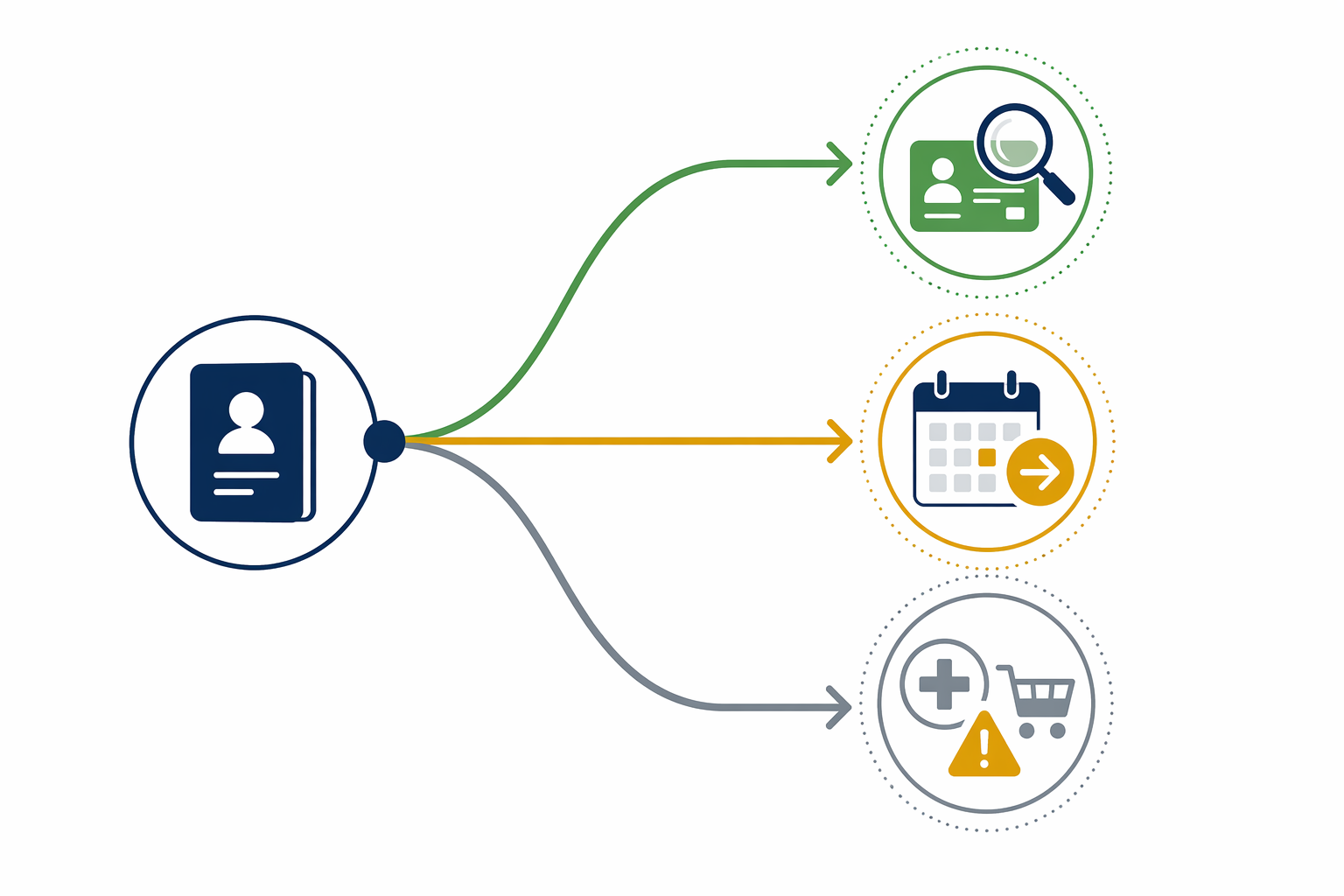
A quick screen: which situation are you in?
| Student situation | What the rescission appears to mean | Who should review it with you |
|---|---|---|
| Only applying for or maintaining F-1 study | No clear change to initial F-1 eligibility or routine status maintenance based on current information | Your DSO if you have school-specific status questions |
| Planning adjustment of status to a green card | Public charge could become more discretionary and less predictable | An immigration attorney, especially before filing or using benefits |
| Likely to need an extension beyond the separate 4-year cap | Possible watch point because future extension procedures may interact with public charge review, but guidance is still missing | Your DSO and, if the facts are complicated, an immigration attorney |
| Considering Medicaid, SNAP, or housing assistance | Legal eligibility and immigration risk may not feel the same under a broader discretionary standard | Benefits counselor plus immigration attorney before making a case-specific choice |
The biggest change is for students who later seek a green card
The clearest risk is not at the beginning of study. It is later, when a student tries to move from temporary student status into permanent residence through employment, family sponsorship, or another adjustment-of-status route.
Boundless describes the rescission as a shift away from the 2022 rule’s narrower treatment of public charge and toward a broader totality-of-circumstances standard for green card applicants.[5] In practical terms, that means a student’s case may not turn on one bright-line question. Officers may weigh multiple factors together: income, age, health, education, household resources, affidavit of support, and use of certain public benefits.
That is why the word “rescission” can be misleading for students. It sounds like something was removed, and in a formal sense it was: the 2022 regulation is being taken off the books. But removing a narrow rule can leave applicants with a less predictable standard if agencies return to broader discretion rather than a clearer safe harbor.
NILC’s discussion of the proposed rule warned that the change would widen the public charge inquiry and raise concern about non-cash benefits that many families use for health, nutrition, or housing support.[6] The Federal Register proposal also discussed State Department guidance on personal factors such as age and health, including obesity and mental health, as part of public charge analysis.[7] Those details do not mean every student with a medical condition or a modest income will be denied. They do mean a later green card case could depend more heavily on how an officer reads the whole record.
For a graduating student with an employer sponsor, this is not an abstract distinction. During F-1 study and OPT, the student may be fully compliant. The risk begins when the student moves into an immigrant-benefit process where admissibility is reviewed differently. A record that was irrelevant to routine student status may become part of a future adjustment file.
The hard part is that students often make benefit, insurance, and employment decisions years before they file a green card application. A student deciding today whether to enroll an eligible child in Medicaid may not know whether an employer will sponsor them later. A master’s student considering a family-based green card may not yet know which financial documents will matter. Bright-line rules let people plan around known boundaries. Discretionary standards make planning depend more on future interpretation.
The 4-year student-status cap is a separate rule, but it can become part of the same planning problem
The public charge rescission is not the same as the separate duration-of-status rule. Forbes reports that the student duration-of-status rule takes effect September 15, 2026, while the public charge rule takes effect September 18, 2026.[2] The timing matters because students may experience them together even though they are legally distinct.
Under the duration-of-status change, F-1 students would no longer simply remain in the United States for “duration of status” in the same open-ended way; many students would face a 4-year admission period and may need extensions for longer programs or longer academic paths.[2] JQK Law’s 2026 update also discusses the student-status changes together with public charge developments and notes a reduction in the grace period.[8]
This does not mean a student extension will automatically become a public charge case. That would overstate what USCIS has clarified so far. The more careful point is that extension filings create another agency touchpoint. If future policy memoranda or forms ask more public-charge-related questions in extension or change-of-status contexts, students who need extra time to finish a degree could face a review that students finishing within the initial period never encounter.
The students most likely to care about this are not necessarily doing anything unusual. Doctoral students, students who change majors, students in longer professional programs, students with medical interruptions, and students who need extra time after academic delays may all have clean status records and still need an extension. Until implementation guidance is available, DSOs will likely be asked questions they cannot answer with the precision students want.
Benefit use is where legal eligibility and student behavior may split
The chilling effect is not a side issue here. Forbes reports that DHS’s own cost-benefit analysis estimates $8.97 billion per year in reduced transfer payments because people disenroll from benefits or avoid enrollment.[2] That figure does not prove every person who drops coverage would have been safe to remain enrolled. It does show the government expects a large behavioral response.
Older evidence points in the same direction, with an important limit. The Migration Policy Institute wrote, in the context of the 2019-era public charge rule, that 1 in 7 adults in immigrant families reported avoiding public benefits because of green card concerns.[9] That is historical context, not a precise forecast for 2026. The legal setting, agencies, and implementation details are not identical. Still, it helps explain why campus offices should not treat fear as confusion that can be solved with one FAQ line.
For students, the decision is often immediate and practical. A student may be eligible for a benefit through a state program, a spouse, a child, or another lawful category. The student may also be thinking about a green card later. Once public charge review becomes less rule-bound, many students will ask a different question: not “Am I eligible?” but “Will this be used against me later?”
Those are not the same question. A benefits office may be able to confirm program eligibility. A DSO may be able to explain F-1 status rules. Neither answer alone may settle the student’s future adjustment-of-status risk. If Medicaid, SNAP, or housing assistance is involved and a future green card is possible, the safer move is to get immigration-specific advice before enrolling, disenrolling, or making a family member’s benefit decision on fear alone.
What is known, likely, and still unclear
Known
- USCIS has announced the rescission of the 2022 public charge regulation.[1]
- The public charge rule and the separate student duration-of-status rule take effect in September 2026, not immediately.[2]
- Routine F-1 study and green card adjustment are different immigration contexts; public charge analysis is most clearly relevant to the latter.[3][4]
- DHS expects large benefit-use changes, reflected in its $8.97 billion annual estimate of reduced transfer payments.[2]
Likely
- Students who later apply for a green card will face more uncertainty than they did under the 2022 rule’s narrower framework.
- Some students who are legally eligible for Medicaid, SNAP, or housing assistance will avoid those benefits because they worry about future immigration consequences.
- DSOs will receive case-specific questions before schools have all the implementation details they need.
Still unclear
- How USCIS will operationalize the rescission in forms, officer training, and policy guidance.
- Whether future extension or change-of-status procedures for F-1 students will include public-charge-style scrutiny.
- How consistently officers will weigh health, income, family size, affidavits of support, and benefit-use history in student-to-green-card cases.
How to use this if you are a current student
Start by identifying which file you are really worried about. If the only issue is current F-1 study, the public charge rescission is probably not the rule that changes your day-to-day status. Keep your I-20 accurate, enroll as required, update your address, follow employment rules, and work with your DSO on normal SEVIS matters.
If you are planning a green card, treat the rule differently. Do not assume that because a benefit was available to you, it carries no immigration planning consequence. Also do not assume that every benefit use is fatal. The correct answer depends on your full record, your sponsor, your household, the benefit involved, timing, and the version of agency guidance in effect when you file.
If your academic path may run beyond the new 4-year admission period, ask your DSO what extension process your school expects to use after the September 2026 rule takes effect. If your case also involves public benefits, a pending immigrant petition, or a likely adjustment-of-status filing, bring those facts to an immigration attorney rather than treating the extension as a purely academic form.
If you are considering Medicaid, SNAP, or housing assistance, do not make the decision from a headline. A benefits counselor can explain program eligibility, but an immigration attorney is better positioned to assess public charge risk for your future filings. A DSO can help you understand student status, but most DSOs cannot give individualized legal advice about green card admissibility.
The practical boundary is this: the rescission does not rewrite the front door to F-1 study, but it does make later immigration planning and benefit-use decisions less predictable. Before changing behavior, sort your situation into one of four buckets: only current F-1 study, future adjustment of status, extension beyond the new cap, or public benefit use. If you are in more than one bucket, get case-specific help before deciding.
References
- US Citizenship and Immigration Services Rescinds 2022 Public Charge Regulation, USCIS, July 2026.
- DHS Finalizes Immigration Rule That Imperils Status Of Many Students, Forbes, July 17, 2026.
- Changes to the Immigration and Nationality Act of 1952: The New Public Charge Rule, Gallagher Student Health.
- Public Charge, University of Illinois ISSS.
- DHS Rescinds 2022 Public Charge Rule: What It Means for Green Card Applicants, Boundless, July 2026.
- Public Charge: What Advocates Need to Know About the November 2025 Proposed Rule, NILC, November 2025.
- Public Charge Ground of Inadmissibility, Federal Register, November 19, 2025.
- Immigration Policy Updates: What International Students and Immigrants Need to Know in 2026, JQK Law, 2026.
- Trump Administration Public-Charge Rule Would Amplify Harms to Immigrant Families, Migration Policy Institute.
Comments
Join the discussion with an anonymous comment.