
The Physics Behind a Shattering Metal Baseball Bat
Why does a metal baseball bat shatter on a home run swing — and does the break affect the ball? This article explains the bending-wave mechanism and high-speed video evidence proving the crack occurs after the ball is already gone.
Updated:
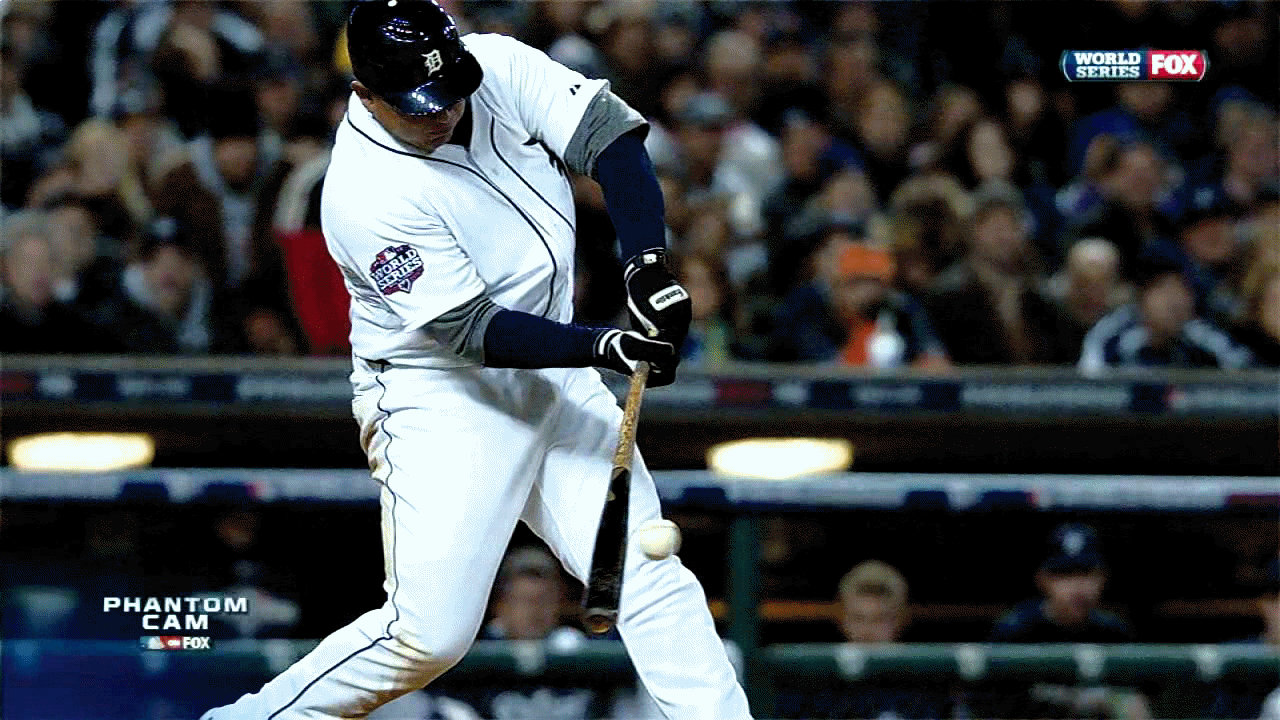
In Alan Nathan's high-speed video of Miguel Cabrera's broken-bat home run, the baseball is already gone before the crack becomes visible; the visible failure shows up more than five frames after contact, with the ball gone by frame 4.[1] That timing is the key fact. If the bat breaks after separation, it cannot be the thing that changed the ball's flight.
Once the sequence is clear, the common story stops working. The bat-ball collision lasts only about 0.5 to 1.5 milliseconds, so the impact does not shatter the bat first and then send the ball on its way; the ball is already in motion before the visible fracture appears.
What actually breaks
The hit launches a bending wave through the bat. That wave starts at the barrel, travels down toward the handle, and grows in amplitude as the bat narrows. The useful picture is not a sudden snap at the moment of contact, but a wave carrying strain through changing geometry until the metal exceeds its elastic limit after the ball is gone.[2]
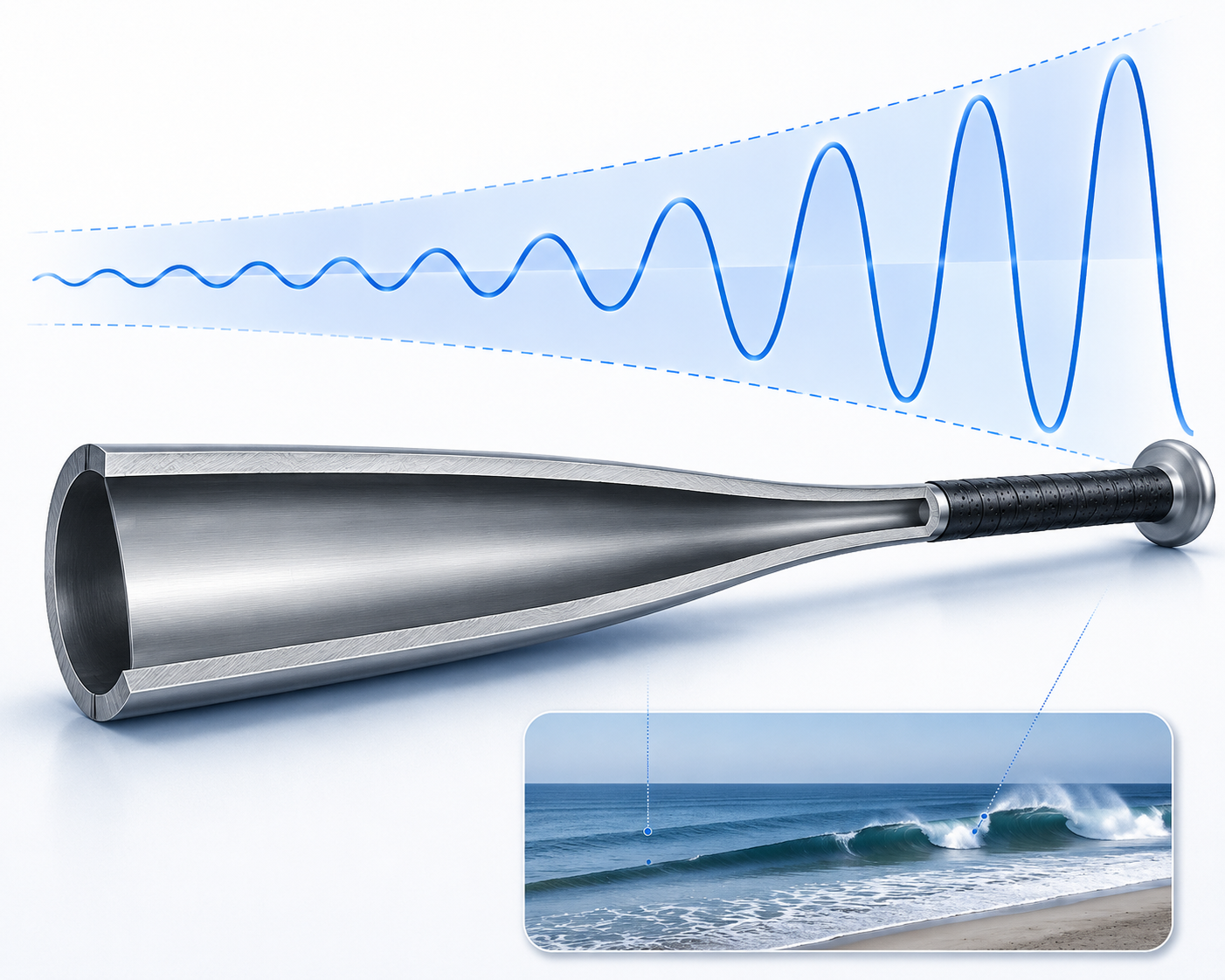
That is why the wave analogy matters. A wave moving into a thinner section does not stay neatly bounded just because the collision has ended. The energy is being carried through the bat's structure, and the smaller cross-section near the handle makes the local strain larger.
Why metal bats fail the way they do
Metal bats are hollow, and their wall thickness changes along the length. Daniel A. Russell's bat acoustics pages note that this is why metal bats tend to crack, dent, or develop spiral fractures in the barrel instead of snapping the way wood bats usually do at the handle.[2] Cold weather makes the problem worse; below about 60 degrees F, the metal is less forgiving and fractures become more likely.[2]
So the clean answer is simple: a metal bat shatters because a bending wave drives it past its material limit after contact, not because the break itself changes the ball's trajectory. By the time the bat fails, the ball is already on its way.
References
- Broken Bat Home Run - University of Illinois Urbana-Champaign - baseball.physics.illinois.edu/brokenbathr.html
- The Physics of Baseball Bats - Penn State University - acs.psu.edu/drussell/bats/
Comments
Join the discussion with an anonymous comment.