
Why Horror Movie Humor Helps You Study Smarter
Research shows that laughing during horror movies is a form of cognitive reappraisal. Learn how the same psychological mechanism can be used to manage exam stress and study anxiety.
Updated:
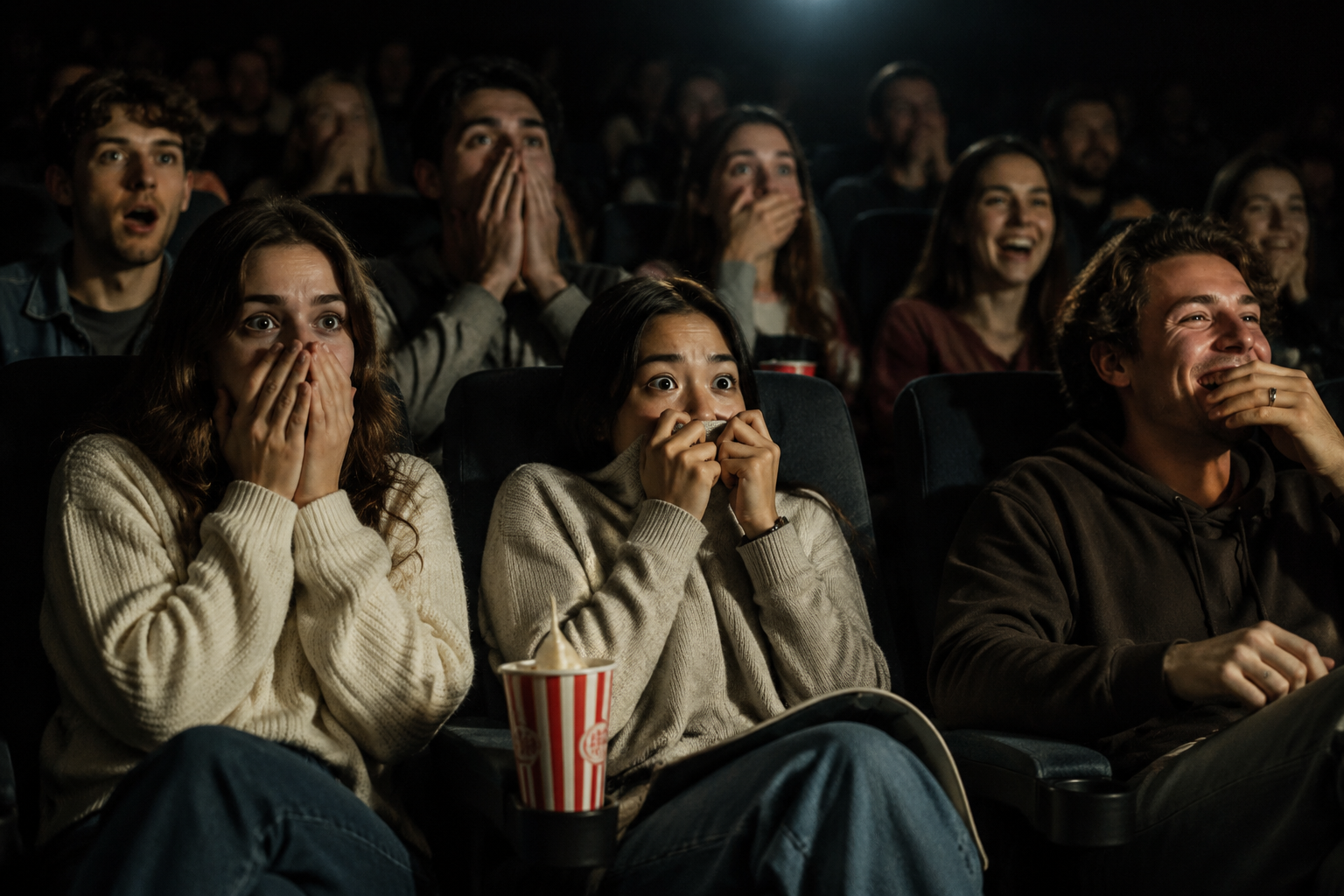
The best part of a horror screening is sometimes the half-second after everyone loses it. The monster snaps into frame, the room screams, somebody drops their popcorn, and then a laugh breaks out. Not a polished, clever laugh. More like the body realizing it is still sitting in a theater seat and not, in fact, being hunted.
That little laugh is the useful question behind research on horror-movie humor: why does fear so often turn funny right after it peaks? And if the mind can change the meaning of fear in a theater, can students use a similar move when exam stress starts acting like a full-body emergency?
The Laugh After the Scare Is Not Just Random Noise
The clearest evidence comes from a place where nobody had to pretend to be calm: a haunted house. In a field study at a Danish haunted attraction, researchers video-coded 113 guests as they moved through fear scenes. Immediately after a jump scare, 74–77% of guests smiled or laughed.[1]
That number matters because it is behavioral. It is not a survey where people later clean up their memories and say they handled fear in some impressive way. The researchers watched faces and bodies in the moment. The pattern was messy, human, and visible: fear spiked, then a large majority of people showed humor or relief almost immediately.[1]
This does not mean every smile was pure amusement. A grin after a scare can include nervous laughter, social smoothing, embarrassment, or relief. It also comes from one haunted house study, not a universal law of human fear. Still, it is a useful starting point because it catches the transition most students recognize from horror movies: the scene is scary, then suddenly it becomes shareable.
That transition is not the same as pretending the fear never happened. The scream is real. The heart rate jump is real. The point is that the mind does not have to leave the experience labeled only as danger. It can relabel the moment while the body is still buzzing.
Why the Monster Becomes Funny
One clean explanation is Benign Violation Theory. The idea is that something becomes funny when it is appraised in two ways at once: as a violation and as benign. Horror hands over the violation easily. A masked figure, a distorted face, a sudden sound, a thing crawling where things should not crawl — all of that breaks the normal safe order of the room. But the setting also keeps feeding the brain evidence that the threat is contained: the ticket, the friends nearby, the actor’s costume, the theater exit sign, the knowledge that this is a designed experience.[2]
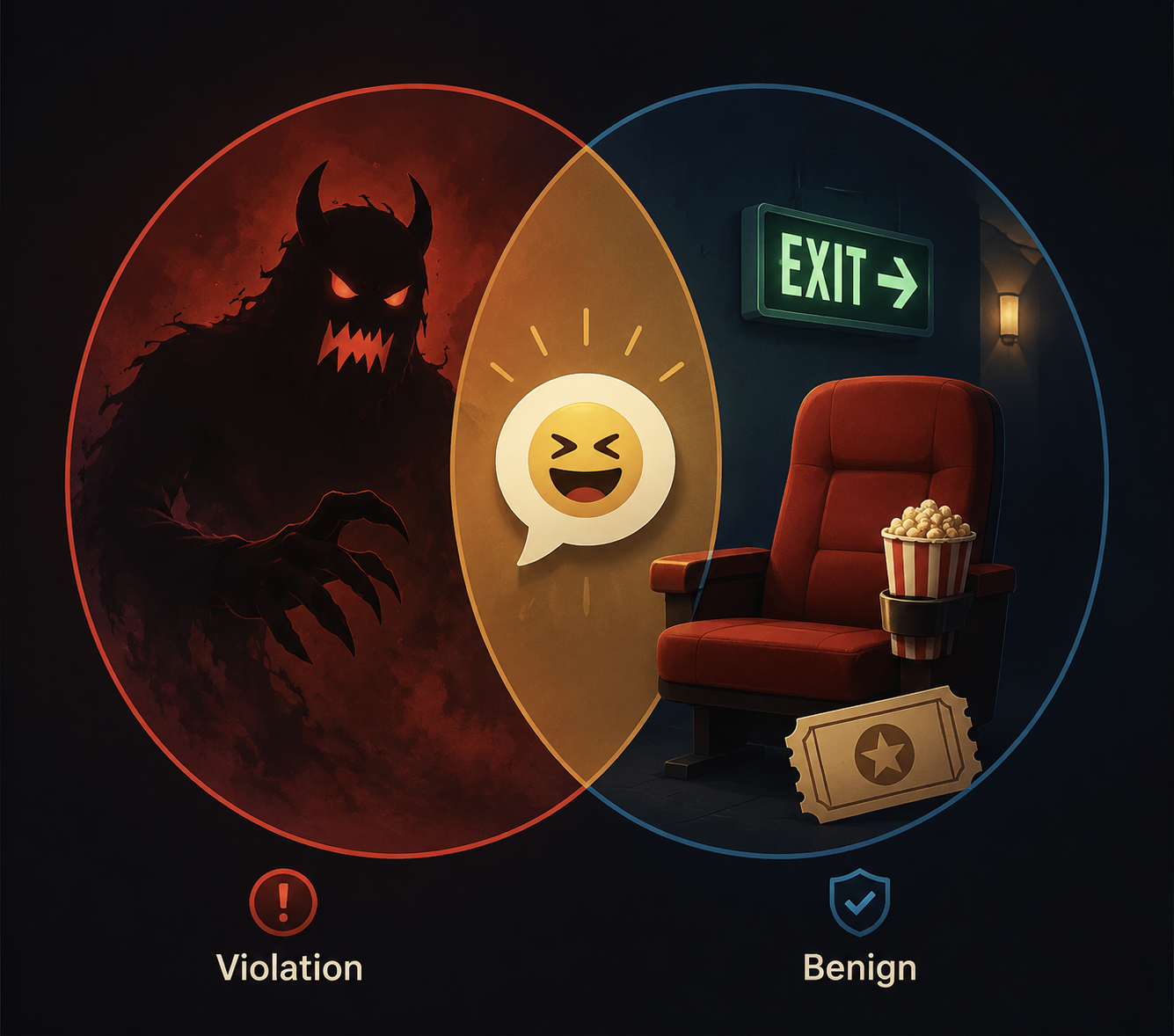
The laugh lives in the overlap. If the scene feels only benign, it is not scary enough to be funny in this particular way. If it feels only threatening, nobody is having a bonding moment; they are trying to survive. Horror humor needs both appraisals available at the same time: “that was intense” and “I am safe.”
The body helps make the switch feel dramatic. A review of fear and humor research describes the opposition between fear-related chemistry, including cortisol and adrenaline, and humor-related responses involving dopamine and endogenous opioids.[2] That does not mean laughter magically deletes stress chemicals. It means the felt experience can change quickly because the body is moving from alarm toward relief and reward.
This is why horror laughter can feel like a reset. The scare still happened, but the meaning of the scare changes. The room is no longer just a place where something jumped out. It is a place where everyone survived the same ridiculous spike of panic.
Some People Use Humor on Purpose
The haunted house laughter study shows what people do after fear peaks. Another study gets closer to what people think they are doing. In research on 280 haunted house visitors, 19.1% explicitly reported using humor as a way to reduce fear.[3]
The strategies were not all the same. Some visitors used cognitive reframing, such as trying to see the experience as humorous. Some used behavior, such as deliberately smiling or laughing. Others used the social version: joking with people around them.[3]
| Humor strategy | What changes |
|---|---|
| Seeing the scare as funny | The meaning of the threat changes |
| Smiling or laughing deliberately | The body acts out a safer interpretation |
| Joking with others | The fear becomes shared instead of private |
The social version is easy to underestimate. Students often talk about academic stress as if it happens inside one isolated brain, but stress spreads through group chats, dorm rooms, library tables, and the five minutes before class when everyone asks how much everyone else studied. A joke does not solve the exam. It can, however, stop the room from turning one quiz into a public funeral for everyone’s future.
The important move is reappraisal: changing what the situation means without denying what is happening. In horror, the person does not have to say, “I was not scared.” They can say, “I was scared, and now this is funny because I know what kind of situation I am in.” That is a more honest regulation strategy than pretending to be above the scare.
What This Does and Does Not Prove About Resilience
There is also broader research suggesting that horror fans may relate to stress differently. In a 2020 study of 310 people during COVID-19, horror fandom was significantly associated with lower psychological distress, and fans of prepper genres reported greater preparedness.[4]
That finding is interesting, but it should stay in its lane. The study was correlational. It cannot show that watching horror caused people to become more resilient. Horror fans may already differ from non-fans in traits such as sensation-seeking, comfort with negative emotion, or willingness to mentally rehearse danger. The result supports a cautious idea: people who voluntarily engage with frightening fiction may also have patterns of coping that relate to distress. It does not support the claim that a weekend slasher marathon will fix exam anxiety.
That boundary is worth keeping because inflated advice becomes useless fast. Students do not need another fake guarantee. They need a mechanism they can actually practice.
The Study Version of “This Is Intense, and I Am Safe”
A midterm is not a haunted house. Grades have consequences. Scholarships, eligibility, graduation timelines, family pressure, and self-respect can all get tangled into one test score. So the useful comparison is not “exams are fake scary.” The useful comparison is the appraisal pattern.
In horror, the regulated mind can hold two truths: “this is intense” and “I am safe.” In studying, the same kind of reappraisal sounds like: “this exam matters” and “this is not a verdict on my entire future.” Both halves matter. If a student only says, “this does not matter,” the brain may not believe it. If the student only says, “this determines everything,” panic gets promoted to manager.
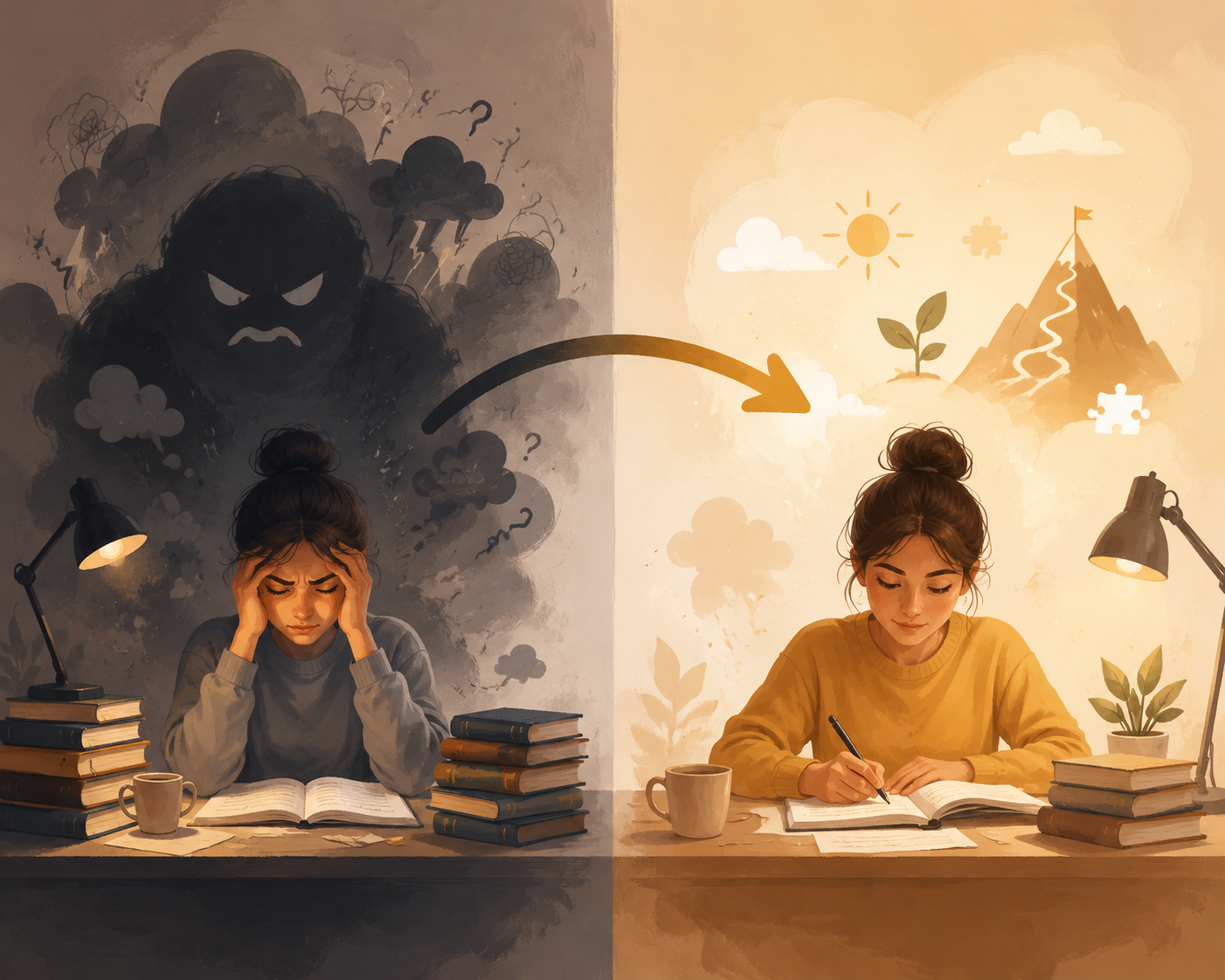
The goal is not to laugh off school. The goal is to change the job stress is doing. When stress is labeled as proof of failure, it tends to freeze action: rereading the same paragraph, checking grades again, opening three tabs and learning nothing from any of them. When stress is labeled as a signal, it can point to the next move: start the practice set, email the TA, rewrite the missed concept, sleep instead of doing one more doomed hour.
How to Reappraise Exam Stress Without Lying to Yourself
A useful reappraisal has to be believable. “I am totally fine” usually collapses the second your stomach drops. Try a sentence that keeps the pressure but removes the catastrophe.
- Threat label: “If I do badly on this exam, I’m not cut out for this major.” Reappraisal: “This exam is feedback on what I understand right now, not a final diagnosis of who I am.”
- Threat label: “I’m panicking, so I’m going to fail.” Reappraisal: “My body is treating this as important. I can use that signal to begin the next concrete task.”
- Threat label: “Everyone else knows what they’re doing.” Reappraisal: “Other people’s confidence is not reliable data. I need to check my own gaps with practice questions.”
- Threat label: “I ruined everything with one bad quiz.” Reappraisal: “One score changed my information, not my entire academic identity.”
Notice that none of those sentences says the exam is meaningless. That would be too flimsy. Good reappraisal respects the real demand and shrinks the fake verdict attached to it.
Turn the Panic Cue Into a Study Cue
The moment stress spikes, give it a job. A simple sequence works better than arguing with your nervous system for twenty minutes.
- Name the spike: “This is exam alarm.”
- Add the benign half: “I am not in danger; I am facing a hard task.”
- Choose the next visible action: one problem, one flashcard set, one outline, one office-hours question.
- Stop after that action and reassess the next gap instead of reassessing your whole life.
This is the study version of the post-scare laugh. The fear response arrives first. Then the meaning changes. Then the room becomes workable again.
Use Humor Carefully, Especially With Other People
Social joking can help because it puts fear back into proportion. A friend saying, “My brain has left the group chat,” before opening the review guide may do more emotional regulation than a very serious speech about productivity. The joke marks the panic as a shared human reaction, not a private defect.
The line is whether the joke moves people toward action or away from it. “We are doomed” can be funny once. If it becomes the whole study session, it is not reappraisal anymore; it is group avoidance wearing a hoodie. Better humor leaves a door open: “I hate this graph with my whole soul. Okay, what is the x-axis actually telling us?”
What Horror Laughter Can Teach Students
The strongest lesson from horror is not that fear is secretly good or that students should become horror fans for academic reasons. No study here shows that laughing during scary movies directly improves exam performance. The bridge to studying is based on a shared psychological process: appraisal.
A jump scare becomes manageable when the mind can read it as both intense and contained. Academic pressure becomes more workable when a student can read it as both important and limited. That shift does not remove the work. It changes whether stress blocks the work or points toward it.
So if you laugh after a horror scene, it does not mean you were never scared. It may mean your brain found a way back. The same skill is available at a desk before midterms: notice the alarm, change the meaning, and take the next concrete step.
Comments
Join the discussion with an anonymous comment.