
How the Endangered Species Act Changed in 2025–2026
Explains the major Endangered Species Act policy changes from 2025 to 2026, including the harm definition rescission, proposed rules, God Squad exemption, and court rulings, and what they mean for conservation and students studying environmental policy.
Updated:
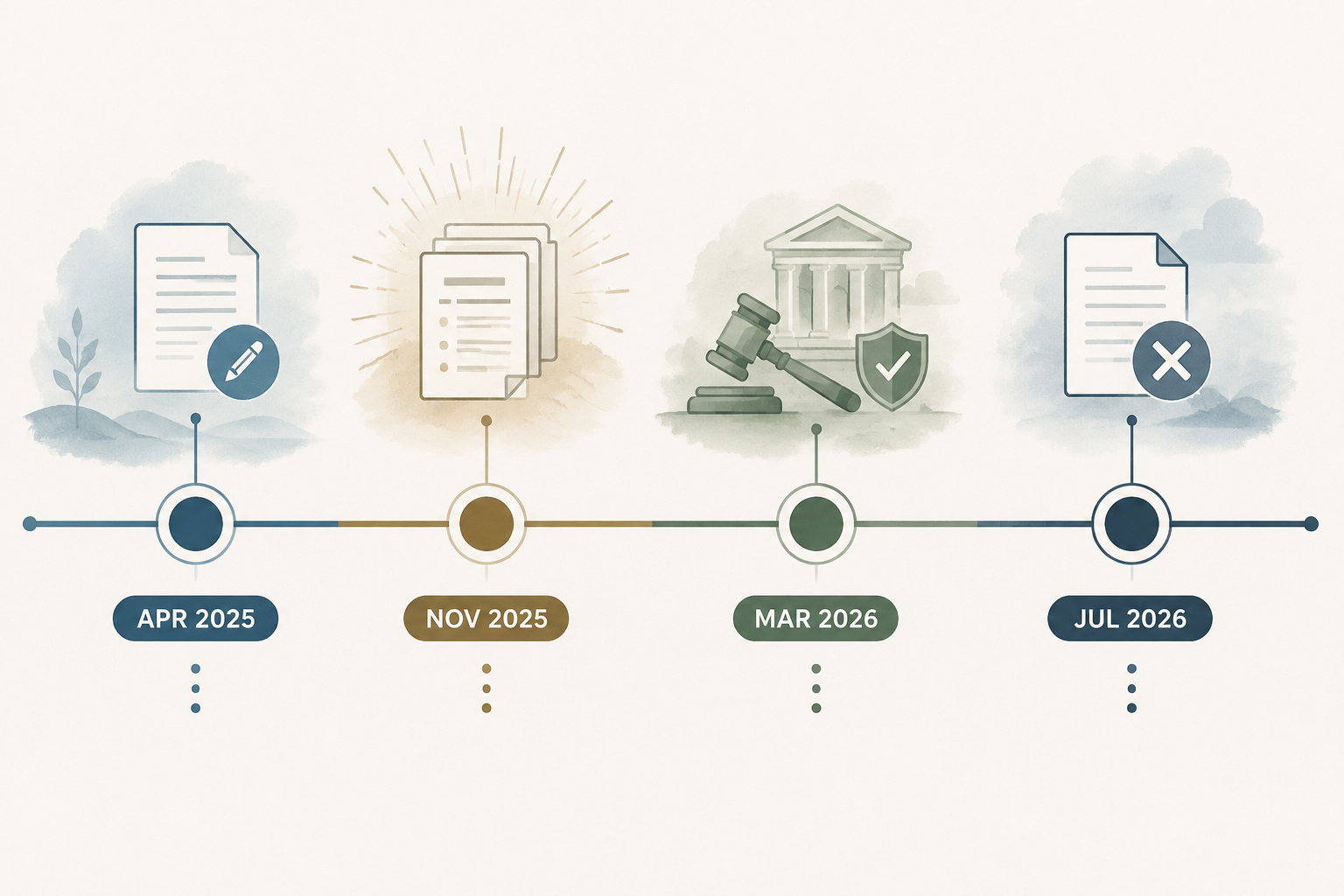
Start with the sequence, because the changes make more sense as a timeline than as a theory dispute. On April 15, 2025, the administration proposed rescinding the ESA's "harm" definition; in November 2025 it followed with a broader rulemaking burst; on March 30 and 31, 2026, a federal court vacated parts of the consultation and habitat rules while the Endangered Species Committee granted a rare Gulf oil-and-gas exemption; and on July 10, 2026, the harm rescission became final. Harvard EELP's tracker holds that chronology together, and Michigan State's plain-English explanation of "harm" gets to the point: when habitat modification counts as take, the statute can reach damage before a listed species is physically killed or injured.[1][2]
Why the harm rescission matters most
The July 10 final rule is the most consequential move because it removes habitat modification from "take" by rescinding the regulatory definition of "harm." That is not a semantic trim. It narrows the point at which federal law can stop destruction of breeding, feeding, or sheltering areas that later translate into injury or death for listed species.[1][2]
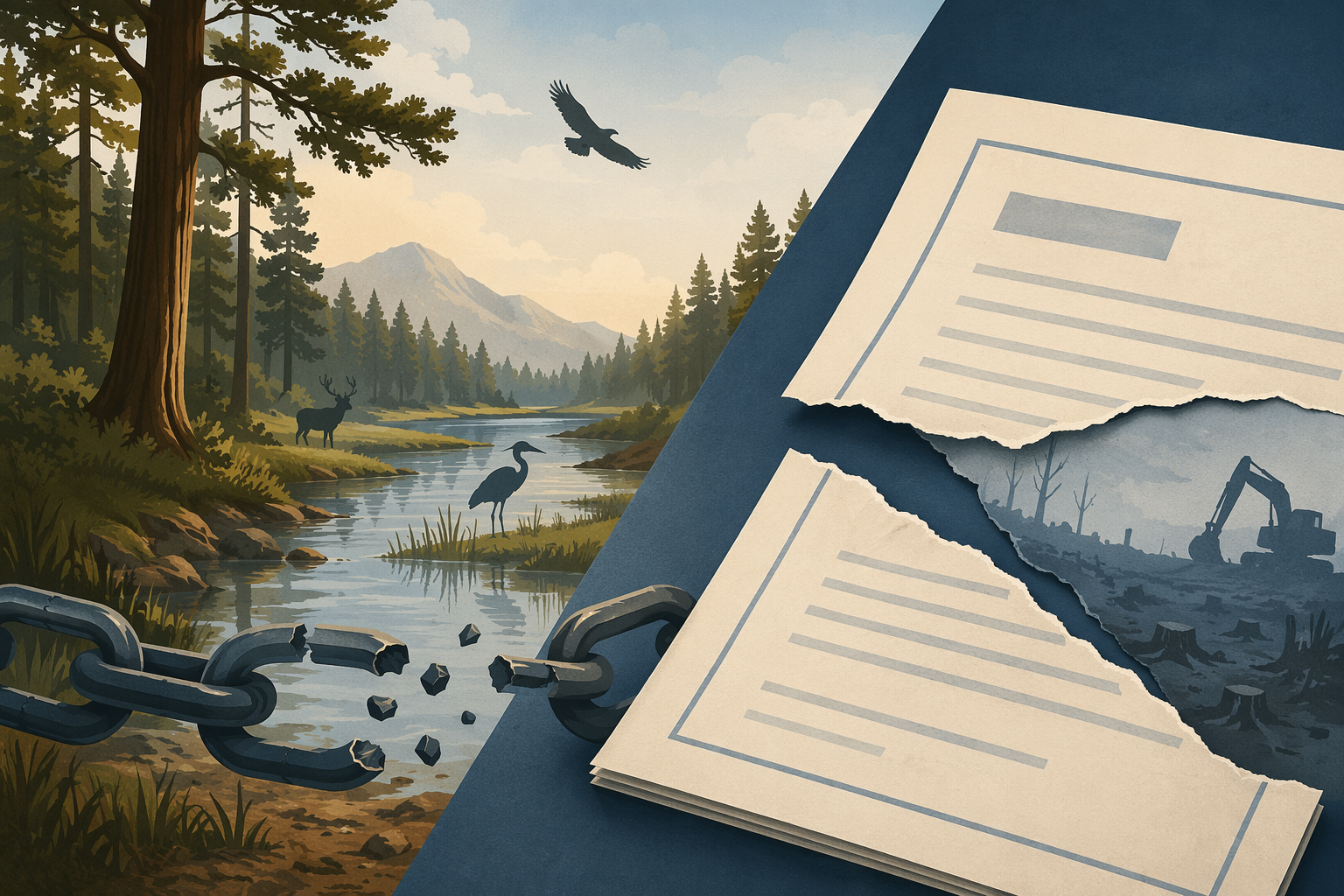
That matters because habitat is where the species actually lives. MSU's cited 2019 study says 81% of listed species were listed primarily because of habitat loss, so the legal reach of "harm" tracks a very real conservation problem rather than a technical footnote.[2] Procedurally, the change took about 15 months from proposal to finalization, and challengers moved fast: two lawsuits were filed within four days, in separate federal courts.[1]
The November package was a coordinated reset
November 2025 was the other big hinge. The administration proposed four rules that would roll the clock back to much of the 2019-2020 regulatory framework, rather than the 2024 Biden revisions, across listing, Section 7 consultation, blanket threatened-species protections under 4(d), and critical-habitat exclusions.[1][3]
- Listing decisions
- Section 7 consultation
- Blanket 4(d) threatened-species protections
- Critical habitat exclusions
Together, the proposals drew more than 387,000 opposing comments, and as of June 2026 three of the related rules were still under OIRA review, so the rollback was still moving rather than settled.[1]
Courts, committee, and states created a patchwork
Litigation scrambled the baseline in March 2026. Harvard's tracker describes the March 30 order as vacating the 2019 and 2024 consultation and habitat rules; Nossaman's reading is more operational, saying the result is that pre-2019 consultation rules govern the affected provisions. Either way, agencies were left with a split baseline instead of one clean national rule set.[1][5]
A day later, the Endangered Species Committee approved a Gulf oil-and-gas exemption on national-security grounds. Harvard says it was only the third exemption in 48 years and the first ever justified by national security rather than economic hardship, which makes the move historically unusual even before one reaches the merits.[4]
California answered with AB 1319, signed in October 2025, which creates a provisional-listing backstop - the first state-level mechanism of its kind, as Brownstein and Nossaman describe it - so the state can move when federal protection lags.[6][7] Congress has also signaled further change: secondary legal summaries describe HR 1897, the ESA Amendments Act, as another active push to revise the statute, but those provisions should be read as a summary of reported bill language, not as a primary-text analysis.[6][7]
The baseline is still moving
Taken together, the sequence from April 2025 through July 2026 does not read like one clean deregulatory act. It is a multi-front transition: one major rollback finalized, several others proposed but not yet settled, one consultation baseline disrupted by litigation, one rare exemption granted, and one state building a backstop. The conservation effect will depend on which version of the rules agencies, courts, and landowners actually end up using.[1][4][5][6][7]
References
- Endangered Species Act Regulations Tracker — Harvard EELP
- Ask the Expert: How the Endangered Species Act is under threat — Michigan State University
- Reversing Course for Endangered Species Act — Holland & Knight
- Endangered Species Committee Exempts Oil and Gas Activities in the Gulf Based on National Security Finding — Harvard EELP
- Endangered Species Act Evolving — Nossaman Blog
- Federal ESA Rules Face Overhaul; California Prepares to Fill the Gap — Brownstein
- California Legislature Sends Endangered Species Bill to Governor — Nossaman Blog
Comments
Join the discussion with an anonymous comment.