
Lessons from the DraftKings Consumer Protection Lawsuits
The DraftKings consumer protection lawsuits offer a real-world lens on how state laws handle deceptive digital marketing and addictive platform design. This case study synthesizes the major cases, legal theories, and mixed outcomes under different state statutes for law and policy students.
Updated:
The most useful place to begin a DraftKings consumer protection lawsuit case study is not with the size of the sports-betting market or with a verdict about whether gambling apps are good or bad. It is with a narrower procedural sentence from Massachusetts: a jury can decide.
In March 2026, a Massachusetts Superior Court judge denied DraftKings’ attempt to end Scanlon v. DraftKings before trial. The claims centered on deposit-bonus advertising: promotions that allegedly made bonus money look easier to obtain than it actually was, because the advertised offer was tied to wagering requirements and terms that consumers may not have seen before depositing. Judge Squires-Lee found genuine factual disputes over whether the ads were misleading and whether users had adequate notice of the relevant terms. Just as important, DraftKings could not produce verifiable records showing what the named plaintiffs actually saw; computer recreations were ruled inadmissible.[1]
That evidentiary failure is not a side detail. In an app-based transaction, the legal fight often turns on a small historical question that is surprisingly hard to reconstruct later: what did the consumer see before clicking deposit, accepting a promotion, or placing the next wager? A plaintiff can feel misled after the fact, and a company can insist the terms were available somewhere in the interface. Neither position answers the elements of a consumer protection claim by itself. Scanlon became powerful for plaintiffs because the court treated visibility, presentation, and proof of notice as jury questions rather than accepting a platform reconstruction as the last word.
Why Scanlon Teaches More Than a Promotion Dispute
The allegation in Scanlon is familiar to anyone who has watched online promotions move faster than their disclaimers. A deposit-match offer appears to promise extra betting value. The user deposits. The bonus is subject to terms, including wagering requirements, that affect whether the customer can actually withdraw money or obtain the value suggested by the front-end message. The legal question is not whether fine print existed somewhere. The legal question is whether the overall representation could mislead a reasonable consumer under the governing statute, and whether the consumer had a fair opportunity to see the limiting terms before the transaction.
For students, the first lesson is to separate three things that advocacy writing often slides together: the promotional language, the consumer’s causal story, and the statute’s required proof. A bonus offer can be aggressive without being actionable. A user can be confused without satisfying reliance. A company can disclose terms without proving those terms were actually presented in a legally meaningful way. Scanlon matters because the plaintiffs had enough factual friction on those points to survive summary judgment.
The missing records problem also gives the case exam value. If DraftKings had verifiable clickstream records showing exactly what the plaintiffs saw, when they saw it, and how the terms appeared, the summary-judgment posture might have looked different. Instead, the court confronted a dispute between plaintiff testimony and inadmissible computer recreations. That changes the litigation terrain. The issue becomes not only whether the promotion was deceptive in the abstract, but whether the defendant can prove the consumer received the qualifying information at the relevant moment.[1]
That is why Scanlon is the strongest plaintiff-side procedural win in this cluster. It does not establish that DraftKings is liable. It does establish that a digital-marketing deception theory can reach a jury when the record leaves unresolved questions about what consumers saw and whether the advertised bonus was fairly qualified.
The Same App Conduct Does Not Travel the Same Way
Once Scanlon is clear, the broader DraftKings litigation becomes easier to read. The cases are not just a pile of complaints about an unpopular product. They are a map of state-law gates. A plaintiff’s theory may survive in one jurisdiction because deception can be assessed through the overall impression of a promotion. The same basic business conduct may fail elsewhere because the state requires pre-transaction reliance, refuses to recognize a duty of care to compulsive gamblers, or channels disputes into contract rather than consumer-fraud doctrine.
| Jurisdiction or forum | Claim posture | Teaching point |
|---|---|---|
| Massachusetts | Scanlon survived summary judgment in March 2026 on disputed promotion and notice issues.[1] | A deception theory can reach a jury when the record leaves factual disputes over what users saw before depositing. |
| Connecticut regulator | DraftKings returned more than $3 million to about 7,000 consumers and paid a $50,000 penalty in July 2025 over misleading deposit-match promotions.[2] | Public enforcement can produce consumer restitution without waiting for class litigation to finish. |
| Pennsylvania | A court dismissed similar duty-of-care claims in 2026, concluding state law did not recognize a casino-style duty to protect compulsive gamblers.[3] | A morally serious addiction theory still needs a legally recognized duty. |
| Indiana | In McAfee v. DraftKings, a breach-of-contract claim proceeded after DraftKings voided a winning $150,000 parlay, but the consumer-fraud claim was dismissed because Indiana required pre-transaction detrimental reliance.[4] | Contract and consumer fraud can split even when they arise from the same disputed transaction. |
| Illinois, Kentucky, New Jersey | Loevy + Loevy filed deceptive-promotion suits in multiple states in 2025.[5] | Multi-state strategy tests whether similar promotional design fits different statutory elements. |
| Baltimore, Maryland | The city sued DraftKings in April 2025, alleging data-driven targeting of problem gamblers and failures involving self-exclusion requests.[6] | Municipal and public-interest claims expand the case study beyond bonus fine print into platform design. |
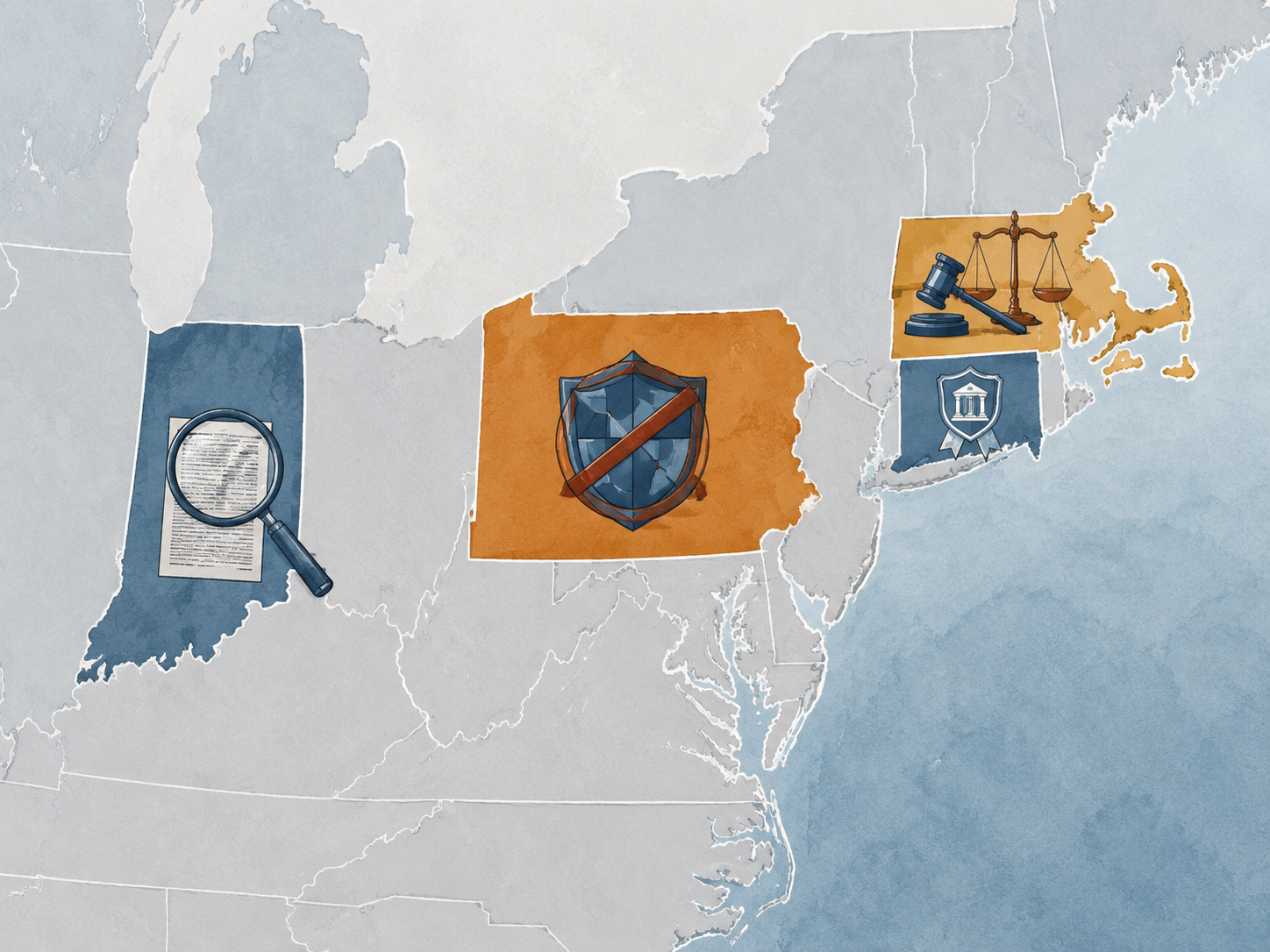
The table looks tidy, but the law is not. The important move is to ask what each claim must prove before letting the facts do the work. A Massachusetts deception claim can focus heavily on the net impression of the promotion and the availability of terms. An Indiana consumer-fraud claim, as pleaded in McAfee, ran into the need to show detrimental reliance before the transaction. Pennsylvania’s dismissal illustrates a different barrier: even a compelling account of compulsive gambling does not create a negligence-style duty unless the law recognizes one.
Massachusetts: deception and proof of notice
Scanlon is plaintiff-friendly not because the court accepted every accusation, but because it kept the evidentiary record open. The alleged wrong was not simply that DraftKings offered a bonus with conditions. Conditional promotions are ordinary. The alleged wrong was that the offer’s front-end message and the buried or disputed terms could have created a misleading impression about what the consumer would receive after depositing. When the defendant could not verify the exact user-facing presentation, the court had reason to leave the issue for a factfinder.[1]
For a case brief, that means the rule-and-application section should not stop at “fine print was too small.” The stronger version is more precise: if the value of a promotion depends on material restrictions, and there is a genuine factual dispute over whether those restrictions were effectively presented before the consumer acted, summary judgment may be inappropriate under a deception theory. That is a litigation lesson, not a final liability finding.
Connecticut: restitution through regulation
Connecticut shows another route. In July 2025, the Connecticut Department of Consumer Protection announced that DraftKings had voluntarily returned more than $3 million to approximately 7,000 consumers and paid a $50,000 penalty connected to misleading deposit-match promotions.[2] That result should not be treated as a class-action victory or as a court’s ruling on liability. It is a regulatory resolution, and that distinction matters.

Regulators do not need to move at the pace of private class litigation, and they may be able to obtain restitution where private plaintiffs would still be fighting arbitration clauses, class certification, reliance, causation, or proof of individualized notice. Connecticut therefore belongs in the center of the case study, not in a footnote. It shows that consumer protection can work as administration as well as litigation.
Pennsylvania: no duty means no negligence-style hook
The Pennsylvania ruling cuts in the other direction. There, the court dismissed claims built around the idea that DraftKings owed compulsive gamblers a duty of care, concluding that state law did not recognize that duty. The reported ruling is under appeal, so it should not be treated as the final national answer to addiction-based platform claims.[3]
Still, the dismissal is a clean warning for students. A complaint can describe an industry that knows some users are vulnerable. It can allege that design features intensify play or that marketing reaches people who should be protected. Those allegations may matter for policy, regulation, or a different statute. They do not automatically supply a common-law duty. The plaintiff has to identify the legal source of the obligation, not just the foreseeable harm.
Indiana: contract survives where consumer fraud fails
McAfee v. DraftKings is the cleanest example of mixed outcomes inside one lawsuit. DraftKings allegedly voided a winning $150,000 parlay on the ground that the odds were erroneously low. The court allowed the breach-of-contract claim to proceed, but dismissed the consumer-fraud claim because Indiana required proof of pre-transaction detrimental reliance.[4]
That split is easy to miss if the case is read only as a fairness story. The contract theory asks whether DraftKings had the contractual right to void the wager as it did. The consumer-fraud theory asks a different question: did the plaintiff rely, before entering the transaction, on a deceptive act or representation in the way Indiana law requires? Same incident, different elements, different result.
The Newer Cases Push From Fine Print Into Platform Design
The newer complaints widen the frame from deposit bonuses to individualized inducements, user data, and responsible-gambling tools. Baltimore’s April 2025 lawsuit alleges that DraftKings uses user data to identify problem gamblers and target them with personalized inducements while ignoring self-exclusion requests. The city also alleges that certain bonus-bet promotions required $150 in real spending to obtain $150 in expiring credits.[6]
Those are allegations, not findings. They nevertheless show why the litigation perimeter is expanding. Fine-print cases ask whether a specific promotion hid material limits. Platform-design cases ask whether the company’s data systems, retention tactics, and self-exclusion practices turn consumer vulnerability into a revenue opportunity. The second theory is more ambitious. It also has more doctrinal ways to fail, especially if the statute cannot connect targeted inducement to a recognized deceptive or unfair act.
The Loevy + Loevy filings in Illinois, Kentucky, and New Jersey show the same multi-state testing strategy from another angle. The firm’s 2025 announcements describe deceptive-promotion suits against DraftKings in several jurisdictions, but the filings should be read as pleadings in progress rather than as proof that a single theory will work everywhere.[5] The point for a student is not to memorize the list of states. The point is to watch lawyers translate one platform pattern into different statutory vocabularies.
The Big Tobacco Comparison Is Useful Only If It Stays Procedural
The public-health analogy that appears around these cases can become sloppy quickly. Online sports betting is not cigarettes in every legally relevant respect, and saying “Big Tobacco” too early can make the comparison sound like a substitute for elements. The more disciplined version is about litigation strategy. Richard Daynard, known for his role in tobacco litigation, has been connected through Northeastern’s Public Health Advocacy Institute to legal work drawing parallels between gambling companies and earlier consumer-protection campaigns against tobacco companies.[7]
Used that way, the analogy helps. Tobacco litigation taught lawyers to look for internal knowledge, marketing to vulnerable consumers, product design, public-health externalities, and state consumer-protection statutes. It did not eliminate the need to prove causation, reliance where required, injury, duty, or statutory unfairness. The DraftKings cases are still gambling-platform cases governed by their own statutes and records.
Policy Pressure Explains the Wave, Not the Outcome
The lawsuits are arriving against a measurable backdrop of financial and health concerns. A 2024 UCLA Anderson working paper by Hollenbeck, Larsen, and Proserpio reported a 28% increase in bankruptcy filings and a 9% rise in auto-loan delinquency in states that legalized online sports betting.[8] Those numbers help explain why plaintiffs’ lawyers, regulators, and cities are willing to test consumer-protection statutes against sportsbook platforms.
They do not prove that DraftKings caused injury in any particular plaintiff’s case. A population-level association can make a legal theory feel urgent, but urgency is not an element. In a private lawsuit, the plaintiff still has to connect the challenged conduct to a legally cognizable injury under the relevant statute. In a regulatory proceeding, the agency still has to fit the conduct within its enforcement authority. Policy evidence supplies context and pressure; it does not finish the pleading.
The municipal-authority fight adds one more layer. In July 2026, DraftKings sued Philadelphia, arguing that the city’s Consumer Protection Ordinance is preempted by state law.[9] That lawsuit is defensive rather than consumer-plaintiff-driven, but it belongs in the same case study because it asks who gets to regulate the platform: city officials, state regulators, courts applying private consumer-protection statutes, or some combination of them.
How to Read the Litigation Cluster for Class
A usable case study starts with the statute before it starts with outrage. For each DraftKings complaint or ruling, the first note should be the cause of action: deceptive act, unfair practice, breach of contract, negligence, public nuisance, municipal consumer-protection violation, or regulatory enforcement. The second note should be the element doing the most work. In Scanlon, that element is deception plus proof of what was disclosed and when. In McAfee, it is pre-transaction reliance for consumer fraud and contractual authority for the wager dispute. In Pennsylvania, it is duty.
- Identify the forum first: state court, federal court, city action, or state regulator.
- Separate allegations from rulings: a complaint describes a theory; a denial of summary judgment preserves a theory; a settlement may return money without establishing liability.
- Track the timing of reliance: did the consumer need to see and rely on the representation before depositing, before wagering, or at some other point?
- Ask whether the defendant’s records prove the interface history or merely recreate it.
- Do not use public-health data as a shortcut for causation in an individual case.
This is also where app evidence becomes legal evidence. Screenshots, terms of service, promotion banners, pop-ups, account histories, self-exclusion logs, and back-end data records matter because they place the consumer at a moment in time. The harder a platform makes that moment to reconstruct, the more room there may be for factual disputes. But the reverse is also true: precise records can narrow or defeat a claim if they show clear pre-transaction disclosure.
As of July 20, 2026, the DraftKings cases show that consumer protection law can reach deceptive digital marketing and addictive platform design, but only through the gates each state statute leaves open. The central question is not whether the conduct sounds troubling. It is what a plaintiff must prove, in that jurisdiction, to make the conduct legally actionable.
References
- Judge Finds Jury Issues in DraftKings Class Action, Sheehan Phinney, March 2026, link
- Connecticut Department of Consumer Protection news releases, Connecticut Department of Consumer Protection, July 2025, link
- DraftKings consumer protection litigation reporting, Bloomberg Law, 2026, link
- McAfee v. DraftKings court reporting, Bloomberg Law, February 2025, link
- DraftKings Sued for Deceptive Promotions, Loevy + Loevy, 2025, link
- City of Baltimore v. DraftKings materials, DiCello Levitt, April 2025, link
- Rigged Against You, Villanova Sports Law, 2025, link
- The Financial Consequences of Legalized Sports Gambling, SSRN, 2024, link
- DraftKings Sues Philadelphia Over Consumer Protection Ordinance, Bloomberg Law, July 2026, link
Comments
Join the discussion with an anonymous comment.