
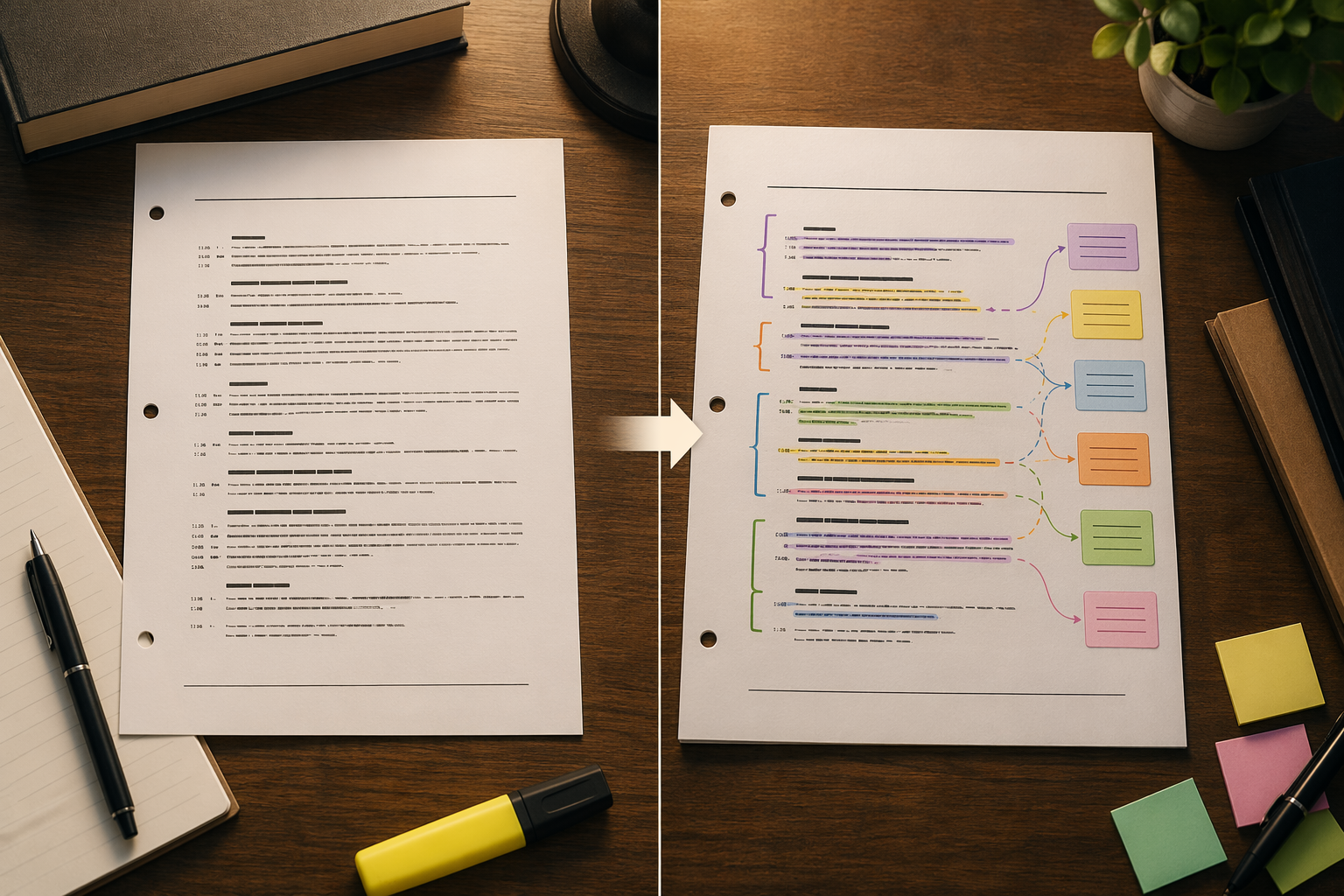
How to Analyze Homeland Security Committee Testimony
This guide gives students a systematic framework for analyzing Homeland Security Committee hearings — covering hearing types, subcommittees, witness roles, questioning patterns, and follow-up materials — so they can turn transcripts into meaningful analysis for papers or exams.
Updated:
A Homeland Security Committee transcript can look friendlier than it is. The sentences are plain enough. The witnesses introduce themselves. Members ask questions in timed rounds. For a student studying Homeland Security Committee testimony, that surface readability is the trap: if the paper only reports what people said, it has not yet analyzed the hearing.
The better starting question is not “What was the most quotable line?” It is “What kind of institutional event produced this record?” A hearing is built around a purpose, a committee jurisdiction, a witness lineup, prepared materials, live questioning, and sometimes follow-up documents that are less visible than the video clip. Those parts tell you what the testimony was being asked to do.
Start by Classifying the Hearing
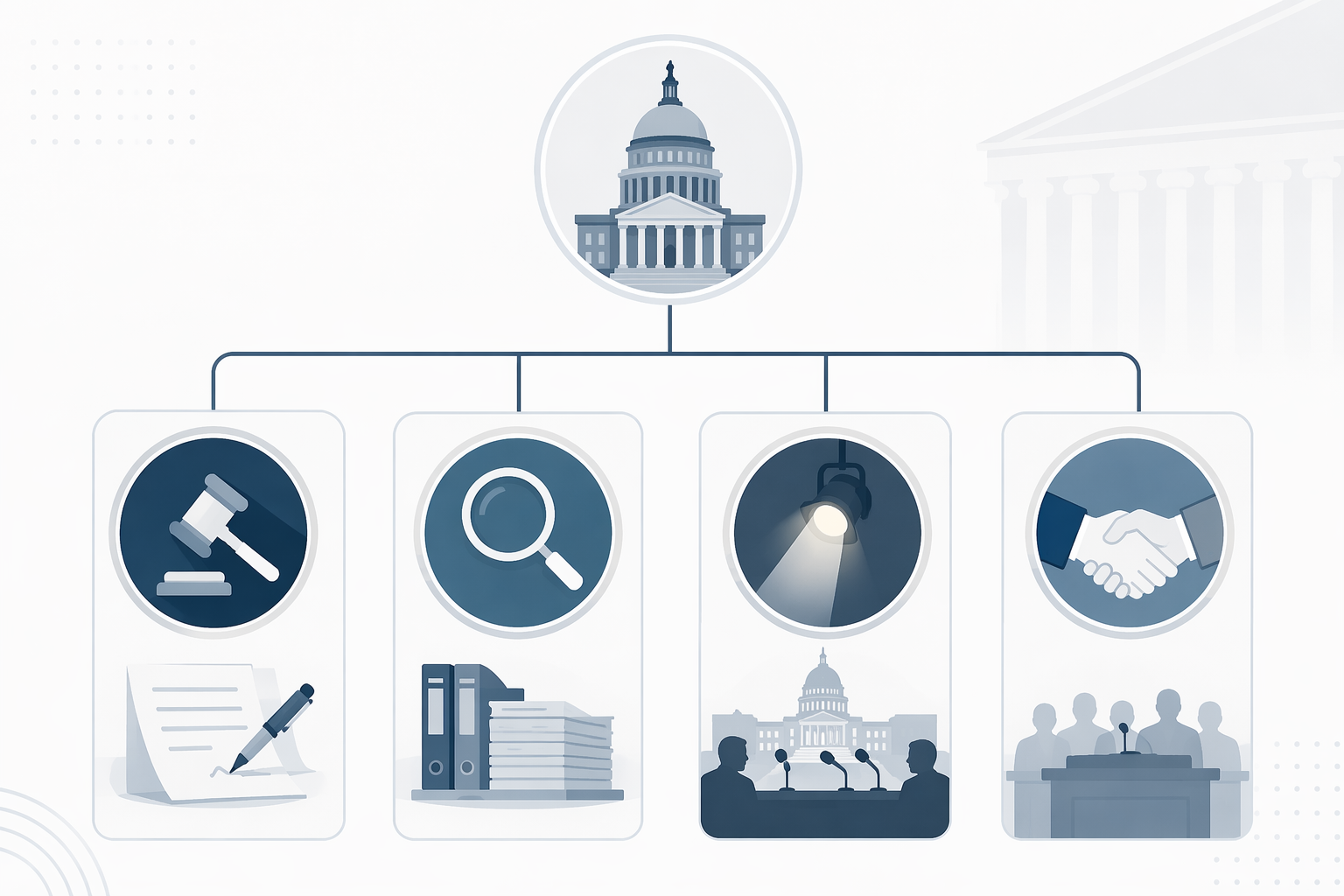
Before underlining testimony, identify the hearing type. The Congressional Research Service describes four common Senate hearing categories: legislative, oversight, investigative, and confirmation hearings. Legislative hearings develop or examine proposed law; oversight hearings review programs, agencies, and implementation; investigative hearings examine possible wrongdoing or disputed facts; confirmation hearings evaluate nominees for office.[1]
That classification is not decorative background. It changes what counts as a strong observation. In a legislative hearing, a witness may be valuable because they explain how a proposed bill would operate in practice. In an oversight hearing, the same witness might matter because they defend, criticize, or complicate an agency’s performance record. In an investigative hearing, omissions, refusals, documentary references, and follow-up requests may carry more weight than a polished opening statement.
A useful first note in your document margin is therefore short and blunt: “This is probably an oversight hearing because…” or “This is legislative because…” Then finish the sentence using evidence from the hearing page, title, agenda, witness list, or member statements. If you cannot classify it cleanly, say so. Some hearings serve mixed purposes, and a careful paper can explain that instead of forcing the record into the wrong box.
| Hearing Type | What Testimony Is Usually Being Asked To Do | What a Student Should Watch For |
|---|---|---|
| Legislative | Support, oppose, refine, or explain proposed legislation | How witnesses define the problem, describe implementation, or argue for statutory language |
| Oversight | Evaluate agency action, program performance, or policy implementation | Whether witnesses defend performance, identify gaps, shift responsibility, or accept corrective tasks |
| Investigative | Develop a factual record around disputed conduct or events | Documents, inconsistencies, refusals, timelines, and questions left for later |
| Confirmation | Assess a nominee’s qualifications, views, and commitments | Promises, evasions, prior record, and standards members use to judge fitness |
Locate the Committee Frame Before You Interpret the Claims
The House Committee on Homeland Security’s official site is the place to verify the basic frame: hearing title, date, witness names, subcommittee, schedule information, and testimony PDFs. The committee site also lists seven subcommittees or committee bodies: Border Security and Enforcement; Cybersecurity and Infrastructure Protection; Emergency Management and Technology; Counterterrorism and Intelligence; Oversight, Investigations, and Accountability; Transportation and Maritime Security; and the Task Force on Enhancing Security for Special Events.[2]
Do not turn that list into filler. Use it as a jurisdiction map. If a hearing is before Cybersecurity and Infrastructure Protection, a student should expect different policy vocabulary, agencies, and risk categories than in Transportation and Maritime Security. If Oversight, Investigations, and Accountability is the venue, the hearing is likely inviting you to examine performance, responsibility, and evidence rather than merely summarize policy preferences.
This is where many papers become weak. They quote a witness as if the witness wandered into Congress with a free-floating opinion. Witnesses appear inside a jurisdictional frame. A state official, federal agency leader, local emergency manager, private-sector representative, or advocacy organization may all speak about “security,” but the committee setting narrows which part of security is being treated as relevant.
- Write down the full hearing title, not just the topic.
- Identify whether the full committee or a subcommittee held it.
- Use the subcommittee name to infer what policy lane the hearing occupies.
- Check whether the witness list fits that lane cleanly or stretches it.
- Note any agency, level of government, or affected group that is absent but central to the topic.
Read the Witness List as an Argument
A witness list is not just a cast list. It is one of the hearing’s first claims about what kind of knowledge matters. Agency leaders signal official responsibility. Inspectors general, auditors, or investigators signal scrutiny. Local officials can turn an abstract federal issue into an implementation problem. Technical experts may define risks that elected officials then translate into political choices.
The December 11, 2025, “Worldwide Threats to the Homeland” hearing is a useful example because the lineup itself tells you how the committee framed the subject. The listed witnesses were DHS Secretary Kristi Noem, National Counterterrorism Center Director Joseph Kent, and FBI National Security Branch Operations Director Michael Glasheen.[3] That is an interagency format. Before reading a sentence of testimony, you can already see that the hearing is not treating homeland threats as the property of one office alone.
For analysis, that means you should not flatten the three witnesses into “the government said.” Ask what each institutional role permits the witness to see and what it encourages them to emphasize. A DHS secretary may speak in terms of departmental priorities and public-facing security responsibilities. An NCTC director brings the intelligence and counterterrorism coordination frame. An FBI national security official speaks from an investigative and domestic security posture. Those roles do not determine every answer, but they give you a disciplined reason to compare answers instead of collecting quotations.
A simple witness map can keep the paper from drifting:
| Witness Feature | Analytical Question |
|---|---|
| Institution | Which agency, office, sector, or level of government does this witness represent? |
| Authority | Is the witness responsible for implementation, investigation, intelligence, oversight, advocacy, or expertise? |
| Likely Incentive | Is the witness defending a record, requesting resources, warning of risk, challenging policy, or supplying technical detail? |
| Relationship to Other Witnesses | Do the witnesses reinforce one another, divide the problem into separate lanes, or expose tension? |
| Relationship to the Committee | Is the witness appearing before a friendly venue, a skeptical venue, or a mixed one? |
Do Not Treat Oral Testimony as the Whole Record
The video or transcript often gives students the most confidence because it feels complete. It usually is not. CRS explains that Senate committees commonly require written testimony before the hearing, and Senate Rule XXVI requires witnesses appearing before Senate committees to file written statements at least 24 hours in advance when practicable. CRS also notes that oral testimony is often a summary of the written statement rather than a full reading of it.[1]
That distinction matters for evidence. The oral opening may be shorter, more strategic, and more audience-conscious. The written statement may contain fuller timelines, program descriptions, footnotes, attachments, or claims that never appear in the live exchange. If your paper says “the witness argued X,” check whether X appears only in the oral remarks, only in the written submission, or in both.
This is also where witness-preparation materials can be useful, but only as a contrast. FiscalNote’s guide approaches testimony from the perspective of people preparing to testify, emphasizing message development and strategic delivery.[5] For a student analyst, that is not an instruction manual to imitate. It is a reminder that the polished oral statement has been shaped for a setting. Your job is to compare the performance with the fuller record, not to admire the performance as if it were the record.
- Download the written testimony PDFs from the official hearing page when available.
- Mark claims, dates, definitions, and agency descriptions that appear in writing but not orally.
- Notice what the oral statement compresses or omits.
- When quoting, identify whether the source is written testimony, oral testimony, or Q&A.
Watch the Questions, Not Just the Answers
The prepared statements tell you how witnesses want to frame the issue. The Q&A tells you what members choose to test, spotlight, challenge, or ignore. Quorum’s discussion of congressional testimony emphasizes that questioning patterns can reveal committee priorities and partisan dynamics during hearings.[4] Treat that as a lens, not as a mechanical scoring system. You are looking for patterns that the record itself supports.
Start with who receives questions. If every member directs questions to the same agency head, the hearing may be concentrating responsibility there even when other witnesses are present. If questions are distributed across agencies, members may be building an interagency picture. If one witness is largely ignored, that silence can be analytically relevant, but be careful: it may reflect time limits, member strategy, or the narrowness of the hearing rather than the witness’s objective importance.
Then track the kind of question being asked. Some questions seek facts: “How many,” “when,” “who approved,” “what authority.” Some seek judgment: “Do you believe,” “is this sufficient,” “what should Congress change.” Some are positioning questions, designed less to discover new information than to place a view into the record. A good paper can distinguish those functions without pretending to read minds.
In a hearing like “Worldwide Threats to the Homeland,” the interagency witness format makes Q&A especially important. If one member asks DHS about border-related threats, another asks NCTC about terrorism intelligence, and another asks the FBI about domestic investigations, the hearing is not merely repeating one theme. It is distributing the homeland security problem across institutional responsibilities. That distribution is often where the analysis lives.
| Q&A Pattern | What It May Suggest | How to Write It Carefully |
|---|---|---|
| Repeated questions to one witness | Members are concentrating responsibility or pressure | “Members repeatedly directed questions to X, suggesting that X’s office was treated as central to the issue.” |
| Different parties emphasize different topics | Partisan priorities may be shaping the hearing record | “The questioning divided attention between A and B; the pattern appears along party lines in the exchanges examined.” |
| Questions ask for commitments | Members are trying to create future accountability | “The exchange moved from explanation to commitment when the member asked whether the witness would provide…” |
| Witness refers to later submission | The live answer is incomplete | “The transcript should be read with any later question-for-the-record response, because the witness deferred the detail.” |
Separate Evidence From Performance
Students often recognize when a hearing becomes tense. They are less practiced at explaining what the tense moment proves. A sharp exchange may show disagreement over facts, disagreement over priorities, a witness refusing a premise, a member using limited time to make a public argument, or an agency official avoiding a commitment. Those are different claims.
When you write about a dramatic exchange, attach it to the structure you have already built. What type of hearing was it? Which subcommittee or committee frame made the topic relevant? What role did the witness occupy? Did the question test written testimony, challenge agency performance, ask for a policy commitment, or create a record for later follow-up? The clip is evidence only after you explain what institutional work it was doing.
A cautious sentence is usually stronger than an inflated one. Instead of writing, “The hearing proved the agency failed,” a student might write, “The exchange shows that several members treated the agency’s explanation as incomplete and used the Q&A period to press for details not supplied in the oral statement.” That version stays closer to what the hearing record can actually support.
Check What Happened After the Hearing
The transcript is not always the final evidentiary record. Members may submit questions for the record. Witnesses may provide supplementary documents, corrections, or written responses after the hearing. CRS describes committee preparation and record-building practices in a 2010 report, so its procedural categories remain useful, while its discussion of access practices should be read with awareness that digital committee archives and video availability have continued to evolve.[1]
For a student paper, the practical habit is simple: return to the official hearing page after watching the video or reading the transcript. Look for posted testimony, additional statements, member materials, or later documents attached to the hearing record. If the page does not include follow-up responses, do not invent them. Say that the available record you reviewed includes the hearing page, witness testimony, and transcript or video, and note any apparent gaps.
- Classify the hearing type and explain why that category fits.
- Identify the committee or subcommittee venue and use it to define the policy frame.
- Map the witness lineup by institution, authority, and likely role in the hearing.
- Compare written testimony with oral statements before drawing conclusions.
- Track Q&A patterns by member focus, witness targeted, question type, and follow-up requests.
- Check the hearing page for post-hearing materials or record gaps.
What a Strong Testimony Analysis Looks Like
A strong analysis does not need to sound like a congressional procedure manual. It needs to show that you understand the hearing as an institutional record. That means your paper should be able to answer a few grounded questions: why this hearing was held, why this committee or subcommittee was the venue, why these witnesses were selected, how the written and oral records differ, what the Q&A revealed that prepared statements did not, and whether follow-up materials complete or complicate the record.
Once you can answer those questions, quotations become evidence instead of decoration. You can still quote the sentence that caught your attention. You just will not ask that sentence to carry the whole analysis by itself.
References
- Hearings in the U.S. Senate: A Guide for Preparation and Procedure, EveryCRSReport.org, April 2, 2010.
- Committee on Homeland Security, U.S. House of Representatives.
- Worldwide Threats to the Homeland, Committee on Homeland Security, December 11, 2025.
- Congressional Testimony, Quorum.
- Guide to Preparing Congressional Testimony, FiscalNote.
Comments
Join the discussion with an anonymous comment.