
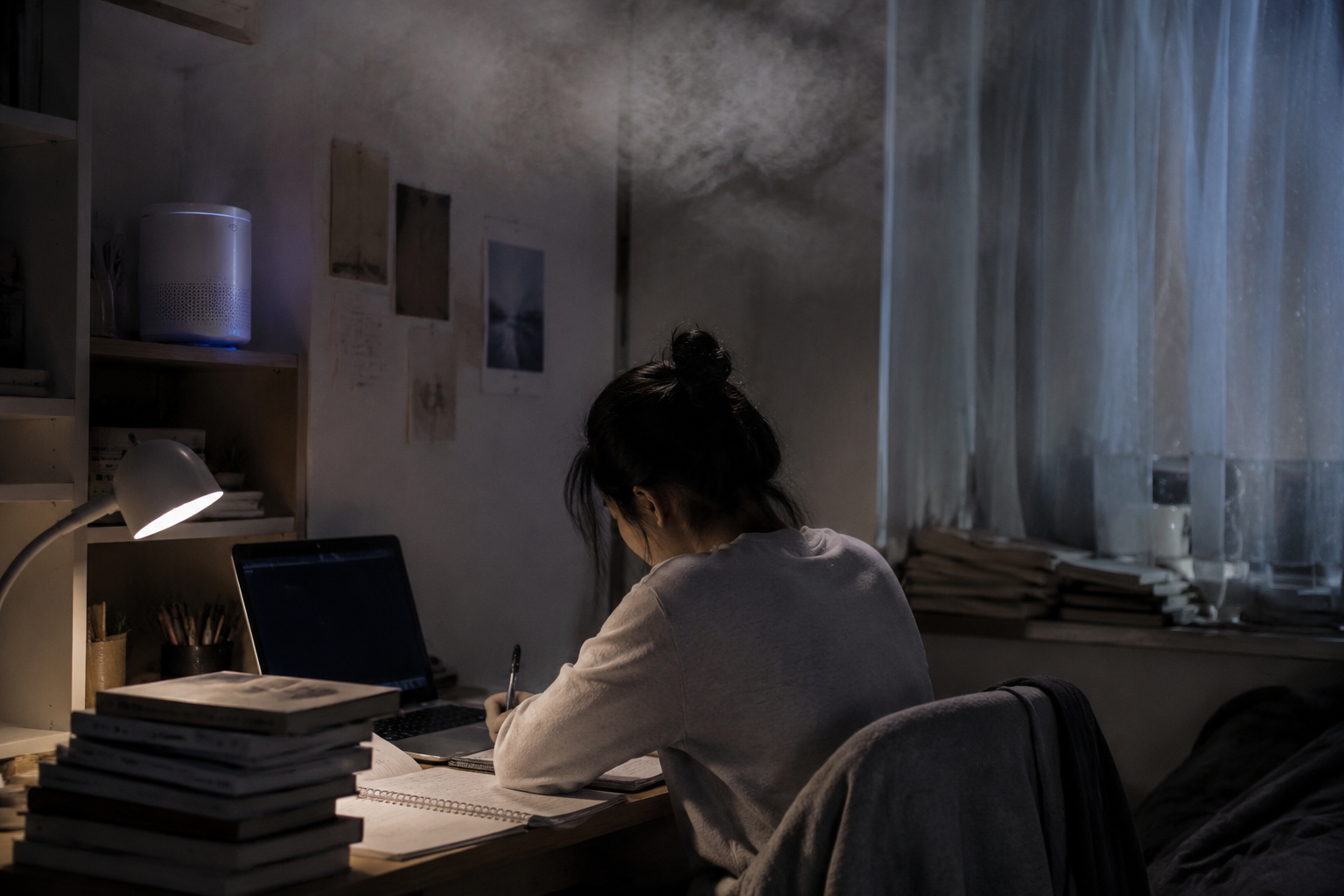
Air Quality Health Risks Every Student Should Know
This article explains how indoor air quality — specifically elevated CO₂ and fine particulate matter — impairs memory, focus, and test scores, and offers affordable steps students can take to protect their academic performance.
Updated:
Yes: the air in a classroom, dorm, library room, or bedroom can lower how well you think, not just how comfortable you feel. The air quality health risks for students that matter most for studying are not exotic. They are usually elevated carbon dioxide from too many people breathing in a closed room, and fine particulate matter, or PM2.5, drifting in from traffic, wildfire smoke, cooking, construction, or poor filtration.
The strongest evidence is not a wellness poster about “fresh air.” In a Harvard controlled-exposure study, lowering CO2 from 1,400 ppm to 550 ppm doubled cognitive function scores in a simulated office environment, with the biggest gains in the kinds of higher-order thinking students need when they are solving, prioritizing, and remembering under pressure.[1] A Yale-led study tracking 2.8 million students found that PM2.5 exposure was linked to lower standardized test scores even below the EPA’s 12 µg/m3 annual standard.[2]
That is the uncomfortable part: a student can sit down with the right notes, a decent plan, and enough sleep, then lose performance because the room itself is working against attention. The fix is not always expensive, and it is not always under the student’s control. But the first step is to stop treating sluggish focus as automatically personal failure.
The two air problems that show up in grades
Indoor air quality is a large topic, but students do not need to become building engineers to make better choices this week. For studying, the practical split is simple: CO2 tells you whether exhaled air is building up because ventilation is weak for the number of people in the room; PM2.5 tells you whether tiny particles are reaching your lungs and, through inflammation and other pathways, affecting the brain systems used for attention and memory.
| Exposure | Where students run into it | Why it matters for studying |
|---|---|---|
| Elevated CO2 | Crowded classrooms, closed dorm rooms, group study rooms, small tutoring spaces | Signals poor ventilation and is linked with lower cognitive performance in controlled exposure research |
| PM2.5 | Wildfire smoke, traffic pollution, indoor cooking particles, nearby construction, weak filtration | Linked with lower test scores and cognitive outcomes, including effects seen below some regulatory thresholds |
CO2 is not just a number on a gadget. In a room full of students, it rises because people keep breathing into the same air volume while too little outdoor or filtered air replaces it. That is why classrooms are a special case. A review on school air monitoring notes that doubling classroom ventilation from 7.5 to 15 cubic feet per minute per person is associated with about an 8% improvement in academic performance.[3] That is roughly the size of gain students usually chase with better schedules, tutoring, or another round of practice problems.
Schools also pack people into rooms more tightly than most offices. The American Lung Association says classrooms can have four times as many occupants per square foot as office spaces, and it reports that 41% of U.S. schools have inadequate ventilation.[4] That does not prove every classroom is damaging performance, but it explains why a room can feel mentally heavy halfway through class even when nothing dramatic has happened.
Why CO2 makes a room feel harder to think in
The student version of CO2 buildup is familiar: the last period of the day, the dorm room with two people studying and the door closed, the basement classroom where everyone gets quieter for reasons nobody names. You reread the same paragraph. You copy an equation correctly, then make a careless decision in the next line. The room does not knock you out; it taxes the very parts of studying that need to stay clean.
The Harvard result matters because it measured cognition under controlled exposure rather than asking people whether they felt better. When CO2 was reduced from 1,400 ppm to 550 ppm, cognitive function scores doubled.[1] That does not mean every student will double a test score by opening a window. It means the difference between a stale room and a well-ventilated room can be large enough to register in complex thinking tasks.
For a student, the warning zone is often less tidy than a lab threshold. CO2 around 800 to 1,000 ppm is commonly treated as a sign that ventilation may be falling behind occupancy. Above that, the useful question is not whether the number is morally bad. It is whether the room is asking your brain to work through avoidable drag.
PM2.5 is the quieter grade risk
PM2.5 is fine particulate matter small enough to stay suspended and penetrate deeply into the body. Students usually notice it during wildfire smoke days, but it also comes from traffic, indoor combustion, and outdoor pollution that slips inside. If you are in a wildfire-prone region, the study problem overlaps with the smoke-specific strategies covered in how wildfire smoke impairs studying and concentration.
The Yale study is useful because it connects pollution to school performance at a scale that is hard to wave away: 2.8 million students, standardized test scores, and negative effects even below the EPA’s 12 µg/m3 standard.[2] That is not the same as saying one smoky afternoon ruins an exam. It does say that “acceptable” outdoor pollution levels can still carry academic costs for children.
A 2026 npj Clean Air meta-analysis also frames air pollution as a cognitive and socioeconomic risk, reporting that each 1 µg/m3 increase in PM2.5 is associated with a 0.27-point decrease in children’s IQ.[5] Association is not destiny for an individual student, and IQ is not the same thing as tomorrow’s biology quiz. But the direction is consistent with the test-score evidence: fine particles are not just a breathing issue; they can show up in learning outcomes.
What to change before you blame your discipline
Students already optimize tiny variables: which app holds flashcards, whether the library is too loud, whether a study playlist helps or distracts. Air deserves the same practical treatment. The goal is not to make every study space perfect. It is to remove the obvious air penalty when you have a choice.
- If a room is crowded and sealed, open a window or door when outdoor air is acceptable and building rules allow it.
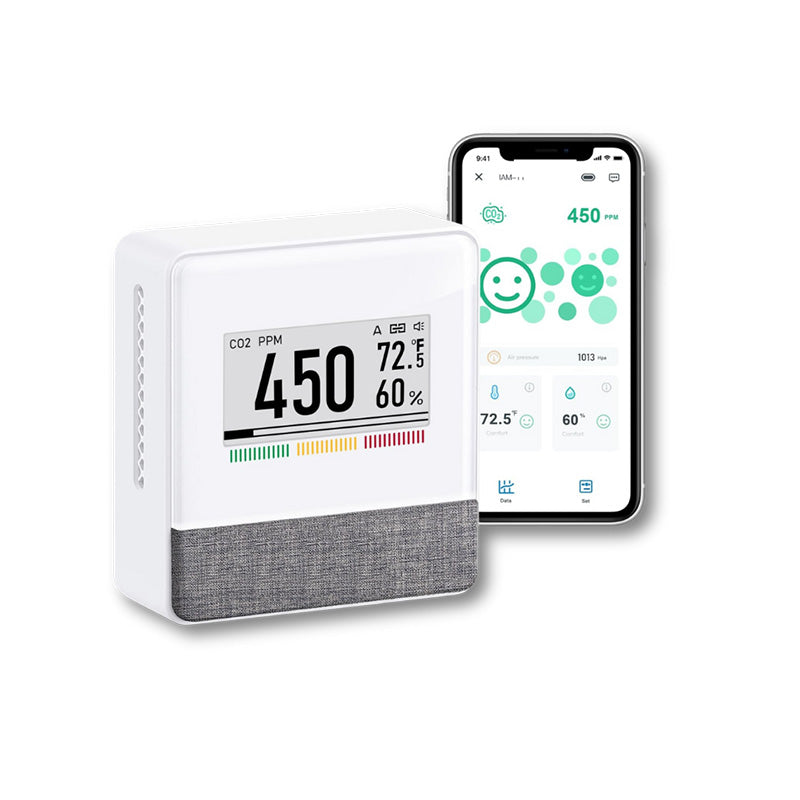
- If you study in the same room often, use a CO2 monitor for a week so you know when the room usually becomes stale.
- If outdoor PM2.5 is high, avoid “ventilation” that simply pulls dirty outdoor air into your study space.
- If you control a dorm room or bedroom, run a properly sized HEPA purifier during long study blocks.
- If you cannot change the classroom, move your hardest independent study to a cleaner, better-ventilated room afterward.
The CO2 monitor is not magic. It is a cheap truth-teller. If your study room climbs quickly after two people sit down, you stop guessing. You can open a door, take a short reset outside the room, move to a less crowded floor, or schedule the most demanding work before the room fills. Without a reading, most students just assume the afternoon slump is laziness.
Windows need judgment. On a clean day, opening one can lower CO2 and dilute indoor pollutants. On a smoky day or next to heavy traffic, it may trade a CO2 problem for a PM2.5 problem. Check local air quality before treating outdoor air as automatically better, especially during wildfire season. Students in smoke-prone areas should pair this article with wildfire smoke safety tips to protect study focus.
Where a HEPA purifier earns its keep
A portable HEPA purifier helps most with particles, not CO2. That distinction matters. If a dorm room has high PM2.5 because outdoor smoke is leaking in, a purifier can reduce particle exposure. If the problem is five people in a closed study room breathing the same air, a purifier may clean particles while CO2 keeps rising. You still need ventilation for that.
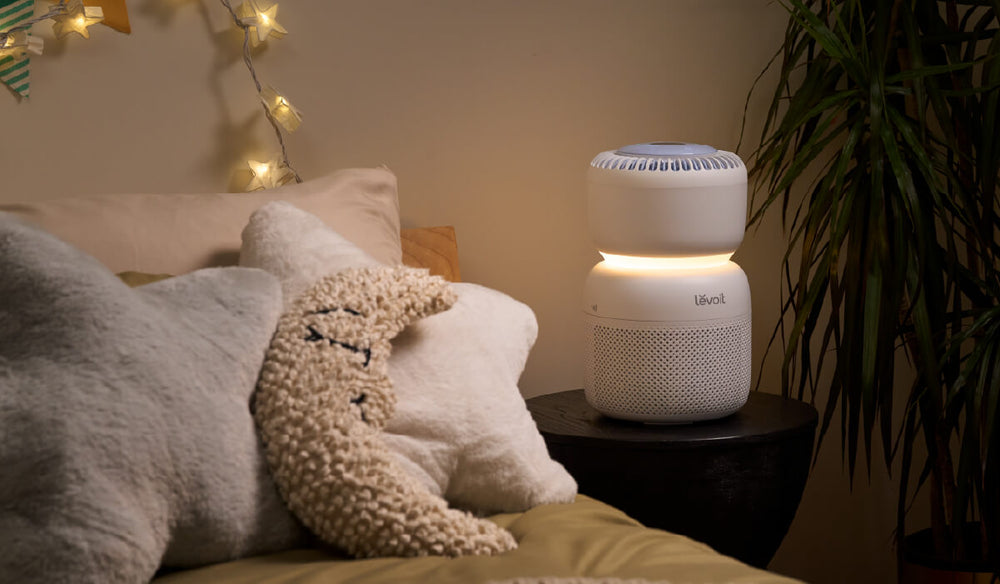
Cost is the reason this fix belongs in a student article rather than only a facilities report. University of Colorado Boulder coverage of school air purifier research cited an estimated cost of about $65 per student per year.[6] That is not nothing, especially for a student buying it alone. But for a shared apartment, dorm suite, club study room, or parent-supported setup, it is in the range of ordinary academic spending rather than a building renovation.
The better purifier decision is boring: choose a unit sized for the room, use a real HEPA filter, keep it running during study time, and replace filters on schedule. A quiet purifier left on is worth more than an impressive one nobody uses because it sounds like a vacuum during problem sets.
There is also emerging school-level evidence. A Resources for the Future working paper on air purifiers in Milan schools reports that a randomized controlled trial cut absenteeism by 12.5%.[7] Absenteeism is not the same as test-score improvement, so it should not be sold as proof that a purifier raises every grade. It does support the more modest point students actually need: filtration can change real school outcomes, not just the smell of a room.
A practical setup for different student rooms
The best move depends on the room. A student cannot fix a whole school HVAC system before Thursday’s exam, and pretending otherwise is just another way to put institutional problems back on the person stuck in the seat.
| Study space | Most useful first move | Limit |
|---|---|---|
| Dorm room or bedroom | Use a CO2 monitor, ventilate when outdoor air is clean, and run a HEPA purifier for PM2.5 | A purifier will not remove CO2 buildup from people breathing in a sealed room |
| Shared apartment | Place the purifier where students actually study, not in a distant hallway | Cooking particles and open windows can overwhelm a small unit |
| Library study room | Check CO2 during long sessions and leave the door open if allowed | Small rooms can get stale quickly when several people stay for hours |
| Classroom | Sit near better airflow if there is a clear difference and ask about ventilation readings or filter upgrades | Students usually cannot control occupancy, HVAC settings, or maintenance |
| Wildfire or smoke day | Keep windows closed, filter indoor air, and move hard study to the cleanest available building | Outdoor ventilation may make particle exposure worse |
For long exam prep blocks, treat air like noise. If you would not choose the loudest lounge for calculus, do not choose the stuffiest room just because it has an outlet. Noise-cancelling headphones can protect attention from one kind of environmental drag; cleaner air protects it from another. The same study-environment logic applies when choosing headphones for studying and focus, a desk, or a study schedule.
What you can ask for when you cannot change the room
Some students are trapped in fixed classrooms, crowded labs, or residence halls where the windows barely open. In that situation, the useful request is specific. Ask whether the school measures CO2 in classrooms. Ask whether HVAC filters are being replaced on schedule. Ask whether portable HEPA units can be used during smoke events or in rooms with known ventilation complaints. Ask whether test rooms can be checked before high-stakes exams.
Those are not luxury requests. If ventilation changes are associated with academic performance differences, and PM2.5 exposure is linked with lower test scores, then room air belongs in the same conversation as lighting, seating, noise, and exam conditions. A student should not have to prove personal weakness before anyone checks whether the classroom is stale.
The fair ending is not that every student can buy their way into perfect air. Many cannot. The fairer conclusion is that poor indoor air is a real academic variable, the damage is measurable, and the first-response fixes are ordinary: more ventilation when outside air is clean, filtration when particles are the problem, monitoring when guessing keeps failing, and a cleaner room for the work that matters most.
Students already adjust their tools, schedules, lighting, and noise. Air should be on that list.
References
- Indoor Air Quality and Student Cognitive Performance in Classrooms with Increased Ventilation, Harvard Healthy Buildings, https://healthybuildings.hsph.harvard.edu/
- Yale study: Polluted air can negatively impact children's test scores, Yale School of Public Health, https://ysph.yale.edu/news-article/yale-study-polluted-air-can-negatively-impact-childrens-test-scores/
- Air quality monitoring in schools — ventilation, cognitive performance, childhood asthma, Cureus, 2025, https://pmc.ncbi.nlm.nih.gov/articles/PMC12126171/
- How Your School's Indoor Air Quality Affects Health and Learning, American Lung Association, https://www.lung.org/blog/schools-indoor-air-quality-faqs
- Reframing air pollution as a cognitive and socioeconomic risk, npj Clean Air, 2026, https://www.nature.com/articles/s44407-026-00059-4
- Can air purifiers help keep kids in school? New study seeks to find out, University of Colorado Boulder, 2023, https://www.colorado.edu/today/2023/09/27/can-air-purifiers-help-keep-kids-school-new-study-seeks-find-out
- The Effect of Air Purifiers in Schools, Resources for the Future, 2025, https://www.rff.org/publications/working-papers/the-effect-of-air-purifiers-in-schools/
Comments
Join the discussion with an anonymous comment.