
What the Iliad Fragment Discovery Means for Modern Students
The discovery of an Iliad fragment on an Egyptian mummy reveals that the ancient Greeks used a sophisticated spatial mnemonic to memorize long epic passages. Learn how Homer's Catalogue of Ships encodes the method of loci and what it teaches about memory techniques you can use today.
Best for: anatomy, law, history, language
The oddest thing about the Iliad fragment discovery is not simply that a piece of Homer turned up with an Egyptian mummy. It is that the passage was placed on top of the body, on the abdomen, folded, tied, and sealed, rather than hidden inside the body as some early accounts suggested. The mummy belonged to Roman-era Egypt, roughly 1,600 years ago, and the papyrus preserved part of one of the least glamorous-looking stretches of the Iliad: the Catalogue of Ships.
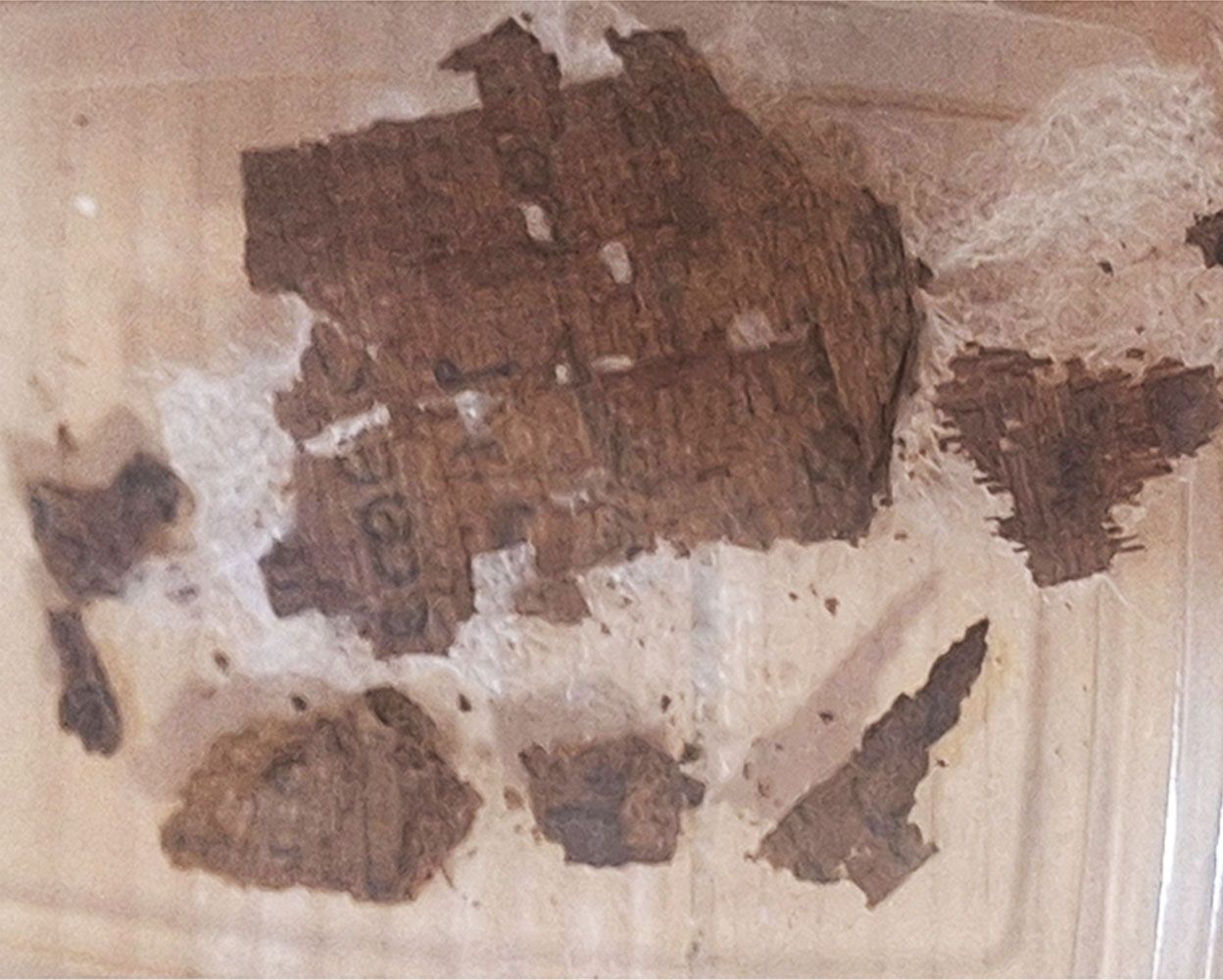
That detail matters, but it should not be made to carry more than it can bear. Scholars have offered different explanations for why the papyrus was there: perhaps it had a protective or ritual function, perhaps it was reused because papyrus remained valuable, perhaps it was a personal object placed with the dead. The safer conclusion is narrower and more interesting for students: this was not a disposable scrap of any random text. Someone handled this passage as something worth placing carefully.
So the better question is not only what the Iliad fragment discovery means archaeologically. It is why this passage, of all passages, mattered enough to be placed with the dead. The Catalogue of Ships can look, at first glance, like the part of an epic that a modern reader skims: commanders, peoples, towns, ships, more towns, more ships. For anyone who has ever stared down an anatomy list, a legal outline, a vocabulary deck, or a historical chronology, that ugliness is familiar. Long material becomes painful when it has no shape.
The Catalogue announces itself as a memory problem
In the Iliad, the Catalogue of Ships appears in Book 2, lines 494–759. Before it begins, Homer pauses and appeals to the Muses: “tell me now, you Muses,” because he says he could not recount the numbers or name the men without divine help. That is not just an ornamental flourish before a list. It frames the coming passage as a memory feat: a huge muster of leaders, places, and ships that would strain ordinary recall.
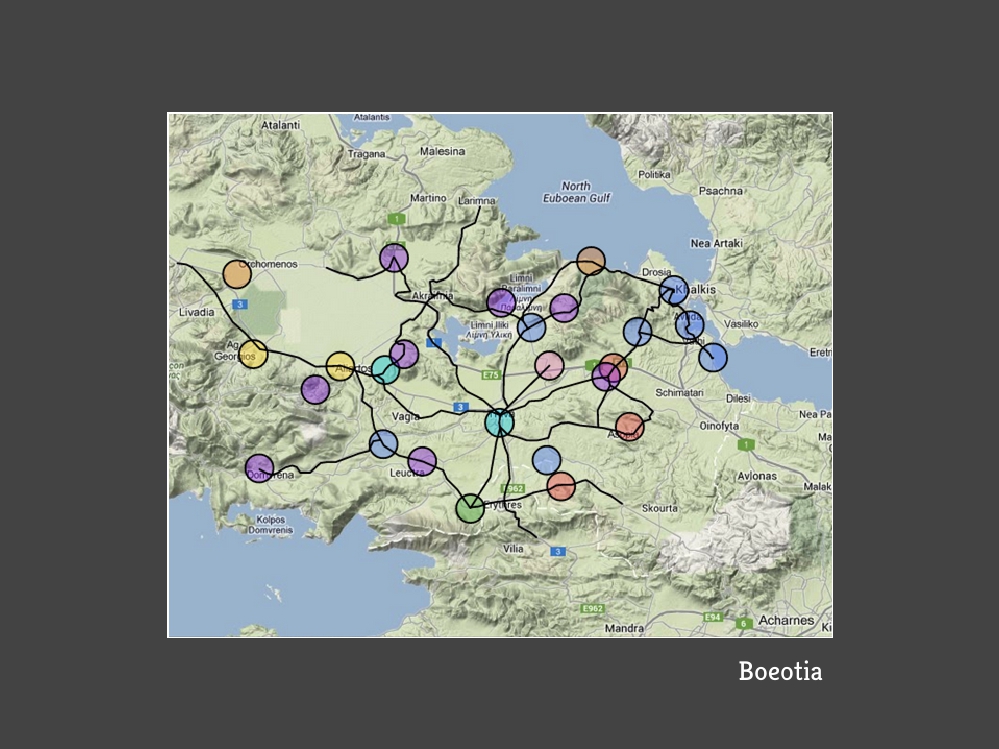
The University of Virginia’s Mapping the Catalogue of Ships project makes the shape of that feat visible. The Catalogue contains 29 contingents and roughly 190 place names, and the project maps those names not as a heap of labels but as organized geographic movement. Its central claim is plain enough for a student to use: the list is arranged as three contiguous itineraries, so a performer could mentally travel through the material rather than drag each item out by force.[1]
A list becomes easier when it becomes a route
The difference between a list and a route is not cosmetic. A list asks the mind to remember item one, then item two, then item three, with little help from the material itself. A route gives the next item a place to stand. If you know where you are, you have a cue for what comes next.
That is what makes the mapped Catalogue more than a curiosity. UVA’s project shows the Catalogue moving through three broad geographic itineraries: a Boeotian and central Greek route, a Peloponnesian route, and an island and Thessalian route. The contingents are not merely grouped by political identity; they are arranged so that the singer can proceed across a mental landscape.[1]
This is the part students should notice. The poem does not solve the memory problem by making every item vivid in isolation. It solves the problem by putting related items into a navigable order. The places cue one another because they belong to a route.
| If the material is treated as a bare list | If the material is treated as a route |
|---|---|
| Each item must be recalled from scratch | Each item is cued by position and movement |
| Order feels arbitrary | Order follows an imagined path |
| Groups blur together | Clusters attach to locations or regions |
| Review becomes repeated recitation | Review becomes retracing the route |
The arrangement also works at a smaller scale. Within individual contingents, towns often appear in route order or as circuits around a central point. One especially useful example is Boeotia: the towns form a circuit around Thebes, even though Thebes itself is not named in the Catalogue. The absent hub still helps organize the named places around it.[1]
That is a wonderfully practical idea. A central concept does not always need to be one more item in the list. Sometimes it is the organizing landmark. In a biology unit, the “hub” might be a body system. In a law outline, it might be a claim or doctrine. In a language class, it might be a theme such as movement, food, or obligation. The hub gives the surrounding items direction.
This is close to the method of loci, without needing the mythology
Modern memory competitors often use the method of loci, sometimes called the memory palace. The usual version asks you to imagine a familiar place, walk through it in a fixed order, and attach information to specific locations. The Catalogue is not a modern memory palace in the tidy self-help sense, and it would be silly to pretend that Homer wrote a study-skills manual. But the shared principle is hard to miss: memory improves when information is arranged spatially.
The Catalogue’s route is not someone’s apartment or childhood school. It is a cultural map. The performer moves through regions, towns, coastlines, islands, and hubs. The mind gets sequence from geography. That is why the passage found with the mummy is more interesting than a famous quotation would have been. A quotation can be treasured for beauty. This passage seems built for survival under pressure.
There is still no need to overclaim. The mummy fragment does not prove that the deceased used the Catalogue as a personal memory exercise. It does not settle the ritual question. It does not mean every ancient reader consciously analyzed the passage as a mnemonic device. The stronger evidence is the structure of the Catalogue itself: many names, grouped into contingents, arranged along routes that a mind can travel.[1]
How students can borrow the structure
The useful lesson is not “memorize like an ancient poet.” It is simpler: when material is long and ugly, stop asking memory to hold it as a pile. Give it a route.
- Find the natural clusters first. Do not begin by memorizing item by item. Look for units: body systems, legal elements, historical periods, vocabulary families, equation types, author groups.
- Choose a route that has a stable order. It can be a real place you know, a diagram, a timeline, a map, a process flow, or the layout of a page. The route matters because it prevents the order from floating.
- Attach each cluster to a location. Put one group at the doorway, another at the desk, another at the window; or put one doctrine at the filing stage, another at review, another at appeal.
- Use hubs for dense material. If several details belong to one central idea, let that idea act like Thebes in the Boeotian circuit: the organizing center around which the details sit.
- Review by retracing, not merely rereading. Walk the route mentally and check which locations feel empty, crowded, or out of order.
A student memorizing cranial nerves, for example, does not need to invent a theatrical story for every term. A route through a dorm room or campus path can carry the sequence. The first few items might belong near the entrance, the next cluster near a staircase, the next near a window or courtyard. The point is not decorative weirdness. The point is that the order no longer has to be recreated from nothing each time.
A law student can do something similar with elements of a rule. Instead of rereading a paragraph until it feels familiar, the student can turn the rule into a path: threshold requirement first, main elements next, exceptions in a side room, remedies at the exit. The material still has to be understood and practiced. Spatial arrangement does not replace thinking. It reduces the load of holding everything in the air at once.
This is where a lot of study advice becomes unhelpful. Memorization is too often presented as either brute discipline or a magic trick. The Catalogue suggests a middle route: arrange the material so recall has cues. A student still works, but the work is better designed.
What the discovery means
The meaning of the Iliad fragment discovery is not that an old papyrus has suddenly made a difficult passage glamorous. Nor is it that modern students should imitate ancient poets out of nostalgia. Its value is more practical than that. A passage many readers expect to be a dull roll call turns out to have a navigable design.
The folded and sealed fragment shows that the Catalogue was handled with care, though the reason remains contested. The map of the Catalogue shows something firmer: the passage organizes 29 contingents and roughly 190 place names into routes, circuits, and clusters.[1] That is the part a student can take away without pretending to solve every archaeological question.
Durable memory often begins before memorization starts. It begins when the material is arranged well enough to be traveled. The Catalogue of Ships is still long, still strange, still demanding. But it is not a heap. It is a map.
References
- Mapping the Catalogue of Ships, University of Virginia.
Apply This Method
Related Methods
- Where Students Can Watch the Perseid Meteor Shower in 2026
The 2026 Perseid meteor shower peaks on August 12–13 under a new moon, creating the best viewing conditions in years. This guide helps students find dark-sky spots near campus — on foot, by transit, or on a weekend trip — without expensive gear.
- What Are the Androids in the Iliad?
This guide breaks down the Iliad's passages about Hephaestus' golden handmaidens, self-moving tripods, and automated bellows, explaining what the Greek text actually says and how these ancient automata relate to modern ideas of artificial life and robotics.
- Switched at Birth: Legal Steps and Study Guide for Torts
A case-based study guide for law students exploring how switched-at-birth litigation tests negligent infliction of emotional distress, the independent duty exception, multi-party standing, and statute-of-limitations issues across multiple jurisdictions.
Comments
Join the discussion with an anonymous comment.