
BAR-EXAM Exam Hub
Probable Cause Explained for Law Students
What the Fourth Amendment's probable cause standard really requires — the totality-of-the-circumstances 'fair probability' test from Illinois v. Gates, how it differs from reasonable suspicion, and how to apply it to arrests, searches, and digital-evidence hypos in law exams.
- gre
- mcat
- asvab
- sat
- act
- digital-adaptive
- official-material
- section-strategy
- test-date-timeline
Source note before doctrine: this explainer uses LII Wex’s probable-cause entry, last reviewed in October 2025, as the main anchor for the Fourth Amendment text, the Beck/Brinegar working definitions, Illinois v. Gates, Riley, Carpenter, exclusion, and good faith; LII Wex’s reasonable-suspicion and Aguilar-Spinelli entries supply the boundary and the historical test; FindLaw is used cautiously because its July 6, 2026 page conflicts with the Gates/LII “fair probability” formulation discussed below. Source freshness should be rechecked at publication in Q3 2026, and any verbatim Supreme Court wording should be verified against the opinions themselves before final publication. [1][2][3][4]
The usable rule
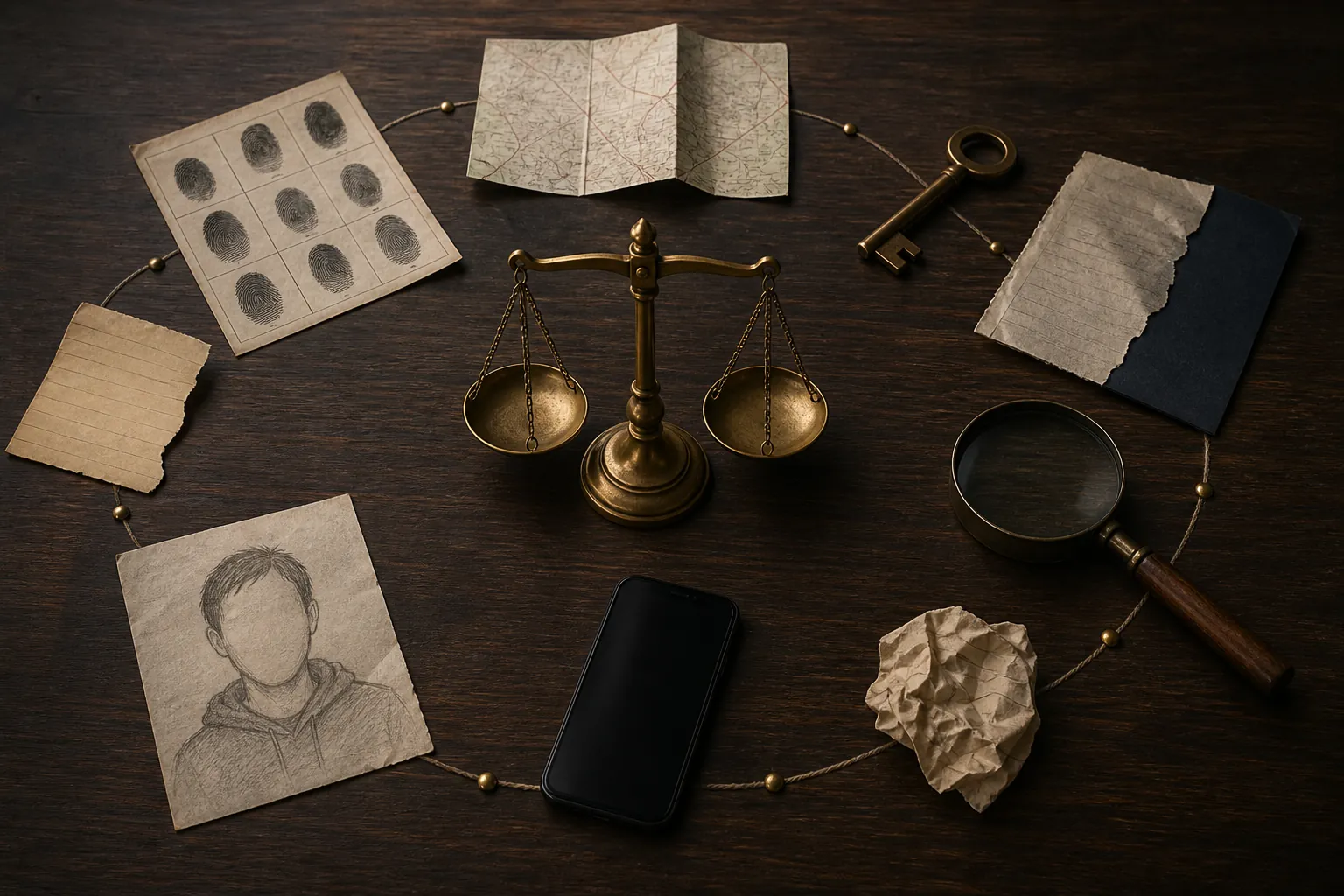
For law students, probable cause is a practical and nontechnical Fourth Amendment judgment. It asks whether the facts known to the officer or magistrate create a fair probability of criminal conduct or evidence of a crime. It is not a number, not “more likely than not,” and not a formula that can be solved by counting facts on each side. LII’s probable-cause entry ties the modern standard to a totality-of-the-circumstances inquiry under Illinois v. Gates and also treats probable cause differently depending on whether the government is arresting a person or searching a place. [1]
That last sentence is where many exam answers start to improve. Probable cause is never floating in the air. Write the object: probable cause to arrest whom, or probable cause to search where, for what. Arrest probable cause focuses on whether a reasonable person would believe the suspect committed a crime. Search probable cause asks whether evidence will be found in a particular place. Those are related standards, but they are not the same question. [1]
The Fourth Amendment requires warrants to rest on probable cause, but it does not define the term like a statute would. The old Supreme Court formulations that still matter for exams are working definitions: Beck v. Ohio centers the facts and circumstances within the officers’ knowledge, while Brinegar v. United States describes probable cause in practical, everyday terms rather than technical legal proof. [1]
One source conflict is worth making explicit because it can confuse students. LII’s Gates-based formulation uses “fair probability” as the operative phrase. FindLaw’s page says that neither mere suspicion nor fair probability is enough. For exam purposes, use the Gates/LII statement: probable cause is the totality-of-the-circumstances fair-probability standard. Treat the FindLaw wording as a caution to avoid collapsing probable cause into mere suspicion, not as the governing formulation. [1][4]
Why Aguilar-Spinelli still teaches the rule Gates replaced

The doctrinal movement from Aguilar-Spinelli to Gates is the center of probable cause because it shows how courts think about reliability. The hardest probable-cause hypos rarely say, “Officer sees defendant commit crime.” They say an informant called, or an anonymous tip came in, or several imperfect facts point in the same direction. Aguilar-Spinelli tried to organize that problem with two prongs. Gates kept the insight and rejected the rigidity.
The two prongs
- Basis of knowledge: how did the informant know the information? Personal observation is different from rumor.
- Veracity or reliability: why should the police or magistrate believe this informant? Past reliability, corroboration, statements against interest, or other reliability signals can matter.
LII’s Aguilar-Spinelli entry describes the test as a two-prong method for evaluating informant tips: the government had to show both the informant’s basis of knowledge and the informant’s veracity or reliability. It also states that Illinois v. Gates replaced that test with a totality-of-the-circumstances approach. [3]
The prongs are still worth learning because they name two real weaknesses in tip evidence. A tip from a person with no explained source of knowledge is thin. A detailed tip from someone with no reliability signal is also thin. Aguilar-Spinelli made those weaknesses feel like separate gates the government had to pass through.
What Gates changed
Illinois v. Gates changed the exam answer by turning the two prongs into factors rather than mandatory boxes. Under Gates, a weak showing on one Aguilar-Spinelli concern can be strengthened by a stronger showing on another, along with corroboration and the rest of the facts. LII’s probable-cause entry identifies Gates as the source of the totality-of-the-circumstances test for probable cause. [1]
A hypothetical tip illustrates the difference. Suppose an anonymous caller gives police a prediction about a suspect’s future conduct, officers corroborate innocent details, and the timing aligns with the caller’s description. Under a rigid prong test, the absence of known informant identity creates an immediate veracity problem. Under Gates, the exam answer should ask what all the facts together do: whether the detailed prediction, police corroboration, timing, and remaining gaps create a fair probability. The missing veracity fact still hurts the government. It just does not end the analysis by itself.
This is why probable cause resists percentage talk. Gates does not invite a student to say the officer was “60 percent sure.” It asks whether the whole factual picture, viewed practically, justifies the intrusion. Clean labels help only after the facts have been sorted.
Applying probable cause in exam hypos
Start with the government action. Probable cause does different work depending on what the state is trying to do.
| Government action | Question to ask | Common exam trap |
|---|---|---|
| Arrest | Would a reasonable person believe this suspect committed a crime? | Writing about evidence in a place instead of facts tying the suspect to the offense. |
| Search | Is there a fair probability evidence will be found in this particular place? | Showing the suspect is guilty but failing to connect evidence to the place searched. |
| Terry stop or frisk | Are there specific articulable facts supporting reasonable suspicion? | Using probable-cause language when the hypo asks only about a brief stop. |
| Digital search or location data | Does the phone or data request require a warrant supported by probable cause? | Treating a phone like an ordinary container without addressing Riley or Carpenter. |
Arrest: probable cause aimed at a person
For an arrest, probable cause is suspect-focused. The facts must support a reasonable belief that the person arrested committed a crime. If a witness identifies the suspect, officers see matching physical evidence, or the suspect is found with items connected to the offense, those facts may point toward arrest probable cause. If the facts show only presence near suspicious activity, the analysis is weaker. LII’s probable-cause entry states the arrest version in terms of whether a reasonable person would believe the suspect committed a crime. [1]
On an exam, do not write, “There was probable cause because the police had evidence.” Evidence of what, against whom? The officer’s conclusion is not the rule. The facts known before the arrest are the rule’s raw material.
Search: probable cause aimed at a place and an object
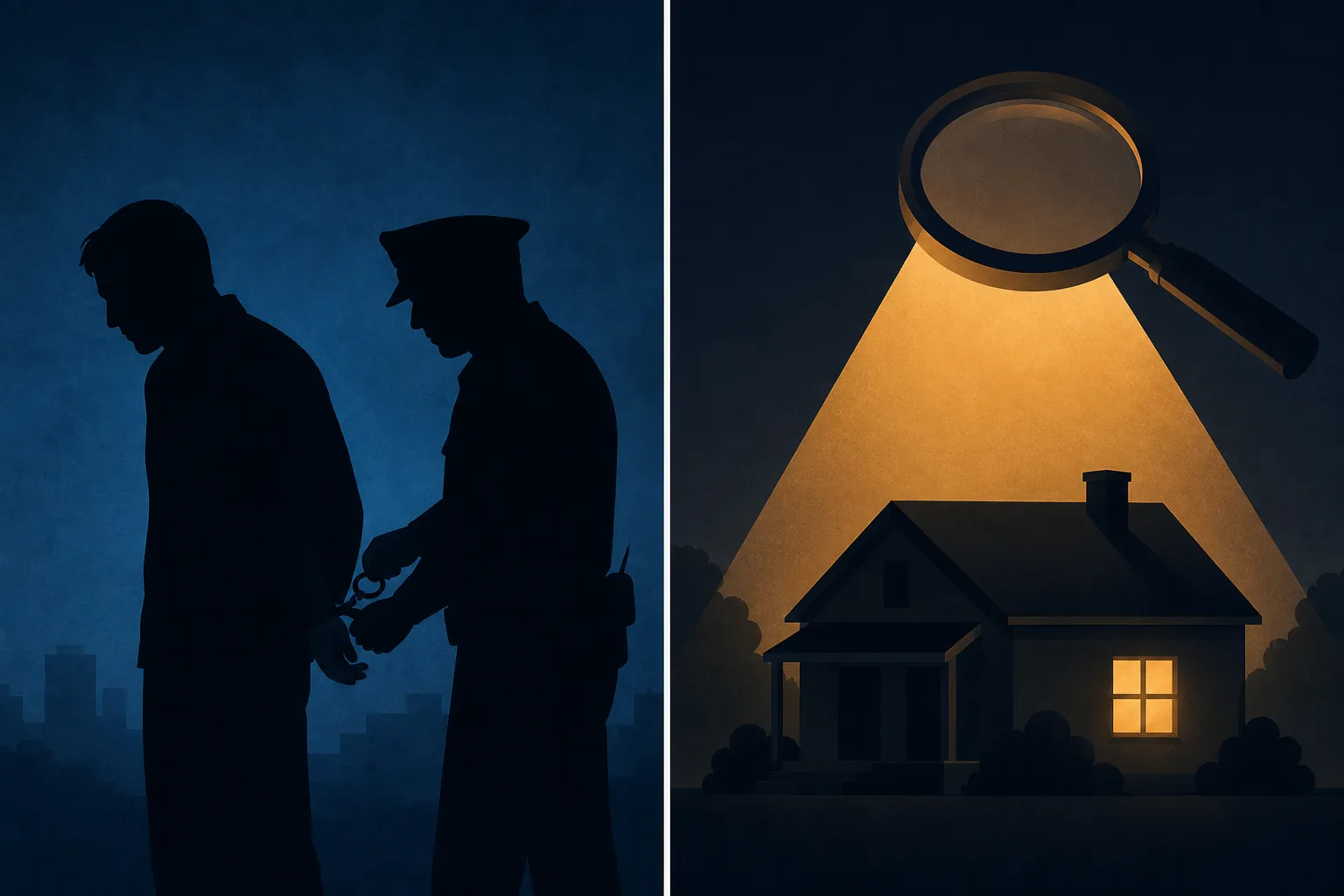
For a search, probable cause is place-and-evidence focused. The question is not simply whether the suspect probably did something wrong. It is whether there is a fair probability that evidence will be found in the place to be searched. LII states the search version as whether a reasonable person would believe evidence of a crime is present in the place to be searched. [1]
This is the mistake to hunt for in search-warrant hypos: the facts may strongly connect the suspect to a crime but barely connect the suspect’s apartment, car, backpack, or phone to evidence. Gates totality still applies, but the totality must be aimed at the correct target.
For more practice translating case rules into exam paragraphs, the site’s Supreme Court cases study guide is the natural companion: probable cause is exactly the kind of doctrine where a case name matters only after you can say what legal move the case made.
Reasonable suspicion: the lower boundary
Reasonable suspicion matters because it is the standard below probable cause. LII’s reasonable-suspicion entry describes it as the standard for Terry-style brief stops and frisks, requiring specific articulable facts rather than a hunch. [2]
Keep the boundary sharp. If the officer briefly stops someone to investigate, reasonable suspicion may be enough. If the officer arrests the person or obtains a warrant to search a home, probable cause is the standard you need to discuss. If the facts begin as a stop and then escalate, write that sequence. The standard may change as the government action changes.
Digital evidence: the framework survives, but the warrant question gets serious
Digital-evidence hypos are not an invitation to abandon probable cause. They are an invitation to notice that the object searched may be different in kind. LII’s probable-cause entry identifies Riley v. California as holding that police generally need a warrant to search a cell phone seized during an arrest. It also identifies Carpenter v. United States as requiring a warrant supported by probable cause for historical cell-site location information. [1]
So if a hypo says the police validly arrest a suspect and then open the suspect’s phone, do not stop after arrest probable cause. A valid arrest does not automatically answer the phone-search issue. Ask whether a warrant was required, whether probable cause supported that warrant, and whether any exception is actually available. Riley exists because a phone is not treated like every ordinary physical item found on an arrestee.
Carpenter works the same way for historical cell-site data. The important exam move is not to recite that technology is sensitive. It is to identify the government acquisition of location-history information, recognize the warrant-and-probable-cause issue, and then apply the facts supporting or weakening the government’s claim.
Where probable cause sits among proof standards

Probable cause sits above reasonable suspicion and below trial-level proof. That comparison is useful only as orientation. Do not spend an exam paragraph proving that probable cause is less than beyond a reasonable doubt unless the call of the question makes proof standards the issue. In most criminal procedure hypos, the work is factual: which facts existed, when the officer knew them, and whether they support the particular arrest or search.
The timing point matters. Probable cause is assessed based on what was known at the relevant moment. Later-discovered evidence may explain why the police were right in the ordinary sense, but it does not retroactively supply probable cause for the earlier action.
If probable cause is missing: exclusion and good faith
Remedies come after the probable-cause analysis, not before it. LII’s probable-cause entry ties Fourth Amendment violations to the exclusionary rule and identifies Mapp v. Ohio as the case applying exclusion to the states. The same entry also notes the good-faith exception, which can prevent exclusion when officers reasonably rely on a warrant later found defective. [1]
That means a clean exam sequence is: first decide whether the search or seizure required probable cause; then decide whether probable cause existed; then decide whether the warrant, if any, was valid; then discuss suppression and good faith. A defective warrant does not always mean suppression. A lack of suppression does not mean the Fourth Amendment analysis was unnecessary.
If you are building broader issue-spotting habits, compare this sequence with the IRAC-style treatment in Study the ADA for Law School Exams and the criminal-law orientation in Defense Attorney Withdrawal on the Bar Exam. Different subjects, same discipline: identify the legal consequence before you start announcing doctrine.
The exam checklist
- Identify the government action: stop, frisk, arrest, search, warrant application, phone search, data request, or use of evidence.
- Name the required standard. Do not use probable cause if the action requires only reasonable suspicion, and do not use reasonable suspicion for an arrest or search warrant.
- Separate arrest from search. Arrest asks whether this person committed a crime. Search asks whether evidence will be found in this place.
- Apply Gates totality. Use Aguilar-Spinelli’s basis-of-knowledge and veracity concerns as factors when informant tips appear, but do not treat them as mandatory boxes.
- Track timing. Use the facts known before the arrest, search, or warrant application.
- For digital facts, ask the Riley or Carpenter question instead of assuming a phone or location record is just another container or observation.
- Only after the Fourth Amendment violation analysis, discuss exclusion, Mapp, and the good-faith exception.
References
- probable cause, LII Wex, Legal Information Institute, last reviewed October 2025
- reasonable suspicion, LII Wex, Legal Information Institute
- Aguilar-Spinelli test, LII Wex, Legal Information Institute
- What Is Probable Cause?, FindLaw, July 6, 2026
Related exhibits & inventory
Verified outcomes
No verified outcomes on file for this exam yet
See Methodology for how outcome evidence is disclosed once logged.
Planners
No planner filed for this exam yet
A downloadable timeline template for this exam hasn't been published yet.
Tool verdicts
AI-tool cautions
No AI tools tested for this exam yet
No hands-on AI-accuracy logs have been filed for this exam.
Questions about this plan
Ask a question about a specific section, timeline, or citation in this plan — or flag something that needs correcting.
Comments
Join the discussion with an anonymous comment.