
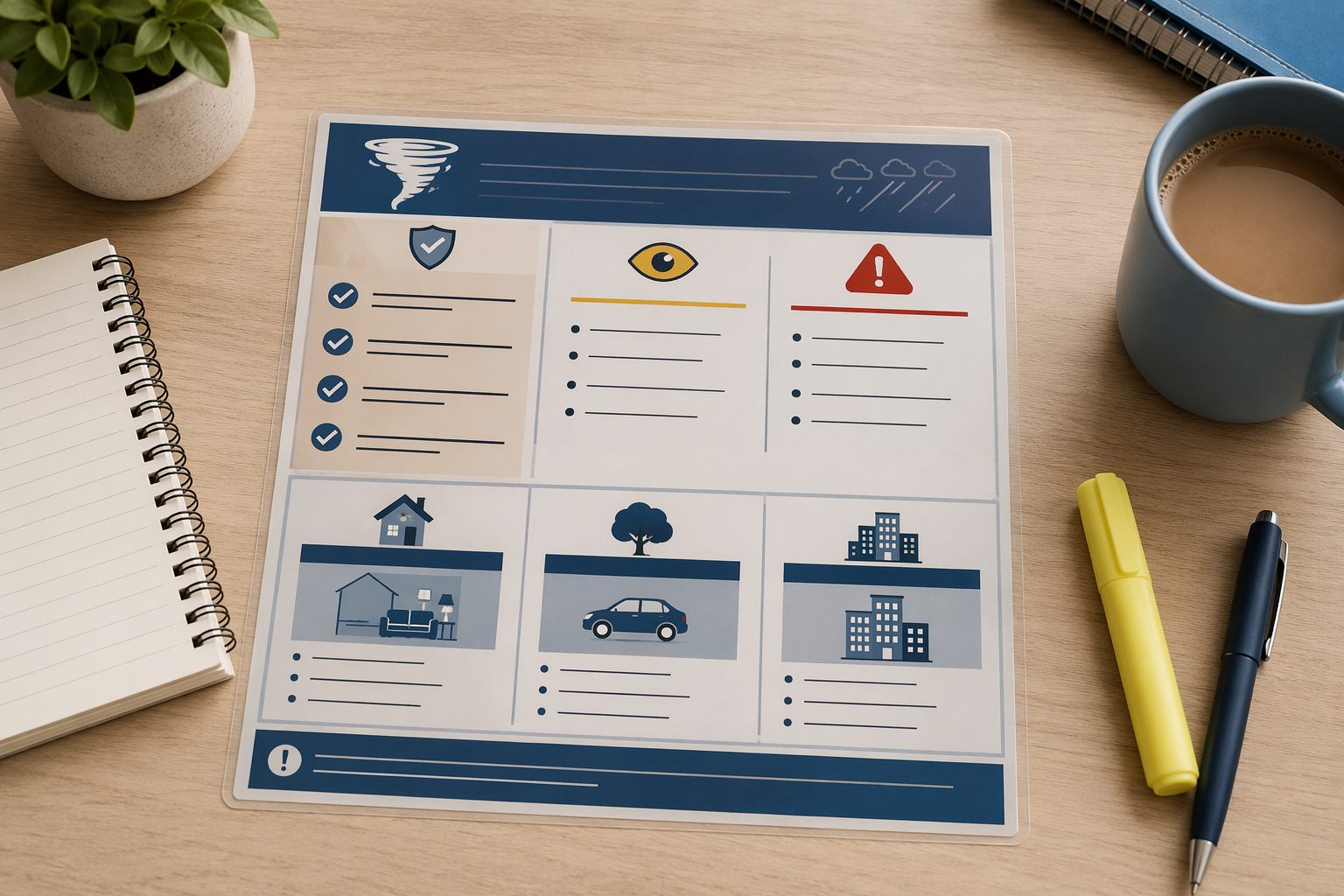
Tornado Safety Tips Every Student Should Memorize
A compact, study-friendly tornado safety guide that distills key statistics, watch/warning definitions, location-specific action steps, and a self-quiz into a format students can memorize and test themselves on.
Updated:
For students, the useful version of tornado safety is short: know the numbers, know watch vs. warning, and know the nearest shelter route before the siren starts. The U.S. averages more than 1,200 tornadoes a year, and NOAA reports 71 average annual deaths from 1993 to 2022 [1]. Warning lead time is often only 13 to 15 minutes [2]. In 2026, risk is also shifting eastward, with research cited by U.S. News pointing to an expansion up to 500 miles east into states such as Alabama, Arkansas, Illinois, Indiana, Kentucky, Mississippi, Missouri, and Tennessee [3].
Watch vs. warning
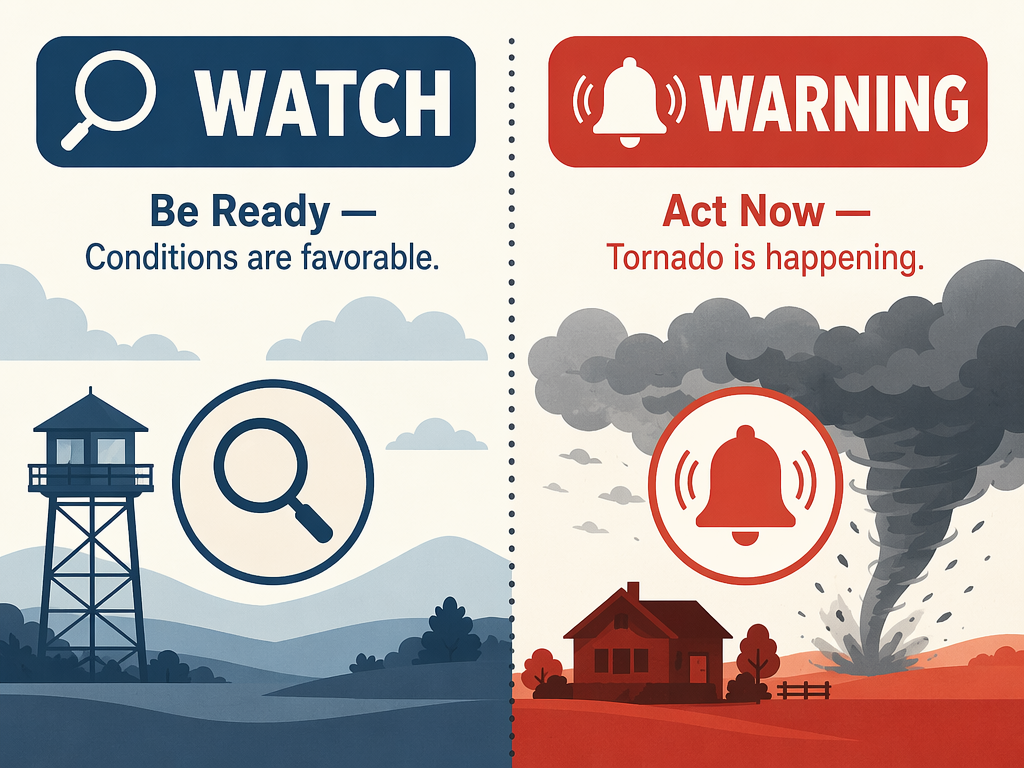
| Alert | What it means | What you do |
|---|---|---|
| Watch | Conditions are favorable for tornadoes [4]. | Be ready. Check where your shelter is, keep your phone charged, and stay close to updates. |
| Warning | A tornado is happening or has been spotted [4]. | Act now. Move to shelter immediately. |
Do not spend a warning opening windows or trying to look outside. That is not the task.
Where to go
- Classroom, library, or lab: move to the lowest floor and get into an interior hallway or small room away from windows [5][7].
- Dorm: use the basement if there is one. If not, go to an interior room on the lowest floor and stay away from glass [5].
- Gym, auditorium, or cafeteria: leave the open space and follow the building's shelter plan. Do not stay where the room is wide open [7].
- Bus, car, or outdoors: get to a sturdy building immediately. School and CDC guidance puts the priority on getting under real shelter, not waiting outside [6].
Once you are in place, crouch low, cover your head and neck with your arms, and stay away from windows and exterior walls [5]. If your school uses helmets, mats, or other protection in drills, use them exactly as directed.
After the sirens
Do not rush back into normal movement the second the noise stops. Stay clear of damaged buildings, fallen power lines, and debris until staff or officials give the all clear [5].
Check yourself
- You get a tornado watch before class. What is your move? Answer: review your shelter route, stay alert, and be ready to move.
- A warning comes in while you are in a lab. What is your move? Answer: go now to the nearest interior shelter on the lowest floor and get low.
- Sirens start while you are in a gym. What is your move? Answer: leave the open space and follow the drill to the designated shelter area.
- The storm passes and the hallway is quiet. What is your move? Answer: wait for the all clear and avoid damaged areas until they are checked.
References
- Tornadoes - NOAA Education
- Tornado warning lead time report, 2025 - Forbes
- New Tornado Alley 2026: Shifting Risks - U.S. News, May 2026 - U.S. News
- Tornado Safety Rules - National Weather Service Birmingham
- Tornadoes - Ready.gov
- Tornadoes Safety - CDC
- Schools - National Weather Service Green Bay
Comments
Join the discussion with an anonymous comment.