
Which Homeschool Curriculum Is Best for Your Family in 2026?
Compare top homeschool curriculum platforms side by side on pricing, accreditation, learning-style fit, and parent-involvement level to find the best match for your family's needs.
Updated:
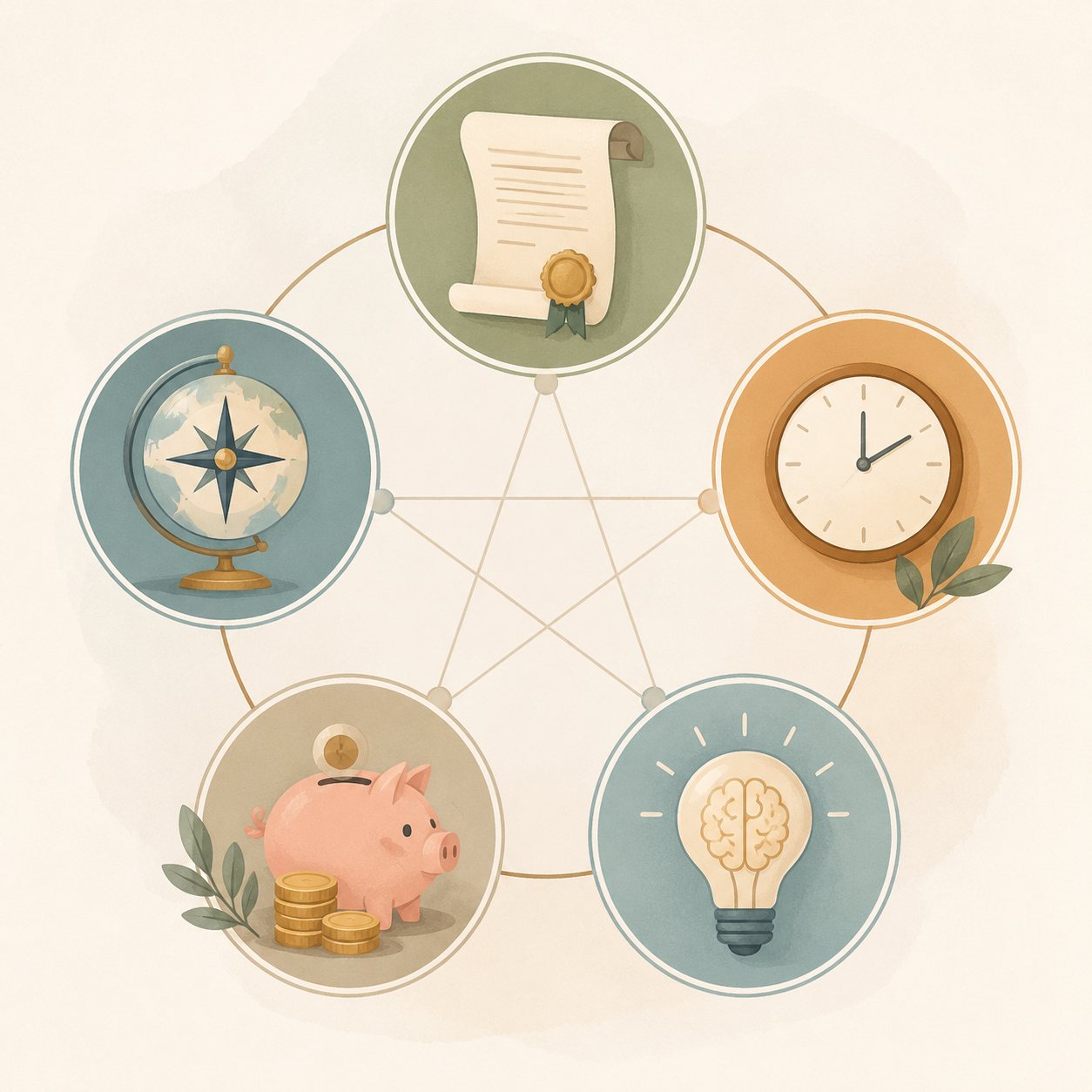
The least useful question in a crowded homeschool tab session is “Which curriculum is best?” A better question is: which homeschooling resources and curriculum match your family on accreditation, parent teaching time, learning style, budget, and worldview?
That distinction matters more in 2026 because the market is not small or simple anymore. One industry summary puts the homeschool curriculum market at $3.24 billion in 2024, while national estimates place homeschooled students at more than 5.2% of U.S. K–12 enrollment in 2022–23, with NHERI estimating roughly 6% for 2025–26.[1] Tutorbase also reports an NHERI-attributed SAT comparison of 1190 for homeschoolers versus 1060 for public school students, and Brighterly summarizes NHERI’s claim that 78% of peer-reviewed studies show stronger academic performance for homeschooled students.[1][2]
Those numbers help explain why more parents are shopping. They do not prove that any particular platform will produce those outcomes for your child. Homeschool research often depends on non-random samples, and families choosing homeschool curriculum differ in time, income, motivation, prior schooling experience, and support networks. Treat the statistics as market context, not as a receipt for a better transcript.
Quick comparison of major homeschool curriculum options
Prices below reflect mid-2026 reporting where available and should be verified directly before purchase. The same name can also mean different things depending on whether you buy a parent-directed subscription, an accredited school option, or a supplemental tool.
| Platform | Best role | Mid-2026 price signal | Accreditation / records | Parent involvement | Learning-style fit | Worldview | AI / adaptive features |
|---|---|---|---|---|---|---|---|
| Acellus | Full online curriculum or school-style program | Around $249/month in review roundups; verify before enrollment | Accredited options reported; confirm the exact program | Lower daily teaching load because instruction is teacher-led | Good fit for students who can follow video-led, structured lessons | Secular / general academic positioning | Known for adaptive and AI-supported instruction features |
| Power Homeschool | Online core curriculum for families wanting mostly self-directed lessons | Around $99/month in comparison guides; verify current plan terms | Accredited options reported in comparison materials; confirm whether the plan includes them | Low to moderate parent teaching; parent still monitors progress and records | Good for independent learners who like a clear digital sequence | Secular / general academic positioning | Uses the Acellus learning system, including adaptive course delivery |
| Time4Learning | Comprehensive online curriculum for parent-managed homeschool | Paid subscription; exact plan varies, so verify current per-child pricing | Not the same as an accredited school by default; parents manage homeschool compliance and records | Low to moderate daily teaching, with parent oversight | Good for visual, interactive, self-paced learners | Secular | Automated grading and pacing support; less framed around AI than Acellus |
| Miacademy | Customizable online curriculum with strong parent control | Paid subscription; verify current pricing | Parent-managed homeschool rather than a universal accredited-school replacement | Moderate involvement because parents can customize paths | Good for children who need flexibility, gamified practice, and adjusted paths | Secular | Custom learning paths and platform-guided personalization |
| IXL | Supplemental skill practice | Paid subscription; verify current subject and family plans | Not a full accredited homeschool program; use alongside a core curriculum or umbrella school | Depends on how it is assigned; parent chooses what to reinforce | Strong for targeted math, language arts, and standards-aligned practice | Secular | Adaptive diagnostics and personalized practice |
| Khan Academy | Free supplemental lessons and practice | Free | Not a full accredited homeschool program; no transcript path by itself | Parent must select scope, sequence, assignments, and records | Strong for self-paced video explanations and practice | Secular | Personalized practice features; best treated as support, not a school system |
| The Good and the Beautiful | Faith-based curriculum for parent-led homeschool | Varies by subject and materials; verify current bundles | Parent-managed homeschool; confirm any outside record service separately | Moderate to high, especially for younger students | Good for families wanting integrated reading, beauty, and faith-informed materials | Faith-based | Primarily curriculum materials rather than AI-centered delivery |
| Abeka | Traditional faith-based curriculum and school-style materials | Varies by grade, format, and enrollment choice; verify current packages | Some school/enrollment options may support records; confirm before assuming accreditation | Moderate to high unless using video or school-supported options | Good for families wanting structured, traditional lessons | Faith-based | More traditional delivery than adaptive-platform model |
| BJU Press | Faith-based curriculum with structured parent-led or video options | Varies by format and grade; verify current pricing | Parent-managed unless using a separate service; confirm records and accreditation details | Moderate, with teaching load affected by video use | Good for families wanting structured Christian academic materials | Faith-based | Primarily curriculum and video-supported instruction, not an AI-first platform |
Life Hub’s 2026 comparison places average annual homeschool cost broadly between $500 and $2,500 per child, while its platform comparisons and Ideal School’s review roundup show digital options ranging from free supplemental resources to paid monthly programs around the $99 and $249 marks.[3][4] That range is wide enough that “online curriculum” is not a budget category by itself.
First separate full curriculum from supplemental tools
This is the mistake that can cost a family weeks: Khan Academy, IXL, and a complete online homeschool program do not occupy the same slot. A child can learn real algebra from Khan Academy and build real fluency with IXL practice, but those tools do not automatically create a legally complete homeschool plan, issue accredited transcripts, or decide what counts as a full year of English.
A comprehensive curriculum usually gives you a planned sequence across core subjects, lessons, assignments, and some form of assessment. A school-style or accredited option may add teachers, official records, transcripts, or enrollment status, depending on the provider and plan. A supplemental resource fills gaps: extra math practice, a clearer science explanation, reading reinforcement, test prep, or a low-pressure way to review a topic that did not land the first time.
Life Hub’s comparison explicitly distinguishes supplemental tools such as Khan Academy and IXL from broader curriculum or accredited options, which is the line parents should keep visible when comparing prices.[3] A free tool can be excellent and still not be the thing that satisfies your state paperwork, your umbrella school, or a future high school transcript request.
How to choose by family profile
If you need accredited records
Start with accreditation before you look at lesson style. If a high school transcript, NCAA eligibility question, diploma path, umbrella-school requirement, or re-entry into a public or private school is part of your near-term plan, do not assume that “complete curriculum” means “accredited school.”
Acellus and Power Homeschool are the names most likely to appear in this part of the search because comparison guides report accredited options connected to those ecosystems.[3] The important word is “options.” Before paying, confirm the exact entity providing accreditation, whether your chosen plan includes official records, what transcripts look like, and whether your state or receiving school recognizes the arrangement.
If you have limited teaching time
A working parent, a single parent, or a family homeschooling multiple children needs to know who teaches at 9:20 on a Tuesday when the fractions lesson begins. Time4Learning and Power Homeschool are often described as largely self-directed, while Acellus is described as providing more teacher-led instruction.[4][5] That can reduce the parent’s daily explanation load, though it does not remove the parent’s job entirely.
Low-involvement does not mean no-involvement. Someone still checks whether the child is watching lessons carefully, whether quizzes are being guessed through, whether writing is developing, and whether the program’s sequence matches local requirements. The better promise is not “hands off”; it is fewer daily decisions.
If your budget is tight
Build the plan from the non-negotiables first: required subjects, recordkeeping, state compliance, and the one or two areas where your child truly needs paid support. Khan Academy can cover a large amount of free instructional ground, and free-curriculum directories such as Freedom Homeschooling can help parents find no-cost subject materials.[6][7] IXL, a paid skill-practice program, or a writing course can then be added only where the free plan is weak.
The trade-off is parent labor. Free and low-cost plans often require more planning, sequencing, printing, checking, and recordkeeping. A paid platform may be expensive because it packages decisions you would otherwise make yourself. That does not make the expensive option better; it means the real price comparison includes your time.
If you want secular curriculum
For secular materials, the shortlist usually begins with Khan Academy, IXL, Time4Learning, Miacademy, Power Homeschool, or Acellus, depending on whether you need a supplement, parent-managed curriculum, or a more school-like structure. The key is to inspect science, history, literature, and health content rather than relying only on a provider’s broad label.
Miacademy deserves a closer look for families that want flexibility without moving into explicitly faith-based materials. Miacademy’s own curriculum roundup emphasizes customizable learning paths, and Life Hub’s learning-style guide places it among programs suited to students who benefit from personalization and interactive work.[5][6]
If you want faith-based curriculum
Faith-based curriculum is not a single teaching style. The Good and the Beautiful, Abeka, and BJU Press may all appear on Christian homeschool lists, but they differ in tone, structure, parent teaching load, and format.[8] One family may want integrated faith language across subjects; another may want a traditional school-at-home model; another may only want certain subjects from a faith-based publisher.
The practical test is not whether the curriculum belongs to the right category. It is whether you are comfortable with how worldview appears in history, science, literature, and daily assignments, and whether the teaching format fits the adult who will actually deliver or supervise it.
If you are supplementing another core program
Khan Academy and IXL make the most sense when the family already has a spine: a parent-built curriculum, a charter or umbrella program, a literature-based plan, a faith-based package, or an online core. Khan Academy can reteach a concept in a different voice. IXL can turn “she seems shaky on decimals” into targeted practice. Prodigy’s resource inventory also treats many homeschool tools as supports for parent-teachers rather than replacements for a full curriculum plan.[9]
This is where many families overspend. If a child already has a complete math course, a second full math curriculum may create more clicking, not more mastery. A supplement should have a job title: diagnose gaps, provide extra practice, explain differently, add enrichment, or lighten one recurring pain point.
Platform notes without pretending they are interchangeable
Acellus
Acellus is strongest for families looking for a highly structured, online, teacher-led model with adaptive technology. Miacademy’s 2026 roundup discusses Acellus in connection with AI-supported learning, and Ideal School’s review positions it among more comprehensive online options.[5][4] The caution is cost and plan clarity: if you are considering it for accreditation or records, verify the exact enrollment path, not just the curriculum name.
Power Homeschool
Power Homeschool is often attractive because it offers a more affordable online path than some school-style programs, with comparison sources placing it around $99/month in mid-2026.[3] It is a better fit for students who can work independently through a digital sequence than for children who need constant live interaction. Parents should still confirm whether they are buying curriculum access, an accredited option, or a recordkeeping-supported arrangement.
Time4Learning
Time4Learning sits in the practical middle for many families: broad online curriculum, self-paced lessons, automated support, and enough structure to reduce daily planning. Life Hub and Ideal School both discuss it as a largely self-directed option.[3][4] It should not be treated as an accredited school replacement unless a separate arrangement provides that piece.
Miacademy
Miacademy is worth considering when customization matters more than outsourcing every decision. Its appeal is the adjustable path: parents can shape learning while still giving children an engaging online environment.[5] That makes it especially relevant for students who are uneven across subjects or who need more control over pacing than a rigid grade-level package allows.
Khan Academy and IXL
Khan Academy and IXL should stay on the comparison table, but not in the same mental bucket as a full homeschool provider. Khan Academy is excellent for free explanations and practice. IXL is useful for adaptive skill work and gap practice. Neither should be the only plan unless the parent has built the surrounding curriculum sequence, compliance system, assignments, assessments, and records.
The Good and the Beautiful, Abeka, and BJU Press
These faith-based options belong in the comparison because worldview alignment can be a core requirement, not a decorative preference. They also remind parents that “online curriculum” is not the whole homeschool market. Some families want physical books, parent-led lessons, video instruction, or a more traditional academic sequence. The decision here turns on content fit and adult teaching capacity as much as price.
A short-list method that prevents the most common mismatch
Before comparing demos, eliminate anything that fails a hard constraint. If you need accredited records, remove programs that cannot provide them directly or through a clearly documented partner. If you cannot teach for long blocks each day, remove parent-intensive packages unless another adult or tutor will carry that load. If worldview alignment is non-negotiable, do not postpone that review until after the child is attached to the platform.
- Need accreditation or official transcripts: start with providers or school options that explicitly document accreditation and records.
- Need low daily teaching load: compare Acellus, Power Homeschool, and Time4Learning first, then inspect how much monitoring remains.
- Need the lowest cost: build around free resources first, then pay only for the subject or support function that is missing.
- Need flexibility for an uneven learner: look closely at Miacademy, IXL as a supplement, and any program that allows subject-by-subject pacing.
- Need faith-based alignment: compare The Good and the Beautiful, Abeka, and BJU Press by sample lessons, not category label alone.
- Already have a core curriculum: treat Khan Academy, IXL, Prodigy-style tools, and free directories as targeted supports.
Then test the remaining options with one ordinary school week in mind. Who opens the lesson? Who explains the first confusing problem? Who grades writing? Who notices skipped work? Who keeps records? Who decides whether the child is ready to move on? The best-looking dashboard is only useful if it answers enough of those questions for your household.
Choosing homeschooling resources and curriculum is less like picking the highest-rated app and more like choosing the system your family can sustain. Build the shortlist around accreditation, parent time, learning style, budget, and worldview, then verify current pricing, plan terms, and accreditation details directly with the provider before enrollment.
References
- Homeschooling Statistics 2025-2026 in the US, Brighterly
- Homeschool Statistics 2026: 30+ Verified Data Points, Tutorbase
- Homeschool Curriculum Comparison Guide for 2026 Families, Life Hub Education
- 10 Best Homeschool Programs Reviewed for 2026, Ideal School
- Top 7 Best Homeschool Curriculums of 2026, Miacademy
- 10 Best Homeschool Curriculums for Every Learning Style in 2026, Life Hub Education
- Freedom Homeschooling
- The 2026 Best Homeschool Curriculum & Resources List, How to Homeschool
- The Top 18 Homeschooling Resources for Parent-Teachers, Prodigy
Comments
Join the discussion with an anonymous comment.