
Planner
2026 Perseid Meteor Shower Peak Date and Viewing Tips
Find the exact peak date and best viewing times for the 2026 Perseid meteor shower, plus step-by-step preparation tips to see 50–80 meteors per hour under a new moon — no telescope required.
Scope panel
- Target exam
- not specified
- Timeline length
- 1 weeks
- Format
- not specified
- Last reviewed
Put this on your calendar first: plan for the night of Wednesday, August 12, into the pre-dawn hours of Thursday, August 13. The predicted peak is 14:53 UTC on August 13, which is daylight for North America, so the useful plan is not to chase one exact minute. It is to be outside after midnight, stay as close to 3–4 AM local time as you reasonably can, and choose the darkest workable sky you can reach.[1]
That timing is unusually kind in 2026 because the moon is out of the way. The new moon falls at 17:37 UTC on August 12, with 0% illumination around the Perseid peak, removing the bright moonlight that often washes out fainter meteors.[2] If you only have one night to try, make it August 12–13. If you can only manage part of that night, choose the hours after midnight. If you can manage one focused hour, aim for 3–4 AM local time.
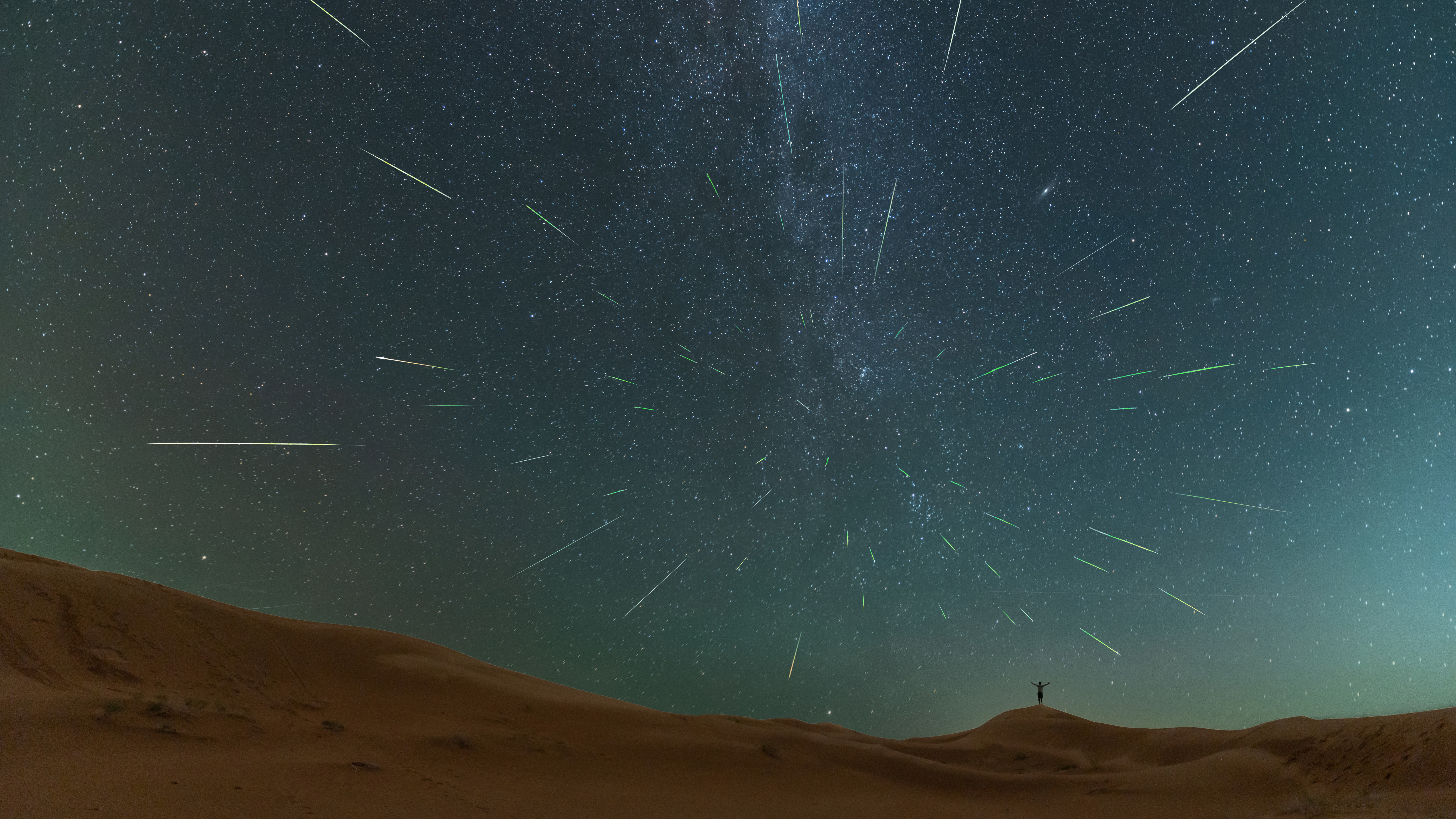
Why 2026 Is Worth Planning Around
The Perseids are reliable every year, but they are not equally easy to see every year. Moonlight is usually the spoiler: it brightens the sky, reduces contrast, and erases many of the faint streaks that make a meteor shower feel active instead of occasional. In 2026, the peak lines up with a new moon, a setup described as comparable to the favorable Perseid conditions last seen in 2018, with the next similar opportunity not expected until 2029.[2]
The other reason to plan carefully is that the Perseids reward the late shift. After midnight, your side of Earth turns more directly into the stream of debris that creates the shower, and the radiant in Perseus climbs higher in the sky. Practical skywatching sources converge on the pre-dawn hours, especially around 3–4 AM local time, as the strongest viewing window.[1][3][4][5]
The shower is active from July 17 through August 24, 2026, so a meteor here or there is possible outside peak night.[6] Treat that range as backup context, not as permission to be casual with the main event. The difference between July 30 at 10 PM and August 13 at 3 AM under a dark sky is not a small scheduling detail.
What “50–80 Meteors Per Hour” Actually Means
You may see Perseid previews promising “up to 100” meteors per hour, and occasionally even higher numbers. The careful version is this: about 100 meteors per hour is a theoretical zenithal hourly rate, or ZHR, under ideal conditions with the radiant overhead and very dark skies.[3][4] Most real people do not observe under perfect laboratory-like skies. Trees, buildings, haze, local light pollution, fatigue, and looking at the wrong patch of sky all reduce the count.
| Viewing location | Realistic expectation near the 2026 peak | What that means for planning |
|---|---|---|
| Dark rural or dark-sky site | About 50–80 meteors per hour | Worth the extra planning if you can travel safely and stay late |
| Suburban sky | About 10–25 meteors per hour | Still worthwhile, especially after midnight, but expect quieter gaps |
| City sky | About 3–10 meteors per hour | Possible, but you need patience and the darkest local spot you can find |
Those ranges are not meant to discourage anyone without a car or a perfect dark-sky site. They are meant to keep the trade-off visible. A city viewer who sees six bright Perseids from a park has not “failed” at the shower. A dark-site viewer simply has access to many more faint meteors that never break through urban skyglow.[3]
The Best Viewing Plan for August 12–13
Here is the workable version of the plan, without pretending everyone can disappear into the countryside all night.
- Choose your location before the night of August 12. If possible, pick a safe place 30–60 minutes from major city lights, with an open view of the sky.
- Arrive before your main viewing window. You do not want to be parking, texting, or finding a blanket at the exact hour your eyes should be adapting.
- Give your eyes at least 20 minutes without bright light. Put your phone away or use the dimmest red-light setting you have.
- Lie flat or recline. Looking straight up gives your peripheral vision more sky to work with and keeps your neck from ending the session early.
- Look 40–90 degrees away from Perseus rather than staring directly at the radiant. Meteors that appear farther from the radiant often leave longer, easier-to-notice streaks.
- Stay through the pre-dawn window if you can, especially around 3–4 AM local time.
For students trying to build a realistic route instead of guessing in a parking lot at midnight, a campus-focused dark-sky planning guide can help narrow the search to safe, practical locations: Where Students Can Watch the Perseid Meteor Shower in 2026.
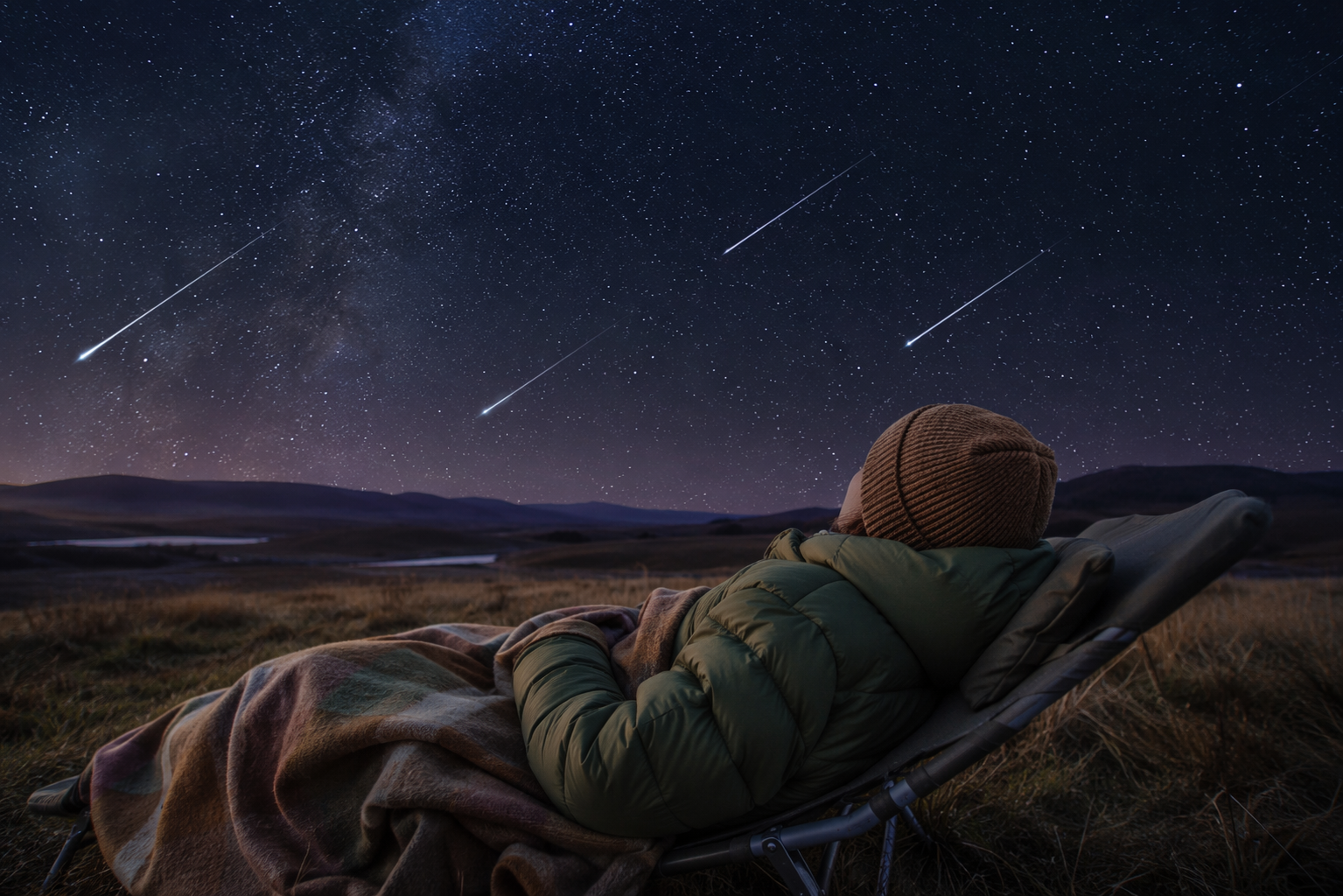
Do Not Bring a Telescope
Meteor showers are naked-eye events. A telescope or binoculars narrows your view, which is the opposite of what you want when meteors can appear across a broad part of the sky. Bring a reclining chair, blanket, warm layers, water, a snack if you are staying out late, and enough patience to let the sky get interesting.[7][8]
The warm layers matter more than people expect. Even in August, sitting still outside at 3 AM can feel very different from walking to class or leaving a shift at 10 PM. Discomfort shortens viewing sessions, and short viewing sessions make meteor showers feel worse than they are.
How to Translate the Peak Time Into Your Night
The predicted peak at 14:53 UTC on August 13 is useful for astronomers and calendar writers, but it is not the way most viewers should make the decision. For the continental United States, that UTC peak falls after the best local nighttime viewing has already passed. That is why the practical instruction is: go out during the night of August 12, keep watching after midnight, and use the pre-dawn hours of August 13 as your prime window.[1]
| If your schedule allows | Best choice |
|---|---|
| One full session | About midnight to dawn on August 13 |
| One shorter late-night session | 2–4 AM local time on August 13 |
| One focused hour | 3–4 AM local time on August 13 |
| Cannot stay out late | Try after midnight if possible; before midnight is a compromise |
| Clouds on peak night | Try the nearest clear pre-dawn morning around the peak |
If you have a work shift, family curfew, early class, or no safe late-night transportation, do not make the plan so perfect that it becomes impossible. A shorter, darker, post-midnight session is usually better than a longer session from a bright sidewalk before midnight.
Where to Look Once You Are Outside
The Perseids appear to radiate from the constellation Perseus, but you do not need to identify Perseus to enjoy the shower. In fact, staring directly at the radiant is a common beginner mistake. Near the radiant, meteor trails look shorter because you are seeing them more head-on. Look well away from Perseus, roughly 40–90 degrees from the radiant, and let your peripheral vision catch movement across the wider sky.
A simple approach works: lie back with your feet generally pointed northeast if that gives you an open sky, then adjust toward the darkest, least obstructed part of your view. Avoid staring at one tiny patch. Let your eyes relax and scan broadly. If a tree, dorm, streetlight, or apartment building blocks part of the sky, shift your setup rather than trying to work around it for an hour.
If You Are Watching From Suburbs or a City
A suburban Perseid plan should focus on reducing nearby light first. Get away from porch lights, athletic fields, gas stations, apartment courtyards, and roads where headlights sweep across your view. A school field, lakeshore, cemetery road, rural edge of town, or large park can be meaningfully better than a backyard with security lights, even if neither qualifies as a true dark-sky site.
For city viewing, the honest expectation is lower: perhaps 3–10 meteors per hour near the peak, with the brighter meteors doing most of the work.[3] That can still be worth a short session if the sky is clear and you have a safe open view. Choose a place where the brightest lights are behind you, keep your phone away, and watch long enough that a quiet ten minutes does not decide the whole night.
If you can get to a darker site but not stay until dawn, prioritize darkness and the post-midnight window over total hours. Two careful hours from a dark location can beat a long, distracted watch from a bright one.
Backup Nights, Weather, and Schedule Limits
Clouds are the one planning problem no checklist can solve. Because the Perseids are active for several weeks, the nearest clear pre-dawn morning around August 13 is your best fallback, with the strongest preference for dates close to the predicted peak.[6] If August 12–13 is completely clouded out, try again as soon as the weather opens rather than waiting a week for convenience.
If you are choosing between the morning of August 12 and the morning of August 13, the morning of August 13 is the better single pick because it follows the night leading into the predicted peak. The morning of August 12 can still be good, especially under a clear dark sky, but it is the backup rather than the main appointment.[1]
For a group, decide the leave time and return time before anyone is tired. For a solo viewer, choose safety over darkness if those conflict. A slightly brighter but familiar location is better than an isolated place that makes you uneasy at 3 AM.
Photography Can Wait Until the Viewing Plan Is Set
If your main goal is to see meteors, do not turn the first half hour into a camera-settings project. Watch first, let your eyes adapt, and decide whether the sky is active enough to split your attention. If you do want to try images, use a separate photography plan rather than guessing in the dark: How to Photograph the 2026 Perseid Meteor Shower.
A Simple Go/No-Go Decision
Go if the sky is mostly clear, you can watch after midnight on August 13, and you have access to a safe place with a reasonably open sky. Make the extra effort if you can reach a dark location 30–60 minutes from city lights and stay into the 3–4 AM window. That is the version of the 2026 Perseids with the best chance of feeling memorable.
Scale down if you need to. A suburban watch from 2–3 AM is still a real plan. A city watch from the darkest nearby park is still a real plan. Just do not expect city-sky numbers to look like dark-sky numbers, and do not let a telescope, phone screen, or too-short session get in the way of the one thing meteor watching actually needs: dark-adapted eyes under as much open sky as you can manage.
If you want to turn the night into something more structured, especially for a class, club, or study group, use a companion guide such as Turn the 2026 Perseid Meteor Shower Into an Astronomy Study Session or Use the Perseid Meteor Shower Peak as an Astronomy Lesson. For the basic viewing decision, keep it simpler: choose the darkest workable location, go after midnight on August 13, give your eyes at least 20 minutes, and stay through the pre-dawn peak if you can.
References
- Everything you need to know: Perseid meteor shower, EarthSky
- Perseid Meteor Shower 2026: Perfect New Moon To Create Ideal Conditions For Peak, The Weather Channel, July 16, 2026
- Perseid meteor shower 2026 guide, Space.com
- Meteor Shower Calendar, American Meteor Society
- Perseid Meteor Shower, The Old Farmer's Almanac
- The Perseid meteor shower reaches its peak, In-The-Sky.org
- Your guide to meteor showers, The Planetary Society
- Perseid meteor shower guide: when and where to see it in the UK, Royal Museums Greenwich
Referenced in this schedule
- Best Places to Watch the 2026 Perseid Meteor Shower in the US
- The Complete Guide to Building a Weekly Homework Planner System That Actually Works
- How to Choose and Set Up a Notion Student Dashboard Template
Check this against the exam hub
Target exam not specified — see all exam hubs.
Comments
Join the discussion with an anonymous comment.