
SAT
Compare the top SAT prep courses for 2026 — from free Khan Academy to premium tutoring — and find the best fit based on your budget, learning style, and target score.
Updated:
The real SAT exam prep question is not which course has the loudest guarantee or the most familiar logo. It is how much structure the student actually needs to do the work after school, when nobody feels like opening another math module.
A motivated student with a realistic score goal can build a serious plan with free Bluebook practice tests, Khan Academy, and one paid question platform. Another student may need a live class because the calendar, instructor, and homework deadlines are the only things that turn good intentions into completed practice. Price matters, but it should buy a missing behavior: practice volume, review quality, pacing, accountability, or expert feedback.
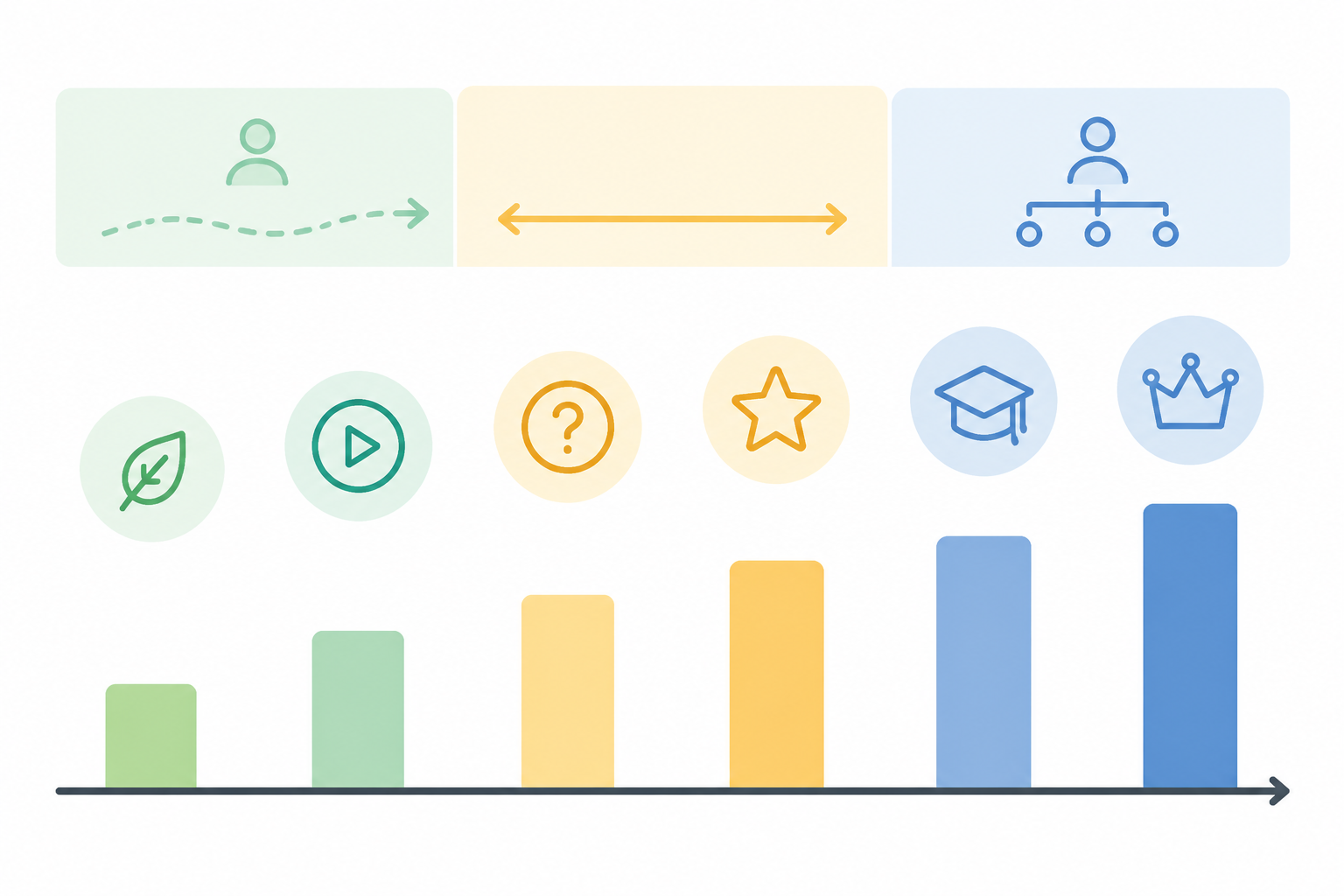
2026 SAT Prep Course Price And Fit Comparison
The prices below were current in June-July 2026 based on available course comparisons and provider information, and they can change without warning. Treat them as a decision snapshot, not a checkout guarantee.
| Option | Approx. 2026 price | What the student is really buying | Best fit | Main caution |
|---|---|---|---|---|
| Khan Academy + Bluebook | Free | Official practice access, personalized skill practice, and full-length test rehearsal | Self-directed students with moderate goals or students starting with a diagnostic | Less depth for advanced strategy or very high 1300+ targets |
| Magoosh | $129 | 200+ video lessons and 1,750+ practice questions | Visual learners who will follow videos and then practice independently | Low price does not add much outside accountability |
| UWorld | $249 | 1,650+ exam-level questions with detailed visual explanations | Students who learn by reviewing exactly why an answer choice is wrong | Vendor comparisons naturally favor UWorld, so use factual product details cautiously |
| PrepScholar | $397 | 4,000+ practice questions, adaptive curriculum, and a +160 point guarantee | Independent students aiming for a larger gain who need more structure than a question bank | Guarantee depends on baseline and completion conditions |
| Kaplan Live Online | $799 | 18 hours of live instruction, QBank access, and an AI-driven study plan | Students who need a schedule, instructor, and assigned work | Worth it only if the student attends and completes practice outside class |
| Princeton Review | $949+ | Live instruction and high-score guarantee options, including 1400+ or 1500+ courses | Students with high target scores who qualify for the guarantee terms | The guarantee is not universal; prerequisites and completion rules matter |
| Premium tutoring tier | $2,000+ commonly possible | Individual diagnosis, custom pacing, and direct accountability | Students with unusual score gaps, limited time, or repeated plateaus | The tutor must provide a system, not just encouragement |
A table like this should make one thing uncomfortable: a $949 live course and a free plan are not automatically competing products. They solve different problems. If a student is already taking practice tests, reviewing mistakes, and showing up three times a week, a paid platform may be enough. If the student keeps saying they are “studying” but has not finished a full-length test, the family may need to buy structure before it buys more content.
Start With The Student, Not The Brand
Before comparing dashboards and guarantees, sort the student into a practical category. This is not a personality test. It is a check on what will actually happen on a Tuesday night.
- Moderate score gain, self-directed: start with Bluebook, Khan Academy, and one low-cost paid platform if practice review needs more depth.
- High gain, still independent: consider PrepScholar or a heavier question platform because the student needs volume, diagnosis, and review discipline.
- High target score: look closely at advanced explanations, hard-question practice, and whether a 1400+ or 1500+ guarantee actually applies.
- Low motivation or weak follow-through: prioritize live class structure, scheduled homework, and adult accountability over the cheapest content library.
- Parent mainly seeking reassurance: pause before paying for a famous name. Ask what the course will make the student do each week that they are not doing now.
That last category deserves honesty. Plenty of families do not buy SAT prep because they lack information. They buy it because the score feels high-stakes and somebody wants the feeling that the problem is being handled. A course can help, but only if it changes the student’s study behavior.
The Budget Stack: Bluebook, Khan Academy, Then One Paid Tool
The strongest low-cost SAT exam prep plan starts with the official ecosystem. Bluebook gives students the digital testing experience and full-length practice tests. Khan Academy, developed with the College Board, provides free personalized SAT practice and skill work.[3] That combination is not glamorous, but it covers the first job: finding out what the student actually misses.

The order matters. A student should not begin by binge-watching lesson videos or shopping for a harder course. Take a diagnostic first, review the misses, build skill practice around the weak areas, and then add a paid tool only when there is a specific gap.
| If the gap is... | Add... | Why |
|---|---|---|
| The student needs lessons explained visually | Magoosh | Its lower price, 200+ video lessons, and 1,750+ practice questions make sense for a self-starter who uses videos well.[1] |
| The student keeps repeating the same mistake types | UWorld | Its 1,650+ exam-level questions and detailed visual explanations are useful when the review process matters more than another generic lesson.[2] |
| The student needs a larger guided curriculum | PrepScholar | Its 4,000+ practice questions and adaptive curriculum offer more structure without jumping to a live class price.[1] |
The case for the budget stack is strongest when the student will complete full-length practice and review mistakes carefully. College Board guidance emphasizes building a study plan around official practice, and its reported practice-test data points in the direction every coach already knows: students who take more full-length practice tests tend to score higher. Students taking one, two, or three or more full-length practice tests score about 25, 45, and 60 points higher, respectively.[4]
Khan Academy also has a meaningful evidence point behind it. A College Board/Khan Academy analysis of roughly 250,000 students associated 20 hours of practice with an average gain of about 115 points.[3] That does not mean every student who logs 20 hours gets 115 points. It means that sustained, targeted practice has more substance behind it than most expensive-sounding shortcuts.
Here is the limitation: a budget stack is only cheap if the student uses it. A teenager can sound mature in a planning conversation and still avoid the next practice test because the first score was embarrassing. For students who will not self-assign, self-check, and self-correct, the budget stack may become a pile of unused tabs.
Why The Digital SAT Makes Review Quality More Important
The digital SAT is not just a shorter paper test on a screen. Its multistage adaptive design means performance on the first module affects the difficulty of the second module.[5] That makes early accuracy especially important. A student who loses points on foundational algebra, punctuation, or evidence questions in Module 1 may not get the same scoring opportunity later.
This is where shallow prep shows. Tricks can help around the edges, but they cannot rescue weak foundations fast enough if the student is missing early-module questions. Strong SAT prep now has to include careful review of why an answer is right, why the tempting answer is wrong, and what pattern caused the miss.
That is also why UWorld’s explanation-heavy model and Khan Academy’s skill practice deserve attention for independent students. The useful question is not “How many questions are in the bank?” by itself. It is whether the student will slow down long enough after each set to learn from the miss.
Where PrepScholar Fits
PrepScholar sits in the middle of the market: more expensive than Magoosh or UWorld, much cheaper than the major live courses, and more structured than a simple question bank. Its 4,000+ practice questions are a real differentiator because practice volume matters when a student needs repeated exposure across question types.[1]
The +160 point guarantee should be taken seriously, but not lazily. Guarantees are contracts with eligibility rules. Baseline score, course completion, attendance or usage requirements, and retake conditions can all matter. A family should read those terms before treating the guarantee as a safety net.
PrepScholar makes the most sense for a student who can work independently but benefits from a defined path. If the student needs someone live on screen expecting them to show up, PrepScholar may still be too quiet.
When Premium Structure Is Worth Paying For
A live SAT course earns its price when it creates a study rhythm the student would not create alone. Kaplan Live Online, at about $799 in the 2026 comparisons, includes 18 hours of live classes, a QBank, and an AI-driven study plan; TestPrepInsight rated Kaplan 9.5 out of 10 for curriculum quality.[1] That is not just content. It is a weekly appointment with consequences.
For many students, the live class is not valuable because the teacher says something no one else knows. It is valuable because the teacher sets the pace, the homework exists, and the student has to face the next practice set before the next class. That kind of structure can be worth more than another thousand practice questions the student will never open.
Princeton Review, starting around $949 for its major offerings in 2026 comparisons, is the premium brand many families notice first. Its strongest selling point is the guarantee structure around high-score courses, including 1400+ and 1500+ options.[1] For a student who already has the baseline score and needs a high target for selective admissions, that can be relevant.
But the guarantee is not a magic refund promise for any nervous junior. It applies only when prerequisites are met. If a student starts too low for a 1500+ course, misses sessions, skips assignments, or fails to follow the required process, the guarantee may not protect the family in the way the headline implies.
Premium tutoring belongs in a narrower lane. It can be the right answer for a student with a short runway, a repeated plateau, test anxiety that disrupts performance, or a lopsided score profile where a class moves too broadly. It is not automatically better than a course. A tutor who chats through homework without a diagnostic plan, timed practice, and mistake tracking is expensive comfort.
Do Not Overbuy For A Retake, But Do Plan For One
Many students improve when they retake the SAT; Tutor Doctor cites College Board data indicating that about two in three students improve on a retake.[6] That does not mean a student should casually sit for test after test without changing the preparation. A retake helps most when the student knows what happened the first time and has enough weeks to correct the pattern.
A student who missed the target by a modest margin after inconsistent prep may not need a premium course. They may need a cleaner practice schedule, two more full-length tests, and stricter review. A student who has already practiced consistently and still cannot move a section score may need more diagnosis than another free worksheet can provide.
What To Ignore In Most SAT Prep Comparisons
Long brand histories rarely change the decision. Neither do generic lists of “pros and cons” that say every course is flexible, comprehensive, and user-friendly. The useful details are more concrete.
- How many full-length digital practice tests will the student take, and when?
- Who reviews missed questions: the student, a platform, an instructor, or a tutor?
- Does the course assign work on a schedule or simply make resources available?
- Are explanations strong enough to fix the mistake, not just reveal the answer?
- Does any score guarantee apply to this student’s actual baseline score and completion behavior?
Families still deciding between the SAT and ACT should make that choice before buying a course. Once the SAT is the test, the course decision should follow the student’s behavior and score gap, not the other way around.
Recommendation Matrix By Situation
| Student situation | Best first choice | Why |
|---|---|---|
| Starting SAT prep with no diagnostic yet | Bluebook practice test + Khan Academy | The first purchase should wait until the student knows the actual score gap. |
| Motivated student aiming for a moderate gain | Khan Academy + Magoosh | Low cost, enough lessons, and enough practice if the student follows through. |
| Student understands lessons but misses keep repeating | Khan Academy + UWorld | Detailed answer explanations can improve the review process. |
| Independent student aiming for a larger gain | PrepScholar | The larger question bank and adaptive curriculum add structure without live-class pricing. |
| Student avoids practice tests or needs deadlines | Kaplan Live Online | Live class time, a study plan, and QBank support buy accountability. |
| High scorer chasing 1400+ or 1500+ | Princeton Review high-score course, if eligible | The guarantee may matter only if the baseline and completion conditions fit. |
| Student has plateaued despite steady work | Targeted tutoring or a live course | The problem may require diagnosis, not just more unsupervised practice. |
| Parent wants the safest-looking brand | Read the guarantee terms before buying | Reassurance is not the same as a workable weekly study system. |
The next step is simple and usually skipped: take a full-length digital diagnostic before buying anything expensive. Then choose the least costly option that fixes the real constraint. If the constraint is knowledge, use skill practice. If it is review quality, use a better question platform. If it is follow-through, buy structure. After that, put the course into a weekly study schedule, because the purchase itself does not raise the score.
References
- Best SAT Prep Courses (Reviewed & Ranked), TestPrepInsight.
- What Is the Best SAT Prep Course in 2026-27?, UWorld College Prep.
- How to Prepare for the SAT, BigFuture/College Board.
- Build Your Study Plan, College Board.
- Digital SAT Changes, Test Prep Scout.
- How to Improve Your SAT Score, Tutor Doctor, February 2026.
Supporting Resources
- A Step-by-Step GRE Study Plan with Free Tools →
This article provides a chronological plan for using free GRE study tools, from your initial diagnostic test through to the final practice simulation, so you can prepare effectively without spending money.
- ACCUPLACER Study Apps with AI Tutoring in 2026: How Mentora and Other AI Features Are Changing Test Prep →
This article evaluates the new generation of ACCUPLACER study apps that include AI tutoring features like Mentora. It explains how these tools provide step-by-step explanations, personalized feedback, and adaptive study plans, and helps students decide which app's AI features actually improve placement outcomes.
- How to Decide Between SAT and ACT Prep in 2026 →
This guide helps you decide whether to prep for the SAT, ACT, or both by comparing the 2026 format changes, your personal strengths, and the current college admissions landscape.
Comments
Join the discussion with an anonymous comment.