
LSAT
This guide maps the full LSAT prep tool landscape in 2026—from full courses and drilling platforms to free official resources and prep books—and shows you how to combine them into a personalized, cost-effective stack that fits your budget and study style.
Updated:
Choosing LSAT prep tools in 2026 is less like picking one course and more like building a study system. The student who buys a premium package first often discovers later that they still need official tests, better drilling, clearer analytics, a schedule, and maybe a book that explains one section in a way the course never did. That does not mean courses are useless. It means the first decision should not be “Which brand do I trust?” It should be “What job does each tool need to do?”
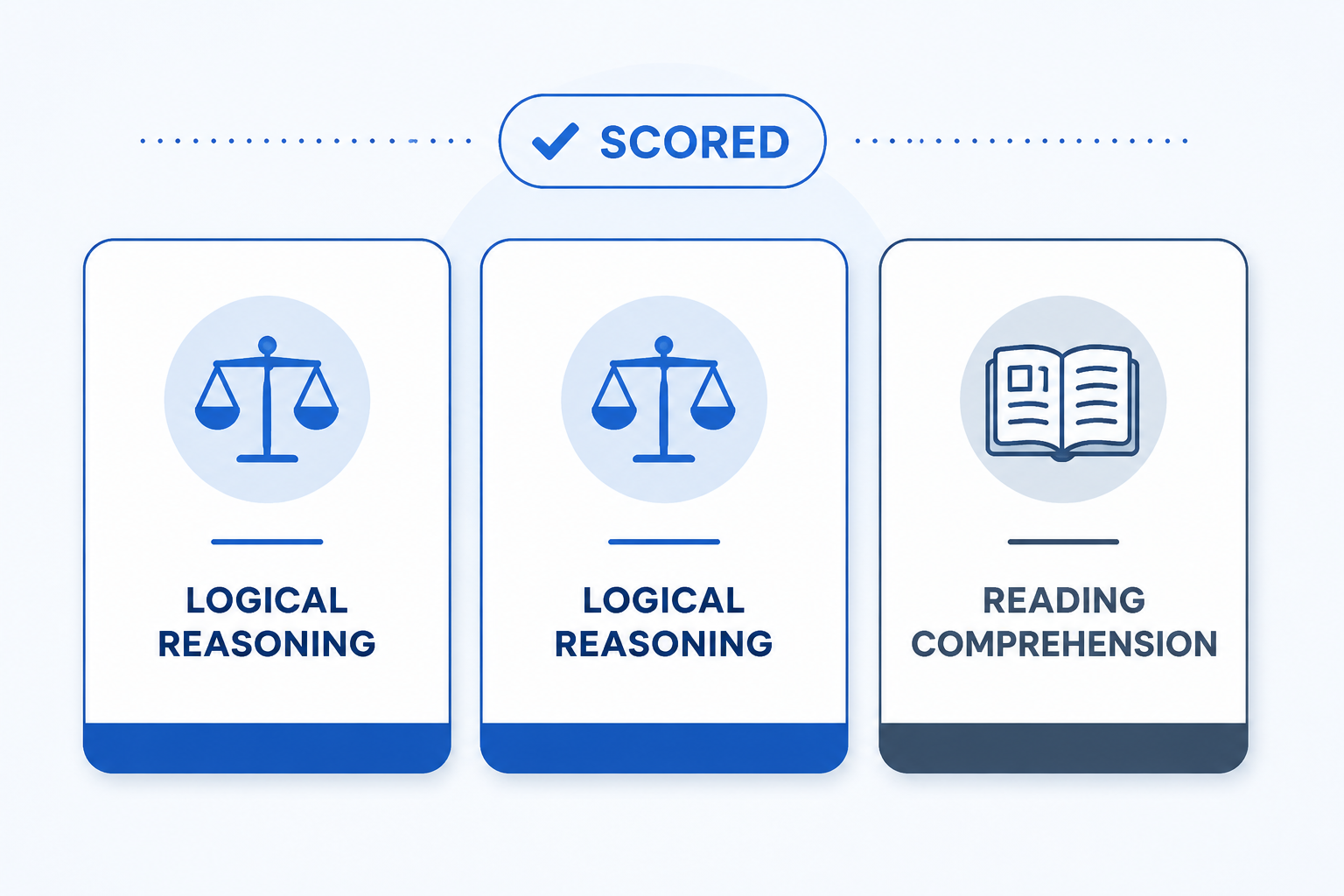
The current LSAT also makes old buying habits riskier. Since the August 2024 LSAT, the scored exam has two Logical Reasoning sections and one Reading Comprehension section, with no logic games section. LSAC reported that the format change had only a 1/100th of a point impact on mean scores across more than 200,000 test sessions, but for prep-tool selection the practical consequence is bigger: any resource still built around logic games is now the wrong center of gravity. [1]
The LSAT Prep Tool Landscape in 2026
A useful LSAT stack usually has a few layers: official questions, instruction, repetition, analytics, review notes, and scheduling. Some full courses bundle several of those layers. Some cheaper tools do one job extremely well. The mistake is assuming that a bigger bundle automatically solves the right problem.
| Tool type | What it is best for | Examples to consider | Main caution |
|---|---|---|---|
| Official resources | Current LSAT format, real PrepTests, baseline diagnostics | LawHub free tier, LawHub Advantage | Free access is limited; full test access generally requires a paid upgrade |
| Full courses | Structured curriculum, live classes, accountability, guided study | Kaplan, Blueprint, 7Sage, Princeton Review, Magoosh | Can be expensive if you mostly need drilling or official tests |
| Drilling and analytics platforms | Targeted practice, weak-area detection, repetition, review workflow | LSAT Lab, LSAT Demon, AdeptLR | Vendor improvement claims should be treated as marketing unless independently verified |
| Books | Conceptual explanations, low-cost section-specific support | The LSAT Trainer, PowerScore LR/RC Bibles, Manhattan Prep, LSAC PrepTest books | Older editions may contain outdated logic-games-heavy material |
| Mobile and supplementary tools | Short review sessions, flashcards, wrong-answer logs, schedule support | 7Sage app, LSAT Demon app, Anki, Brainscape, note-taking apps | Helpful around the edges, rarely enough as the main study engine |
| Score and conversion tools | Estimating scaled scores and tracking practice-test performance | 7Sage score converter, LSAT Demon converter, Magoosh table, LSAT Lab estimator | Estimates are not a substitute for official scoring and timed review |
This is why a student with a $600 budget is not automatically priced out of serious preparation. A free LawHub account, a paid drilling platform around the $49-per-month range, and one targeted book can create a more coherent system than a large course bought mainly for reassurance. That is a practical judgment about fit and coverage, not a controlled finding that cheaper stacks always beat premium courses.
Start With Official LSAT Materials
Every LSAT stack should begin with current official material. Not because LSAC’s interface is magical, but because real LSAT questions are the source material. A student can watch excellent explanations and still be underprepared if most of their practice comes from imitation questions or outdated section mixes.
The free LawHub tier is useful for orientation and early diagnostics, but it is not an unlimited prep library. Current pricing snapshots describe the free tier as including four full tests, while LawHub Advantage is listed around $115-$124 per year for broader access to the official practice-test library. [2]
That boundary matters. If you are taking one diagnostic, learning the interface, or deciding whether the LSAT is your next application step, free LawHub access may be enough for a short period. If you are studying for a real administration and plan to take timed sections, full practice tests, and retakes over multiple months, official test access becomes a core expense rather than an optional add-on.
Retake behavior makes this even more important. LSAC research cited in a Sacramento Bee report says nearly half of test-takers sit for the LSAT more than once, with average improvement of about 2-3 points. [2] If your prep may stretch across two test dates, the question is not just what you can use for eight weeks. It is what you can keep using without rebuilding your entire system.
Use Free Tools, But Know What “Free” Means
Free LSAT prep tools are best used for discovery, early structure, and small gaps. They are not all equal. Some are genuinely free resources. Some are limited previews of paid products. Some are old pages that may still rank in search but no longer match the current exam.
7Sage’s free LSAT resources page, for example, lists tools such as a score converter, conditionals cheat sheet, 12-week study plan, and explanations. [3] Those can be useful before you buy anything, especially if you are trying to understand how LSAT study is organized. Free explanations from forums, LSAT Hacks, and PowerScore discussions can also help when one official question refuses to make sense.
The Khan Academy situation needs extra attention. LSAC has indicated that Khan Academy LSAT content has been moving into LawHub, so do not build a 2026 prep plan around an old Khan Academy recommendation without checking current availability first. This is one of those places where a search result can look more stable than the underlying product.
If you are trying to separate truly free tools from freemium funnels, the same caution applies beyond LSAT prep. A broader guide to genuinely free learning apps can help you spot the difference between a usable free tier and a trial that becomes useless right when studying gets serious.
When a Drilling Platform Beats Another Video Course
After official materials, the most valuable second layer for many students is not another lecture library. It is targeted drilling and review. Logical Reasoning rewards repeated exposure to argument structures, flaw patterns, conditional logic, quantifier traps, and tempting wrong answers. Reading Comprehension rewards disciplined passage review and question-type familiarity. Neither improves much from passively watching someone else solve questions.
Platforms such as LSAT Lab, LSAT Demon, and AdeptLR sit in this middle layer. Their pitch is not simply “more questions.” It is adaptive practice, analytics, weak-area identification, explanation access, and a review workflow that keeps you from doing random problem sets and calling it progress. AdeptLR pricing has been listed around $49-$59 per month, LSAT Demon around $99 per month, and LSAT Lab markets score-improvement claims such as a +12 point average; AdeptLR has also marketed a “52% faster improvement” claim. [2]
Those claims are worth noticing, but they are vendor claims. They should not be read as independent proof that one platform will produce that result for you. The better buying question is narrower: will the tool make you review more precisely, repeat the right question types, and see your weak spots sooner than your current process does?
- Choose a drilling platform when you already understand the basics but keep missing similar question types.
- Choose analytics-heavy tools when your wrong-answer review is vague or inconsistent.
- Choose LawHub-integrated tools carefully, because official-question access and platform access may be separate costs.
- Avoid paying for AI language if the actual workflow does not improve your drilling, review, or timing decisions.

Where Full LSAT Courses Still Make Sense
Full courses are not the villain. They are often the right choice for students who need structure, pacing, instructor access, live accountability, or a single curriculum that removes day-to-day planning decisions. The problem is buying a full course when the missing piece is actually official practice, review discipline, or targeted repetition.
The familiar platforms still cover a wide range. Kaplan has been listed around $899-$1,999, Blueprint around $99-$2,699 depending on format, Magoosh around a $199 one-time option, and 7Sage around $70 per month; major courses often advertise large practice banks in the 6,000-8,000+ question range, with live and self-paced options varying by plan. [2]
That price spread hides very different products. Magoosh is usually positioned as a lower-cost self-paced option. 7Sage is popular with students who want an online curriculum and explanations. Blueprint and Kaplan sell more expansive packages, including higher-priced live or structured options. Princeton Review competes in the same broad full-course category. A student comparing them should not treat all of those as interchangeable “LSAT prep.”
A full course is easiest to justify when at least one of these is true: you need live instruction to stay engaged, you do not know how to sequence your study, your diagnostic is far from your goal score and you want comprehensive coverage, or you have already failed at self-directed prep. It is harder to justify when you are disciplined, have official materials, understand the fundamentals, and mainly need more intelligent repetition.
For a deeper course-by-course and app-by-app breakdown, use a dedicated LSAT prep app and platform comparison. This guide is focused on building the stack, not crowning one dashboard.
Books Are Still Useful, If They Are Current
A good LSAT book can still do something many platforms do poorly: slow the student down. Books such as The LSAT Trainer, PowerScore Logical Reasoning and Reading Comprehension Bibles, Manhattan Prep resources, Kaplan LSAT Prep Plus, Princeton Review Premium Prep, and LSAC official PrepTest compilations can help when you need a coherent explanation of one section rather than another set of clickable questions.
The current-format warning is non-negotiable. A book centered on logic games is not merely lower priority after August 2024; it can actively waste study time. Older PrepTest compilations can still contain useful LR and RC questions, but students should understand what they are buying and avoid treating obsolete section balance as a model for the current test. [1]
Books work best as targeted tools: one for LR fundamentals, one for RC strategy, or one official compilation for additional practice. They work poorly as a substitute for timed digital practice, because the real test experience includes pacing, interface familiarity, endurance, and post-test analytics that a paper book cannot fully reproduce.
Mobile Apps, Flashcards, and Score Tools Belong Around the Core
Mobile LSAT tools are convenient, but convenience should not be confused with centrality. Apps from 7Sage or LSAT Demon, mobile-friendly platforms such as AdeptLR, and supplementary apps such as Super Test can help with short review windows. They are especially useful for revisiting missed questions, watching explanations, reviewing conditional logic, or checking analytics away from a laptop.
Flashcards can support LSAT prep, but they should not turn the exam into vocabulary trivia. Spaced repetition is most useful for recurring concepts: sufficient and necessary conditions, common flaw names, quantifier language, indicator words, passage structure labels, and personal mistake patterns. If you are comparing systems such as Anki, Brainscape, RemNote, or Knowt, a spaced-repetition tool comparison is more useful than downloading whichever app has the cleanest store listing.
Score converters and estimators are similarly supporting tools. 7Sage, LSAT Demon, Magoosh, and LSAT Lab all offer ways to think about raw-to-scaled performance. Use them to understand practice-test trends, not to obsess over one section or reverse-engineer a perfect curve. The number that matters most in weekly study is not only the scaled estimate; it is the pattern of what you missed and why.
How to Build Your LSAT Prep Stack
A sensible stack starts with the constraint that hurts most. Some students have money but no time. Some have time but little money. Some can self-study for four months if the plan is clear. Others will burn three weeks comparing tools unless a class calendar tells them what to do next. The right LSAT prep tools depend on those facts before they depend on brand reputation.
| Student situation | Likely core stack | What to avoid |
|---|---|---|
| Very limited budget, self-directed | LawHub free to start, free explanations, one current LR or RC book, low-cost drilling when ready | Buying a full course before proving you will study consistently |
| Moderate budget, needs repetition | LawHub Advantage, adaptive drilling platform, targeted book, weekly review schedule | Adding more videos when the real issue is weak-area repetition |
| Needs accountability | Structured course with live or guided elements, official tests, review log | Pretending self-study will work if past attempts show it will not |
| Retaking after a plateau | Official tests, analytics-heavy drilling, wrong-answer review system, selective tutoring or explanations | Repeating the same course modules without changing the review process |
| Strong reader, weak LR | LR-focused book or curriculum, high-volume LR drilling, flaw and argument-form review | Spending equal time on every topic for the sake of completeness |
| Strong LR, slow RC | Timed RC sections, passage review, annotation discipline, endurance practice | Treating RC as impossible to improve and only drilling LR |
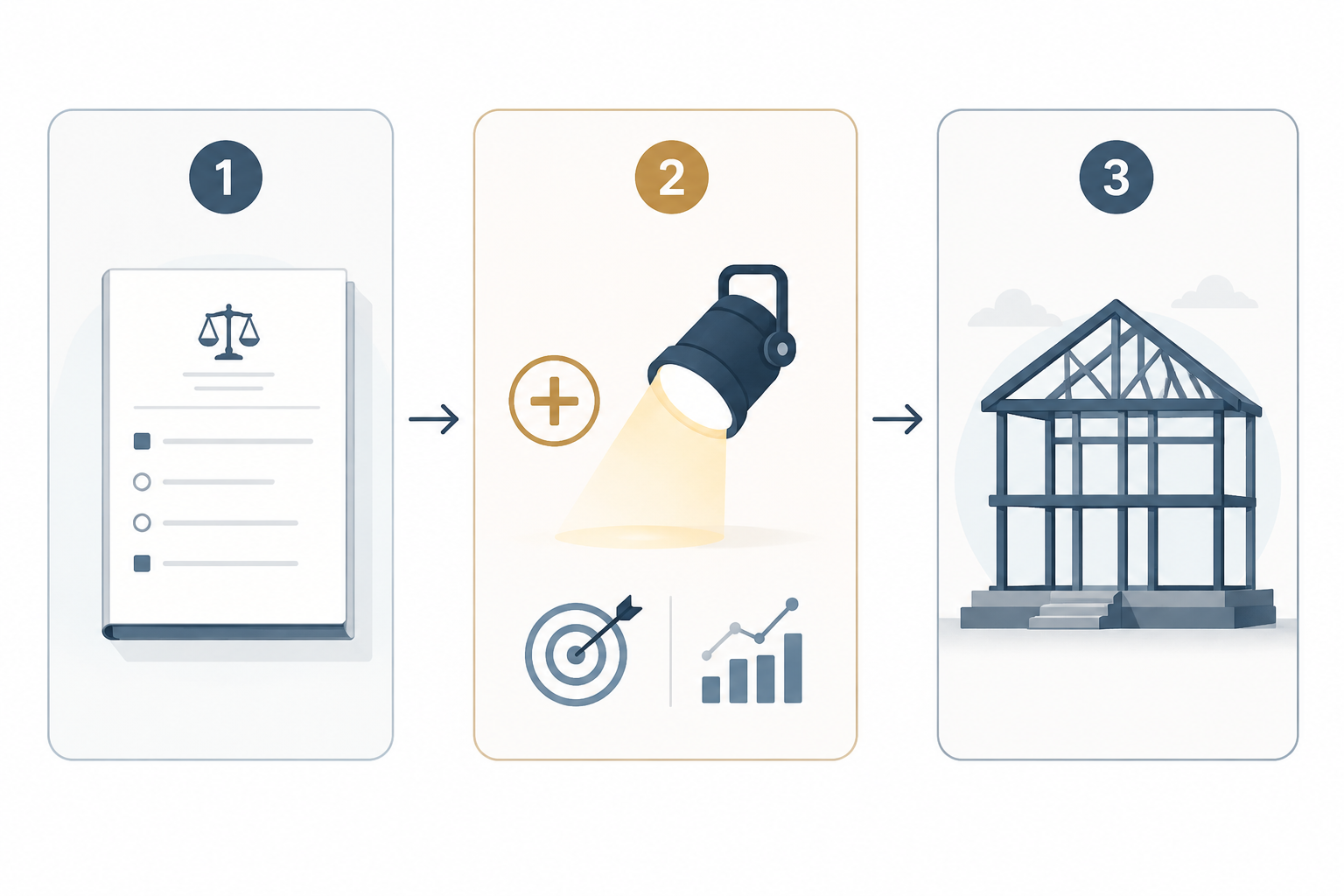
The cheapest serious stack is not “free everything.” It is usually official access plus one tool that fixes the bottleneck. If your bottleneck is not knowing what the test looks like, start free. If it is not having enough official practice, upgrade official access. If it is repeating the same mistakes, add drilling and analytics. If it is not understanding the concepts, add instruction through a book, course, tutor, or explanation library.
A low-cost stack under serious constraints
A student trying to keep total cost low can begin with a free LawHub account, current free tools, and a recent book focused on the weaker section. After the first diagnostic and two weeks of review, the student can add a month-to-month drilling platform if the problem is repetition. At roughly $49 per month for a lower-cost drilling option, several months of targeted practice plus official access and a book can remain far below the cost of many premium live courses. [2]
This version demands honesty. It works only if the student can create and follow a schedule, review wrong answers carefully, and stop collecting resources as a form of procrastination. A weekly study schedule template is often a better next purchase, metaphorically speaking, than a second prep subscription.
A mid-range stack for most self-studiers
The most balanced stack for many applicants is LawHub Advantage, one adaptive drilling or analytics platform, one current book or explanation source, and a simple wrong-answer log. This gives the student official questions, repeated practice, feedback, and a place to turn confusion into rules for the next set.
The wrong-answer log does not need to be elaborate. It should capture the question type, the wrong answer you chose, why it was attractive, why the credited answer is better, and what you will do differently next time. If the platform already tracks some of this, use the platform. If not, a spreadsheet or note-taking app is enough.
A full-course stack for students who need structure
A full-course stack should still include official practice and a review system. The course provides the curriculum; it does not automatically guarantee enough deliberate review. Students paying for Kaplan, Blueprint, Princeton Review, 7Sage, Magoosh, or another course should ask what the package actually includes: live hours, self-paced lessons, official-question access, analytics, explanation quality, refund or score-guarantee conditions, and how long access lasts.
Access length is not a minor detail. If nearly half of test-takers sit more than once, a tool that expires before a likely retake can become more expensive than it looked at checkout. [2]
A Simple Buying Order
If you are starting from zero, do not begin with the most expensive product page. Begin with the exam as it exists now, then add tools only when they solve a named problem.
- Confirm the current LSAT format: two scored Logical Reasoning sections, one scored Reading Comprehension section, and no logic games.
- Create a free LawHub account and take an early diagnostic or sample test to find your starting point.
- Decide whether you need more official tests; if yes, budget for LawHub Advantage before buying extra supplements.
- Identify the first bottleneck: concepts, repetition, timing, review discipline, accountability, or schedule.
- Buy the smallest paid tool that directly addresses that bottleneck.
- Consider a full course only if the missing piece is structure, instruction, or accountability rather than more practice.
This order keeps the expensive decision late enough that it can be informed by evidence from your own study. A student who discovers that they mostly need LR repetition should not buy the same package as a student who cannot build a weekly plan. A student who needs live pressure should not pretend a cheap subscription will create accountability by itself.
What to Check Before You Pay
LSAT prep pricing changes often, and features move. Treat every price in this guide as a June-July 2026 snapshot. Before paying, check the current checkout page, access period, refund terms, whether official-question access is included or separate, and whether the material has been updated for the post-August 2024 exam.
- If a resource emphasizes logic games, check the edition date and skip it unless you have a specific archival reason to use it.
- If a platform advertises score gains, look for whether the claim is independently verified or based on user-reported/vendor data.
- If a course advertises thousands of questions, ask how many are official, current, explained, and usable in your plan.
- If a tool has a free tier, test where the paywall appears before depending on it.
- If your test date may move, prioritize tools with flexible or long enough access.
There is no universal best LSAT prep tool in 2026. Start with current official materials, add the smallest paid layer that fixes your weakest study bottleneck, and buy a full course only when structure or instruction is the thing you are actually missing.
References
- What to Expect Starting With the August 2024 LSAT, LSAC
- Best LSAT Prep Courses, The Sacramento Bee
- Free LSAT Resources, 7Sage
Supporting Resources
- How to Use Anki for the MCAT Without Wasting Hours: A System-First Approach →
Stop treating Anki like a learning tool. This guide reframes Anki as a time-capped retention system for premed students, with a repeatable daily routine, concrete card-type benchmarks, and strict study ratios to keep you in the 30–40 minute sweet spot.
- How to Use Anki for the MCAT: A Complete Step-by-Step Guide →
A practical, no-fluff guide for pre-med students new to Anki. Covers deck selection, FSRS configuration, daily review habits, and how to integrate Anki into a balanced MCAT study plan that prioritizes practice passages and full-length exams.
- The 5 Best ASVAB Study Apps in 2026 — Compared (Features, Pricing, Real User Results) →
A data-driven comparison of the top ASVAB study apps for aspiring military recruits. We analyze features, pricing, user ratings, and real score improvements across five leading apps to help you choose the right one for your budget and target score.
Comments
Join the discussion with an anonymous comment.