STUDENT-LOAN Exam Hub
Student Loan Forgiveness and Credit Glitches, Explained
The 2026 student-loan "glitch" stories actually cover two separate failures: PSLF payment-count reversals in Education Department data and servicer-to-credit-bureau reporting errors. This guide explains how to verify each system yourself, tell a real error from normal post-forgiveness change, and file free disputes when needed.
- gre
- mcat
- asvab
- sat
- act
- digital-adaptive
- official-material
- section-strategy
- test-date-timeline
Evidence status: Confirmed problem; affected population and final restoration outcomes remain unresolved. Last verified: August 27, 2026.
The student-loan “glitch” stories circulating in August describe separate record systems. A reduced or incomplete Public Service Loan Forgiveness payment count belongs to Education Department data on StudentAid.gov. A duplicated balance, false delinquency, or incorrect account status belongs to data sent by a loan servicer to Equifax, Experian, or TransUnion. Before trying to fix anything, identify which record is wrong—if either.
| What the borrower sees | Record system | Where to verify | Appropriate response |
|---|---|---|---|
| PSLF qualifying-payment count decreased or appears incomplete | Education Department forgiveness records | PSLF tracker on StudentAid.gov | Preserve the current and earlier records, then request review of the count |
| Duplicate loan, wrong balance, false delinquency, or inaccurate status | Servicer-to-credit-bureau reporting | Reports from Equifax, Experian, and TransUnion | Compare with servicer records and dispute the specific inaccuracy for free |
| Forgiven loan closes, reports a zero balance, or is followed by a score movement | Ordinary credit-file and scoring mechanics | Credit reports and the forgiveness or discharge notice | No dispute if the underlying account information is accurate |
What is confirmed about the PSLF count reversals
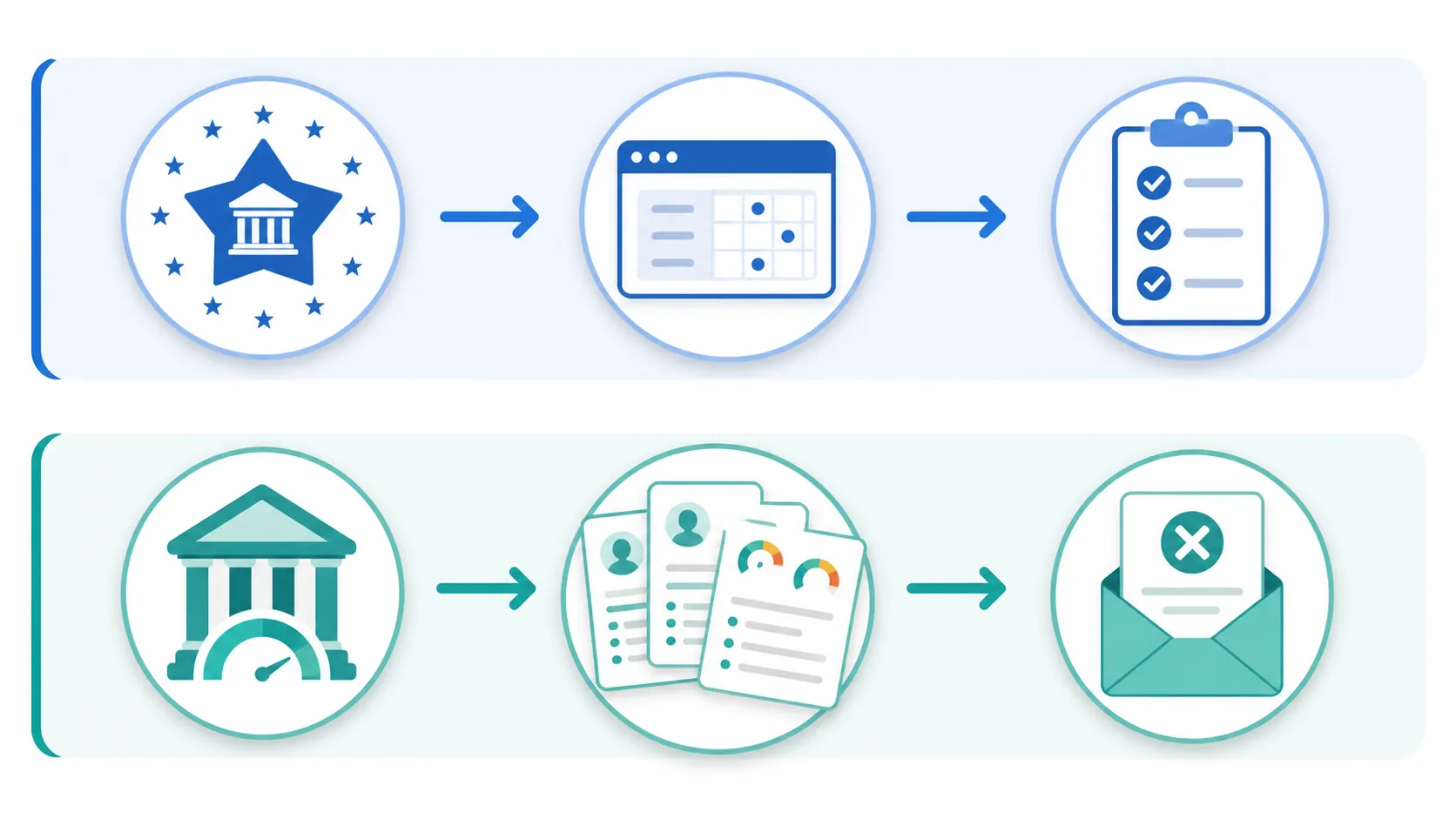
The Education Department confirmed that it rescinded some qualifying PSLF payment counts. It attributed the changes to “multiple PSLF counter code errors stemming from changes implemented in May 2024 under the Biden Administration.” Banners on the Federal Student Aid dashboard also warned that counts “may shift or appear incomplete” while updates continued.[1]
That confirmation establishes that the reversals are real. It does not establish that every PSLF borrower lost credit, that every changed count is incorrect, or that the losses are permanent. As of the last-verified date, the department had not disclosed how many borrowers were affected or said whether all legitimate qualifying credit would be restored.[1]
Borrowers also reported receiving erroneous past-due or near-default notices and incorrect monthly bills during 2026.[2] Those notices are evidence of broader administrative disorder, but they are not proof that a particular borrower’s PSLF tracker is wrong. Each record still has to be examined on its own terms.
Preserve the count before seeking a correction
Open the PSLF tracker on StudentAid.gov and preserve what it shows now. Save or print the page, including the date, loan identifiers, qualifying count, ineligible-payment count, and any explanation attached to disputed months. If an earlier screenshot, letter, or downloaded record shows a higher count, retain both versions rather than replacing the older file.
- Record exactly which loans and payment months changed. A statement such as “my count fell” is less useful than a month-by-month discrepancy.
- Keep payment confirmations, billing statements, bank records, employment-certification records, and prior PSLF notices associated with those months.
- When contacting the servicer or Federal Student Aid, describe the specific missing months and retain the submission, attachments, case number, date, and response.
- Recheck the tracker after any update, but do not treat an acknowledgment or open case as confirmation that the count will be restored.
This file documents a PSLF-count problem. It does not show whether the same loan is accurately reported to the credit bureaus. Conversely, a correct PSLF count does not prove that the credit-file balance, payment status, or account ownership is correct.
Inspect all three credit reports before filing a dispute
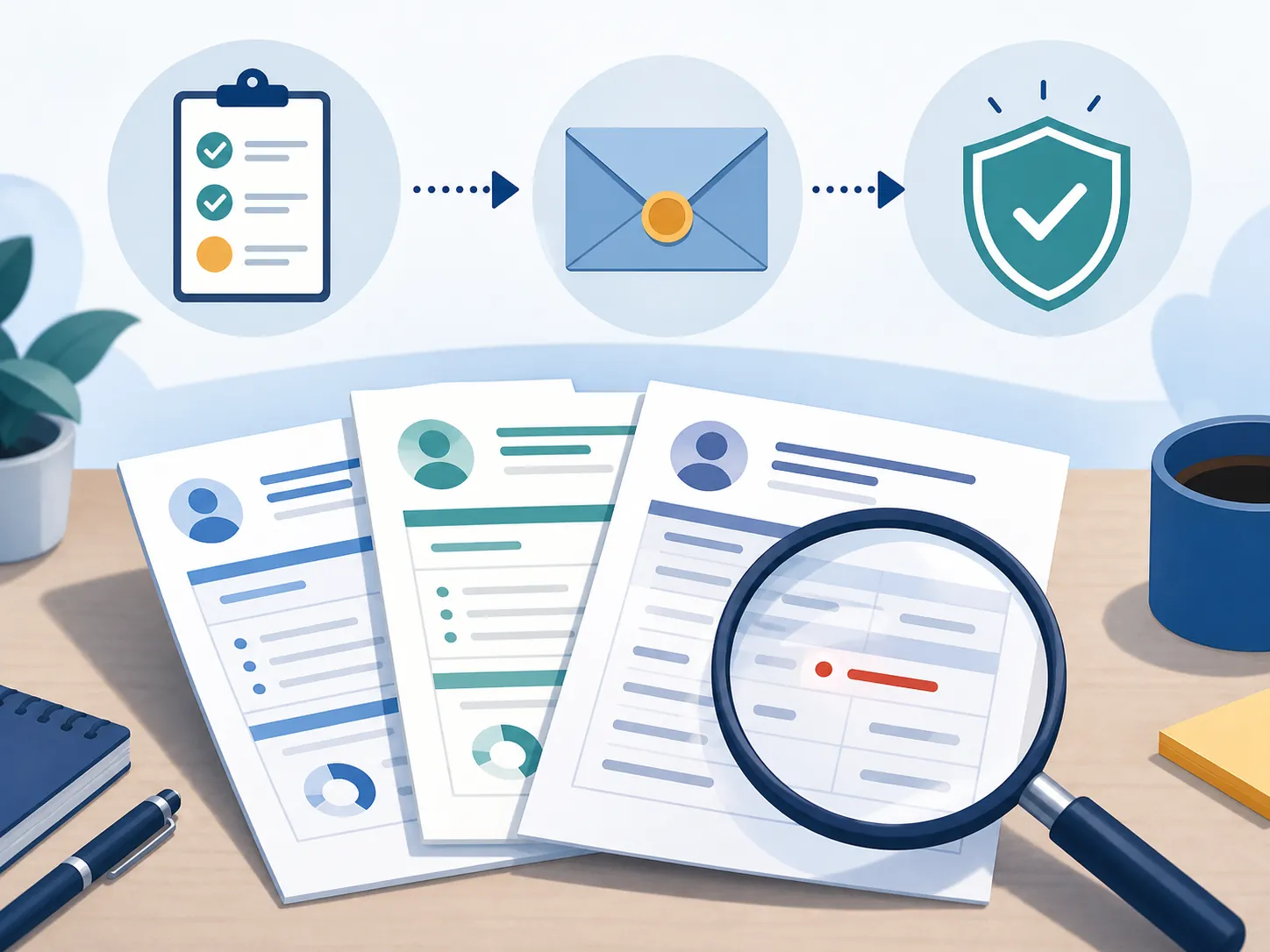
Use AnnualCreditReport.com to obtain free reports from Equifax, Experian, and TransUnion. The Federal Trade Commission identifies it as the authorized source and says free reports from all three bureaus are available weekly.[3] Pulling only one report can miss a problem because a furnisher’s data may not appear identically at every bureau.
Compare each student-loan entry with the servicer’s account records and any forgiveness or discharge notice. Review the creditor or servicer name, partial account number, balance, payment status, date information, remarks, and whether the same obligation appears more than once. The useful question is not whether an entry looks unfamiliar at first glance; it is whether the reported fact can be reconciled with the underlying loan record.
| Credit-file observation | What to check | When a dispute may be appropriate |
|---|---|---|
| The same debt appears twice | Whether the entries represent the same obligation, balance, and reporting period | The same loan is being counted as two active debts rather than accurately shown through a servicing or account transition |
| The report says past due or delinquent | Statements, payment history, due dates, deferment or forbearance records, and servicer notices | The status conflicts with documented account history |
| A forgiven loan still has a balance | Effective date and scope of the discharge, plus the servicer’s current balance | The completed discharge should have reduced the balance, but the reported amount remains inaccurate |
| The loan is closed with a zero balance | Forgiveness or discharge confirmation | Usually no dispute if the status accurately reflects the completed discharge |
Dispute the fact, not the headline
If the comparison identifies an actual inaccuracy, dispute it with both the credit bureau displaying the error and the company that furnished the information, usually the servicer. The FTC and Consumer Financial Protection Bureau describe both routes; neither requires paying a credit-repair company.[3][4]
- Identify the bureau, account, and individual field being challenged.
- State what the report says, why it is inaccurate, and what correction is requested.
- Attach copies—not irreplaceable originals—of the relevant statements, payment records, discharge notice, correspondence, and marked credit-report page.
- Keep the complete submission, confirmation, delivery record, case number, and every response.
Credit bureaus generally must investigate a dispute within 30 days, and furnishers generally must investigate and respond within 30 days after receiving a direct dispute.[3][4] Those periods describe the investigation process, not a promise that the borrower will prevail or that every connected record will update simultaneously.
Read the result against the original submission. If a bureau says the information was verified, that response does not by itself explain which underlying document resolved the conflict. Preserve it, obtain a fresh report when appropriate, and determine whether the disputed field changed. A new submission should add relevant documentation or identify a remaining factual mismatch rather than merely repeat the first complaint.
A post-forgiveness credit change is not automatically an error
Accurate forgiveness can change a credit file. The loan may close, its balance may fall to zero, and the borrower’s account mix or average account information may change. A resulting score movement is not independently proof of inaccurate reporting. The record should be tested against the discharge and account history, not against an expectation that forgiveness must immediately raise a score.
Equifax says a forgiven student loan with paid-as-agreed history may remain on a report for up to 10 years from the lender’s reporting date, while late-payment history generally remains for seven years from the missed payment.[5] That is Equifax’s explanation of ordinary reporting mechanics, not a finding that every student-loan entry is accurate.
Forgiveness also does not erase a legitimately reported earlier delinquency merely because the remaining balance was later discharged. The disputable issue is an incorrect date, status, balance, ownership entry, or duplicate—not accurate adverse history that a borrower would prefer not to see.
Why the credit-report concern cannot be dismissed as a single bad screen
On June 17, 2026, seven senators led by Elizabeth Warren wrote to Equifax, Experian, and TransUnion seeking information about how the bureaus verify student-loan servicer data, with responses requested by June 30.[6] The letter reflected congressional concern; it did not determine that any particular borrower’s report contained an error.
The letter cited a ProPublica analysis finding that Experian resolved under 1% of examined complaints in consumers’ favor in 2025, compared with about 20% in 2024.[6] That is an analysis of complaint outcomes, not a measure of how many student-loan accounts were inaccurate or how an individual dispute will be decided.
An earlier Senate investigation said MOHELA “may have contributed to nearly 2 million student loan duplication errors” on credit reports.[7] The wording matters: it is the investigators’ estimate of possible duplication errors and their attribution of contribution, not an independently established count of unique borrowers harmed.
These aggregate findings justify careful inspection. They cannot replace it. For a borrower facing a mortgage application, apartment screening, graduate-school financing decision, or employment-related credit review, the operative evidence remains the three current reports, the servicer record, and the documents showing what the account should say.
Know when to stop
Verify the PSLF tracker and the three credit reports separately. Act where a documented fact is inaccurate. Do not pay a company merely to submit a dispute that can be filed for free, and do not rush into refinancing federal loans to escape a record problem; refinancing changes the loan itself and can surrender federal protections without correcting the source record.
For a separate loan-status question, use the guide that matches it: the graduate-student default prevention guide for protecting federal-aid eligibility, the 270-day default clock guide when delinquency timing is the issue, or the federal loan caps guide for GRE and MCAT borrowers when the next decision concerns graduate or professional-school borrowing.
References
- Education Department Rescinds Student Loan Forgiveness Credit, But Scope Of Rollback Is Unclear — Forbes, August 18, 2026
- Some student-loan borrowers are losing credit toward a key forgiveness program for public servants — Business Insider, August 18, 2026
- Disputing Errors on Your Credit Reports — Federal Trade Commission
- How do I dispute an error on my credit report? — Consumer Financial Protection Bureau
- Student Loan Forgiveness FAQs — Equifax
- Warren, Senators Press Major Credit Reporting Companies on Plans to Address Credit Errors for Student Loan Borrowers — Office of Senator Elizabeth Warren, June 17, 2026
- Senate Investigation Reveals MOHELA May Have Contributed to Nearly 2 Million Student Loan Duplication Errors Appearing on Borrowers’ Credit Reports — Office of Senator Elizabeth Warren, December 2024
Related exhibits & inventory
Verified outcomes
No verified outcomes on file for this exam yet
See Methodology for how outcome evidence is disclosed once logged.
Planners
No planner filed for this exam yet
A downloadable timeline template for this exam hasn't been published yet.
Tool verdicts
AI-tool cautions
No AI tools tested for this exam yet
No hands-on AI-accuracy logs have been filed for this exam.
Questions about this plan
Ask a question about a specific section, timeline, or citation in this plan — or flag something that needs correcting.
Comments
Join the discussion with an anonymous comment.