SAT, ACT, GRE Exam Hub
Can NYT Strands Hints Count as Vocabulary Study?
Daily Strands players often assume the game — hints included — counts as vocabulary study. This evidence-graded verdict rates it a limited warm-up for SAT and ACT and near-zero standalone yield for GRE, then points to where those study minutes pay off instead.
- gre
- mcat
- asvab
- sat
- act
- digital-adaptive
- official-material
- section-strategy
- test-date-timeline
Evidence label, last reviewed Q3 2026: limited supplementary warm-up for SAT and ACT vocabulary work; near-zero standalone yield for GRE vocabulary prep. If you are using NYT Strands hints for vocabulary study, the honest answer is that Strands can get your verbal brain moving, but it should not be logged as your vocabulary block.
That is not because Strands is silly. It is clever, and on a good morning the spangram does that satisfying little click where the whole theme finally behaves. The problem is bookkeeping. Strands rewards word-form recognition, theme sorting, and pattern search. SAT, ACT, and especially GRE vocabulary work pays off when you can retrieve meanings, choose among near-neighbors, and use context to reject tempting wrong answers.
What Strands hints actually train
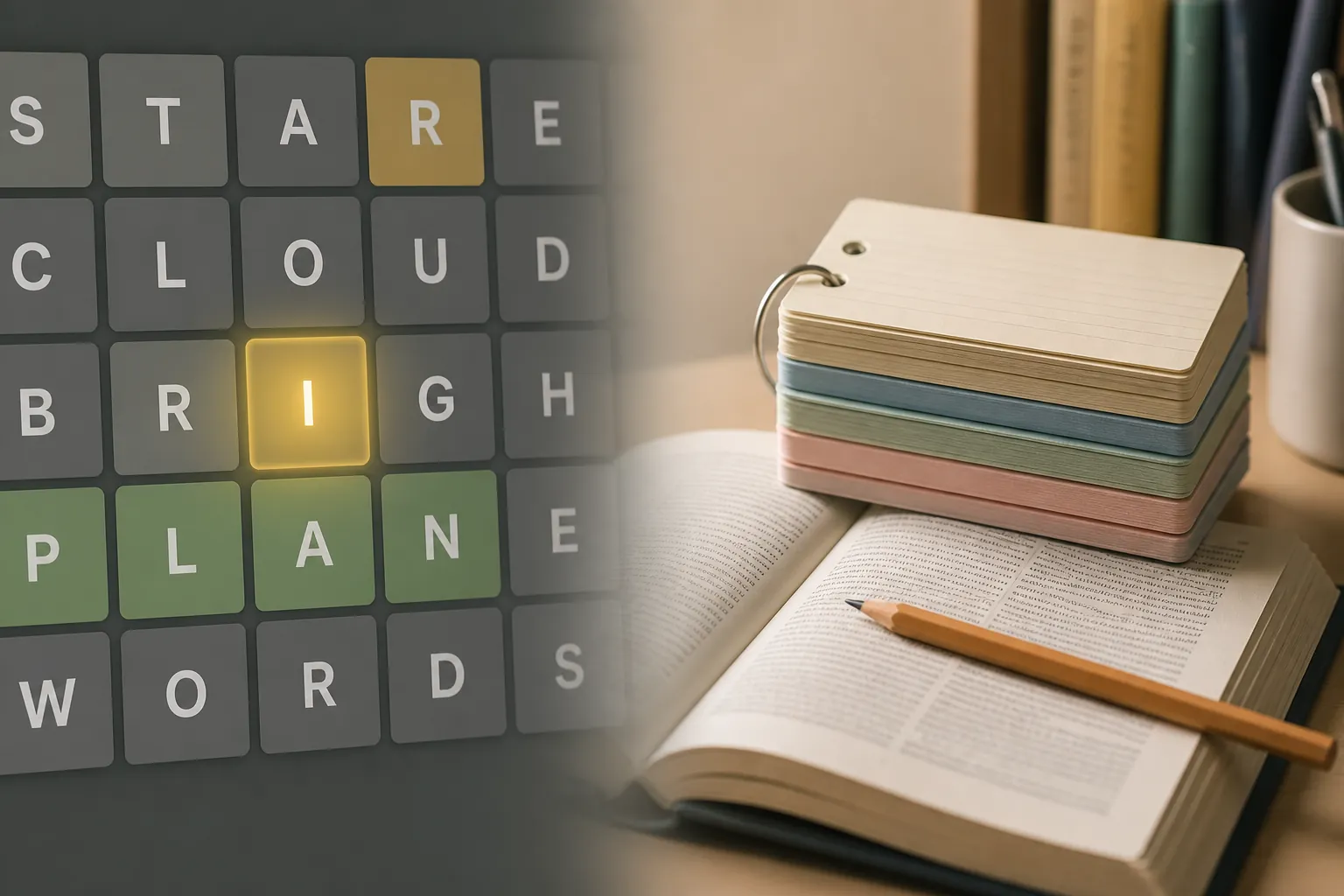
The Strands hint system matters because it shows what the game is asking your brain to do. In NYT Strands, theme words turn blue, the spangram turns yellow, and the spangram touches two opposite sides of the board. To earn a hint, you find three valid non-theme words; the game also tracks “Solved Without Hints” as a stat.[1]
So when you “study” with hints, the productive action is often not defining a word. It is scanning a grid, noticing letter chains, and accumulating enough acceptable non-theme words to buy information about the actual theme set. That can involve vocabulary in the broadest sense — you are recognizing English words — but it is not the same as seeing equivocal on a card and pulling “ambiguous, open to more than one interpretation” out of memory before the answer appears.
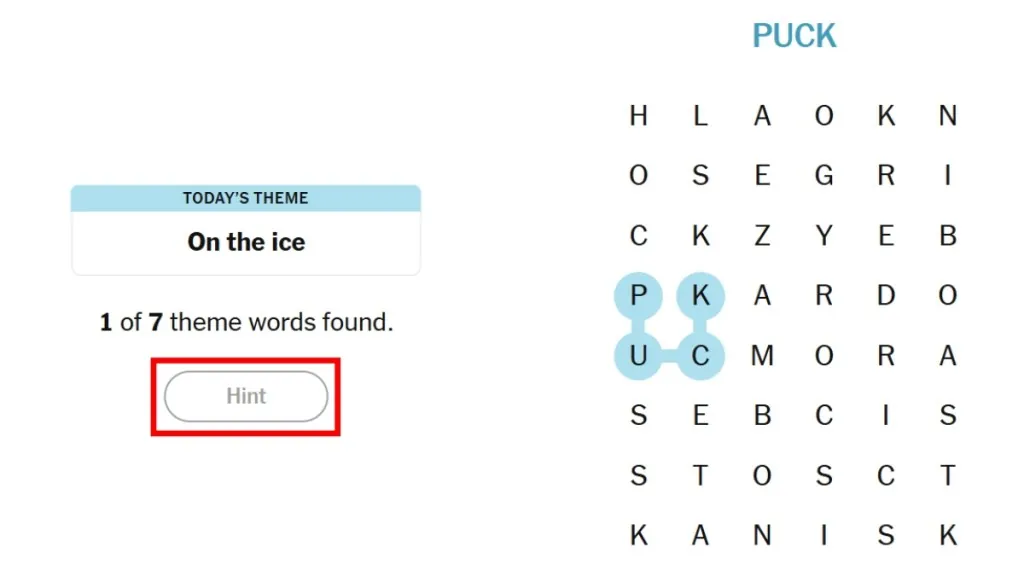
NYT’s own puzzle guidance points in the same direction. In its tips-and-tricks piece, the Times describes Strands difficulty as depending heavily on the relationship between the title and the theme, rather than on rare-word knowledge.[2] That is good puzzle design. It is also the reason the game transfers only weakly to exam vocabulary: the daily win condition is “discover the organizing idea,” not “retrieve precise meanings repeatedly under exam-like pressure.”
A small overlap check from public daily pages points the same way, but it should be labeled carefully. Recent sampled answer sets included familiar words such as UNIQUE, SPECIAL, SOLE, REFILL, MEDICINE, PRIMROSE, and DAISY. That suggests many Strands theme words are ordinary, highly recognizable words, but it is not an NYT frequency statistic and should not be treated as one. A serious frequency claim would require a larger archive sample and a stated classification method.
The exam verdict: SAT, ACT, GRE
| Exam | Verdict for Strands hints as vocabulary study | Why |
|---|---|---|
| SAT | Limited supplementary warm-up | Can prime word attention, but SAT vocabulary appears in context and belongs to a broader Reading and Writing task set. |
| ACT | Limited supplementary warm-up | Can help you settle into reading mode, but ACT reading success depends on contextual interpretation across passages, not grid-based word finding. |
| GRE | Near-zero standalone yield | GRE Verbal requires precise semantic fit, especially in Text Completion and Sentence Equivalence. |
SAT: useful only before the real work starts
For SAT students, Strands is most defensible as a two-to-five-minute warm-up before actual Reading and Writing practice. It can make you attend to word shapes and loose semantic families, and that is better than opening a study session cold while half-looking at your phone.
But the SAT’s vocabulary demand is not “spot an English word in a grid.” PrepScholar’s SAT vocabulary guide frames the relevant work around high-utility words in context and notes that Craft and Structure accounts for about 13–15 questions, or roughly 28% of the Reading and Writing section.[3] Those questions ask you to infer how words and phrases function inside sentences and passages. Strands may wake up the same general verbal machinery, but it does not force enough contextual meaning retrieval to replace targeted SAT vocabulary practice.
If you want a puzzle-adjacent comparison, this is also why Strands should be judged differently from daily NYT Connections as exam vocabulary study. Connections at least centers the sorting of related meanings. Strands sometimes gets there, but the hint economy lets you progress through form-search before meaning does much work.
ACT: a light reading-mode trigger, not vocabulary training
The ACT case is similar, with a slightly different failure point. ACT reading rewards staying oriented inside passages, tracking relationships, and interpreting words from surrounding evidence. Strands can serve as a harmless verbal on-ramp, especially for a student who needs a low-friction start. It does not give enough passage-level context or repeated meaning retrieval to deserve the label “ACT vocabulary study.”
If the choice is between ten minutes of Strands and ten minutes of avoidance, play Strands and then begin. If the choice is between ten minutes of Strands and ten minutes reviewing missed ACT reading questions, the missed questions win.
GRE: the hint path misses the skill that matters
GRE vocabulary is where the verdict gets sharp. ETS describes GRE Verbal Reasoning as including Text Completion and Sentence Equivalence tasks. Text Completion can contain one to three blanks, and Sentence Equivalence asks you to choose two answers that complete the sentence and produce equivalent meanings; ETS states that there is no credit for partially correct answers on Sentence Equivalence.[4]
That no-partial-credit detail is exactly why Strands hints are such a poor GRE substitute. In Strands, you can wander productively: find non-theme words, unlock a hint, test theme ideas, and let the board gradually reveal itself. In GRE Sentence Equivalence, knowing that two words are vaguely positive, academic-looking, or “kind of about criticism” is not enough. You need the pair that fits the sentence and matches each other closely enough in meaning.
A Strands-based GRE drill can still be built around a specific answer set — for example, by turning puzzle words into definition cards and contrast groups, as in this Strands Frocks and Smocks GRE vocabulary drill. But that is no longer “playing Strands with hints.” That is using a puzzle as raw material for a separate retrieval exercise.
Why one daily puzzle does not create much retrievable vocabulary
Vocabulary growth is stingy. Seeing or handling a word once can create familiarity, but familiarity is the weakest version of knowing. Exam performance usually needs a stronger version: you can recognize the word, retrieve its meaning, distinguish it from near-synonyms, and apply it inside a sentence you did not choose.
Incidental-learning research gives a useful scale check. A synthesis discussed by EAP Foundation reports that studies have associated incidental vocabulary learning with roughly 6 to 20 or more encounters with a word, depending on the study and learning target.[5] A Strands puzzle gives you a brief pass through a small themed set. Even if you count the moment of discovery, the hint, the completed board, and the post-game stare at the answer list, that is still not the same as meeting a word repeatedly across contexts.
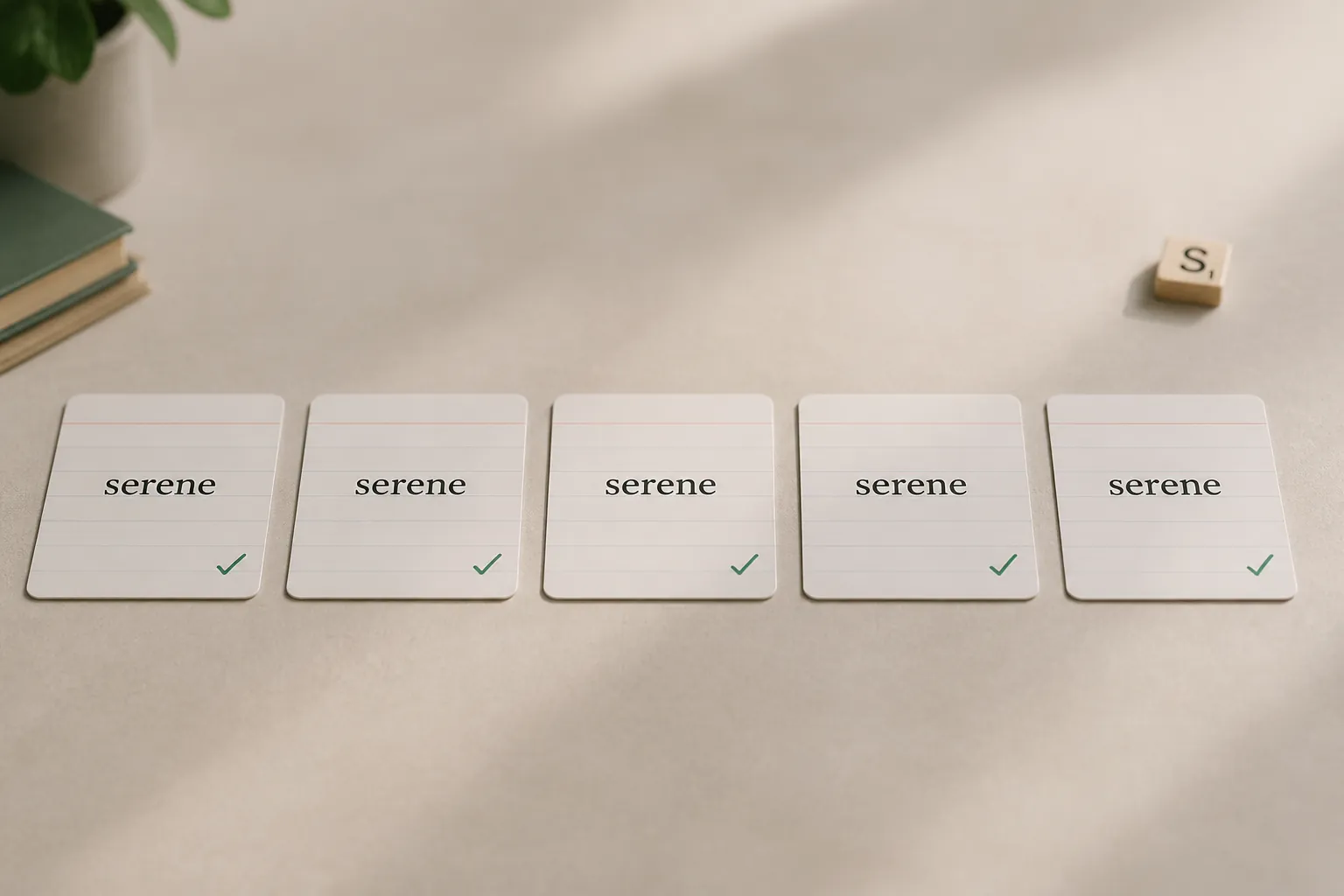
Retrieval practice gives the cleaner contrast. In a 2025 flashcard study by Huang and Cao, reported recall was 0.50 versus 0.354 after three rounds and 0.739 versus 0.519 after four rounds, favoring the retrieval-practice condition over the comparison condition.[6] The useful lesson is not that everyone needs that exact flashcard setup. It is that the learning event has to make you pull the answer from memory more than once.
Strands hints often reduce that burden. A hint can help you locate a theme word without requiring you to define it, use it, or contrast it with a trap answer. For puzzle enjoyment, that is perfectly fair. For vocabulary retention, it removes some of the very struggle you wanted the study session to create.
What the word-game evidence can and cannot prove
There is some classroom evidence that word games can help vocabulary learning, but it should not be stretched onto Strands or standardized tests. One ERIC-indexed grade-8 EFL study reported no significant pretest difference between groups, with p = 0.835, and a significant posttest difference, with p = 0.0015, after word-game-based instruction.[7] Evidence label: Limited. It was a single classroom setting, in an EFL context, and it does not show that NYT Strands raises SAT, ACT, or GRE verbal scores.
The caution cuts the other direction too. A Reading Rockets piece by Joanne Meier says that no research supports word searches for achievement, though students may like them and they may have motivational value.[8] Strands is not merely a classroom word search, but the warning is relevant: liking a word activity and learning durable vocabulary from it are separate claims.
This is the same line I would draw for the NYT Mini Crossword as vocabulary practice: enjoyable word contact can support a routine, but it has to be separated from evidence-based exam preparation.
Where those minutes pay off instead
If Strands helps you sit down, keep it. Just put it in the warm-up box. The exam-labeled vocabulary box should contain tasks that make you retrieve meanings, revisit words, and apply them in context.
- For SAT: use retrieval-based vocabulary cards, then confirm the words inside official-style Reading and Writing questions. If you are choosing a card system, start with which SAT vocab flash cards work best for the digital SAT.
- For ACT: put the minutes into passage review, especially missed questions where the answer depended on a phrase, transition, tone shift, or local context clue.
- For GRE: prioritize definition retrieval, synonym discrimination, and sentence-completion practice. Strands can supply an occasional word to investigate, but it cannot replace GRE-style semantic precision.
If you need a broader SAT route, place vocabulary inside a full plan rather than treating it as a detached daily ritual. The SAT score-gap method is the better place to decide whether vocabulary is actually your bottleneck, and the SAT study tools guide is where tool choices belong.
The clean rule: play Strands if it makes starting easier. Do not count hints, streaks, or a solved board as your vocabulary study. Count the minutes when you retrieve meanings without looking, meet words again, and answer exam-shaped questions with those meanings under control.
References
- Strands, New York Times Games Help Center.
- Strands Tips and Tricks, The New York Times, June 28, 2024.
- The 384 Best SAT Vocabulary Words, PrepScholar.
- Verbal Reasoning Measure, ETS.
- Incidental vocabulary learning, EAP Foundation.
- Retrieval-practice flashcard study, PMC, 2025.
- The Impact of Word Games on the Vocabulary Learning of Grade 8 EFL Students, ERIC.
- Are Word Searches a Waste of Instructional Time?, Reading Rockets.
Related exhibits & inventory
Verified outcomes
No verified outcomes on file for this exam yet
See Methodology for how outcome evidence is disclosed once logged.
Planners
No planner filed for this exam yet
A downloadable timeline template for this exam hasn't been published yet.
Tool verdicts
AI-tool cautions
No AI tools tested for this exam yet
No hands-on AI-accuracy logs have been filed for this exam.
Questions about this plan
Ask a question about a specific section, timeline, or citation in this plan — or flag something that needs correcting.
Comments
Join the discussion with an anonymous comment.