
MCAT Exam Hub
What Lyme Disease Cure Research Means for Biology Exams
What biology exams actually test about Lyme disease — spirochete, tick vector, immune evasion, two-tier diagnosis, doxycycline — and where 2026 cure research stands as an extension of that core, with each pipeline claim labeled by evidence level for accurate study and citation.
- gre
- mcat
- asvab
- sat
- act
- digital-adaptive
- official-material
- section-strategy
- test-date-timeline
If you are studying Lyme disease cure research for a biology exam, the safest move is to keep two columns in your notes: what exams already test, and what 2026 research is trying to extend. MCAT Bio/Biochem, AP Biology, and undergraduate biology questions are much more likely to reward the stable core — the spirochete, the Ixodes tick vector, immune evasion, diagnosis, and doxycycline treatment — than a memorized list of experimental compounds.
The bottom line is clean enough to study, but not so clean that it should be flattened: early Lyme disease is usually curable with standard antibiotics; persistent symptoms after treatment are a real unresolved problem; and “cure research” claims belong in your notes only when tagged as in vitro, mouse, preclinical, Phase 3, or approved clinical standard.

The exam answer first, before the cure headlines
Lyme disease is worth exam space because it is a high-yield organism-and-vector disease: Borrelia burgdorferi is transmitted by infected Ixodes ticks and is described by CDC as the most common vector-borne disease in the United States [1]. A commonly cited U.S. burden estimate is about 476,000 people diagnosed and treated per year, but that number is an estimate of diagnosed-and-treated illness, not the same thing as confirmed surveillance case counts [2].
That distinction matters for exams. A passage may give you public-health numbers, but the biology answer is still about transmission, surface proteins, immune evasion, and treatment evidence. If you are building MCAT-style notes, this belongs with mechanism-first review habits, the same kind used in MCAT biology case-study passages and other research-to-exam translations.
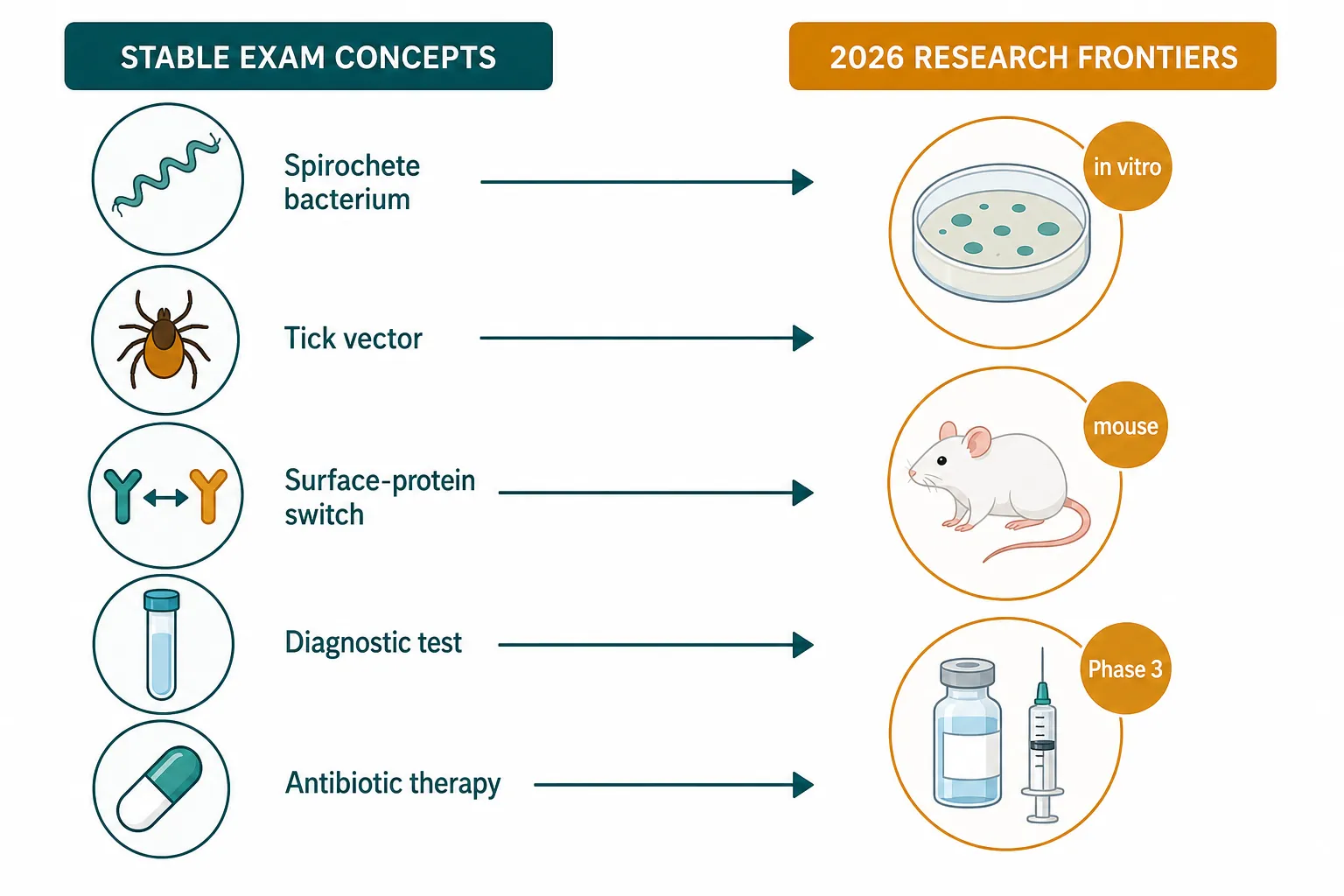
| Stable exam concept | What to know for the exam | 2026 research extension | Evidence label |
|---|---|---|---|
| Spirochete morphology | B. burgdorferi is a corkscrew-shaped spirochete with periplasmic flagella that help it move through viscous tissue [3]. | Drug-screening studies ask whether non-growing or slow-growing cells can survive antibiotic exposure. | Mostly in vitro; some mouse studies |
| Ixodes tick transmission | Ixodes scapularis in North America and Ixodes ricinus in Europe are key vectors; nymph-stage ticks are important because they are small and easily missed, and transmission risk rises with prolonged feeding, often framed around ~24–36 hours. | Transmission-blocking vaccines try to stop Borrelia while it is still inside the tick. | Phase 3-but-not-approved for LB6V; preclinical for other approaches |
| OspA/OspC switching | Borrelia changes surface-protein expression as it moves from tick gut to mammalian host [3]. | OspA vaccine design uses antibodies taken up in the tick blood meal to block migration from tick gut to salivary glands. | Human Phase 3 for LB6V, not approved |
| VlsE antigenic variation | Antigenic variation helps the spirochete evade immune recognition and complicates the host-pathogen interaction [3]. | New diagnostic and vaccine ideas often revisit the same surface-antigen problem. | Mechanism-supported; product-specific evidence varies |
| Diagnosis | Erythema migrans can be clinically diagnostic; otherwise exams often emphasize two-tier serology, usually ELISA followed by immunoblot/Western blot framing [2]. | Better tests remain desirable because antibody timing and antigen variation complicate interpretation. | Clinical standard plus ongoing research |
| Treatment | Doxycycline is first-line for many early cases; amoxicillin or cefuroxime are alternatives, and IV ceftriaxone is used for selected neurologic or late disease [2]. | New antibiotic candidates are being tested against persister-like cells and animal models. | Established clinical standard versus preclinical candidates |
| Post-treatment symptoms | Persistent fatigue, pain, or cognitive symptoms after recommended therapy are not the same thing as untreated active early infection. | Research has shifted toward host response, residual inflammatory triggers, and better symptom-targeted care. | Clinical problem; mechanism research ongoing |
Why the spirochete shape is not just a vocabulary word
B. burgdorferi is not a generic bacterium wearing a Lyme label. It is a spirochete, and that morphology is part of the disease story. Its flagella are periplasmic, sitting between the inner and outer membranes rather than projecting freely like many textbook flagella. That arrangement helps create the corkscrew movement associated with spirochetes and helps explain how the organism moves through viscous environments in host tissue [3].
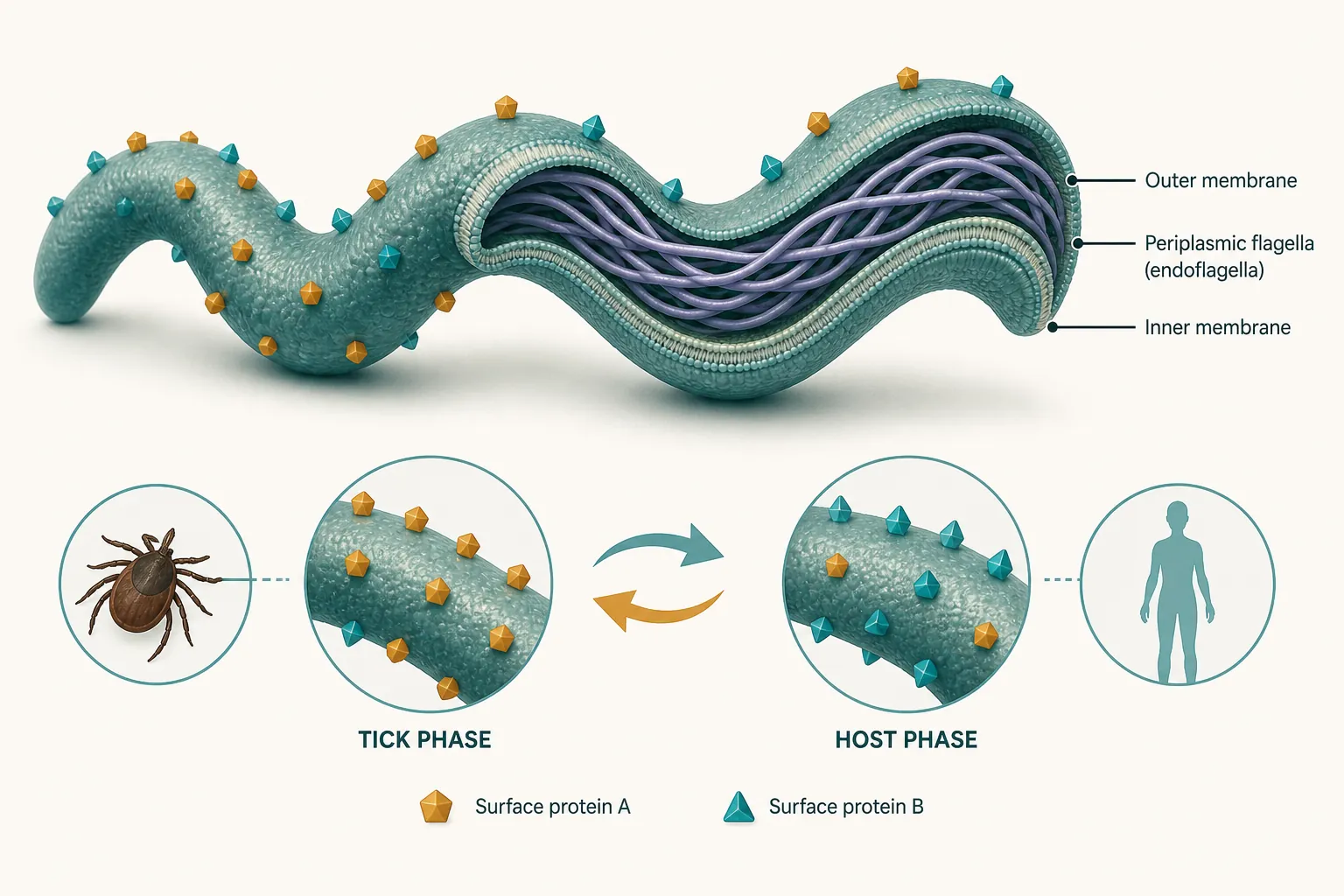
For an exam, that gives you a useful chain: shape affects motility, motility affects tissue invasion, and tissue invasion helps explain why a local tick-bite infection can become disseminated disease. You do not need to make the spirochete romantic. You do need to know why “corkscrew-shaped” is more than a drawing caption.
The tick phase and the host phase are molecularly different
The cleanest mechanism bridge in Lyme biology is the OspA-to-OspC switch. In the tick, B. burgdorferi expresses outer surface proteins suited to surviving in that environment. During tick feeding and transmission into the mammalian host, surface-protein expression changes, with OspC becoming especially important during early mammalian infection [3].
That is the kind of fact an exam can ask in several disguises. It can appear as a vector-biology question, a gene-regulation question, an immune-evasion question, or a vaccine-design question. The tested idea is not that students memorize every outer surface protein. The tested idea is that a pathogen experiences different selective pressures inside an arthropod vector and inside a vertebrate host, and it changes its surface accordingly.
VlsE is the immune-evasion fact that keeps diagnostics from being too simple
VlsE antigenic variation is the other mechanism worth keeping close. B. burgdorferi can vary antigenic surface components during infection, helping it avoid immune clearance and complicating the antibody-target problem [3]. For exam purposes, that connects three topics that students often study separately: pathogen evolution inside a host, adaptive immune recognition, and why serologic diagnosis has timing and interpretation limits.
This is also where cure headlines should be forced back into biology. If a new vaccine or antibody approach claims to block Lyme disease, ask which surface target it uses and at what stage of the life cycle. If a diagnostic claim sounds dramatic, ask whether it is detecting the organism, the host antibody response, or a marker affected by antigenic variation.
Diagnosis and treatment: the clinical standard your exam is most likely to expect
A classic early Lyme presentation includes erythema migrans, the expanding rash often used in exam vignettes. Exams may also include fever, headache, fatigue, arthralgia, or later neurologic, cardiac, or joint involvement, but the rash-plus-tick-exposure setup is the fast lane. When the rash is typical, diagnosis can be clinical; when testing is needed, the common study framework is two-tier serology, with an initial enzyme immunoassay followed by immunoblot/Western blot-type confirmation [2].
Treatment is where “cure” has to be used carefully. For many early cases, doxycycline for 10–14 days is a standard first-line regimen; amoxicillin or cefuroxime are alternatives in selected patients, and IV ceftriaxone is reserved for certain neurologic or late presentations [2]. In a 607-patient doxycycline-regimen study summarized in a Cureus review, treatment failure was reported at less than 1%, and more than half of those apparent failures were attributed to reinfection rather than persistence of the original infection [2].
Post-exposure prophylaxis is a separate exam point, not the same as treatment of established disease. A single 200 mg dose of doxycycline given within 72 hours of tick removal was 87% effective in one double-blind trial, and a pooled estimate across four studies was about 78% effective [2]. If an exam stem gives you a recently removed high-risk tick and a short time window, it is testing prophylaxis logic. If it gives you established signs and symptoms, it is testing treatment.
PTLDS is the unresolved gap, not a reason to overclaim long-term antibiotics
Post-treatment Lyme disease symptoms are the place where students need both sympathy and discipline. Johns Hopkins describes post-treatment Lyme disease as affecting about 14–20% of patients overall, and cites a 2022 prospective cohort in which 14% of early, promptly treated patients met PTLD criteria compared with 4% of controls [4]. Other reviews commonly frame the persistent-symptom range around 10–20%, depending on definition and study population [2][5].
Those symptoms should not be written off as imaginary. Fatigue, pain, and cognitive complaints after treatment are clinically important, and they are exactly the kind of unresolved human problem that keeps Lyme research active. But that does not turn every “chronic Lyme” antibiotic claim into established biology. Placebo-controlled retreatment trials have not shown a durable benefit from prolonged antibiotics for persistent symptoms, and IDSA/AAN/ACR-aligned guidance does not recommend long-term antibiotics for PTLDS [4][5].
The research shift is worth noticing. Persistent symptoms are increasingly studied through host-response mechanisms, inflammation, immune dysregulation, and possible residual bacterial components such as persisting peptidoglycan fragments, rather than through the simple claim that more antibiotics must be the answer [5]. For an exam, the safe distinction is: early infection usually responds well to recommended antibiotics; PTLDS is real and incompletely explained; prolonged antibiotic retreatment is not an established cure.
Why LB6V belongs after OspA, not in a separate vaccine-news box
The vaccine story is easiest to understand once the OspA/OspC switch is already in your notes. The earlier Lyme vaccine, LYMErix, was licensed in 1998 and discontinued in 2002; CDC describes its withdrawal as related to insufficient consumer demand, not proven safety problems [6]. That matters because students sometimes inherit a vague “Lyme vaccine failed because it was unsafe” story, which is not the accurate exam-safe version.
The current Pfizer-Valneva candidate, LB6V, formerly VLA15, is a 6-valent OspA protein subunit vaccine. Its logic is transmission-blocking: vaccine-induced antibodies are taken up by the tick during a blood meal, bind OspA on Borrelia in the tick gut, and prevent the organism from migrating to the salivary glands. That is why OspA biology is not trivia. It is the target mechanism.
The Phase 3 VALOR results announced on March 23, 2026, are promising but not a license to write “approved vaccine” in your notes. Pfizer and Valneva reported 73.2% vaccine efficacy from 28 days after dose 4, with a 95% confidence interval of 15.8–93.5, and 74.8% efficacy from day 1 after dose 4 [7]. The nuance is essential: the trial’s pre-specified primary statistical criterion was not met in the first analysis because there were fewer Lyme disease cases than expected; a secondary analysis did meet its statistical success criterion, and regulatory submission was planned [7][8]. As of Q3 2026, LB6V is a Phase 3-but-not-approved candidate, not an available clinical standard.
The cure-research pipeline, sorted by evidence level
The fastest way to lose points is to treat a petri-dish result, a mouse result, and a human Phase 3 trial as if they occupy the same evidentiary shelf. They do not. For studying, the evidence label is part of the fact.
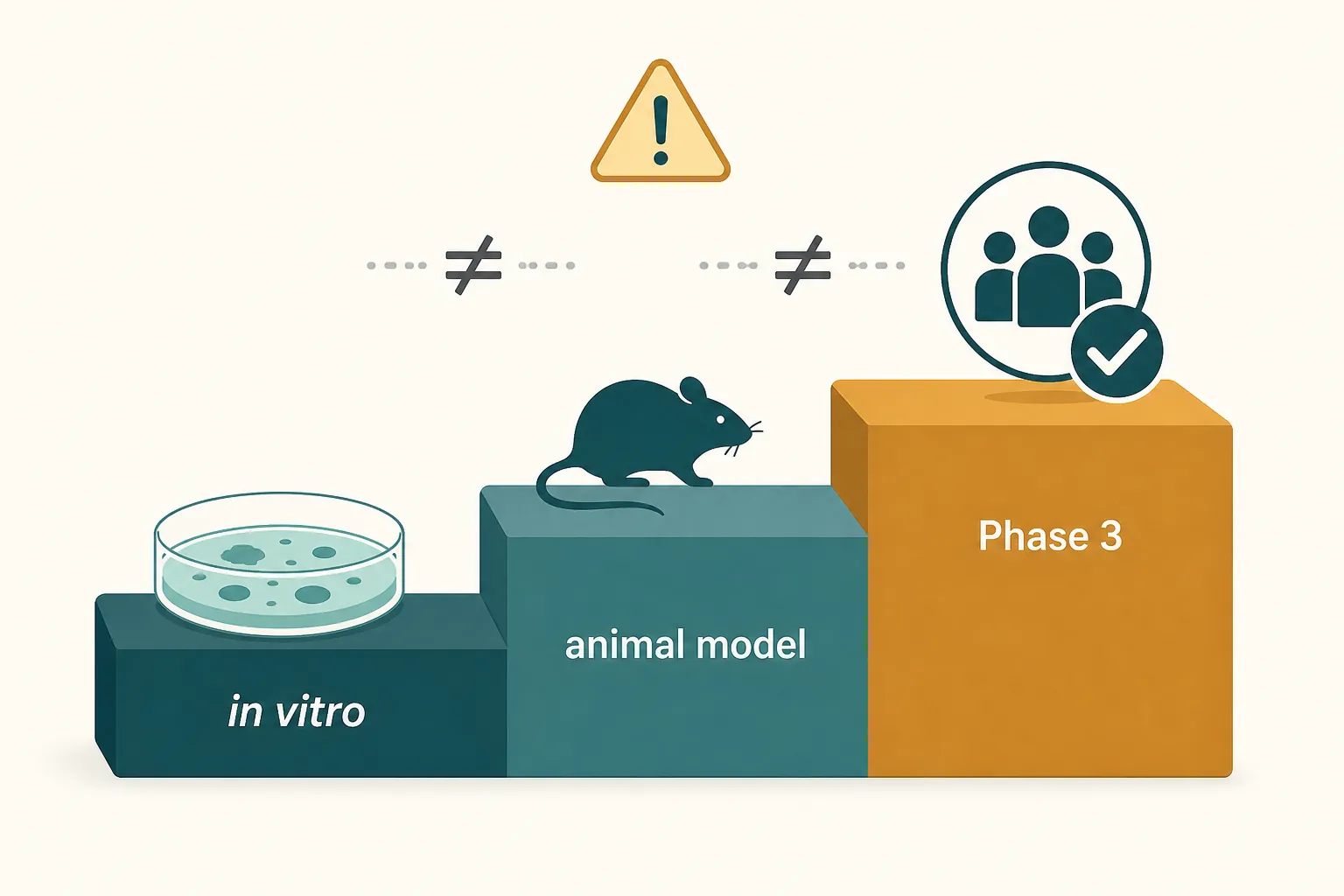
| Research area | What the finding says | What your notes should not say |
|---|---|---|
| Persister-cell work | Drug-tolerant B. burgdorferi subpopulations have been demonstrated in vitro, including biphasic killing patterns; in vivo proof remains unresolved [5]. | Do not write that persister cells are proven to cause PTLDS in humans. |
| Three-drug antibiotic cocktails | A daptomycin-doxycycline-ceftriaxone combination cleared infection in mice in research summarized by reviews [2][5]. | Do not cite this as a human cure regimen. |
| Piperacillin | Northwestern reported in April 2025 that piperacillin cured mice at a 100-fold lower dose than doxycycline with minimal microbiome impact in that mouse-model context [9]. | Do not call it an approved Lyme cure. |
| Hygromycin A and azlocillin | These are discussed as antibiotic candidates with mouse-model evidence against B. burgdorferi [5]. | Do not rank them beside standard doxycycline therapy. |
| Monoclonal antibody prevention | MassBiologics/Tonix-style pre-exposure antibody strategies aim to prevent infection rather than treat established disease [5]. | Do not confuse prevention with cure. |
| CspZ vaccine approach | Tufts reported an engineered CspZ vaccine strategy in April 2025 that targets a complement-evasion protein in preclinical models [10]. | Do not describe it as a human efficacy result. |
| mRNA-LNP and anti-tick vaccine ideas | mRNA and anti-tick approaches are being explored preclinically, including strategies that target the vector-host interface [5]. | Do not make them sound equivalent to LB6V Phase 3 data. |
| LB6V | The OspA subunit vaccine candidate has Phase 3 efficacy data announced in 2026, with important statistical caveats and no approval as of Q3 2026 [7][8]. | Do not write that the Lyme vaccine is available unless approval status changes. |
CDC’s vaccine page also notes ongoing work around provider and public perceptions and the ACIP process for any future Lyme vaccine recommendation, updated April 28, 2026 [6]. That is a public-health step, not a molecular mechanism, but it is the kind of detail that prevents a Phase 3 headline from being mistaken for a deployed vaccination program.
A compact way to memorize the whole story
If you need a one-pass exam version, write this: B. burgdorferi is a motile spirochete transmitted by Ixodes ticks; transmission and immune evasion depend partly on surface-protein changes such as OspA/OspC switching and VlsE antigenic variation; early Lyme disease is usually treated effectively with doxycycline or appropriate alternatives; diagnosis is often clinical with erythema migrans or supported by two-tier serology; PTLDS describes persistent symptoms after recommended therapy and remains unresolved; prolonged antibiotics are not guideline-supported for those symptoms; and 2026 cure research must be labeled by evidence level.
That is the boundary your notes should keep. Lyme cure research is not separate from core biology. It is core biology under experimental pressure: surface proteins becoming vaccine targets, vector transmission becoming a prevention strategy, persister-like cells becoming a drug-screening problem, and post-treatment symptoms becoming a host-response question. The exam skill is to connect those ideas without upgrading a mouse result into a human cure.
References
- CDC Lyme Disease main page, CDC.
- Lyme Disease and Post-treatment Lyme Disease Syndrome: Current and Developing Treatment Options, Cureus.
- Biology of Infection with Borrelia burgdorferi, NIAID.
- Lyme Disease Treatment | Prognosis after Treatment, Johns Hopkins.
- Current and emerging approaches for eliminating Borrelia burgdorferi and alleviating persistent Lyme disease symptoms, Frontiers in Microbiology, 2024.
- CDC Lyme Disease Vaccine, CDC, April 28, 2026.
- Pfizer and Valneva Announce Lyme Disease Vaccine Candidate, Pfizer, March 23, 2026.
- Lyme disease vaccine shows over 70% efficacy in phase 3 trial, CIDRAP.
- Taking the bite out of Lyme disease, Northwestern Now, April 2025.
- Alternative Approach to Lyme Disease Vaccine Development Shows Promise in Pre-Clinical Models, Tufts Now, April 2025.
Related exhibits & inventory
Verified outcomes
Planners
No planner filed for this exam yet
A downloadable timeline template for this exam hasn't been published yet.
Tool verdicts
Questions about this plan
Ask a question about a specific section, timeline, or citation in this plan — or flag something that needs correcting.
Comments
Join the discussion with an anonymous comment.