
ASVAB Exam Hub
How a Heat Dome Forms for Weather Science Exams
A heat dome is a chain of testable weather concepts, not a headline to memorize: high pressure aloft, sinking air that warms by compression, a cloud-suppressing lid, and heat that builds at the surface. This breakdown maps each link to the vocabulary and question formats used on ASVAB General Science and weather-science exams.
- gre
- mcat
- asvab
- sat
- act
- digital-adaptive
- official-material
- section-strategy
- test-date-timeline
Start with the kind of question a weather-science exam might actually ask:
A strong area of high pressure stalls in the middle levels of the atmosphere over a region. Air beneath it sinks for several days. Which result is most likely?
- A. Rising air expands, cools, and produces widespread thunderstorms.
- B. Sinking air compresses, warms, suppresses clouds, and allows surface heat to build.
- C. Cold air near the ground becomes denser and creates a blizzard.
- D. Ocean tides increase evaporation and lower inland temperatures.
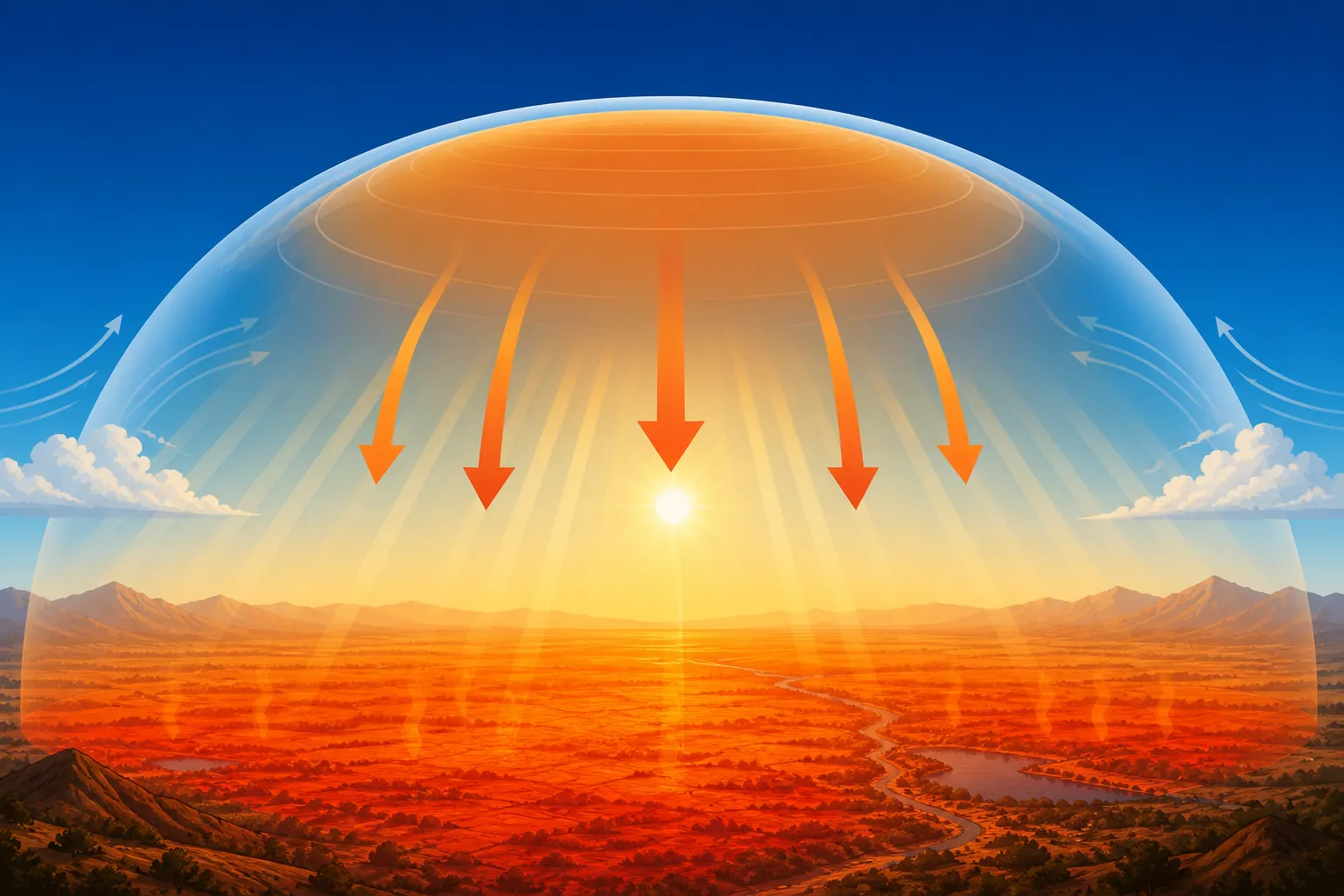
The answer is B. That is the useful version of a heat dome explained for weather science exam prep: not a scary noun, but a chain. High pressure aloft stalls. Air sinks. Sinking air is compressed and warms. The warm, sinking air works like a lid, limiting rising motion, clouds, and thunderstorms. With clearer skies, sunlight keeps heating the ground. If the pattern lasts, heat accumulates at the surface.
That is also about the right level for ASVAB General Science. The official ASVAB sample questions do not ask for graduate meteorology; they ask basic science facts and relationships, such as lower air density meaning molecules are farther apart, water boiling at 100°C or 212°F, and nitrogen making up about 78% of Earth’s atmosphere.[1] A heat-dome question fits that same level when it is treated as atmosphere, temperature, density, pressure, and cause-and-effect vocabulary.
What the exam wants you to see inside the phrase
NOAA describes the heat-dome setup as high pressure in the middle levels of the atmosphere, roughly 10,000 to 25,000 feet, or 3,000 to 7,600 meters, above the ground. In NOAA’s wording, “sinking air acts as a dome capping the atmosphere,” suppressing convection and clouds while heat builds at the surface.[2] That one sentence contains most of the testable science.
| Link in the chain | Exam vocabulary | What it causes |
|---|---|---|
| A ridge or area of high pressure aloft stalls | High pressure aloft, ridge, blocking high | Air tends to sink over the region instead of rising freely |
| Air sinks | Subsidence | The sinking air is compressed by higher pressure below |
| Compressed air warms without needing added heat from the ground | Adiabatic compression | The air mass becomes warmer and more stable |
| The warm, sinking layer acts like a lid | Cap, inversion-like lid, suppressed convection | Clouds and thunderstorms have trouble forming |
| Skies stay clearer | Reduced cloud cover, less precipitation | More solar energy reaches the surface |
| The pattern persists | Stalled pattern, blocking, heat wave outcome | Surface temperatures stay unusually high for days |
The American Meteorological Society Glossary defines a heat dome as “an exceptionally warm air mass at middle latitudes in the warm season associated with a synoptic-scale area of high pressure aloft that suppresses rising motion, clouds, and precipitation.” The same entry notes that the term was popularized by news media; it is useful, but it is not a long-standing formal term in the way “high pressure,” “subsidence,” or “convection” are.[3] National Geographic makes the same practical point: “heat dome” is a common public-facing label rather than a strict formal scientific category.[4]
That matters for exams. A question may never say “heat dome.” It may say “a persistent upper-level ridge,” “a blocking high,” “subsiding air,” or “suppressed convection.” If those phrases point to sinking, warming air and heat building near the ground, the question is testing the heat-dome mechanism even if the headline term is missing.
The middle links students blur together
The easiest trap is the phrase “hot air rises.” That sentence is often true in a simple classroom setup, but it is not the whole atmosphere. In a heat dome, the important motion is not a hot bubble rising from the sidewalk. It is air sinking under high pressure aloft.
Subsidence means sinking air
Subsidence is just the meteorology word for downward motion in the atmosphere. On a test, it may appear in a definition question: “Subsiding air is air that is…” The answer is sinking, not evaporating, rotating, condensing, or rising.
Once air sinks, it moves into layers of the atmosphere where pressure is greater. That pressure squeezes the air parcel. The air warms as it is compressed. This is where many wrong answer choices hide, because they swap in surface heating as the first cause. Surface heating becomes important later, but the upper-air mechanism starts with high pressure and sinking motion.
Adiabatic compression is warming by squeezing
Adiabatic warming sounds harder than it is. For exam purposes, it means the air warms because it is compressed as it sinks, not because a flame or hot ground directly heats it first. The pressure change does the work.
A safe mental model is a bicycle pump getting warm when air is compressed. That is not a weather event; it is a simple analogy for compression warming. In the atmosphere, sinking air under high pressure is compressed as it descends, so its temperature rises.
The lid suppresses convection and clouds
Convection is rising motion driven by warmer, less dense air. Clouds and many thunderstorms need rising air because air usually cools as it rises, and cooling helps water vapor condense. A heat dome works against that rising motion. The sinking, warming air above the surface makes the lower atmosphere more stable, so warm surface air has a harder time rising high enough to form clouds or storms.
Once clouds are suppressed, another piece joins the chain: clear-sky solar heating. More sunlight reaches the ground during the day. The ground heats the air near the surface. If the upper-air pattern stays in place, the region does not get much relief from clouds, rain, or a fresh air mass moving in.
So the clean exam chain is not “heat dome equals hot weather.” It is: high pressure aloft → subsidence → compression warming → suppressed convection and clouds → stronger daytime surface heating → heat building over time.
Heat dome and heat wave are not the same answer choice
A heat dome is the atmospheric circulation setup. A heat wave is the hot spell people experience near the surface. They often occur together, but they are not identical terms.
Even the duration wording for “heat wave” varies slightly by source. The UW-Madison Weather Guys describe a heat wave as three or more consecutive days of abnormally hot weather.[5] National Weather Service-style explanations commonly describe a heat wave as a period of unusually hot weather lasting more than two days.[2] Those definitions are close, but an exam writer can still use the distinction: a heat dome is the upper-air high-pressure pattern; a heat wave is the prolonged surface heat.
That distinction also prevents overgeneralizing. Not every heat wave has to be caused by the same circulation feature, and the word “heat dome” may be used more loosely in news coverage than in a technical forecast discussion. A careful answer choice ties the heat dome to high pressure aloft and suppressed rising motion, not merely to “several hot days.”
Where the stalled pattern comes from
The atmosphere is not a sealed glass dome. The “dome” image is a shortcut for a pressure pattern that resists vertical motion and lingers over a region. The stalling part often involves the jet stream, ridges, and blocking patterns.
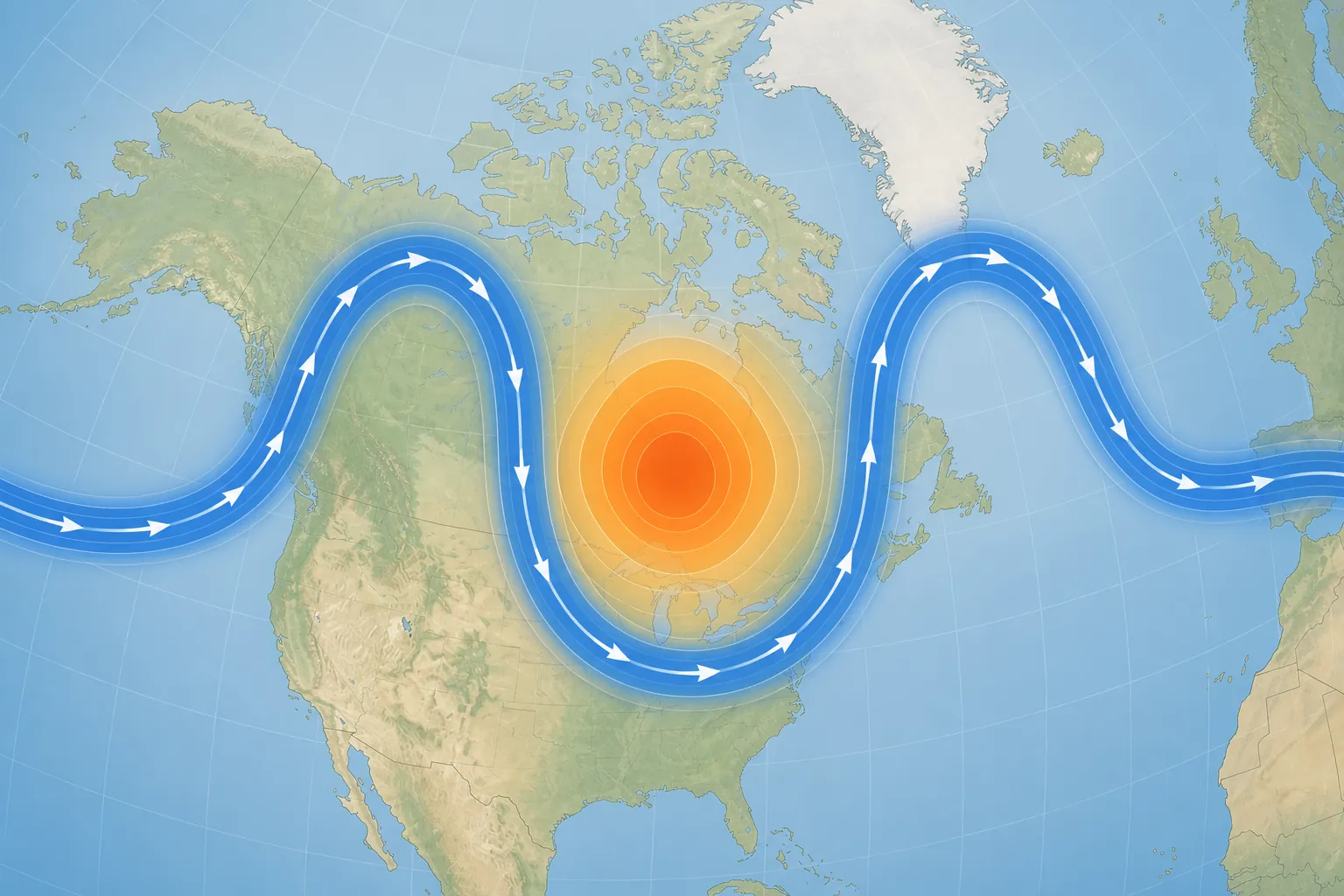
One common blocking pattern is called an omega block because the jet-stream shape resembles the Greek letter omega. Ohio University’s explainer describes this kind of pattern at roughly a 1,000-mile scale, with a high-pressure area in the middle and lower-pressure areas on both sides.[6] For ASVAB-level science, the important part is not drawing the Greek letter perfectly. It is knowing that a blocked or stalled ridge can keep the same air mass over one region long enough for heat to build.
This is also why “high pressure aloft” is more precise than “surface heat.” Surface heat is an outcome and a feedback in the daily heating cycle. The pattern that makes the event persistent is higher in the atmosphere.
How this becomes a distractor-heavy exam question
Weather questions often test whether you can keep the direction of motion straight. If the stem says “high pressure aloft,” “ridge,” “blocking high,” or “subsidence,” expect answer choices about sinking air. If the stem says “convection,” “rising air,” or “thunderstorm development,” expect answer choices about upward motion, cooling, condensation, clouds, and precipitation.
| If the stem says... | Think... | Avoid the distractor... |
|---|---|---|
| Subsidence | Sinking air | Rising air and thunderstorm growth |
| Adiabatic compression | Warming because pressure increases as air sinks | Cooling because the air rises and expands |
| Ridge of high pressure aloft | Stable pattern that can cap the atmosphere | A surface low pulling air upward |
| Suppressed convection | Fewer clouds and storms | More vertical cloud growth |
| Clear skies under persistent high pressure | More solar heating at the ground | Less sunlight reaching the surface |
| Heat wave | Prolonged hot spell at the surface | The exact same thing as the upper-air circulation feature |
Yale Climate Connections has discussed why some meteorologists dislike or limit the term “heat dome,” especially when it is used as if it were a single official diagnosis for every hot spell.[7] For a test-taker, that complaint is useful rather than confusing. It tells you to look for the mechanism words, not only the media label.
A documented 2026 case, after the mechanism
Once the mechanism is in place, a real event can help anchor it. In mid-July 2026, NASA Earth Observatory described a heat dome over the western United States, with intense heat focused over the northern Rockies and Plains. On July 13, Billings, Montana, reached 111°F, and Miles City, Montana, reached 115°F. Salt Lake City, Utah, reached 109°F on July 12. NASA also reported that CDC heat-related emergency department visits in Mountain states spiked tenfold during the event.[8]
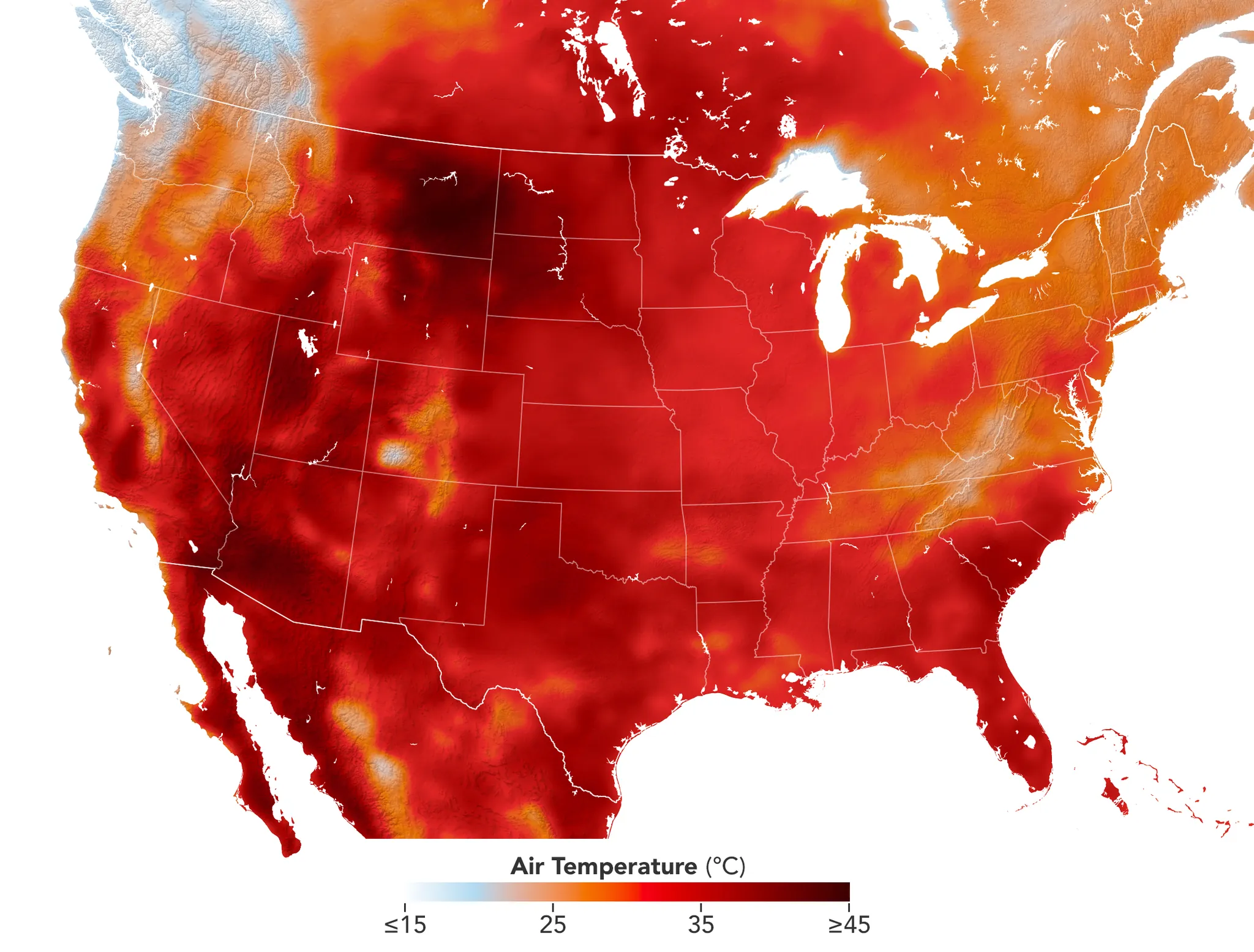
Those numbers are not the main lesson for an exam. They are the surface outcome. The exam lesson is how the atmosphere got there: a persistent high-pressure pattern, sinking and warming air, suppressed clouds, and repeated surface heating.
What to do when the question hides the term
Many students can recognize “heat dome” in a news headline and still miss the exam question because the exam uses older science words. Use the chain backward and forward.
- If the question starts with high pressure aloft, predict sinking air.
- If it starts with sinking air, predict compression and warming.
- If it starts with warming air aloft acting as a cap, predict less convection.
- If it starts with fewer clouds, predict stronger daytime solar heating at the ground.
- If it starts with several days of unusually high surface temperatures, decide whether the question is asking for the heat wave outcome or the heat-dome mechanism.
Here are three ASVAB-level patterns using the same science.
Pattern 1: definition
Question: In weather science, subsidence refers to which process?
Best answer: Air sinking in the atmosphere.
Why: The heat-dome chain depends on downward motion under high pressure. If the answer says air rises, expands, and cools, that is the opposite motion.
Pattern 2: cause and effect
Question: A stalled ridge of high pressure remains over a region for several days. Air sinks beneath the ridge. What effect would this most likely have?
Best answer: The sinking air compresses and warms, reducing cloud formation and allowing surface temperatures to rise.
Why: This answer keeps the order correct. The ridge does not create heat only by naming a “dome.” It creates a setup that favors sinking, warming, stability, clear skies, and accumulated surface heat.
Pattern 3: heat dome versus heat wave
Question: Which statement best distinguishes a heat dome from a heat wave?
Best answer: A heat dome is an upper-air high-pressure pattern that can help produce prolonged surface heat; a heat wave is the period of unusually hot weather experienced at the surface.
Why: This is the distinction that eliminates vague answers like “a heat dome is just a worse heat wave.” That wording may sound dramatic, but it does not identify the circulation feature.
A brief climate-context note, not the main test lesson
There is broader climate context around extreme heat. The IPCC AR6 2023 Synthesis Report concluded it is “virtually certain” that hot extremes have become more frequent and more intense across most land regions since the 1950s.[9] AP’s 2026 climate coverage, citing NASA MERRA-2 analysis, reported that U.S. summer heat waves roughly doubled between 1980 and 2023.[10] Those trends matter for understanding why heat events receive more attention, but an ASVAB General Science question is more likely to ask what sinking air does, why clouds are suppressed, or how high pressure aloft differs from a surface heat wave.
So do not study this as a climate-attribution essay unless your class specifically asks for that. Study it as weather mechanics first. For the ASVAB, the winning move is usually to translate the headline into pressure, motion, temperature, and clouds.
Compact vocabulary map for exam review
| Term | ASVAB-level meaning | Heat-dome role |
|---|---|---|
| High pressure aloft | Higher-pressure air pattern in the middle or upper atmosphere | Starts the sinking-air setup |
| Ridge | Elongated area of high pressure | Can stall over a region and keep the pattern in place |
| Blocking high | Pressure pattern that slows normal movement of weather systems | Helps heat build for days |
| Omega block | Jet-stream pattern shaped like the Greek letter omega | One way a high-pressure ridge can become persistent |
| Subsidence | Sinking air | Compresses and warms as it descends |
| Adiabatic compression | Temperature increase caused by compression, without direct heat exchange as the first explanation | Warms the sinking air |
| Convection | Rising motion of warmer air | Suppressed by the cap or lid |
| Cloud formation | Condensation usually helped by rising and cooling air | Reduced when rising motion is suppressed |
| Heat wave | Prolonged period of unusually hot surface weather | Possible outcome of the heat-dome setup |
If you are building this into a larger study plan, place heat domes with the rest of your atmosphere and earth-science review in the ASVAB Exam Prep Guide. For related weather-mechanism practice, compare the pressure and energy vocabulary here with hurricane science study tips for the ASVAB General Science subtest. If you need more earth-science practice outside weather, the earthquake preparedness study guide is a useful companion.
If you can explain why a stalled ridge of high pressure aloft makes air sink, warm by compression, suppress clouds, and allow surface heat to build, you understand the testable science behind a heat dome.
References
- General Science (GS) — Official ASVAB.
- Heat Index — NOAA JetStream.
- heat dome — AMS Glossary, edited 7 October 2024.
- What is a heat dome? — National Geographic.
- What is a heat dome? — UW-Madison Weather Guys, 28 July 2025.
- Heat domes, atmospheric rivers, omega blocks: Explaining what these and other weather terms mean — Ohio University, July 2026.
- Is ‘heat dome’ overhyped? Why some meteorologists dislike this term — Yale Climate Connections, August 2025.
- Heat Dome Broils the Western U.S. — NASA Earth Observatory, 15 July 2026.
- Climate Change 2023: Synthesis Report — IPCC AR6.
- AP News (2026) — AP News, 2026.
Related exhibits & inventory
Verified outcomes
No verified outcomes on file for this exam yet
See Methodology for how outcome evidence is disclosed once logged.
Planners
No planner filed for this exam yet
A downloadable timeline template for this exam hasn't been published yet.
Tool verdicts
AI-tool cautions
No AI tools tested for this exam yet
No hands-on AI-accuracy logs have been filed for this exam.
Questions about this plan
Ask a question about a specific section, timeline, or citation in this plan — or flag something that needs correcting.
Comments
Join the discussion with an anonymous comment.