CCSP Exam Hub
A Cloud Computing Security Study Guide That Actually Works
A practical cloud computing security study guide for CCSP candidates: how to weight the six official ISC2 domains, sequence practice questions against reading, choose official and third-party resources, and set a realistic prep timeline — with every self-reported figure clearly labeled.
- gre
- mcat
- asvab
- sat
- act
- digital-adaptive
- official-material
- section-strategy
- test-date-timeline
The point where many CCSP plans go bad is not at the beginning. It is two or three weeks in, after a candidate has read a serious-looking book, highlighted half of it, and still cannot explain why one exam answer is safer than another. A useful cloud computing security study guide has to start there: with the exam outline, the domain weights, and a study loop that exposes weak judgment before the calendar runs out.

This guide treats official ISC2 material as the anchor. First-hand passer experience is useful, especially when it describes an actual study process, but it is not the same as a broad outcome dataset. That distinction matters for CCSP because candidates are often working professionals with an exam fee, a reimbursement rule, and a limited prep window, not students with unlimited time to “cover everything.”
Start with the exam you are actually taking
The current CCSP exam is a 3-hour exam with 100–150 items, a passing score of 700 out of 1000, and an Americas exam fee listed at $599. ISC2 also states the experience requirement as five years of cumulative paid IT work, including three years in information security and one year in one or more CCSP domains. [1]
Those mechanics should shape the plan. A 3-hour exam with adaptive uncertainty in the item count is not a trivia contest where memorizing every acronym is the safest use of time. The candidate has to keep making defensible security decisions across domains, under time pressure, with no guarantee that the next question will come from the chapter they just reviewed.
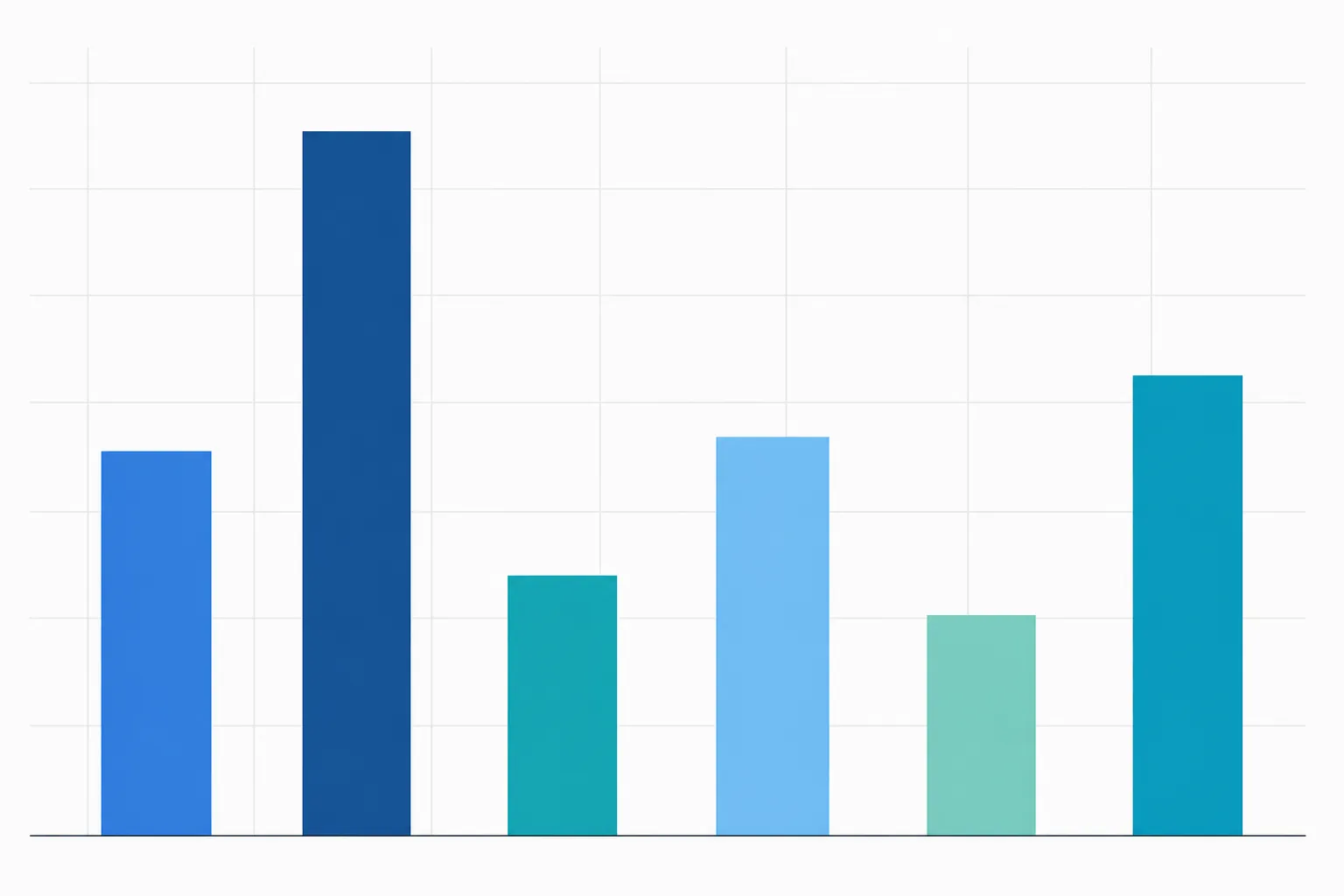
The six official domains are not weighted equally. The current ISC2 outline assigns the highest share to Cloud Data Security, followed by three 17% domains, then Cloud Security Operations and Legal, Risk and Compliance. [2]
| CCSP domain | Official exam weight | Planning consequence |
|---|---|---|
| Cloud Concepts, Architecture and Design | 17% | Early diagnostic questions should test shared responsibility, cloud characteristics, design principles, and architectural tradeoffs. |
| Cloud Data Security | 20% | Give this the largest share of study and review time; misses here should trigger targeted repair, not vague rereading. |
| Cloud Platform & Infrastructure Security | 17% | Treat infrastructure, virtualization, network, and platform controls as recurring decision material. |
| Cloud Application Security | 17% | Expect application security to interact with identity, data, deployment models, and secure development choices. |
| Cloud Security Operations | 16% | Practice operational scenarios, monitoring, incident response, and administrative controls under realistic wording. |
| Legal, Risk and Compliance | 13% | Do not ignore it, but do not let compliance reading consume the same time as Cloud Data Security. |
That table is not decoration. It is the reason a study plan should be uneven. If a candidate spends the same number of days on every domain because a book gives every chapter equal dignity, the plan has already drifted away from the test.
Convert the official weights into study time
The cleanest first pass is simple: allocate your baseline study time in roughly the same proportions as the exam outline, then adjust after diagnostics. This does not mean a 20% domain gets exactly 20% of every evening. It means Cloud Data Security gets more cycles than Legal, Risk and Compliance unless your diagnostic evidence says otherwise.
For example, in a hypothetical 60-hour plan, the official weights translate like this:
| Domain | Weight | Approximate hours in a hypothetical 60-hour plan |
|---|---|---|
| Cloud Data Security | 20% | 12 hours |
| Cloud Concepts, Architecture and Design | 17% | About 10 hours |
| Cloud Platform & Infrastructure Security | 17% | About 10 hours |
| Cloud Application Security | 17% | About 10 hours |
| Cloud Security Operations | 16% | About 10 hours |
| Legal, Risk and Compliance | 13% | About 8 hours |
After the first diagnostic round, the allocation should stop being purely proportional. A candidate who works daily in infrastructure but keeps missing data lifecycle and encryption questions should move hours toward Cloud Data Security. A governance-heavy candidate who repeatedly misses platform controls should do the same for infrastructure. “Weak areas” is too vague; the miss log has to name the domain and the concept.
This is also where an exam-date plan beats a completion plan. If you already have a test date, build backward from it. The same principle appears in other exam-first plans, such as a test-date anchored study plan: the calendar is a constraint, not an afterthought.
Put practice questions before long reading
Practice-first does not mean reading disappears. It means questions reveal what the reading has to repair. Without that pressure, experienced candidates can spend too long reviewing familiar ideas and too little time finding the places where CCSP wording exposes uncertain judgment.
One first-attempt passer report published in October 2024 is useful here because it is operational rather than inspirational. The author reported using the official question bundle of 800+ questions, recommended spending roughly 90% of study time on practice questions and 10% on reading, and observed that the exam emphasized concepts over abbreviation memorization. That is a single community-sourced report, not a validated pass formula, but the process is concrete enough to test against your own diagnostics. [3]
The loop
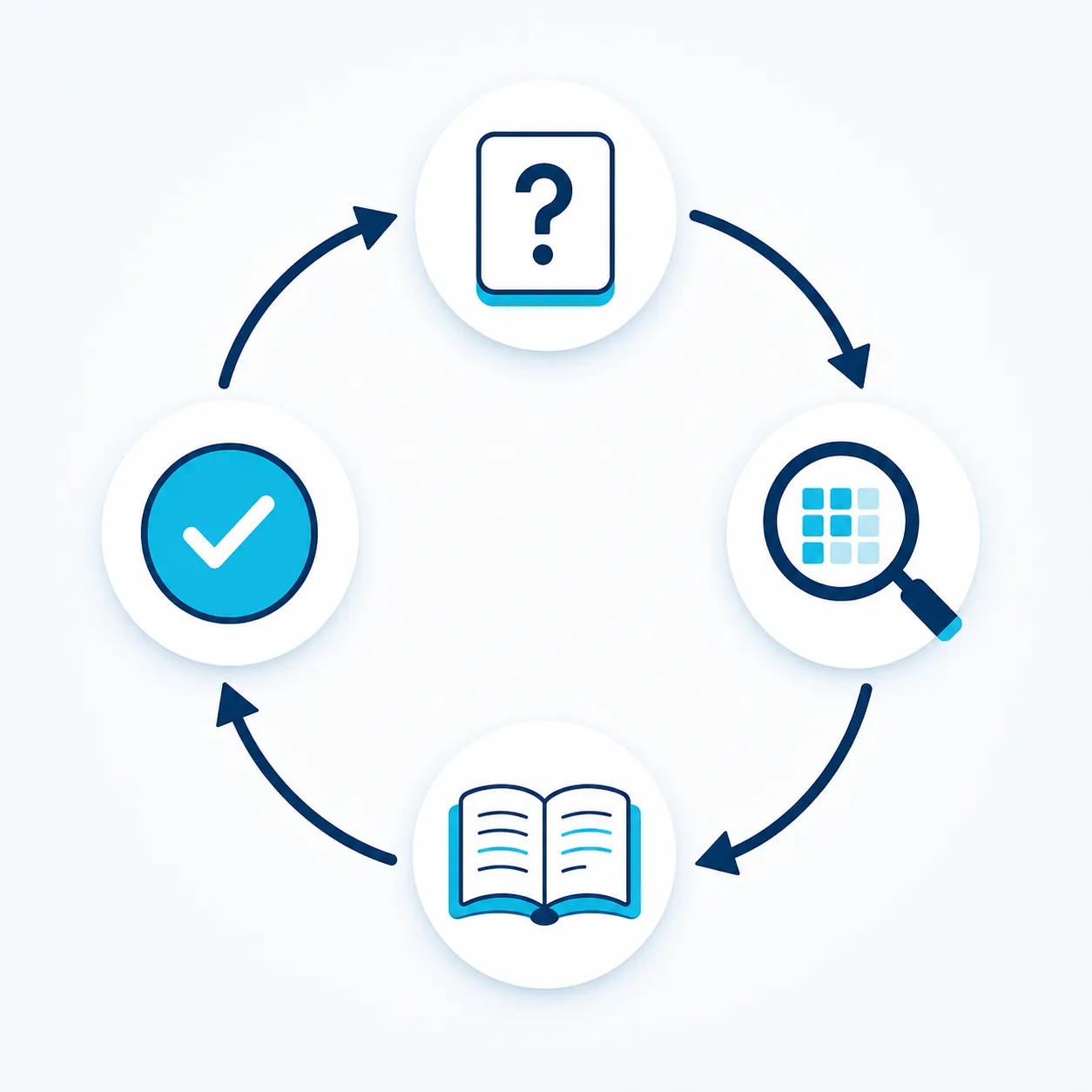
- Take a small mixed set of practice questions before rereading a domain. Do not wait until you feel ready.
- Mark every miss by official domain, not by book chapter.
- Write the concept that caused the miss: data classification, tenant isolation, key management, secure SDLC, incident response, legal jurisdiction, or whatever the question actually tested.
- Read selectively to repair that concept. Use the book or official material as a reference, not a tunnel.
- Return to questions and explain both sides: why the correct answer is correct, and why the attractive wrong answer is wrong.
The last step is the one candidates often skip. A raw score can rise because you recognize wording, not because the underlying decision has improved. If you cannot explain the tempting answer, the question has not finished teaching you.
A miss log worth keeping
| What to record | Why it matters |
|---|---|
| Official domain | Keeps review aligned to the ISC2 outline instead of a vendor’s chapter order. |
| Concept tested | Separates a genuine knowledge gap from a careless read. |
| Why your answer was tempting | Shows the trap: overengineering, choosing a technical control when governance comes first, or treating cloud as if it were only traditional infrastructure. |
| Reference used for repair | Prevents endless rereading and gives you a source to revisit. |
| Retest result | Shows whether the repair worked or only felt productive. |
A candidate who logs “missed encryption question” has learned very little. A candidate who logs “Domain 2, data lifecycle, confused tokenization with encryption, chose tool before data-state requirement” has something to fix.
Use official and third-party resources as tools, not a shopping list
ISC2’s self-study page points candidates to the official exam outline, interactive flashcards, official self-paced training, and official study resources. [4] The outline should be open before any book purchase and before any long review block. If a resource is organized around an older objective set, the mismatch becomes your problem on exam day.
Books still have a place. They are useful when a practice miss reveals a concept you cannot explain cleanly. They are less useful when they become a moral project: finish the book, then start the exam. Destination Certification’s CCSP book discussion is candid about the widely referenced Official Study Guide by Mike Chapple and David Seidl reading like a reference text, and it advises candidates to verify resources against the current exam outline before choosing study materials. [5]
A practical resource stack can be small:
- The current ISC2 exam outline as the map.
- A practice-question source used early and repeatedly.
- One primary reference book or course for targeted repair.
- Flashcards for terms that genuinely block understanding, not as the center of the plan.
- A miss log organized by the six official domains.
If you use AI study tools, keep the same rule: the tool may help explain a concept or generate a self-quiz, but it does not replace the official outline. For a broader version of that habit, see this guide to using AI tools for cybersecurity study.
Set a prep window as a range, not a promise
The honest CCSP timeline is a labeled range. The October 2024 first-attempt report describes a short, intensive path, while Destination Certification discusses a self-reported book-based preparation range of roughly two to four months. [3][5] Those figures should not be flattened into “CCSP takes X weeks.” They describe different candidates, different study intensity, and different resource choices.
| Your situation | Prep window to consider | What should decide it |
|---|---|---|
| You already work across cloud security domains and can study intensely | The short end of the self-reported range may be possible | Early mixed-question performance, not confidence from experience alone |
| You are experienced in IT/security but uneven across cloud data, application, and legal domains | Plan closer to a multi-month window | Domain miss patterns after the first diagnostic sets |
| You are using a reference-style book as the main repair tool | Expect slower progress than a pure question loop | How quickly misses turn into explainable concepts |
| You need employer reimbursement | Leave margin before the reimbursement deadline | The exam fee and policy risk, not optimism |
The safest scheduling move is to take a diagnostic set before choosing the exam date, if your situation allows it. If the date is already fixed, diagnostics still matter; they decide what gets cut. Usually the cut should be broad rereading, not practice, repair, and retest cycles.
Exam-day tactics begin before exam day
Because the exam window is 3 hours and the item count is listed as 100–150, pacing cannot be built around a fixed number of questions. [1] In practice sessions, avoid training only on tiny sets. Include longer mixed blocks so you learn how your judgment changes when questions stop arriving in neat domain order.
- Read for the security decision first, then the cloud service detail.
- Watch for answers that are technically true but poorly sequenced.
- Do not overvalue abbreviation recall if the question is really testing concept choice.
- If two answers look plausible, ask which one best fits the role, responsibility boundary, data state, risk posture, or compliance constraint in the question.
- Use review time during prep to practice explaining wrong answers, not only checking the correct letter.
Do not plan around unofficial pass-rate claims. The useful official inputs are the score standard, exam length, item range, fee, eligibility rules, and domain outline. ISC2 publishes the passing score as 700 out of 1000, but this guide does not rely on circulating unofficial pass-rate figures. [1]
Cost and career value: useful context, not proof of a study method
The $599 Americas exam fee is enough reason to avoid a casual plan. [1] It becomes more consequential if your employer pays only after a pass or if a failed attempt delays reimbursement.
Career-value figures should be read carefully. Coursera’s 2026 cloud security certification roundup cites ISC2 workforce survey figures including an average U.S. salary increase of about $18,000 correlated with certifications, 70% of employers requiring certifications, and 40% of professionals having exam fees employer-paid. [6] Those are useful context for deciding whether CCSP is worth the effort, but they do not prove that any specific study method raises pass odds.
Orca Security’s 2026 cloud security certification comparison also treats CCSP as part of the current cloud security certification landscape and discusses credential cost and renewal considerations. [7] That supports the practical point: the exam is not only a study event. It is a credential decision with money, time, and maintenance attached.
The working plan
A CCSP plan that respects the exam does not start by promising mastery of cloud security. It starts by choosing the current ISC2 outline, weighting the six domains, and taking practice questions early enough to expose the wrong assumptions.
- Open the current ISC2 CCSP outline and copy the six domains with their weights.
- Build the first study allocation from those weights, giving Cloud Data Security the largest share.
- Take mixed practice sets before long reading.
- Log misses by domain, concept, tempting wrong answer, repair source, and retest result.
- Use books, flashcards, courses, and official resources to repair specific misses.
- Pick a prep window honestly from the limited self-reported range: about four intensive weeks at the short end, or two to four-plus months for slower or book-heavy preparation.
The candidate who can explain why the right answer is right and the attractive answer is wrong is in a better position than the candidate who has merely finished more pages. That is the difference between studying cloud security content and preparing for the CCSP exam.
References
- CCSP – Certified Cloud Security Professional — ISC2
- CCSP Certification Exam Outline — ISC2
- I Passed the CCSP Exam in 40 Minutes — Cloud Security Guy, October 2024
- CCSP Self-Study Resources — ISC2
- CCSP Book — Destination Certification
- Popular Cloud Security Certifications — Coursera, 2026
- Top 5 Cloud Security Industry Certifications — Orca Security, 2026
Related exhibits & inventory
Verified outcomes
No verified outcomes on file for this exam yet
See Methodology for how outcome evidence is disclosed once logged.
Planners
No planner filed for this exam yet
A downloadable timeline template for this exam hasn't been published yet.
Tool verdicts
AI-tool cautions
No AI tools tested for this exam yet
No hands-on AI-accuracy logs have been filed for this exam.
Questions about this plan
Ask a question about a specific section, timeline, or citation in this plan — or flag something that needs correcting.
Comments
Join the discussion with an anonymous comment.