
Comparison
The Brain Benefits of Dance Breaks for Studying
Short dance breaks during study sessions trigger neural replay, BDNF release, and dopamine spikes that boost memory and focus. This guide explains the science behind movement breaks and how to apply them effectively during study.
Verdict panel
- Compared
- not specified
- Target exam
- not specified
- Best for
- not specified
- Pricing last reviewed
- pricing currency unconfirmed
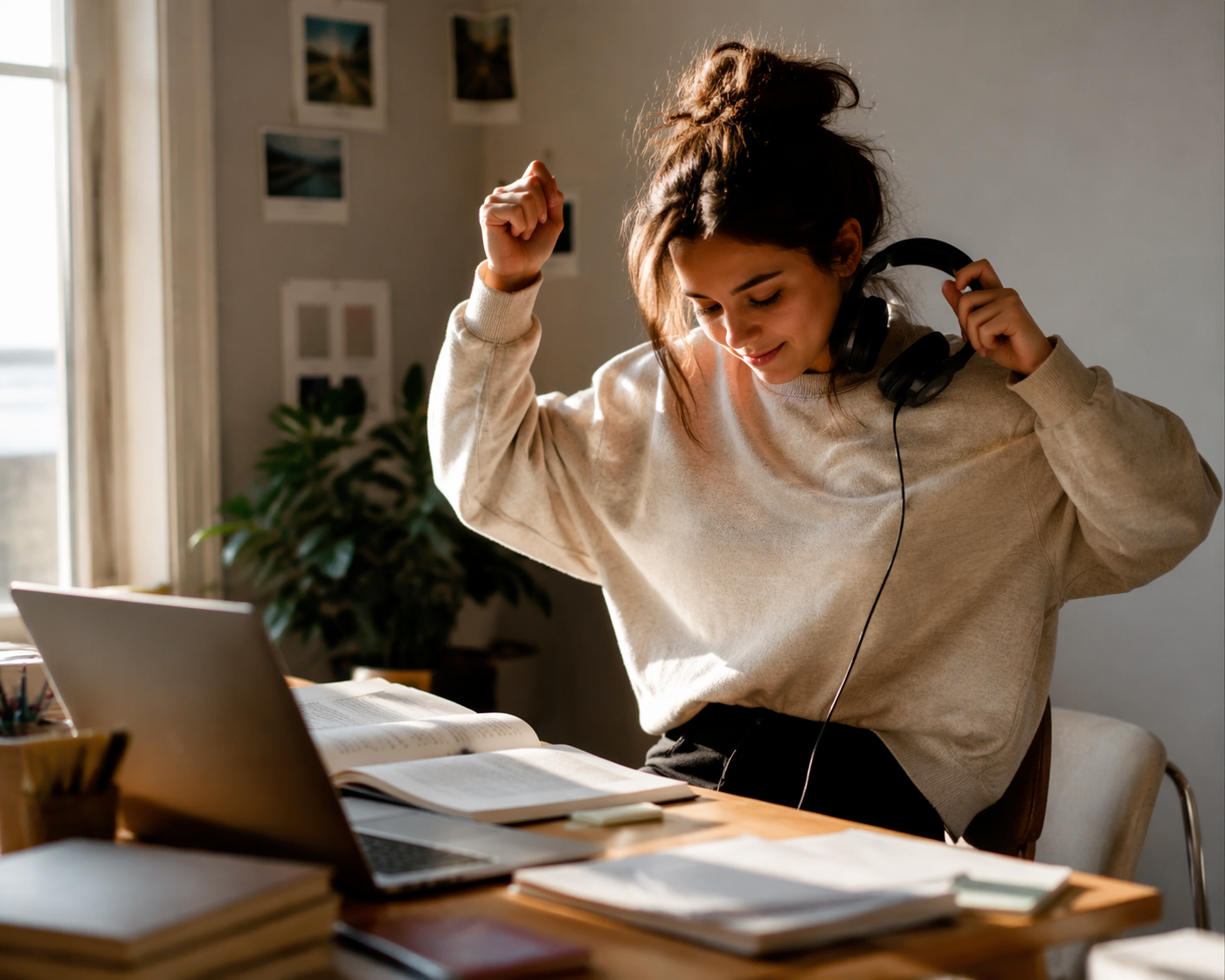
There is a particular kind of studying that looks responsible from the outside and useless from the inside. The laptop is open. The notes are highlighted. The phone is face down. You have reread the same paragraph enough times to recognize its shape, but not enough to explain it. At that point, a break can feel suspiciously like giving up.
A short dance break is not a cure for bad sleep, missing notes, or a test you started preparing for too late. The more honest claim is smaller and more useful: a timed burst of movement can create conditions that help memory and attention recover. The brain benefits of dance breaks for studying come from several mechanisms working at once: rest, movement, arousal, mood, and the cognitive richness of dancing itself. The strongest direct evidence is not from perfect college-student dance-break trials. It comes from neural replay research, movement-break studies, and broader dance-cognition work.
The break is not always empty time
The most interesting reason to take breaks seriously is not that they feel nice. It is that the brain may keep working on recently learned material after active practice stops.
In a 2021 Cell study, researchers looked at what happened during short rest periods after people practiced a new typing sequence with their non-dominant hand. During rest, the brain replayed the learned sequence at roughly 20 times the original speed, cycling activity between the neocortex and hippocampus more than two dozen times in 10 seconds.[1]
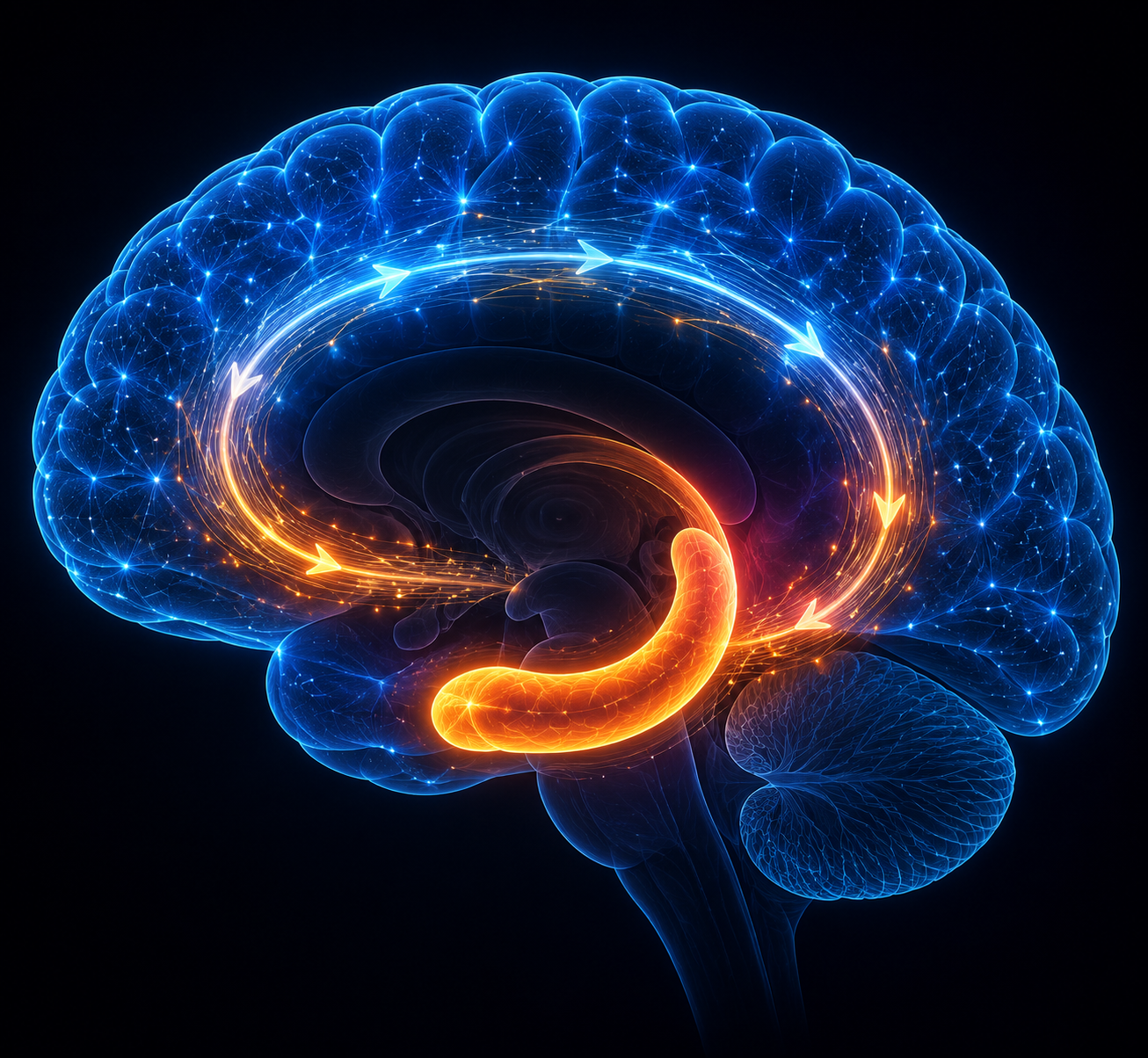
That is a different picture from the one students often carry around: study as the only productive state, break as blank space. In this study, the rest period was not just a pause between learning attempts. It was a window in which the brain rapidly reactivated the newly learned pattern, sending it through memory-related circuits again and again.[1]
The caveat matters. This was not a chemistry student reviewing equilibrium problems, standing up, dancing for two minutes, and then scoring higher on an exam. The task was a motor sequence typed with the non-dominant hand. So the study does not prove that dancing between flashcard rounds directly consolidates vocabulary or formulas. What it does support is the broader mechanism: after learning, brief rest can be an active memory-processing period rather than a waste of time.
That distinction is useful because it changes the question. Instead of asking whether every minute away from the textbook is lost, the better question is whether the break helps you return in a brain state that can encode, retrieve, and apply information better than the foggy version of you that kept staring at the page.
Why movement helps the brain come back online
A dance break adds movement to that rest window. That matters because movement changes the chemical and electrical conditions under which learning happens.
One commonly cited pathway is BDNF, or brain-derived neurotrophic factor. In Spark, John Ratey popularized the phrase “Miracle-Gro for the brain” to describe BDNF’s role in supporting neural growth and plasticity.[2] The phrase is catchy enough to become annoying, but the underlying idea is relevant for students: movement can help prepare the brain for the kind of adaptation learning requires.
Movement also affects neurotransmitters involved in attention and mood. Dopamine is tied to motivation, reward, and learning from feedback. Norepinephrine helps regulate alertness and the ability to respond to what matters. Serotonin is involved in mood and regulation. A good study break does not need to turn these into separate trivia facts. The practical point is that moderate movement can shift a tired student out of low-arousal mental sludge and into a more usable state for the next round of work.
There is also the rhythm of the hippocampus to consider. Research on hippocampal theta activity suggests a relationship with movement speed, which fits the broader picture of movement and memory systems interacting. For studying, the takeaway should stay modest: physical movement is not merely a way to burn energy between “real” learning blocks. It can change the readiness of memory and attention systems that the next study block depends on.
Movement-break studies are closer to the student problem
The neural replay study gives the break credibility. Movement-break studies move the evidence closer to the classroom problem: students sitting too long and trying to keep concentrating after attention has already started to fray.
Peiris et al. studied 85 participants and found that movement breaks after 20 minutes of sedentary time significantly improved concentration, with the reported result reaching p<0.001.[3] That does not mean every student needs to stand up exactly at minute 20. It does mean the familiar “I can push through this” instinct has competition from evidence that the body may need interruption before the mind performs well again.
Fenesi et al. tested 5-minute exercise breaks during lectures and found improved quiz performance.[4] This is a helpful study because it connects movement to academic output rather than only to mood. A quiz is not the same as a final exam, and a lecture is not the same as solo studying at midnight, but it is closer to the academic setting than a general claim that exercise is healthy.
Pastor-Vicedo et al. reported that 10 minutes of moderate physical activity improved reaction times by about 15%.[5] Reaction time is not memory, but it is part of the attention story. When a student returns to practice problems, faster and cleaner responding can matter: noticing the sign error, catching the exception in a definition, or reacting to feedback before the whole session goes dull.
| Study area | What it supports for studying | What it does not prove |
|---|---|---|
| Neural replay during rest | Brief rest after learning can involve rapid memory reactivation | That dance breaks directly raise grades |
| Movement breaks | Short activity can improve concentration, quiz performance, or reaction time | That one exact break length works for every student |
| Dance-cognition research | Dance may engage memory, attention, emotion, rhythm, and motor planning together | That older-adult dance findings automatically apply to high-school or college study sessions |
What dance adds beyond simply standing up
If the evidence for movement breaks is already strong enough to justify standing up, why make the break a dance break? Because dance layers several demands at once: timing, balance, coordination, prediction, emotion, and sometimes music. That does not make it magic. It does make it cognitively richer than pacing around the room while still doom-scrolling.
The NFPT synthesis describes dance as engaging seven neurobehavioral domains and involving the action observation network.[6] In plain terms, dancing asks the brain to coordinate what it sees or imagines, what the body does, and what the rhythm requires. Even a short, unserious version has more going on than a generic stretch if the student is actually moving to a beat.
A 2025 NHSJS review connects dance with hippocampal and prefrontal engagement.[7] Those regions matter for the student version of cognition: memory, planning, inhibition, sequencing, and returning to a goal after distraction. The evidence should still be read carefully. A review connecting dance to these brain systems is not the same thing as a randomized trial showing that two minutes of dancing after biology notes improves tomorrow’s recall. It does, however, make dance a reasonable candidate when choosing a study break that wakes up both the body and the executive system.
There is also older-adult research that makes dance especially intriguing, but it needs a firm label. A 2003 New England Journal of Medicine study reported a connection between dancing and reduced dementia risk in older adults.[8] That finding is compelling for long-term brain-health conversations. It should not be quietly repackaged as proof that a teenager’s dance break before algebra creates the same protective effect. Different population, different outcome, different time scale.
How to use dance breaks without turning them into procrastination
The best study dance break is short enough that you will actually come back. It should feel like a reset, not a second activity that requires its own recovery period.
- Use it after sustained sitting, especially when rereading starts replacing thinking.
- Keep the intensity moderate: enough to raise alertness, not enough to become a full workout.
- Set a timer before the music starts.
- Choose music or movement you do not need to search for once the break begins.
- Return to one specific task: one problem set, one recall round, one paragraph explanation, not a vague promise to “keep studying.”
For many students, the danger is not the dancing. It is the phone. If the break requires opening a social app to find the perfect song, the brain may get a movement break wrapped inside a recommendation-engine trap. A pre-made playlist, one saved track, or even dancing without a screen is less glamorous and more useful.
Dance breaks also pair naturally with interval-based studying. If you already use a Pomodoro setup, the break can replace a passive scroll during the short rest period. Students who need more flexible timing, especially those adjusting intervals around attention regulation, can compare this with the approach in the Pomodoro Technique for ADHD Brain article. The useful question is not whether 25 minutes is sacred. It is whether your break timing helps you restart before your attention collapses.
Not every break has to be movement-based. A word-game break, like the one discussed in the NYT Strands study-break article, may be useful when you want a lighter cognitive shift rather than a physical reset. The difference is the job you need the break to do. If your body feels wired from stress but your mind wants a puzzle, a word game may fit. If you have been sitting still while your attention dissolves, movement is probably the more direct intervention.
A simple pattern
Try this as a starting point, then adjust it instead of treating it like a rule:
- Study one defined unit: a problem set section, a lecture segment, a flashcard category, or a passage.
- Stop when attention starts slipping or when your planned interval ends.
- Dance for a short, timed break at moderate intensity.
- Sit down and immediately retrieve something from memory before rereading.
- If you return foggier, shorten the break, lower the intensity, or remove the screen.
The retrieval step matters. If the break helped, you should use the next few minutes for active recall, practice questions, teaching the concept aloud, or rebuilding the idea from memory. Going straight back to passive rereading wastes some of the alertness you just created.
Where the evidence stops
The honest version of this method is promising, not proven in every form students might want. Neural replay research supports the idea that rest after learning can be active memory time, but the major study discussed here used a non-dominant-hand typing task rather than academic studying or dance.[1] Movement-break studies support short activity for concentration, quiz performance, and reaction time, but they do not establish a universal formula for every subject or student.[3][4][5] Dance research suggests richer engagement of memory, motor, emotional, and executive systems, but much of the strongest dance-cognition work is not specifically about high-school or college students taking two-minute breaks between study blocks.[6][7][8]
That still leaves a practical recommendation worth trying. A dance break is low-cost, quick, and easy to stop if it does not help. It asks less of a tired student than a total lifestyle overhaul. Stand up, move for a short timed interval, let the brain leave the page without leaving the task entirely, and come back to retrieval while attention is more available.
Used that way, dance breaks sit in a reasonable middle ground: supported by strong rest and movement-break science, made more interesting by dance-related brain mechanisms, and still waiting for more direct student-specific research.
References
- Cohen 2021 neural replay study, Cell, 2021.
- Spark, John Ratey.
- Peiris et al. 2021 movement breaks study, International Journal of Environmental Research and Public Health, 2021.
- Fenesi et al. 2018 exercise breaks during lectures study, Journal of Applied Research in Memory and Cognition, 2018.
- Pastor-Vicedo et al. 2024 moderate activity and reaction time study, Cogent Social Sciences, 2024.
- NFPT synthesis on dance and neurobehavioral domains, NFPT.
- NHSJS 2025 review on dance, hippocampal engagement, and prefrontal engagement, NHSJS, 2025.
- NEJM 2003 study on dancing and dementia risk, New England Journal of Medicine, 2003.
Back to the exam this applies to
Target exam not specified — see all exam hubs.
Comments
Join the discussion with an anonymous comment.