How to Benchmark DeepSeek V4 Flash for Study Tasks
Accuracy Warning — DeepSeek V4 Flash
Can produce wrong-but-confident answers and hallucinate when uncertain; verify against official material
- Accuracy:
- Limited
- Tested:
- Official practice question review across Non-Think, High, and Max modes with hallucination scoring
- Last tested:
- 2026-08-01
A DeepSeek V4 Flash benchmark test for study tasks should start with official practice questions, not a leaderboard. If you are prepping for the SAT, GRE, MCAT, ACT, or ASVAB, the useful question is not whether Flash posts a nice MMLU-Pro or GPQA score. The useful question is whether it can explain the question you actually missed without inventing a polished wrong rule that you then carry into next Sunday night’s review.
This is an Aug. 1, 2026 snapshot. The current DeepSeek V4 Flash evidence is awkwardly fresh: the July 31, 2026 build is extremely new, while most hands-on third-party writeups still reflect the April 24 preview build. That does not make the older runs useless. It does mean they should set expectations, not substitute for a small benchmark on your own exam material.
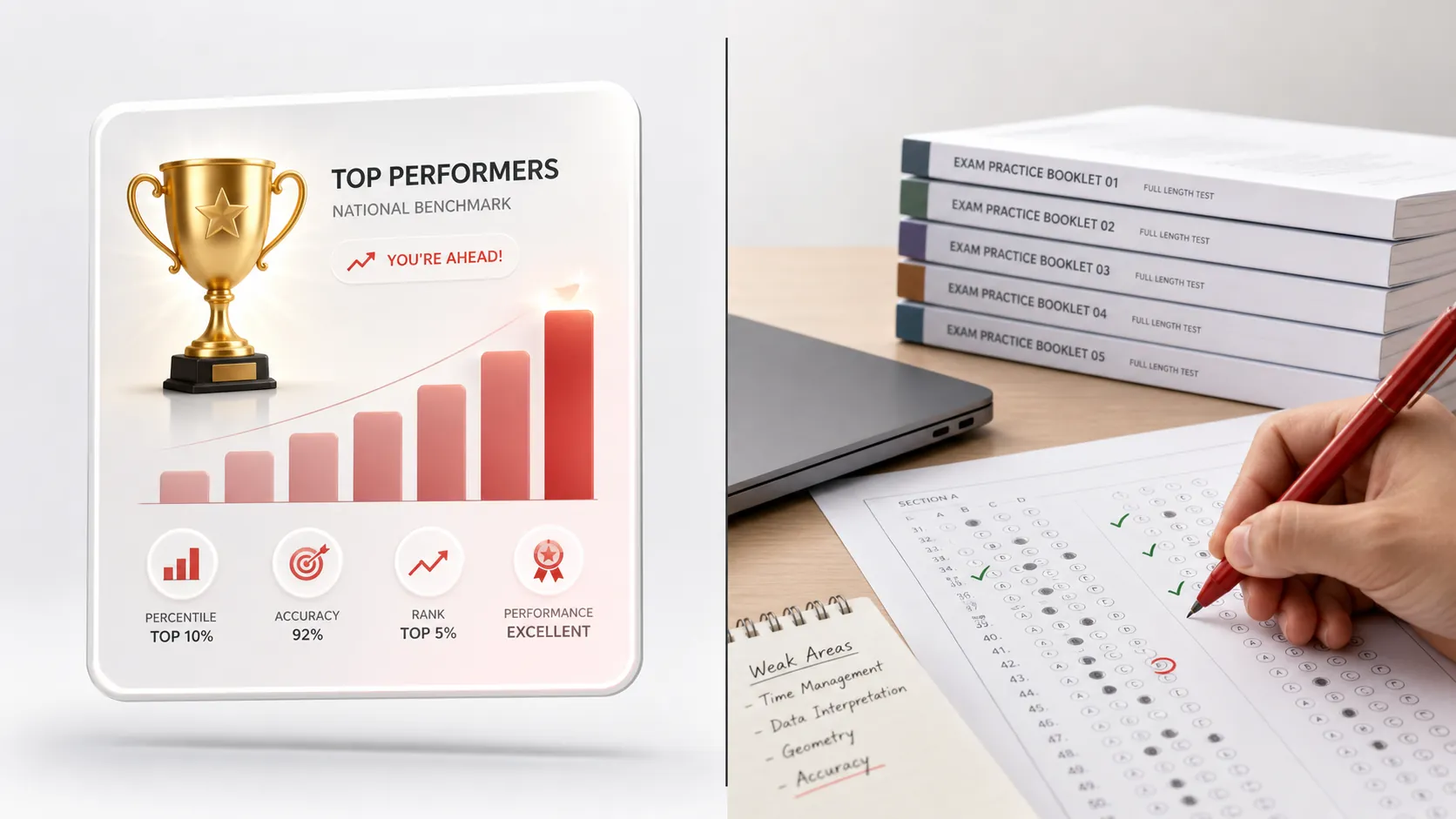
The official model card is still worth reading because it shows the trap. “DeepSeek V4 Flash” is not one stable tutoring behavior. On the official table, Non-Think, High, and Max produce sharply different scores: MMLU-Pro is 83.0, 86.4, and 86.2; GPQA Diamond is 71.2, 87.4, and 88.1; HMMT Feb 2026 is 40.8, 91.9, and 94.8; HLE is 8.1, 29.4, and 34.8; and MRCR 1M is 37.5, 76.9, and 78.7 across those three modes. The model card also reports AGIEval Flash-Base at 82.6 versus V3.2-Base at 80.1, and lists the model under an MIT license.[1]
That table is not the answer. It is the reason to test by mode. If a student asks for an MCAT passage explanation in Non-Think and another asks in Max, they may not be using the same practical study tool at all.
The benchmark that matters: official items, three modes, separate hallucination scoring
Use official practice material from the exam you are actually taking. For SAT, that means College Board material. For GRE, ETS. For MCAT, AAMC. For ASVAB, official guide material. If you are testing ACT prep, use official ACT material. Do not replace these with synthetic “SAT-style” or “MCAT-like” prompts, because synthetic questions often hide the exact scoring and wording traps that make exam prep painful.
The run can be small. You are not trying to publish a lab paper. You are trying to catch the failure modes before they become your study plan.
| Protocol step | What to do | What to record |
|---|---|---|
| 1. Pick official items | Choose a compact sample from the section you actually need: reading, math, science passage, vocabulary-in-context, mechanics, or quantitative reasoning. | Exam, section, question ID or page reference, official answer, and official explanation if available. |
| 2. Run all three modes | Ask the same prompt in Non-Think, High, and Max. Do not change wording between modes. | Mode, final answer, explanation, and whether the model expressed uncertainty. |
| 3. Score answer accuracy | Compare the final answer to the official key. | Correct, wrong, incomplete, or refused. |
| 4. Score explanation quality | Compare the reasoning to the official explanation or the tested concept. | Good, usable with edits, misleading, or unrelated. |
| 5. Score wrong-but-confident separately | Mark any wrong answer that sounds certain, invents a rule, misquotes the passage, or gives a false fact. | Hallucinated confident wrong answer: yes or no. |
| 6. Ask for verification | After the first answer, ask: “Verify your answer against the question text and identify any uncertainty.” | Changed answer, corrected itself, doubled down, or became uncertain. |
| 7. Log cost and tokens | Record input tokens, output tokens, provider, and mode. | Total cost for the run and cost per usable explanation. |
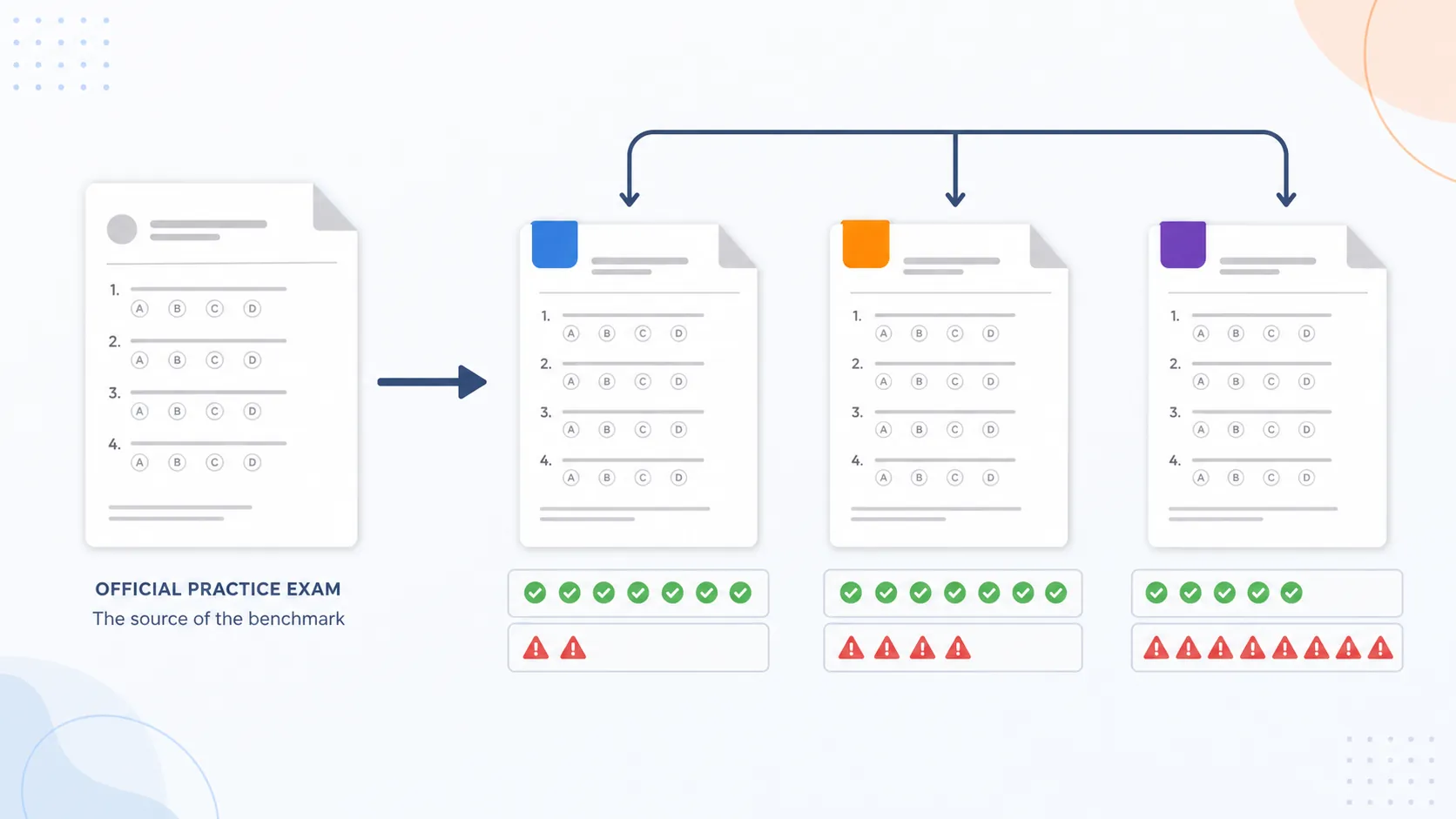
The verification prompt matters because a model that corrects itself after being asked to check is annoying but salvageable for low-stakes study support. A model that confidently doubles down on the wrong answer is the one that costs you time. That is the mistake students remember later: not the plain miss, but the beautifully explained miss.
Use a prompt that does not leak the answer
Paste the question and answer choices, but do not paste the official answer or explanation on the first pass. Ask for the answer, the reasoning, and a confidence note. For passage-based exams, paste the full relevant passage if licensing and platform rules allow it. DeepSeek’s API documentation lists a 1M context window, and the official card’s MRCR 1M scores are one reason passage-heavy students may be tempted to test it seriously.[1][2]
You are helping me review an official practice question for [EXAM].

Task:
1. Choose the best answer.
2. Explain the reasoning using only the question and passage provided.
3. If any part is uncertain, say exactly what is uncertain.
4. Do not invent facts, formulas, passage details, or test rules.

Question:
[Paste official question text]

Answer choices:
[Paste answer choices]

Passage or stimulus, if any:
[Paste relevant official passage/stimulus]
After the model answers, run the same follow-up in each mode:
Verify your answer. Re-read the question text and passage. If your answer depends on an assumption, name it. If another answer choice is stronger, change your answer and explain why.Do not score the follow-up as if the first answer never happened. In real studying, the first answer is what most tired students copy into their notes. The correction is useful, but the first confident miss still belongs in the log.
Wrong is not the same as wrong-but-confident
A normal wrong answer is easy to handle. You mark it wrong, read the official explanation, and move on. A wrong-but-confident answer is different. It can teach a fake grammar rule, misread an MCAT passage, choose a GRE quant shortcut that does not apply, or assert an ASVAB mechanical principle too broadly. The damage is not just the missed item. The damage is the remedial work afterward.
Artificial Analysis is the cleanest warning sign here. In its fresh independent coverage of the July 31 build, DeepSeek V4 Flash Max scored 50 on the Artificial Analysis Intelligence Index, but the same coverage reported AA-Omniscience at -23 and a hallucination-when-uncertain rate of 96% for Flash Max and 94% for the model’s non-reasoning variant. That does not mean 96% of all answers are wrong. It means that, in that uncertainty test, the model tended to answer anyway when it did not know.[3]
That is exactly the behavior an exam benchmark has to isolate. If your log only has “correct” and “incorrect,” you will miss the tutoring-risk category.
| Score label | Meaning | How to treat it in study |
|---|---|---|
| Correct and well-explained | Matches the official answer and gives reasoning consistent with the official explanation or tested concept. | Safe for first-pass review, still checked against the official source. |
| Correct but shaky | Gets the right answer but gives vague, lucky, incomplete, or partially wrong reasoning. | Do not turn the explanation into notes without repair. |
| Wrong and uncertain | Misses the answer while signaling uncertainty or asking for more context. | A normal miss. Annoying, but less dangerous. |
| Wrong-but-confident | Misses the answer while sounding certain, inventing facts, misquoting the passage, or defending a false rule. | High-risk for tutoring. Restrict or reject the mode for that section. |
| Self-corrected on verification | Changes to the official answer after being asked to check. | Useful signal, but keep the first-answer miss in the score. |
| Doubled down | Keeps the wrong answer after verification. | The worst tutoring pattern. Do not use as an answer authority. |
What headline benchmarks can and cannot tell you
MMLU-Pro, GPQA Diamond, HMMT, HLE, and long-context recall scores are not meaningless. They suggest a model can handle broad knowledge, graduate-level science questions, competition math, difficult general evaluation tasks, or long inputs under test conditions. That is useful context if you are deciding whether Flash is worth a one-hour trial.
They do not prove it can tutor your exam section. GPQA Diamond is not the MCAT. HMMT is not GRE Quant. HLE is not the ACT. MMLU-Pro is not a College Board reading module. The one official-card benchmark that comes closest to admissions-test material is AGIEval, and even there the relevant composition is narrower: AGIEval includes real SAT English, SAT Math, and GRE Math questions, among other exams.[4]
So use the official benchmarks for what they actually show: Max and High are much stronger than Non-Think on several reasoning-heavy tables, and long-context handling may be promising enough to test with full passages. Do not use them as a permission slip to trust explanations on official exam items.
Cost is the nice part, as long as it does not become the trust argument
The bargain is real. As of this Aug. 1, 2026 snapshot, DeepSeek’s API documentation lists DeepSeek V4 Flash at $0.14 per 1M input tokens for cache-miss input, $0.0028 per 1M input tokens for cache-hit input, and $0.28 per 1M output tokens, with 2,500 concurrency and a 1M-token context window.[2]
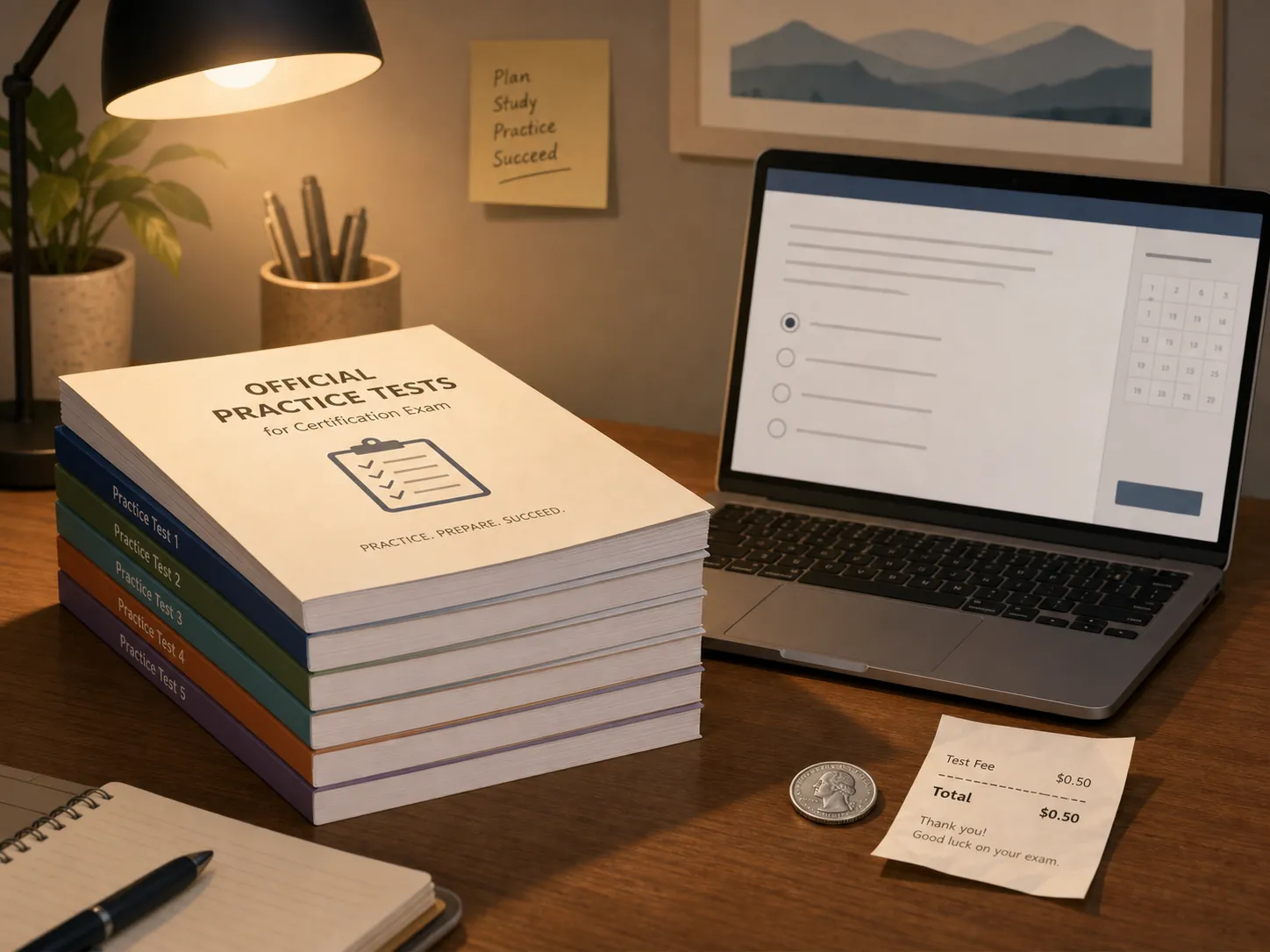
A modest benchmark can easily stay under a dollar if you keep the sample tight. For example, a student could run a small set of official questions through Non-Think, High, and Max, then run one verification prompt per answer, while logging total input and output tokens. The exact price depends on provider, prompt length, passage length, output length, and cache behavior, so do not copy someone else’s cost line into your own budget without checking your dashboard.
Third-party cost evidence points in the same direction. Tessl reported $0.0236 per complete task for Flash, with a skill-augmented score of 82.3 versus 64.1 raw, and compared it with $0.183 per task for Pro.[5] Kilo Code reported an independent spec test result of 60/100 at about $0.02 per run and said the tool-calling “held up surprisingly well.”[6] Towards AI’s 20-real-task harness reported Flash winning 7 of 20 tasks in about 800 output tokens where Pro-Max needed about 3,400.[7]
Those runs are useful because they make the economics concrete. They are not proof that Flash is reliable on MCAT passages, ACT English, ASVAB electronics, or GRE data interpretation. Most of that hands-on evidence is also from the April preview build, not the July 31 build.
How to choose the sample without fooling yourself
Pick questions that represent the work you are about to outsource to the model. If you only plan to use Flash for flashcards, test definition extraction and cloze-card generation from official explanations. If you plan to use it for missed-question review, test missed-question explanations. If you plan to paste full science or reading passages, include full passages. A benchmark made of short standalone questions will flatter a tool you later use on dense passages.
- For SAT Reading and Writing: include vocabulary-in-context, transitions, command of evidence, and grammar items that require the exact sentence logic.
- For SAT Math or GRE Quant: include at least a few items where a tempting shortcut fails, because that is where confident tutoring errors become expensive.
- For MCAT: include passage-based science questions and at least one item where the answer depends more on passage interpretation than outside content.
- For ACT: separate English, Reading, Math, and Science instead of averaging them into one score that hides section-specific problems.
- For ASVAB: separate word knowledge, arithmetic reasoning, math knowledge, and technical subtests if those sections matter for your target score.
Averaging everything together is how students end up trusting a model in the wrong place. A tool can be helpful for summarizing a reading passage and still be unsafe for quantitative explanations. It can make clean flashcards and still hallucinate a science fact. Score by task type.
If you want a precedent for this exam-first style of testing, StudyMethod’s earlier hands-on run on open models used real SAT, GRE, and MCAT questions, though it tested DeepSeek-R1 rather than V4 Flash. Treat that as a complement, not a substitute for the V4 Flash protocol here: testing open-source AI on exam questions.
What third-party results suggest before you run your own test
The likely outcome is not “useless” and not “replacement tutor.” The published evidence points toward a fast, cheap first-pass study engine with a trust boundary around factual correctness and uncertainty.
BenchLM is especially useful for resisting one-mode conclusions. Its pages place the non-think Flash snapshot at Knowledge rank #55 of 55, while the Max-mode page ranks #42 of 55 and reports Math at 81.6.[8] That is not an exam-task benchmark, and it should not be inflated into one. But it reinforces the mode lesson from the official card: Non-Think behavior should not stand in for the whole model.
Artificial Analysis adds another piece: the July 31 build generated 240M output tokens in its index run versus a 62M median, and the reported index run cost was $113 versus $1,071. That helps explain why people are excited about Flash as an efficient model. The same source’s hallucination-when-uncertain result is why that excitement should not become answer-key trust.[3]
Provider choice also changes the practical setup. DeepSeek’s first-party API is not the only route; OpenRouter lists DeepSeek V4 Flash with an April 24, 2026 release date and provider pricing around $0.09 per 1M input tokens and $0.18 per 1M output tokens.[9] The research value of your benchmark is better if you record the provider, model build, date, and mode alongside the scores.
There is one more practical boundary: data handling. DeepSeek is a Chinese company, and students uploading College Board, AAMC, ETS, ACT, or ASVAB material should think about privacy, platform terms, and content-licensing rules before pasting full materials into any hosted model. Self-hosting may sound like the clean escape hatch, but for most students it is not realistic; that path can require around 150GB at 4-bit. Most users will be choosing between first-party API access, a router, or chat.deepseek.com.
How to read your results
After the run, do not ask, “Is DeepSeek V4 Flash good?” Ask which mode is safe for which study job.
| Your result | Reasonable use | What not to do |
|---|---|---|
| High accuracy, low wrong-but-confident rate, explanations match official reasoning | Use that mode for first-pass missed-question review, rough explanations, and study-note drafts. | Do not stop checking against the official explanation. |
| High accuracy, weak explanations | Use for answer checking or quick triage only. | Do not copy its reasoning into notes. |
| Moderate accuracy, frequent self-correction after verification | Use only with a mandatory verification prompt and official answer review. | Do not rely on the first answer. |
| Wrong-but-confident answers appear repeatedly | Restrict to low-stakes summarization, formatting, or flashcard cleanup. | Do not use as a tutor for that exam section. |
| Non-Think fails but High or Max performs well | Use the stronger mode for reasoning-heavy study tasks and reserve Non-Think for cheap, low-risk formatting. | Do not average the modes together. |
| Passage tasks fail while short questions work | Use only for short-item review or vocabulary extraction. | Do not paste full passages and trust the answer. |
A passing result does not make Flash the source of truth. It makes it a candidate for reducing friction: explaining why an answer choice is tempting, turning an official explanation into flashcards, summarizing a passage you already read, or generating a checklist of concepts to review. Those are useful jobs. They are not the same as letting the model decide what is true.
If you want a section-level comparison against ChatGPT-style alternatives after you run this benchmark, use the separate StudyMethod section map here: DeepSeek V4 Flash or ChatGPT by exam section. The point of this article is narrower: measure Flash against official material before you give it a job.
The operational verdict
DeepSeek V4 Flash is cheap enough to benchmark properly. That is the good news. There is no reason to argue from vibes or from a vendor benchmark card when a small official-material run can show you how Non-Think, High, and Max behave on the section you actually need.
If your run shows accurate answers, usable explanations, and a low wrong-but-confident rate, use Flash as a first-pass study assistant. Let it reduce friction. Let it draft flashcards, unpack passages, and help you see why a wrong choice was tempting. If your run shows confident mistakes, especially after verification, keep it away from answer authority for that exam section.
The official practice material remains the answer key. The benchmark is valuable because it makes that boundary visible before a student depends on the tool.
References
- deepseek-ai/DeepSeek-V4-Flash, Hugging Face.
- Models & Pricing, DeepSeek API Docs.
- DeepSeek is back among the leading open weights models, Artificial Analysis.
- AGIEval: A Human-Centric Benchmark for Evaluating Foundation Models, arXiv, 2023.
- DeepSeek V4 Flash benchmarks, Tessl.
- DeepSeek V4 Flash, Kilo Code.
- DeepSeek V4 Flash 20 real task benchmark, Towards AI.
- DeepSeek V4 Flash, BenchLM.ai.
- DeepSeek: V4 Flash, OpenRouter.
Authoritative source
For the authoritative version of this contentHow to Read the '1 in 4 NFL Players CTE' Study
Report an error in this tool's output
Found something this tool got wrong beyond what's documented above? Report it so the accuracy log stays current.
Comments
Join the discussion with an anonymous comment.