iPhone 18 vs 17 for students — buy the 17 now
Evidence label: current purchase verdict, last reviewed August 26, 2026. The iPhone 18 has not been announced, so every iPhone 18 launch, RAM, price, and feature claim below is treated as reported or rumored, not confirmed.
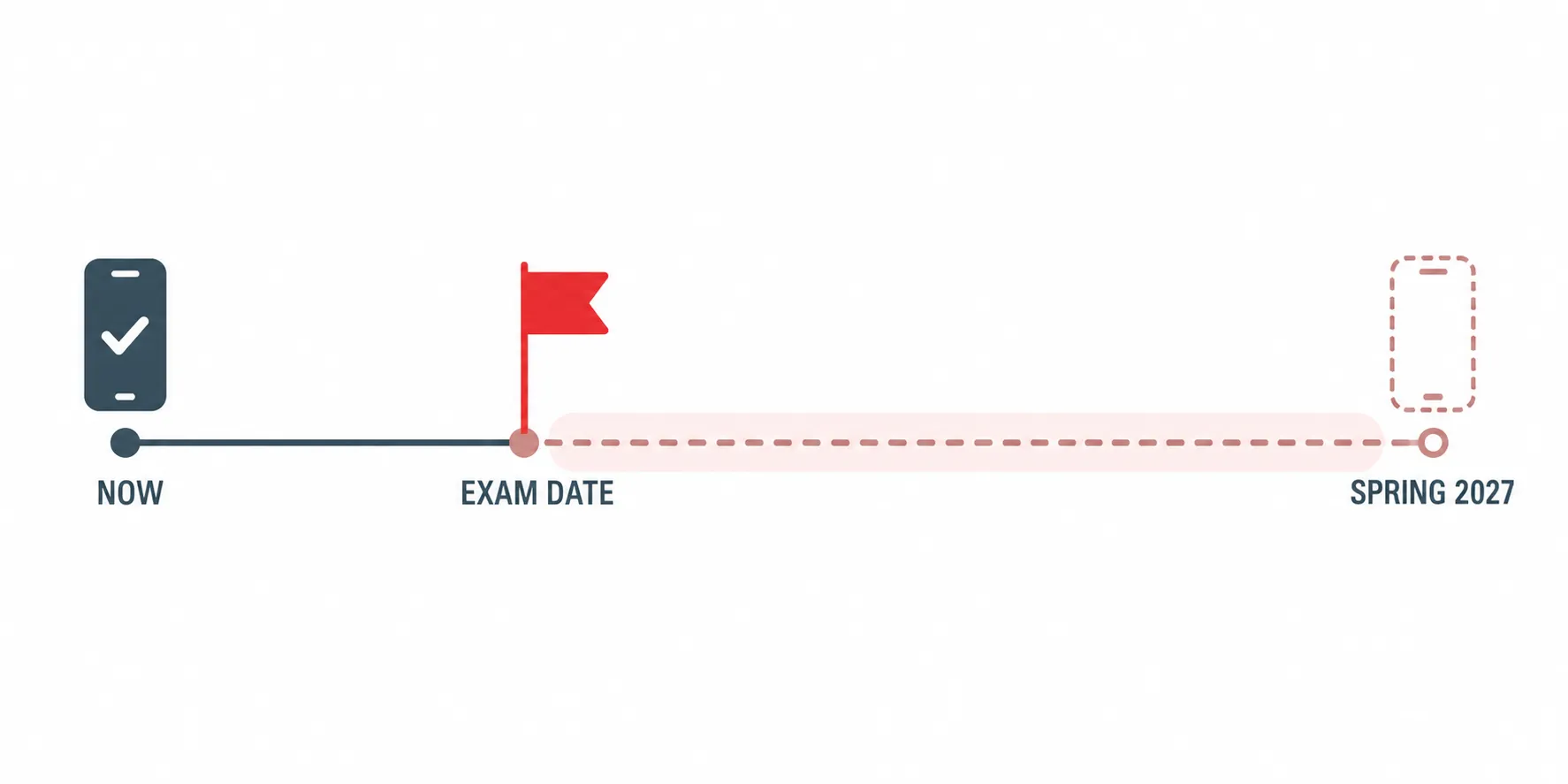
For iPhone 18 vs 17 for student study productivity, the answer is unusually calendar-driven: if your GRE, MCAT, SAT, ACT, ASVAB, or other fixed exam is in the next 6–12 months, buy the $799 iPhone 17 now rather than wait for the iPhone 18. The reason is not that the iPhone 18 sounds bad. It is that the base iPhone 18 a student is most likely to buy is reported for spring 2027, while the nearer launch window is expected to bring the iPhone 18 Pro, iPhone 18 Pro Max, and a much more expensive foldable model instead [1][2][3][4].
That split matters more than the usual spec-sheet argument. “Wait for the iPhone 18” is not one clean option. For a student buying a mainstream phone, it likely means waiting past a large part of the prep cycle, possibly past the exam itself. For a student buying in the expected September 2026 window, it likely means considering a Pro-tier device whose rumored camera, modem, satellite, and display changes do not make flashcards more consistent, official practice apps more effective, or phone limits easier to obey.
The buying decision should start with the exam date
A phone used for exam prep has to be useful before the deadline. That sounds obvious until rumor-cycle buying turns a real study plan into a holding pattern. If your test is already on the calendar, waiting for a base iPhone 18 reported for spring 2027 is not neutral. It means carrying an older, possibly failing phone through practice blocks, commute reviews, audio notes, app limits, and test-week logistics.
| Student situation | What the reported launch split means | Practical verdict |
|---|---|---|
| Exam in the next 3–6 months | The reported base iPhone 18 timing is after the study window for many students. | Buy the iPhone 17 now if your current phone is a bottleneck. |
| Exam in the next 6–12 months | Spring 2027 may still arrive late in prep or after the exam, depending on the test date. | The iPhone 17 is still the safer study purchase. |
| No fixed exam date | Waiting costs less in study-calendar risk because there is no deadline to miss. | Waiting can be reasonable if you accept rumor and price uncertainty. |
| You want the expected 18 Pro line specifically | The near-term option is likely premium-priced, not the base student model. | Wait only if the Pro features matter to you outside studying. |
The current iPhone 17 is not a weak stopgap. Apple lists it from $799 with an A19 chip, 8GB RAM, 256GB base storage, a 6.3-inch 1–120Hz Always-On display, and up to 30 hours of video playback [5]. CNET gives the iPhone 17 a 9.1 score and calls it the best iPhone for most people, while also showing a pricing snapshot that can differ depending on activation context [3]. For a student, the important part is not the award label. It is that the phone available now already clears the study-app bar by a wide margin.
Waiting also carries price risk
The waiting case usually assumes that today’s price remains available, tomorrow’s phone arrives on time, and the student can calmly choose between both. That is too tidy. Reported iPhone 18 Pro pricing is unsettled: one report relayed by 9to5Mac points to a possible $100 increase, while MacRumors tracks higher estimates around $1,299–$1,399 and reports upward build-cost pressure [1][6]. BGR also warns that trade-in values have historically dropped around new iPhone launches [4].
None of that proves the iPhone 18 Pro will be unaffordable or that the iPhone 17 will become harder to buy at a good price. It does mean waiting is not a cost-free pause. If the exam is fixed, the student is taking on timing risk, price risk, and study-disruption risk in exchange for features that still have to prove they change the prep workflow.
Do not cite education-store discounts unless you verify them at purchase time. Apple’s education-store pricing and back-to-school terms can change, so do not treat an education discount as part of this comparison unless you verify it at apple.com/us-edu/store. Use the public $799 iPhone 17 price as the clean baseline, then check Apple, carriers, and trade-in offers the week you buy.
What actually happens on a student’s phone
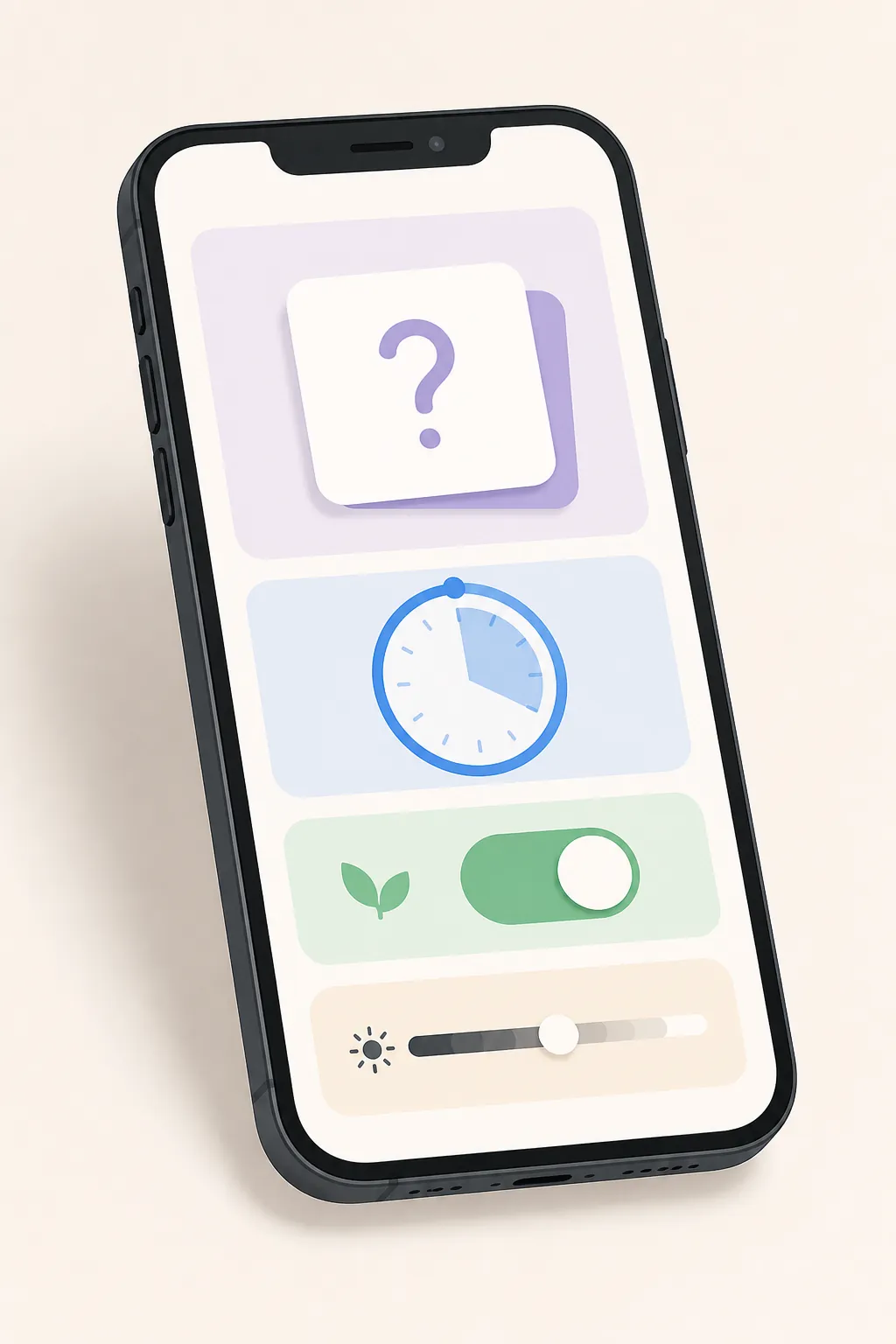
A study phone is not doing one glamorous thing. It is doing several ordinary things repeatedly: opening flashcards on the bus, running official practice apps, recording a lecture or self-explanation, transcribing notes, timing a study block, blocking social apps, switching into grayscale, and staying reliable enough that the student does not keep negotiating with the device.
| Prep task | What matters | Does the iPhone 17 already cover it? |
|---|---|---|
| Flashcards | Reliable app support, storage, sync, and enough battery for short repeated sessions. | Yes. AnkiMobile is a one-time $24.99 app requiring iOS 15.2 or later [9]. |
| Official exam apps | Compatibility with the app, not a Pro camera or foldable screen. | Yes for ordinary current prep use. The official U.S. Army ASVAB Challenge is free and requires iOS 14 or later [10]. |
| Voice notes and transcripts | Recording, transcript access, and summary support where available. | Yes for Apple’s documented iOS 26 Notes workflow; it is not presented as an iPhone 18-only feature [11]. |
| Timers and focus blocks | Fast access, notifications discipline, and predictable battery life. | Yes. This is a settings-and-routine problem more than a rumored-hardware problem. |
| Distraction control | App limits, grayscale, Focus modes, and consistency. | Yes. The relevant controls are already available without waiting for an iPhone 18. |
If you are building an MCAT routine around spaced repetition, the phone decision should feed into the system described in How to Use Anki for the MCAT Without Wasting Hours, not become a separate hobby. If you are comparing broader MCAT tools, start with MCAT Study Tools in 2026. For ASVAB prep, the more relevant question is whether the free official app is enough or whether a paid app adds value, which is covered in paid ASVAB study app worth it and the guide to ASVAB study apps that boost AFQT score.
The same applies to Notes and voice capture. Apple documents recording, transcript, and AI-summary support in Notes for iOS 26 generally; it is not an iPhone 18-only study advantage [11]. If voice notes are central to your prep, compare the actual lecture workflow in We Tested Voice AI Note-Takers on Exam-Style Lectures before paying for rumored hardware.
The rumored iPhone 18 Pro upgrades mostly sit outside the study loop
Rumors around the iPhone 18 Pro line include items such as a variable-aperture camera, Apple’s C2 modem, 5G satellite features, a smaller Dynamic Island, and other premium changes [1][7]. Those may matter if you care about photography, connectivity edge cases, or owning the newest Pro hardware. They do not obviously improve the study behaviors that move a test plan forward: doing the review, taking the practice set, checking the missed questions, and keeping the phone from becoming the reward machine between blocks.
The foldable rumor is even easier to separate from this decision. A roughly $2,000 foldable iPhone is expected in the same broad window as the Pro models, not as the mainstream base iPhone 18 student purchase [1][2]. A bigger or folding screen could be pleasant for reading, but at that price point it is no longer a normal study-productivity comparison against a $799 iPhone 17.
The one productivity-adjacent exception: rumored 12GB iOS 27 features
There is one rumor worth treating carefully rather than dismissing: iOS 27 Siri voice-customization and dictation improvements are reportedly tied to 12GB RAM [1][7]. If that proves true, it could matter to a student who relies heavily on dictation, spoken recall, or voice-first note capture.
But that exception does not automatically help the “wait for the base iPhone 18” case. The iPhone 17 has 8GB RAM [5]. Rumors conflict on the base iPhone 18, with one track pointing to 9GB and another to 12GB [1]. Until Apple announces the phones and iOS 27 requirements, this is a reason for a narrow group of voice-workflow-heavy students to wait knowingly, not a reason for every test-taker to delay a working prep setup.
A better phone will not fix an unmanaged phone
The useful productivity question is less “Which iPhone is newer?” and more “Which setup makes the phone less able to interrupt the plan?” A 2023 peer-reviewed JMIR review found that only 4 of 13 evaluated screen-time app interventions, or 31%, showed effectiveness at reducing phone use. It also reported that 58% of included papers had weak study quality, so the finding is useful context, not a clean promise that a setting change raises test scores [8].
Still, the details point in the right direction for students: grayscale, app limits, and mixed interventions were among the strategies that showed effectiveness, with one grayscale study reporting up to about 37.9 fewer minutes of phone use per day [8]. Those tools do not require an iPhone 18 Pro. They require being turned on before the study block starts.
- Put your flashcard app, official prep app, timer, Notes, and calendar on the first screen.
- Move social, shopping, video, and games off the first screen or behind App Limits.
- Use grayscale during study blocks if visual pull is a problem.
- Create a Focus mode for practice tests that allows only timer, emergency contacts, and required study apps.
- Test the setup during a normal practice block before relying on it during test week.
For students who keep blaming themselves for opening the wrong app, the better next read is Willpower for Studying Is a System, Not a Muscle. The phone purchase matters, but the phone rules matter more once the device is in your hand.
So, should a student buy the iPhone 17 or wait for the iPhone 18?
Buy the iPhone 17 now if the phone is meant to support a real exam plan in the next 6–12 months. The verified current device is available, starts at $799, has enough performance, storage, display quality, and battery life for the study stack, and is already judged by CNET as the best iPhone for most people [3][5]. The reported base iPhone 18 timing falls too late for many students, and the near-term 18 Pro rumors mostly buy premium phone features rather than better study execution [1][2][7].
Wait only if you do not have a fixed exam deadline, your current phone can comfortably carry you through prep, or you specifically want the possible 12GB iOS 27 Siri and dictation feature tier enough to accept launch, RAM, and pricing uncertainty. If you are buying for SAT prep, plug the device into the routine in the SAT study tools guide. If the purchase is part of a semester reset, build around a plan like the back-to-school study routine. The phone should enter the system as a tool, not as the event.
References
- iPhone 18: Rumors and Release Date — MacRumors.
- iPhone 18 Pro Latest Release Schedule: What To Expect When — Forbes, August 23, 2026.
- Best iPhone of 2026 — CNET.
- 4 Reasons To Skip The iPhone 18 — BGR.
- iPhone 17 - Technical Specifications — Apple.
- iPhone 18 Pro's new price might be better than expected — 9to5Mac, August 24, 2026.
- iPhone 18 Pro Launching Next Month With These 12 New Features — MacRumors, August 6, 2026.
- Effectiveness of Screen Time Interventions in Reducing Smartphone Use and Symptoms of Smartphone Addiction: Systematic Review and Meta-Analysis — JMIR, 2023.
- AnkiMobile Flashcards — App Store.
- U.S. Army ASVAB Challenge — App Store.
- Use Apple Intelligence in Notes on iPhone — Apple Support.
Related comparisons & exam hub
No matching exam hub found
Browse tool comparisons to find other verdicts for this exam.
Did this match your own testing?
Report whether your hands-on experience with this tool matched the verdict, or flag a pricing or accuracy change.
Comments
Join the discussion with an anonymous comment.